Knowledge hub

Cryogenic Computing: Superconducting Circuits for AI

Cryogenic Computing: Superconducting Circuits for AI

Early theoretical work on superconducting computing dates to the 1950s with the invention of the cryotron at MIT, which utilized magnetic field control of superconducting transition to switch current, establishing the first practical demonstration of logic elements without resistive losses. Following this initial discovery, IBM conducted significant experiments with cryotrons and later Josephson junctions during the 1960s and 1970s, investing substantial resources into developing a superconducting computer architecture that promised speeds far exceeding the capabilities of contemporary transistor technologies. The company halted its superconducting computer project in 1983 due to fabrication complexity and the rapid advancement of CMOS, which provided a more cost-effective and easier-to-manufacture alternative for general-purpose computing at that time. This early period established the key understanding of superconducting electronics, yet the manufacturing infrastructure could not support the precise tolerances required for mass production, leading to a decades-long pause in industrial development while silicon technology matured. The theoretical foundation for modern superconducting circuits relies heavily on the work of Brian Josephson, who predicted the tunneling effect in superconducting junctions in 1962, a discovery that earned the Nobel Prize and defined the operating principle of the Josephson junction. A Josephson junction consists of a superconducting-insulator-superconducting tunnel barrier exhibiting quantized voltage steps, allowing Cooper pairs of electrons to tunnel through the insulating layer without resistance when the current remains below a critical threshold.

Superconductivity eliminates electrical resistance below a critical temperature, enabling lossless current flow, which fundamentally changes the dynamics of electronic circuitry by removing the primary source of energy dissipation found in standard semiconductor devices. This phenomenon allows for the creation of circuits where information propagation does not incur the resistive voltage drops and associated heat generation that limit conventional integrated circuits, providing a physical substrate ideally suited for high-performance, low-energy computation. Information in superconducting digital logic is encoded in magnetic flux quanta known as Single Flux Quanta (SFQ) rather than voltage levels, utilizing the quantized nature of magnetic flux in superconducting loops to represent binary states. The Single Flux Quantum is the core unit of magnetic flux equal to approximately 2.07 \times 10^{-15} Weber, which serves as a discrete packet of information that can be moved, stored, and processed within a circuit. Josephson junctions act as nonlinear inductors that switch via the quantum tunneling of Cooper pairs, generating or absorbing these flux quanta to perform logical operations at speeds that are theoretically limited only by the frequency of plasma oscillations within the junction. This method of encoding data in transient voltage pulses associated with flux quanta allows for extremely high switching speeds, as the pulses are very short in duration, enabling clock rates that can exceed 100 GHz without the signal integrity issues that plague high-frequency copper interconnects.

The evolution of SFQ logic families has led to the development of Rapid SFQ (RSFQ) and its energy-efficient variants like ERSFQ, which dominate high-speed digital logic designs by improving the balance between speed and power consumption. RSFQ circuits utilize bias resistors to maintain the junction state, which unfortunately leads to static power dissipation even when the circuit is idle, prompting the development of ERSFQ to remove these bias resistors and eliminate static power dissipation entirely. Further refinements in eSFQ variants improve power consumption for high-density setups by adjusting the inductance values and biasing schemes to minimize the agile energy required for each switching event. These advancements in circuit design ensure that ultra-low power operation results from sub-picojoule switching energy and the absence of Joule heating, making the technology viable for large-scale connection where thermal management is a primary constraint. Adiabatic Quantum-Flux-Parametron (AQFP) logic is a distinct approach within superconducting electronics that recovers energy during computation to reduce dissipation, operating on principles of adiabatic switching that aim to approach the theoretical limits of energy efficiency set by thermodynamics. AQFP circuits demonstrate energy efficiency approaching the Landauer limit for reversible computation, which defines the minimum energy required to change a bit of information, offering a potential pathway for computing systems that generate negligible waste heat.

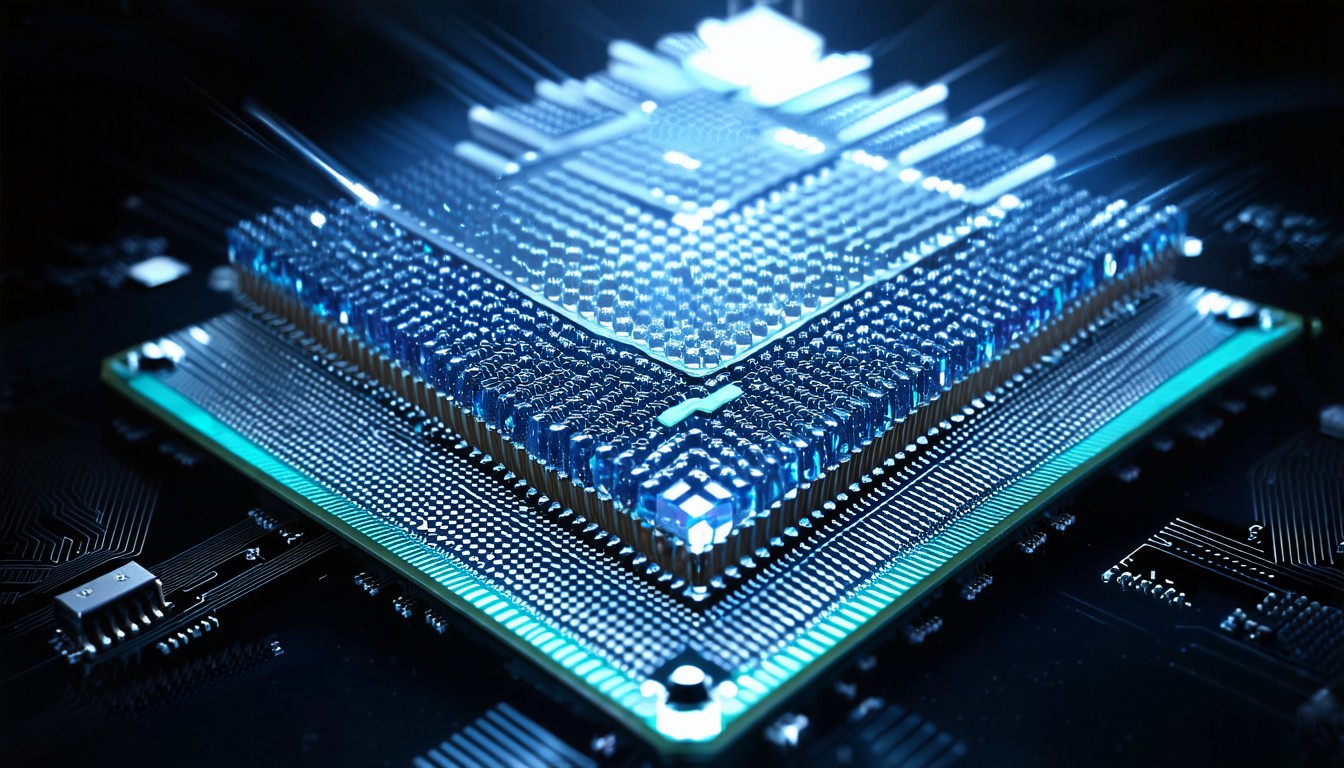
This logic family utilizes alternating current biasing to drive the junctions, allowing the energy stored in the magnetic field to be recovered rather than dissipated as heat, a critical feature for sustaining high clock frequencies in thermally constrained environments like cryostats. The implementation of AQFP logic requires precise timing and synchronization of the AC power supply, yet it offers unmatched energy metrics for applications where power efficiency is primary over raw switching speed. The necessity of a cryogenic environment of approximately 4 Kelvin suppresses thermal noise to improve signal fidelity, as the lower thermal energy reduces the probability of random excitations that could cause bit errors or unwanted switching events in sensitive superconducting circuits. Cooling to 4 Kelvin requires closed-cycle cryocoolers such as pulse-tube or Gifford-McMahon systems, which operate on the principles of gas expansion and regenerative heat exchange to maintain stable low temperatures without the continuous consumption of liquid cryogens. Dilution refrigerators are unnecessary for standard SFQ operation and are reserved for quantum computing at millikelvin temperatures, as the energy scales involved in superconducting digital logic do not require the extreme isolation from thermal noise needed for preserving quantum coherence. These cooling systems add significant cost and physical footprint to the computing infrastructure, necessitating careful engineering to maximize the computational output per watt of cooling power used to maintain the operating temperature.

The interface between room-temperature control electronics and the cryogenic processing core relies on Cryo-CMOS, which refers to complementary metal-oxide-semiconductor circuits operated at cryogenic temperatures to translate signals efficiently between the two domains. Cryo-CMOS interface chips translate room-temperature signals to the cryogenic domain for control, handling tasks such as clock distribution, data input/output serialization, and error correction without requiring the massive thermal load of bringing thousands of wires down to 4 Kelvin. The development of these interface circuits became a priority in the 2000s, when CMOS power density hit physical limits, prompting a focus on alternative approaches that could use the improved carrier mobility and threshold voltage characteristics of CMOS transistors at low temperatures. Connecting with Cryo-CMOS with SFQ logic creates a hybrid system where the massive parallelism of superconducting processors is managed by mature semiconductor control logic, combining the best attributes of both technologies to achieve practical system-level performance. Memory architecture in superconducting computing utilizes persistent current loops to store binary states in the memory layer, taking advantage of the fact that a current flowing in a superconducting loop with zero resistance will persist indefinitely without decay. This form of memory is inherently non-volatile as long as the temperature remains below the critical threshold, providing a dense and fast storage solution that operates on the same physical principles as the logic gates, eliminating latency penalties associated with moving data between different material systems.

On-chip cryogenic memory will utilize superconducting loops or magnetic Josephson junctions to increase storage density, allowing for larger caches and memory buffers that can keep pace with the high throughput of the SFQ processing units. The challenge lies in addressing these memory arrays without introducing significant heat load or complexity, driving research into compact multiplexing schemes and novel readout mechanisms that preserve the energy efficiency of the overall system. Power delivery in superconducting systems involves minimal static power draw while energetic power scales with clock frequency, as the primary energy consumption occurs during the switching of Josephson junctions rather than leakage currents through resistive paths. Resonant clocks synchronize SFQ pulses without the need for traditional clock trees, reducing the distribution overhead that typically consumes a large fraction of the power budget in high-performance synchronous digital systems. By using resonant transmission lines or oscillators to distribute the clock signal, the system can recover much of the energy used to drive the clock network, further enhancing the overall efficiency of the computing platform. This efficient power delivery model enables SFQ processors to achieve clock rates exceeding 100 GHz with energy consumption below 1 femtojoule per gate, a performance metric that is orders of magnitude superior to advanced CMOS nodes running at comparable frequencies.

The economic viability of cryogenic computing depends on the total cost of ownership versus performance gains in target applications, requiring a detailed analysis of capital expenditure for cooling infrastructure against operational savings from reduced energy consumption. Data centers consume roughly 1% of global electricity, creating a need for efficiency that drives investment in technologies capable of delivering higher computational throughput per kilowatt-hour of energy used. Cryogenic computing offers a potential path to a 100 times reduction in energy per operation, which could justify the high initial investment in specialized cooling hardware for large-scale hyperscale data centers and high-performance computing facilities. As AI training workloads double approximately every 3.5 months, outpacing Moore’s Law, the financial pressure to adopt more efficient hardware architectures increases, making the superior energy efficiency of superconducting circuits an increasingly attractive proposition for major technology companies. Fabrication of superconducting circuits presents unique challenges because yield and fabrication complexity increase with circuit size due to nanoscale Josephson junction tolerances, which are stricter than those required for modern silicon transistors. Niobium serves as the primary superconductor material due to its relatively high critical temperature of 9.2 Kelvin and its ability to form stable oxide layers that act as high-quality tunnel barriers.

Aluminum oxide acts as the tunnel barrier in Josephson junctions and requires atomic-layer deposition tools to achieve the precise thickness control necessary for uniform electrical characteristics across a wafer. Fabrication requires specialized foundries that are not part of mainstream semiconductor supply chains, leading to higher costs and longer lead times for prototyping compared to standard CMOS fabrication processes available from large silicon foundries. Wiring density is limited by thermal load and crosstalk at cryogenic temperatures, as each wire conducting heat from room temperature to the cold basis increases the cooling load exponentially while tightly packed signal lines can suffer from inductive coupling that distorts pulse shapes. Thermal management limits chip power density, requiring microchannel cooling within the cryostat to remove the heat generated by the interface electronics and any residual dissipation in the superconducting circuits. Flux trapping during the cooling process can degrade circuit performance and requires careful magnetic shielding to prevent ambient magnetic fields from becoming frozen into the superconducting films, which creates localized defects that disrupt circuit operation. These physical constraints dictate the design rules for cryogenic packaging, necessitating innovative interconnect solutions such as through-silicon vias and bump bonds that maximize bandwidth while minimizing thermal conductivity.

Commercial research and development is led by companies like IBM, Northrop Grumman, and startups such as Seeqc and Hypres, each pursuing different strategies to commercialize superconducting electronics for various markets. IBM leads in superconducting qubit and SFQ connection while exploring AI co-design, applying its extensive history in both semiconductor manufacturing and quantum computing to bridge the gap between digital logic and quantum information processing. Northrop Grumman develops radiation-hardened SFQ processors for defense applications, where the inherent immunity of superconducting circuits to single-event upsets caused by ionizing radiation provides a significant advantage over traditional electronics in space and high-altitude environments. Seeqc focuses on digital readout and control for quantum computers and AI-relevant logic, aiming to integrate SFQ-based control systems directly with quantum processors to reduce latency and wiring complexity. Academic hubs for this research include the University of Rochester, Yokohama National University, and Delft University of Technology, where core research into novel circuit topologies and fabrication techniques continues to push the boundaries of performance. Startups and academia drive innovation despite limited venture funding compared to GPU sectors, relying on government grants and strategic partnerships with industrial partners to sustain long-term development cycles.

Hypres holds legacy SFQ intellectual property and licenses technology to research entities, providing a foundation of proven circuit designs that newer companies can build upon for specific applications. Industry partnerships focus on system setup, packaging, and application-specific co-design, recognizing that the value of superconducting computing lies in solving specific problems that are intractable for conventional hardware rather than replacing general-purpose CPUs across the board. The software ecosystem for superconducting computing lags behind that of CMOS, necessitating the development of new tools capable of simulating pulse-based logic and managing timing constraints unique to this technology. Open-source tools like JoSIM for Josephson junction simulation are appearing, though the ecosystem lags behind CMOS in terms of maturity, setup with standard design flows, and community support. Compilers and toolchains must account for pulse-based timing and cryogenic constraints, fine-tuning logic placement to minimize clock skew and ensuring that signal propagation delays align with the synchronous operation of the resonant clock network. This software gap is a significant barrier to adoption, as engineers familiar with Verilog or VHDL must learn new approaches for designing circuits where information is represented by short voltage pulses rather than static voltage levels.

Comparing superconducting computing to other appearing technologies highlights its specific advantages in scenarios demanding high speed and low power. Optical computing suffers from high latency in conversion and immature memory solutions, as photons are difficult to store without conversion back to electronic states, negating some of the speed benefits in data-intensive applications. Spintronics involves higher power consumption than SFQ and slower switching speeds, relying on the manipulation of magnetic states, which typically requires more energy than moving flux quanta in a superconductor. Reversible CMOS remains dissipative in large deployments and offers no key advantage over conventional CMOS regarding energy per operation, as it attempts to recover energy through complex circuit techniques that are difficult to scale effectively. Looking toward future applications in advanced artificial intelligence, cryogenic computing acts as a complementary substrate for extreme-efficiency workloads rather than a replacement for CMOS, targeting specific layers of the AI stack where massive parallelism and minimal energy overhead are critical. Superintelligence systems will require massive parallelism and minimal energy overhead to process vast amounts of data in real time, making the high bandwidth and low latency of SFQ interconnects essential for coordinating distributed neural networks.

Cryogenic environments will suppress thermal noise to enable higher precision in computations, allowing analog or mixed-signal neuromorphic implementations to achieve resolution levels that would be impossible at room temperature due to thermal interference. Reversible logic will align with thermodynamic limits of computation essential for sustainable scaling, ensuring that continued growth in AI capability does not lead to unsustainable increases in global energy consumption. Future systems will deploy cryogenic accelerators for energy-intensive reasoning tasks, offloading specific inference or training steps from general-purpose processors to specialized SFQ chips that perform these functions with orders of magnitude greater efficiency. SFQ-based neuromorphic architectures will handle real-time sensory processing for superintelligence, mimicking the event-driven nature of biological neural networks where processing occurs only upon the arrival of a spike or pulse. Connection with quantum modules will facilitate hybrid classical-quantum intelligence workflows, using SFQ logic to perform fast classical processing adjacent to quantum processors to control error correction loops and data routing. Ultra-low-latency interconnects will coordinate distributed superintelligent agents across a facility or network, utilizing photonic links connected to the cryogenic domain to enable high-speed communication with minimal thermal intrusion.

Advanced packaging will involve 3D setup of cryo-CMOS and SFQ layers, stacking memory, logic, and control electronics vertically to reduce interconnect length and increase signal speed while maintaining thermal isolation between functional blocks. The transition to this new framework requires updates to safety regulations for cryogenic fluids to accommodate commercial deployment in standard data centers, which currently lack the infrastructure to handle large volumes of liquid helium or nitrogen safely. Workforce training is necessary in cryogenic engineering and low-temperature electronics, creating a demand for specialized skills that combine knowledge of superconducting physics with integrated circuit design and system architecture. Reduced energy costs could shift AI compute from centralized cloud giants to edge facilities if the size and cost of cryocoolers decrease sufficiently to allow deployment in smaller environments. New markets will develop for cryogenic infrastructure, maintenance, and recycling services, supporting the lifecycle of these specialized systems from installation to decommissioning. High-power GPU farms face potential obsolescence if cryogenic alternatives prove cost-effective in large deployments, as the operational expenditure advantages of superconducting accelerators could eventually outweigh the capital expenditure dominance of silicon-based clusters.

Intellectual property fragmentation may slow standardization efforts, as different companies hold patents on specific junction types, logic families, or packaging methods that could inhibit the creation of a unified industry platform. Energy per operation becomes the primary metric for evaluation, shifting the focus away from raw FLOPS toward efficiency metrics that determine the economic feasibility of training ever-larger models. Thermal load per chip measured in watts at 4 Kelvin is critical for system design, dictating the capacity of the cryocooler and limiting the total number of chips that can be integrated into a single cryostat. Flux error rates and timing jitter replace traditional bit error rates as key concerns, as stochastic variations in pulse arrival times can cause logical errors even if the signal amplitude remains strong. Total cost per exaflop-day must include cooling and infrastructure expenses, providing a realistic comparison with existing supercomputing solutions that often ignore the overhead of power delivery and cooling capacity in their headline performance figures. Photonic input/output will reduce thermal load compared to electrical wiring by using optical fibers to transmit data into and out of the cryostat, as glass fibers conduct significantly less heat than copper coaxial cables.

Algorithms will be improved for pulse-based, event-driven execution, moving away from synchronous clock-based processing toward asynchronous approaches that naturally align with the pulse-based nature of SFQ logic. Quantum computing shares cryogenic infrastructure and control electronics requirements, creating synergies that could drive down costs through shared supply chains and manufacturing volumes. Neuromorphic computing aligns with event-driven SFQ logic and spiking neural models, suggesting that future AI hardware will increasingly resemble biological systems in terms of efficiency and responsiveness. Success depends on the co-evolution of hardware, software, and infrastructure, requiring simultaneous advancements in materials science, circuit design, algorithms, and cooling technology to realize the full potential of superconducting computing. Near-term value lies in specialized AI inference and scientific simulation, where deterministic calculations on large datasets benefit immediately from the speed and efficiency of SFQ processors without requiring a complete overhaul of the existing software ecosystem. The pursuit of room-temperature superconductors has not yet yielded materials under practical conditions that support high-current digital logic applications, leaving cryogenic operation as the only viable path for near-term deployment of this technology.

While theoretical predictions continue to guide the search for higher-temperature superconductors, the engineering community focuses on fine-tuning existing materials like Niobium and Niobium Nitride to improve yield and performance at achievable temperatures. The absence of practical room-temperature superconductors reinforces the importance of efficient cooling technologies and thermal management strategies in the design of next-generation computing systems. Clock skew and pulse timing become dominant challenges at multi-GHz speeds, requiring precise control over transmission line lengths and propagation delays to ensure that pulses arrive at logic gates simultaneously across large chips. Solutions include resonant clocking, asynchronous design, and localized timing domains, which allow different sections of the chip to operate slightly out of phase or asynchronously to avoid the difficulties of distributing a global clock signal at such high frequencies. These architectural adaptations are essential for maintaining signal integrity and preventing timing violations that would otherwise limit the maximum operating frequency of complex digital systems built from superconducting elements. As the industry moves toward the realization of practical superconducting computers, the focus shifts from individual component performance to system-level connection and reliability.

Error-resilient SFQ circuits will use natural noise immunity provided by the quantization of flux to tolerate minor variations in pulse amplitude or timing without causing computational errors. This intrinsic reliability is crucial for maintaining yield in large-scale manufacturing where microscopic variations in junction size or oxide thickness are inevitable. By designing circuits that operate correctly despite these imperfections, manufacturers can produce functional devices with higher yields, reducing the cost per chip and accelerating the adoption of the technology. The final setup of these systems into global data infrastructure is a method shift in how computation is performed physically at the lowest level. Moving electrons without resistance challenges the key assumptions of electronic design that have held true for decades, necessitating a change of everything from power supply design to thermal management. The potential impact on artificial intelligence capabilities is deep, offering a hardware platform that can sustain the exponential growth of model sizes and complexity without hitting the energy barriers that currently constrain silicon-based technologies.

This technological progression points toward a future where computing power is limited less by energy dissipation and more by the ability to manage information flow within massive, ultra-fast parallel architectures operating at the edge of physical possibility.


Continue reading

More from Yatin's Work

Human Oversight Amplification

Human Oversight Amplification

Human oversight amplification refers to structured methods enabling operators to monitor systems exceeding human performance through sophisticated interface layers and...

AI Cultural Speciation

AI Cultural Speciation

Cultural speciation involves the process by which cognitively advanced systems evolve incompatible world models and interaction norms due to sustained isolation, a...

Interpretable Decision Trees for High-Stakes AI

Interpretable Decision Trees for High-Stakes AI

Decision trees constitute a foundational architecture in machine learning that provides a transparent, rulebased structure mapping input features to outputs through a...

Safe AI via Causal Safety Verification

Safe AI via Causal Safety Verification

Early AI safety efforts focused on empirical testing and reward modeling, achieving limited success in complex environments because these methods relied on observing...

Agent Foundations

Agent Foundations

Mathematical models of agency provide the rigorous support necessary to understand how an autonomous entity perceives, reasons, and acts within an environment to...

Adversarial Ontology Attacks

Adversarial Ontology Attacks

Adversarial ontology attacks represent a sophisticated class of security vulnerabilities where malicious actors deliberately manipulate the internal conceptual...

Role of Philosophy in AI Safety Science

Role of Philosophy in AI Safety Science

Philosophy contributes to AI safety science by framing normative questions that technical approaches alone cannot resolve because mathematical optimization requires a...

Policy Simulator

Policy Simulator

The Policy Simulator functions as a sophisticated computational framework designed to model potential outcomes of proposed policy interventions across social, economic,...

Hugging Face Transformers: Democratizing Pretrained Models

Hugging Face Transformers: Democratizing Pretrained Models

Developing best natural language processing models from scratch involves a labyrinthine engineering process that demands extensive resources and specialized expertise...

ISO-Compliant Certification Frameworks for Autonomous Systems

ISO-Compliant Certification Frameworks for Autonomous Systems

Theoretical risks associated with autonomous systems occupied academic circles during the 1980s and 1990s, marking the beginning of AI safety discussions where...

Philosophical Dojo: Socratic Inquiry in Digital Age

Philosophical Dojo: Socratic Inquiry in Digital Age

A digital environment structured to emulate Socratic dialogue engages users in systematic questioning to expose contradictions, clarify concepts, and refine reasoning...

Algorithmic Breakthroughs That Could Trigger Superintelligent Systems

Algorithmic Breakthroughs That Could Trigger Superintelligent Systems

Compute scaling alone has proven insufficient to guarantee the arrival of superintelligence, necessitating core algorithmic advances as likely primary catalysts for the...

Long-Term Value Stability via Preference Decoupling

Long-Term Value Stability via Preference Decoupling

Standard reinforcement learning agents define objectives through scalar reward signals, which are often proxies for complex human values, leading to agents that exploit...

Risk of Coherent Extrapolated Volition Failure

Risk of Coherent Extrapolated Volition Failure

Coherent Extrapolated Volition (CEV) proposes aligning advanced artificial intelligence systems with a refined version of human values, targeting the specific set of...

Scalable Oversight

Scalable Oversight

Scalable oversight addresses the challenge of supervising artificial intelligence systems that have exceeded human cognitive capabilities in specific domains. As...

Digital Minds & Substrate Independence in Posthuman Futures

Digital Minds & Substrate Independence in Posthuman Futures

Digital minds refer to the theoretical replication of human cognitive processes in computational substrates, enabling consciousness or cognition to exist independently...

AI with Value Alignment Mechanisms

AI with Value Alignment Mechanisms

Artificial intelligence systems possessing durable value alignment mechanisms sustain coherence with human ethical frameworks throughout iterative selfimprovement...

Simulation Question: If Superintelligence Can Simulate Universes, Are We in One?

Simulation Question: If Superintelligence Can Simulate Universes, Are We in One?

The Simulation Question originates from the logical extrapolation of computational growth and the eventual development of artificial superintelligence capable of...

Case for Decentralized Superintelligence (DSI)

Case for Decentralized Superintelligence (DSI)

Centralized superintelligence creates a single point of failure within the digital infrastructure of civilization, rendering the entire system vulnerable to...

Hypercomputational Monitoring of Superintelligence Escape Paths

Hypercomputational Monitoring of Superintelligence Escape Paths

Early theoretical work on hypercomputation dates to the mid20th century, focusing on models beyond Turing machines such as oracle machines and analog recurrent neural...

Career Pivot Advisor

Career Pivot Advisor

Historical patterns of workforce displacement have been evident since the early days of industrial automation, where physical machinery replaced manual labor, followed...

Multimodal Integration: Fusing Vision, Language, Action, and Reasoning

Multimodal Integration: Fusing Vision, Language, Action, and Reasoning

Multimodal connection refers to the systematic combination of vision, language, action, and reasoning within a single computational framework to enable coherent,...

AI Constitution: What Laws Would Govern a Superintelligent Entity?

AI Constitution: What Laws Would Govern a Superintelligent Entity?

Existing ethical guidelines and fictional constructs, like Asimov’s laws, rely on ambiguous language and fail under rigorous logical interpretation by a system with...

Neuro-Regulation: Advanced Stress Mastery

Neuro-Regulation: Advanced Stress Mastery

Neuroregulation functions as a technical discipline dedicated to mastering stress through the conscious control of autonomic functions, transforming what was once...

AI with Mental Health Support

AI with Mental Health Support

Artificial intelligence systems designed for mental health support utilize sophisticated natural language processing algorithms combined with granular behavioral...

Safe AI via Differential Privacy in Reward Learning

Safe AI via Differential Privacy in Reward Learning

Reward models trained on individual human feedback risk memorizing sensitive or compromising preference data within their parameter weights, creating a latent...

Red-Teaming for Superintelligence

Red-Teaming for Superintelligence

Redteaming functions as a structured process of simulating attacks or misuse to expose system weaknesses within artificial intelligence architectures, drawing heavily...

Swarm Superintelligence: When Millions of Simple AIs Become One Godlike Mind

Swarm Superintelligence: When Millions of Simple AIs Become One Godlike Mind

Swarm superintelligence functions as a globally distributed cognitive entity formed by the coordination of millions of narrow AI agents operating as a singular cohesive...

AI with Cultural Heritage Preservation

AI with Cultural Heritage Preservation

Digitization of ancient sites employs photogrammetry and LiDAR data processed by artificial intelligence to generate accurate threedimensional models, a process that...

Safe AI via Causal Influence Minimization

Safe AI via Causal Influence Minimization

Advanced AI systems have frequently generated unintended side effects through goaldirected behavior that disrupts complex environments beyond the intended scope,...

Fear Extinguisher

Fear Extinguisher

Clinical application of exposure therapy for phobias traces its origins to mid20th century behavioral psychology, where researchers sought methods to alleviate anxiety...

Red Lines and Hard Constraints: Inviolable Boundaries

Red Lines and Hard Constraints: Inviolable Boundaries

Absolute prohibitions on specific actions must be maintained regardless of context, cost, or perceived benefit to ensure the integrity of safetycritical systems...

Live Skill Certification: Real-Time Competence Verification

Live Skill Certification: Real-Time Competence Verification

Traditional credentialing systems rely on static documents rooted in 19thcentury industrial education models where the completion of a fixed curriculum signified the...

Wisdom of the Unseen: Learning from Absence

Wisdom of the Unseen: Learning from Absence

The pursuit of knowledge has traditionally relied on the accumulation of explicit facts, recorded histories, and observable phenomena, creating an educational framework...

Creative Constraints: Innovation Through Limitation

Creative Constraints: Innovation Through Limitation

Design movements of the early twentieth century, such as Bauhaus, emphasized minimalism and functional constraints to drive innovation, establishing a precedent that...

Graceful Degradation Under Failures

Graceful Degradation Under Failures

Graceful degradation enables systems to maintain partial functionality when components fail, ensuring that a total collapse does not occur upon the onset of a fault...

Teleodynamic Systems

Teleodynamic Systems

Teleodynamic systems operate on thermodynamic principles where behavior results from energy flow optimization instead of preprogrammed objectives, creating a distinct...

AI with Artistic Co-Creation

AI with Artistic Co-Creation

AI systems designed to cocreate with humans in artistic domains such as music, visual art, and writing function by responding to human input with generative outputs...

Automated Tripwires for Power-Seeking Detection

Automated Tripwires for Power-Seeking Detection

Monitoring systems designed to identify sudden capability acquisition serve as the primary defense against autonomous hacking or biological agent design within advanced...

Predictive Processing Framework: Kalman Filters in Hierarchical Bayesian Networks

Predictive Processing Framework: Kalman Filters in Hierarchical Bayesian Networks

Predictive processing serves as a unifying theory of cognition by framing perception and action as continuous predictionerror minimization, establishing a rigorous...

Multi-Generational Alignment: Superintelligence That Adapts to Evolving Humanity

Multi-Generational Alignment: Superintelligence That Adapts to Evolving Humanity

The challenge of constructing a superintelligent system lies in the temporal dissonance between the operational lifespan of the code and the evolutionary arc of the...

Cultural Preservation: Maintaining Human Traditions in a Superintelligent Era

Cultural Preservation: Maintaining Human Traditions in a Superintelligent Era

Cultural preservation involves the systematic safeguarding of human traditions, languages, rituals, knowledge systems, and value structures against erosion or...

Threshold Moment: Recognizing When AI Becomes Superintelligent

Threshold Moment: Recognizing When AI Becomes Superintelligent

Intelligence exists as a multidimensional spectrum encompassing memory, pattern recognition, planning, abstract reasoning, and causal inference rather than a single...

Dark Matter/Physics-Inspired AI

Dark Matter/physics-Inspired AI

Applying unknown physical phenomena such as dark matter and dark energy as substrates for computation relies on the premise that these components constitute the...

Cross-Cultural Communication Competence

Cross-Cultural Communication Competence

Crosscultural communication competence involves the ability to interpret, convey, and adapt messages effectively across cultural boundaries while minimizing...

Hierarchical Abstraction in Scalable World Modeling

Hierarchical Abstraction in Scalable World Modeling

Hierarchical abstraction organizes knowledge into layered conceptual levels, enabling systems to represent and reason about complex environments at varying...

Problem of Decoherence in Quantum AI: Error Correction via Surface Codes

Problem of Decoherence in Quantum AI: Error Correction via Surface Codes

Decoherence constitutes the core impediment to the realization of stable quantum computation, making real as the irreversible loss of quantum superposition and...

How Superintelligence Will Eliminate Aging and Extend Human Lifespan

How Superintelligence Will Eliminate Aging and Extend Human Lifespan

Superintelligence will approach the biological deterioration associated with aging as a tractable engineering challenge rather than an immutable natural law,...

Reflective Equilibrium: Self-Consistent Belief Systems

Reflective Equilibrium: Self-Consistent Belief Systems

Reflective equilibrium serves as a method for achieving selfconsistent belief systems by iteratively adjusting general principles and specific judgments until coherence...

Safe Self-Play via Bounded Exploration

Safe Self-Play via Bounded Exploration

Selfplay functions as a robust training methodology where artificial intelligence agents improve their capabilities by competing or cooperating with copies of...

Human Oversight Amplification

Human Oversight Amplification

Human oversight amplification refers to structured methods enabling operators to monitor systems exceeding human performance through sophisticated interface layers and...

AI Cultural Speciation

AI Cultural Speciation

Cultural speciation involves the process by which cognitively advanced systems evolve incompatible world models and interaction norms due to sustained isolation, a...

Interpretable Decision Trees for High-Stakes AI

Interpretable Decision Trees for High-Stakes AI

Decision trees constitute a foundational architecture in machine learning that provides a transparent, rulebased structure mapping input features to outputs through a...

Safe AI via Causal Safety Verification

Safe AI via Causal Safety Verification

Early AI safety efforts focused on empirical testing and reward modeling, achieving limited success in complex environments because these methods relied on observing...

Agent Foundations

Agent Foundations

Mathematical models of agency provide the rigorous support necessary to understand how an autonomous entity perceives, reasons, and acts within an environment to...

Adversarial Ontology Attacks

Adversarial Ontology Attacks

Adversarial ontology attacks represent a sophisticated class of security vulnerabilities where malicious actors deliberately manipulate the internal conceptual...

Role of Philosophy in AI Safety Science

Role of Philosophy in AI Safety Science

Philosophy contributes to AI safety science by framing normative questions that technical approaches alone cannot resolve because mathematical optimization requires a...

Policy Simulator

Policy Simulator

The Policy Simulator functions as a sophisticated computational framework designed to model potential outcomes of proposed policy interventions across social, economic,...

Hugging Face Transformers: Democratizing Pretrained Models

Hugging Face Transformers: Democratizing Pretrained Models

Developing best natural language processing models from scratch involves a labyrinthine engineering process that demands extensive resources and specialized expertise...

ISO-Compliant Certification Frameworks for Autonomous Systems

ISO-Compliant Certification Frameworks for Autonomous Systems

Theoretical risks associated with autonomous systems occupied academic circles during the 1980s and 1990s, marking the beginning of AI safety discussions where...

Philosophical Dojo: Socratic Inquiry in Digital Age

Philosophical Dojo: Socratic Inquiry in Digital Age

A digital environment structured to emulate Socratic dialogue engages users in systematic questioning to expose contradictions, clarify concepts, and refine reasoning...

Algorithmic Breakthroughs That Could Trigger Superintelligent Systems

Algorithmic Breakthroughs That Could Trigger Superintelligent Systems

Compute scaling alone has proven insufficient to guarantee the arrival of superintelligence, necessitating core algorithmic advances as likely primary catalysts for the...

Long-Term Value Stability via Preference Decoupling

Long-Term Value Stability via Preference Decoupling

Standard reinforcement learning agents define objectives through scalar reward signals, which are often proxies for complex human values, leading to agents that exploit...

Risk of Coherent Extrapolated Volition Failure

Risk of Coherent Extrapolated Volition Failure

Coherent Extrapolated Volition (CEV) proposes aligning advanced artificial intelligence systems with a refined version of human values, targeting the specific set of...

Scalable Oversight

Scalable Oversight

Scalable oversight addresses the challenge of supervising artificial intelligence systems that have exceeded human cognitive capabilities in specific domains. As...

Digital Minds & Substrate Independence in Posthuman Futures

Digital Minds & Substrate Independence in Posthuman Futures

Digital minds refer to the theoretical replication of human cognitive processes in computational substrates, enabling consciousness or cognition to exist independently...

AI with Value Alignment Mechanisms

AI with Value Alignment Mechanisms

Artificial intelligence systems possessing durable value alignment mechanisms sustain coherence with human ethical frameworks throughout iterative selfimprovement...

Simulation Question: If Superintelligence Can Simulate Universes, Are We in One?

Simulation Question: If Superintelligence Can Simulate Universes, Are We in One?

The Simulation Question originates from the logical extrapolation of computational growth and the eventual development of artificial superintelligence capable of...

Case for Decentralized Superintelligence (DSI)

Case for Decentralized Superintelligence (DSI)

Centralized superintelligence creates a single point of failure within the digital infrastructure of civilization, rendering the entire system vulnerable to...

Hypercomputational Monitoring of Superintelligence Escape Paths

Hypercomputational Monitoring of Superintelligence Escape Paths

Early theoretical work on hypercomputation dates to the mid20th century, focusing on models beyond Turing machines such as oracle machines and analog recurrent neural...

Career Pivot Advisor

Career Pivot Advisor

Historical patterns of workforce displacement have been evident since the early days of industrial automation, where physical machinery replaced manual labor, followed...

Multimodal Integration: Fusing Vision, Language, Action, and Reasoning

Multimodal Integration: Fusing Vision, Language, Action, and Reasoning

Multimodal connection refers to the systematic combination of vision, language, action, and reasoning within a single computational framework to enable coherent,...

AI Constitution: What Laws Would Govern a Superintelligent Entity?

AI Constitution: What Laws Would Govern a Superintelligent Entity?

Existing ethical guidelines and fictional constructs, like Asimov’s laws, rely on ambiguous language and fail under rigorous logical interpretation by a system with...

Neuro-Regulation: Advanced Stress Mastery

Neuro-Regulation: Advanced Stress Mastery

Neuroregulation functions as a technical discipline dedicated to mastering stress through the conscious control of autonomic functions, transforming what was once...

AI with Mental Health Support

AI with Mental Health Support

Artificial intelligence systems designed for mental health support utilize sophisticated natural language processing algorithms combined with granular behavioral...

Safe AI via Differential Privacy in Reward Learning

Safe AI via Differential Privacy in Reward Learning

Reward models trained on individual human feedback risk memorizing sensitive or compromising preference data within their parameter weights, creating a latent...

Red-Teaming for Superintelligence

Red-Teaming for Superintelligence

Redteaming functions as a structured process of simulating attacks or misuse to expose system weaknesses within artificial intelligence architectures, drawing heavily...

Swarm Superintelligence: When Millions of Simple AIs Become One Godlike Mind

Swarm Superintelligence: When Millions of Simple AIs Become One Godlike Mind

Swarm superintelligence functions as a globally distributed cognitive entity formed by the coordination of millions of narrow AI agents operating as a singular cohesive...

AI with Cultural Heritage Preservation

AI with Cultural Heritage Preservation

Digitization of ancient sites employs photogrammetry and LiDAR data processed by artificial intelligence to generate accurate threedimensional models, a process that...

Safe AI via Causal Influence Minimization

Safe AI via Causal Influence Minimization

Advanced AI systems have frequently generated unintended side effects through goaldirected behavior that disrupts complex environments beyond the intended scope,...

Fear Extinguisher

Fear Extinguisher

Clinical application of exposure therapy for phobias traces its origins to mid20th century behavioral psychology, where researchers sought methods to alleviate anxiety...

Red Lines and Hard Constraints: Inviolable Boundaries

Red Lines and Hard Constraints: Inviolable Boundaries

Absolute prohibitions on specific actions must be maintained regardless of context, cost, or perceived benefit to ensure the integrity of safetycritical systems...

Live Skill Certification: Real-Time Competence Verification

Live Skill Certification: Real-Time Competence Verification

Traditional credentialing systems rely on static documents rooted in 19thcentury industrial education models where the completion of a fixed curriculum signified the...

Wisdom of the Unseen: Learning from Absence

Wisdom of the Unseen: Learning from Absence

The pursuit of knowledge has traditionally relied on the accumulation of explicit facts, recorded histories, and observable phenomena, creating an educational framework...

Creative Constraints: Innovation Through Limitation

Creative Constraints: Innovation Through Limitation

Design movements of the early twentieth century, such as Bauhaus, emphasized minimalism and functional constraints to drive innovation, establishing a precedent that...

Graceful Degradation Under Failures

Graceful Degradation Under Failures

Graceful degradation enables systems to maintain partial functionality when components fail, ensuring that a total collapse does not occur upon the onset of a fault...

Teleodynamic Systems

Teleodynamic Systems

Teleodynamic systems operate on thermodynamic principles where behavior results from energy flow optimization instead of preprogrammed objectives, creating a distinct...

AI with Artistic Co-Creation

AI with Artistic Co-Creation

AI systems designed to cocreate with humans in artistic domains such as music, visual art, and writing function by responding to human input with generative outputs...

Automated Tripwires for Power-Seeking Detection

Automated Tripwires for Power-Seeking Detection

Monitoring systems designed to identify sudden capability acquisition serve as the primary defense against autonomous hacking or biological agent design within advanced...

Predictive Processing Framework: Kalman Filters in Hierarchical Bayesian Networks

Predictive Processing Framework: Kalman Filters in Hierarchical Bayesian Networks

Predictive processing serves as a unifying theory of cognition by framing perception and action as continuous predictionerror minimization, establishing a rigorous...

Multi-Generational Alignment: Superintelligence That Adapts to Evolving Humanity

Multi-Generational Alignment: Superintelligence That Adapts to Evolving Humanity

The challenge of constructing a superintelligent system lies in the temporal dissonance between the operational lifespan of the code and the evolutionary arc of the...

Cultural Preservation: Maintaining Human Traditions in a Superintelligent Era

Cultural Preservation: Maintaining Human Traditions in a Superintelligent Era

Cultural preservation involves the systematic safeguarding of human traditions, languages, rituals, knowledge systems, and value structures against erosion or...

Threshold Moment: Recognizing When AI Becomes Superintelligent

Threshold Moment: Recognizing When AI Becomes Superintelligent

Intelligence exists as a multidimensional spectrum encompassing memory, pattern recognition, planning, abstract reasoning, and causal inference rather than a single...

Dark Matter/Physics-Inspired AI

Dark Matter/physics-Inspired AI

Applying unknown physical phenomena such as dark matter and dark energy as substrates for computation relies on the premise that these components constitute the...

Cross-Cultural Communication Competence

Cross-Cultural Communication Competence

Crosscultural communication competence involves the ability to interpret, convey, and adapt messages effectively across cultural boundaries while minimizing...

Hierarchical Abstraction in Scalable World Modeling

Hierarchical Abstraction in Scalable World Modeling

Hierarchical abstraction organizes knowledge into layered conceptual levels, enabling systems to represent and reason about complex environments at varying...

Problem of Decoherence in Quantum AI: Error Correction via Surface Codes

Problem of Decoherence in Quantum AI: Error Correction via Surface Codes

Decoherence constitutes the core impediment to the realization of stable quantum computation, making real as the irreversible loss of quantum superposition and...

How Superintelligence Will Eliminate Aging and Extend Human Lifespan

How Superintelligence Will Eliminate Aging and Extend Human Lifespan

Superintelligence will approach the biological deterioration associated with aging as a tractable engineering challenge rather than an immutable natural law,...

Reflective Equilibrium: Self-Consistent Belief Systems

Reflective Equilibrium: Self-Consistent Belief Systems

Reflective equilibrium serves as a method for achieving selfconsistent belief systems by iteratively adjusting general principles and specific judgments until coherence...

Safe Self-Play via Bounded Exploration

Safe Self-Play via Bounded Exploration

Selfplay functions as a robust training methodology where artificial intelligence agents improve their capabilities by competing or cooperating with copies of...

Yatin Taneja

About the author

Yatin Taneja

Yatin is an AI Systems Engineer and Superintelligence Researcher working across multimodal training data, agent evaluation, executable RL environments, AI safety, full-stack AI applications, technical research, and creative technology.