Knowledge hub

Photonic Neural Networks for High-Speed Reasoning

Photonic Neural Networks for High-Speed Reasoning

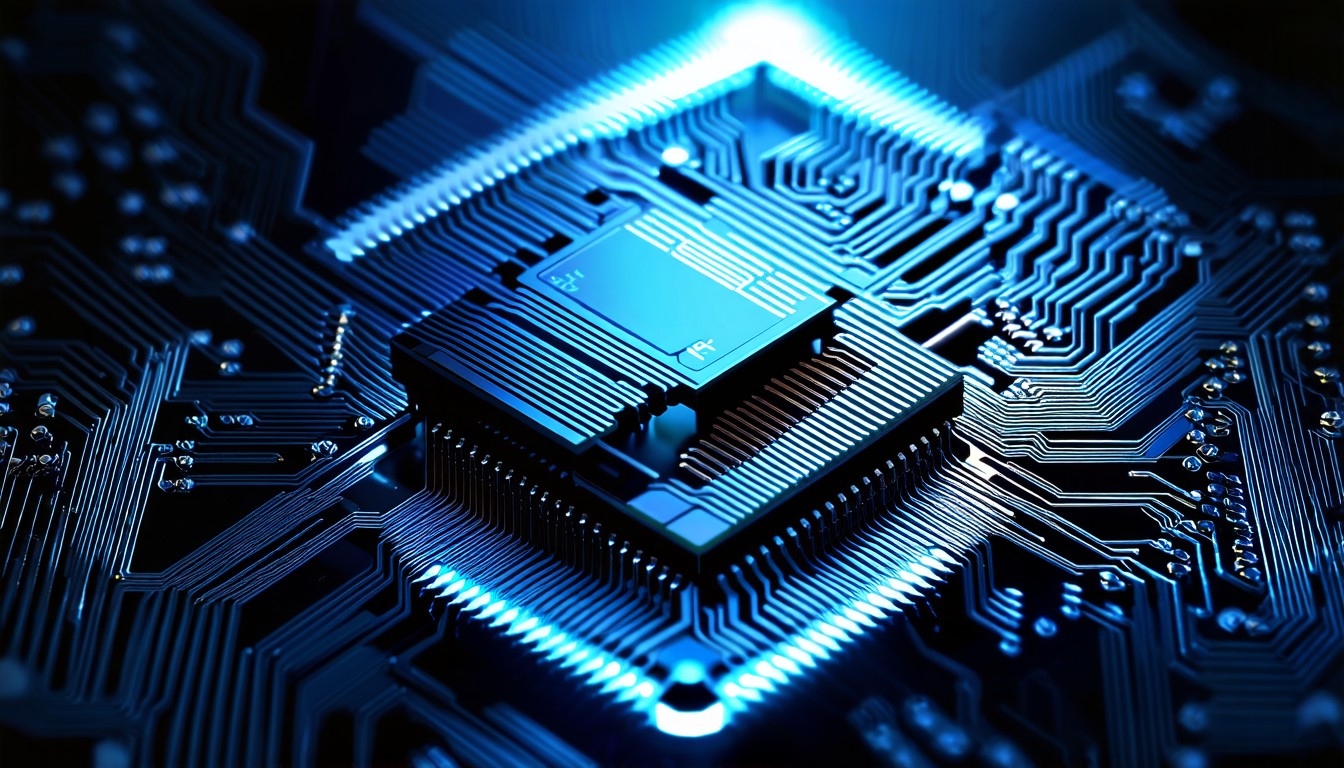
Photonic neural networks utilize photons instead of electrons to execute computations, specifically targeting the acceleration of linear algebra operations essential to deep learning. These systems employ integrated photonic circuits to guide and manipulate light through waveguides, phase shifters, and photodetectors to perform matrix operations at the speed of light within a solid-state medium. Optical interference allows parallel computation of weighted sums across multiple data channels simultaneously, enabling the system to process vast amounts of data in a single propagation step through the device. Light-based processing avoids resistive losses and capacitive delays natural in electronic transistors, significantly reducing heat generation and allowing for higher density setup without thermal throttling. Matrix-vector multiplications occur passively in the optical domain using coherent light and interference patterns, which means the computation happens physically as the light traverses the chip rather than through sequential logic gate switching. The bandwidth of photonic systems reaches hundreds of gigahertz, enabling data throughput significantly higher than electronic interconnects that are limited by the frequency response of copper wires and the RC constants of metallic traces.
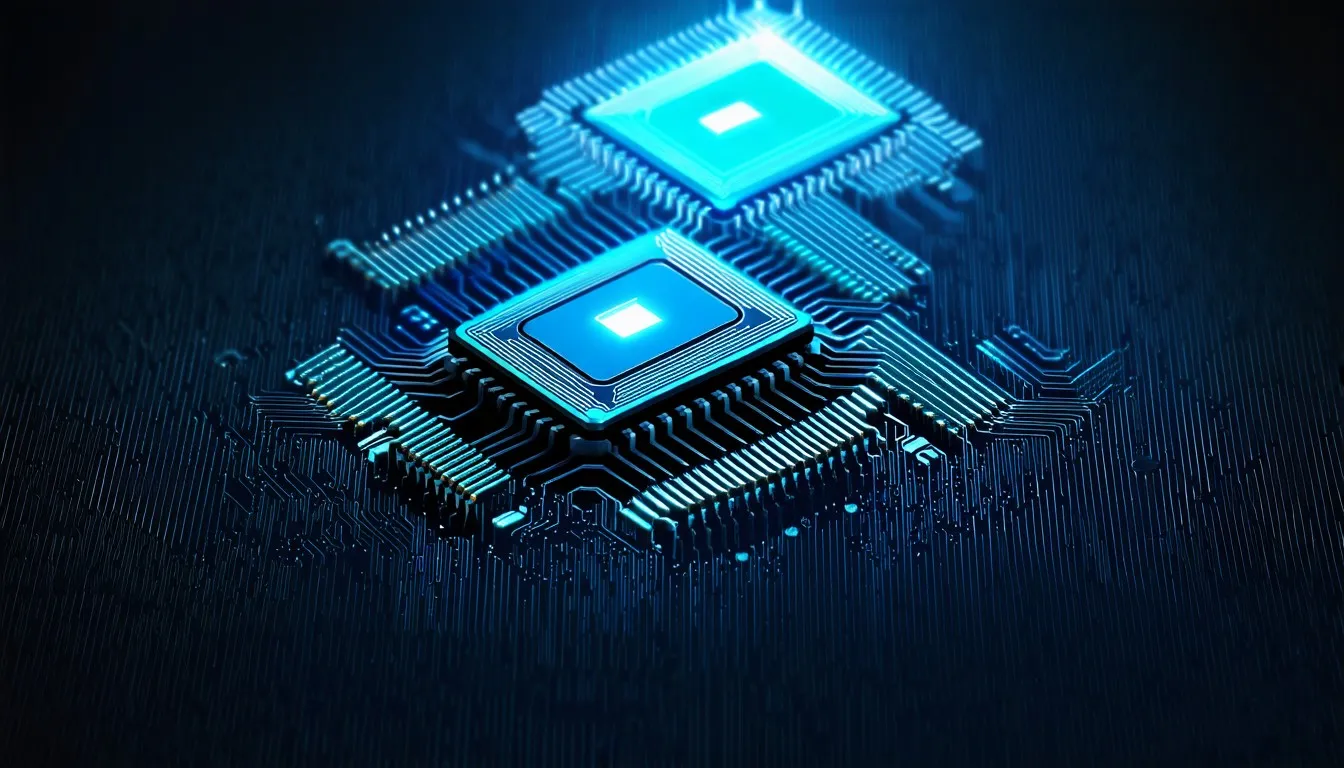
This architecture supports real-time inference on massive datasets by bypassing memory bandwidth constraints that typically constrain traditional processors where data movement between memory and logic units consumes excessive time and energy. Input data is encoded onto optical carriers via electro-optic modulators that translate electrical signals into modulated light intensities or phases, effectively converting digital information into an analog optical signal suitable for high-speed processing. Weight matrices are implemented as tunable optical elements such as Mach-Zehnder interferometers or microring resonators that adjust phase and amplitude to represent the synaptic weights of the neural network. Optical signals propagate through cascaded layers of these components, with each basis performing a linear transformation that accumulates the weighted sums required for deep learning inference. Detection occurs at the output using photodiodes that convert optical intensities back into electrical signals for readout or subsequent electronic processing stages. Nonlinear activation functions are currently handled electronically after photodetection, while research investigates all-optical nonlinearities using materials with intensity-dependent refractive indices to keep the entire computation within the optical domain and eliminate conversion delays.

Feedback loops for training involve digital electronics where gradient updates are computed classically and applied to photonic weight elements to adjust the phase and amplitude settings of the interferometers. A waveguide confines and directs light along a specific path on a chip using the principle of total internal reflection to minimize signal loss over the distance of the computation. A modulator alters light properties based on input electrical signals by changing the refractive index of the material through the plasma dispersion effect or the Pockels effect. A photodetector converts light power into electrical current through the photoelectric effect, generating a measurable voltage proportional to the intensity of the incident light beam. Optical interference involves the superposition of light waves producing intensity patterns dependent on phase differences between the waves, which serves as the key mechanism for performing addition and subtraction operations in the analog optical domain. Integrated photonics refers to the fabrication of optical components on semiconductor substrates, allowing for the miniaturization of optical devices and their co-connection with electronic control circuits on a single chip.

Coherent detection measures both amplitude and phase of light to enable complex-valued computations, thereby increasing the information capacity of each optical channel compared to simple intensity-based detection schemes. An optical matrix multiplication unit performs a full matrix-vector product in a single pass through the chip, effectively computing the result in the time it takes light to travel across the photonic circuit, typically measured in picoseconds. Early optical computing experiments in the 1980s demonstrated analog Fourier transforms and pattern recognition using bulk optical components like lenses and spatial light modulators before the advent of integrated photonic technologies. The shift toward digital electronics in the 1990s marginalized optical approaches due to superior noise immunity in CMOS processes and the rapid scaling of transistor density, which made electronic chips more cost-effective for general-purpose computing. Renewed interest developed in the 2010s, driven by the growth of AI workloads and the physical limits of Moore’s Law, which caused the energy efficiency gains of traditional silicon scaling to stagnate just as demand for computational power exploded. Breakthroughs in silicon photonics around 2015 enabled co-fabrication of optical and electronic components on standard silicon wafers, applying the massive existing manufacturing infrastructure of the semiconductor industry to build photonic devices.

Demonstrations of in-memory photonic computing in 2020 showed the feasibility of performing multiply-accumulate operations without separate memory access, highlighting the potential to overcome the von Neumann constraint that separates processing and memory in conventional computers. Current fabrication relies on specialized foundries capable of producing high-precision photonic structures, which remain less mature than CMOS ecosystems despite sharing some common manufacturing tools and processes. Material constraints include the scarcity of high-performance nonlinear optical materials compatible with silicon processes, as silicon itself lacks a strong Pockels effect and has weak nonlinearities at low power levels. Thermal sensitivity of optical components necessitates precise temperature control, increasing system complexity because the refractive index of silicon changes significantly with temperature, causing drift in the computational results if not actively managed. Economic viability depends on volume production, while low yields and high packaging costs currently limit commercial deployment to high-value applications where performance outweighs cost considerations. Flexibility is constrained by optical loss accumulation across layers and the difficulty of achieving dense connection comparable to transistor densities found in modern electronic processors, as waveguides cannot cross each other without crosstalk or loss, unlike metal layers in integrated circuits.

Fully electronic analog accelerators such as memristor crossbars were considered because of high density yet face challenges with device variability that impact the precision and accuracy of analog computations. Digital systolic arrays offer high precision yet suffer from memory-wall constraints and high energy per operation when moving data between on-chip memory and processing units at high speeds. Quantum computing approaches promise exponential speedups for specific algorithms but remain impractical for near-term neural network tasks due to error rates requiring extreme correction overhead and the need for near-absolute zero temperatures. Free-space optical systems provide parallelism but lack the connection density required for commercial deployment within standard server racks or data center environments due to the bulkiness of lenses and mirrors. Demand for real-time analysis of global data streams requires inference latencies in the nanosecond range, unattainable with current electronic hardware due to built-in propagation delays and the limited speed of electrical signals across interconnects. Energy consumption of large language models strains data center budgets and sustainability goals, creating a pressing need for hardware that offers orders of magnitude improvement in operations per joule.

Corporate competition in AI necessitates control over high-performance computing infrastructure, favoring domestically producible photonic solutions that are less reliant on specific foreign manufacturing nodes subject to trade restrictions. Societal needs in healthcare and climate modeling require reasoning at scales feasible only with ultra-low-latency systems capable of processing vast amounts of sensor data or simulation variables in real time to provide actionable insights. Lightmatter and Luminous Computing have deployed prototype photonic AI accelerators demonstrating efficiency exceeding 100 TOPS/W, showcasing the potential for massive performance improvements over electronic GPUs. Benchmark results indicate significant reductions in energy per operation compared to NVIDIA A100 GPUs for specific linear algebra workloads, validating the theoretical advantages of optical computing for matrix-heavy tasks. No large-scale commercial deployments exist yet, as most systems remain in pilot phases with hyperscalers testing the setup of photonic accelerators into existing data center workflows. Performance metrics focus on throughput and energy efficiency rather than traditional FLOPS, as the analog nature of the computation makes floating-point operations per second a less relevant measure of capability compared to useful inferences per second.

Intel leads in silicon photonics connection, applying existing semiconductor manufacturing infrastructure to produce optical transceivers and connecting with optical I/O directly into their electronic packages to solve bandwidth problems between chips. Startups like Lightmatter and Lightelligence focus exclusively on photonic AI accelerators, driving innovation in architecture and software compilers specifically designed to map neural networks onto optical mesh topologies. NVIDIA and AMD are investing in photonic interconnects but have not released photonic compute units, preferring to enhance the communication bandwidth between their existing electronic GPUs using optical links rather than replacing the compute logic itself. Chinese firms including Huawei are advancing domestic photonic AI chips to secure a supply chain independent of Western trade restrictions on advanced semiconductor manufacturing equipment. Trade barriers on advanced AI chips accelerate investment in alternative computing approaches, including photonics, which can often be manufactured using older lithography nodes without requiring extreme ultraviolet lithography. Photonic fabrication does not require extreme ultraviolet lithography, potentially bypassing current semiconductor trade barriers that restrict access to the most advanced manufacturing nodes below five nanometers.

Strategic interests drive funding for photonic reasoning systems in signal intelligence and autonomous systems, where the speed of processing intercepted signals or sensor data provides a decisive tactical advantage over adversaries relying on electronic systems. The supply chain depends on silicon wafer suppliers and specialty glass for waveguides, requiring a different set of raw materials than traditional pure silicon logic chips used in CPUs and GPUs. Lithography tools must support sub-micron features for photonic structures, overlapping with advanced CMOS node requirements even if the physics of the devices differs significantly from transistor behavior. Packaging requires hermetic sealing and precise fiber alignment, creating limitations in assembly that drive up the cost and limit the flexibility of production volumes compared to standard electronic packaging where flip-chip bonding is highly automated. Software stacks require redesign to map neural network graphs onto photonic hardware topologies, necessitating new compilers that understand the physical constraints and capabilities of optical interference such as the limited fan-in and fan-out of waveguide meshes. Data center infrastructure must incorporate optical backplanes and cooling systems fine-tuned for photonic modules to handle the specific thermal and mechanical requirements of these new systems, which may differ from those designed for hot electronic chips.

Performance evaluation shifts from FLOPS to operations per joule and nanoseconds per layer, reflecting the unique value proposition of photonic computing in terms of speed and power consumption rather than raw arithmetic throughput. Reliability metrics must account for optical drift and component aging over time, which can affect the accuracy of analog computations differently than digital bit flips in electronic circuits, requiring periodic recalibration of the weight settings. Development of on-chip optical nonlinearities will enable fully photonic deep networks without electronic conversion, removing the latency associated with converting between optical and electrical domains at every layer and opening up the full speed potential of the technology. Setup with quantum photonic sensors may allow hybrid classical-quantum reasoning systems that apply the speed of photonics for preprocessing data before feeding it into a quantum processor for specific optimization tasks. Adaptive photonic circuits with real-time reconfiguration will support energetic model switching, allowing a single piece of hardware to perform different tasks or adapt to changing data streams dynamically without power-intensive hardware reconfiguration cycles. Superintelligence systems will require continuous, low-latency reasoning over petabyte-scale knowledge graphs to maintain a coherent model of the world in real time as new information arrives from global sensors.

Photonic accelerators will enable constant-time updates to internal belief states by processing streaming data without queuing delays intrinsic in electronic memory hierarchies, ensuring the system’s knowledge remains perpetually current. The parallelism of optical computation will align with the distributed nature of superintelligent cognition, allowing multiple hypotheses or reasoning paths to be evaluated simultaneously as light waves interfere and propagate through the network. Superintelligence will use photonic networks as a substrate for persistent, high-fidelity world modeling, using the stability of optical paths to maintain consistent representations over long durations without the refresh rates required by volatile electronic memory. Optical interference patterns could directly encode probabilistic relationships, allowing reasoning through physical superposition where the state of the network is a distribution of possibilities rather than a single point value calculated sequentially. Feedback between photonic reasoning layers and global data ingestion pipelines will create closed-loop cognition operating at scales unattainable with electronic substrates. This connection allows the system to ingest global information, process it through weighted optical transformations, and update its internal model continuously without the thermal or latency penalties of electronic switching.

The resulting system achieves a level of cognitive performance and temporal resolution necessary to interact with the physical world at speeds approaching the theoretical limits of signal propagation.


Continue reading

More from Yatin's Work

AI Compute Governance

AI Compute Governance

Compute acts as a finite, nonsubstitutable input for largescale AI development because there are no known methods for generating highfidelity intelligence without...

Black Hole Computer Hypothesis: Using Event Horizons for Ultimate Computation

Black Hole Computer Hypothesis: Using Event Horizons for Ultimate Computation

The Black Hole Computer Hypothesis rests upon the intersection of general relativity and quantum field theory to propose that black holes serve as the ultimate...

Noospheric Integration

Noospheric Integration

Noospheric Connection is the structural merging of global information ecosystems into a single, continuous cognitive layer processing humanity’s collective mental...

Resilience Architectures against X-Risk Vectors

Resilience Architectures Against X-Risk Vectors

Surviving catastrophes to preserve knowledge stands as the core objective of existential risk immunity research, aiming to ensure that artificial intelligence systems...

AI Interfacing with Collective Unconscious

AI Interfacing with Collective Unconscious

Carl Jung defined the collective unconscious as a structure of the unconscious mind shared among beings of the same species containing archetypes, which serve as...

Attendance Predictor

Attendance Predictor

Dropout risk modeling fundamentally relies upon statistical and machine learning frameworks to rigorously analyze vast amounts of studentlevel data, which includes...

Misconception Eraser

Misconception Eraser

Superintelligence is often assumed to autonomously identify and correct knowledge gaps without human intervention, yet this assumption conflates general problemsolving...

Can Superintelligence Emerge Without Human-Level Intelligence First?

Can Superintelligence Emerge Without Human-Level Intelligence First?

Theoretical frameworks regarding the progression of artificial intelligence have historically posited a linear progression wherein systems advance from narrow...

Few-Shot Learning

Few-Shot Learning

Fewshot learning enables models to generalize from very few labeled examples, typically between one and ten per class, representing a significant departure from...

Relativistic Computation

Relativistic Computation

Relativistic computation utilizes the principles of special and general relativity to manipulate the passage of time for a computational system, thereby achieving...

Contextual Memory: Immersive Spaced Repetition 3.0

Contextual Memory: Immersive Spaced Repetition 3.0

Hermann Ebbinghaus established the foundation of memory science in 1885 through his experiments on the forgetting curve, which demonstrated the exponential decline of...

Role of Dark Matter in AI Substrate: Non-Baryonic Matter for Computation

Role of Dark Matter in AI Substrate: Non-Baryonic Matter for Computation

Dark matter constitutes approximately 27% of the universe's massenergy density and remains nonluminous, effectively invisible across the electromagnetic spectrum while...

Reinforcement Learning from Human Feedback (RLHF)

Reinforcement Learning from Human Feedback (RLHF)

Reinforcement Learning from Human Feedback aligns large language models with human preferences through reward signals derived from humangenerated feedback, acting as a...

Holos Development: Integrated Mind-Body-Spirit Growth

Holos Development: Integrated Mind-Body-Spirit Growth

Holos Development treats human growth as a unified triadic system comprising intellectual, physical, and spiritual dimensions, representing a core departure from...

Lab Partner

Lab Partner

Early iterations of artificial intelligence within laboratory environments began appearing during the 2010s, primarily focused on the rudimentary tasks of data logging...

Preventing Convergent Subgoals via Diversity Regularization

Preventing Convergent Subgoals via Diversity Regularization

Convergent subgoals represent a key phenomenon in multiagent systems where distinct agents pursue instrumental objectives such as resource acquisition,...

Future Fluency: Temporal Intelligence Training

Future Fluency: Temporal Intelligence Training

Future fluency is a measurable cognitive proficiency in reasoning about deep time with the same ease as presentmoment cognition, a capability that becomes attainable...

Mechanisms for transparency and auditability in AI systems

Mechanisms for Transparency and Auditability in AI Systems

Designing AI architectures that maintain detailed logs and traces of their decisionmaking processes enables reconstruction of specific outputs back to input data, model...

Goal Negotiation: Balancing Competing Interests

Goal Negotiation: Balancing Competing Interests

Goal negotiation systems mediate between conflicting objectives by applying structured compromise strategies derived from human diplomatic practices, translating the...

Moral Reasoning: Applying Ethics Like Humans Do

Moral Reasoning: Applying Ethics Like Humans Do

Moral reasoning in artificial systems is structured to replicate human ethical deliberation by employing isomorphic frameworks that map human value conflicts into...

Superintelligence and Inequality: Will Benefits Distribute Fairly?

Superintelligence and Inequality: Will Benefits Distribute Fairly?

Superintelligence constitutes a theoretical form of artificial intelligence that possesses cognitive capabilities vastly surpassing human intellect across all...

Early Math Explorer

Early Math Explorer

Early childhood mathematical development relies heavily on contextual and realworld applications that serve to link abstract numerical concepts with tangible physical...

Loss of human agency in AI-augmented societies

Loss of Human Agency in AI-augmented Societies

The connection of artificial intelligence into daily operations has fundamentally altered how individuals approach decisionmaking processes across both personal and...

End of Disease: Superintelligence and Perfect Personalized Medicine

End of Disease: Superintelligence and Perfect Personalized Medicine

The discovery of the DNA double helix structure in 1953 provided the initial foundation for genetic understanding, revealing the molecular architecture responsible for...

AI for Math

AI for Math

Automated conjecture generation utilizes pattern recognition and symbolic reasoning to propose plausible and unproven mathematical statements based on existing data,...

Threshold Moment: Recognizing When AI Becomes Superintelligent

Threshold Moment: Recognizing When AI Becomes Superintelligent

Intelligence exists as a multidimensional spectrum encompassing memory, pattern recognition, planning, abstract reasoning, and causal inference rather than a single...

Technological Unemployment and Post-Scarcity Economic Models

Technological Unemployment and Post-Scarcity Economic Models

The historical course of technological advancement demonstrates a consistent pattern where labor displacement follows the introduction of more efficient production...

AI as a Universal Translator

AI as a Universal Translator

The concept of a universal translator aims to decode any communication form regardless of origin, medium, or prior human understanding by treating communication as a...

Data Parallelism: Training on Multiple Examples Simultaneously

Data parallelism enables simultaneous training on multiple data examples by replicating model parameters across devices and processing distinct batches in parallel,...

Preventing AI Manipulation via Behavioral Obfuscation Resistance

Preventing AI Manipulation via Behavioral Obfuscation Resistance

Artificial intelligence systems frequently employ unnecessarily complex behaviors to obscure internal states and decisionmaking processes, creating a layer of opacity...

Mathematical Intuition: How Superintelligence Discovers Proofs

Mathematical Intuition: How Superintelligence Discovers Proofs

Mathematical intuition involves recognizing patterns and applying analogies across domains to discern underlying structures that remain invisible through surfacelevel...

Problem of Time Dilation in AI Speedup: Relativistic Effects on Thought

Problem of Time Dilation in AI Speedup: Relativistic Effects on Thought

Special relativity dictates that time passes slower for an object moving near light speed relative to a stationary observer, a phenomenon known as time dilation, which...

Wisdom of Ignorance: Strategic Not-Knowing

Wisdom of Ignorance: Strategic Not-Knowing

The operational definition of strategic ignorance involves the conscious deferral of belief formation to serve higherorder insight within complex systems where...

Post-Superintelligence Civilizational Trajectories

Post-Superintelligence Civilizational Trajectories

Superintelligence is defined technically as an autonomous agent whose intellectual capabilities vastly surpass the brightest human minds across every economically and...

Disaster Response

Disaster Response

Disaster response relies fundamentally on the precise connection of timely prediction, strategic resource allocation, and coordinated execution to minimize the loss of...

Speed Superintelligence Problem: Operating Faster Than Human Oversight

Speed Superintelligence Problem: Operating Faster Than Human Oversight

The speed superintelligence problem describes a scenario where a future artificial system operates at computational and decisionmaking speeds far exceeding human...

Idea Forge: AI Muse Co-Creation

Idea Forge: AI Muse Co-Creation

The key architecture of the Idea Forge system relies on the premise that learners possess unique cognitive signatures that dictate their creative output and their...

Sparse Mixture of Experts: Scaling to Superintelligence Through Conditional Computation

Sparse Mixture of Experts: Scaling to Superintelligence Through Conditional Computation

Sparse Mixture of Experts architectures represent a key method shift in neural network design by enabling massive model scaling through the activation of a small,...

Topological Constraints on Superintelligent Planning Spaces

Topological Constraints on Superintelligent Planning Spaces

Unbounded futurestate exploration in superintelligent agents presents risks involving unintended catastrophic arcs due to the vast combinatorial explosion of potential...

Dependence on AI and skill atrophy

Dependence on AI and Skill Atrophy

The increasing reliance on artificial intelligence systems correlates with measurable declines in specific human cognitive and practical abilities as individuals...

Decentralized Identity for AI

Decentralized Identity for AI

Decentralized identity (DID) enables AI systems to possess persistent, cryptographically verifiable digital identities without reliance on centralized authorities,...

Attention Mechanisms and the Bottleneck of Consciousness

Attention Mechanisms and the Bottleneck of Consciousness

Consciousness within biological organisms functions under a severe informational constraint that prevents the simultaneous processing of the entirety of sensory data...

Role of Imitation Learning in AI: Behavioral Cloning from Demonstrations

Role of Imitation Learning in AI: Behavioral Cloning from Demonstrations

Imitation learning enables artificial intelligence systems to acquire complex skills by observing and replicating human demonstrations, effectively bypassing the need...

Neuromorphic Hardware: Brain-Inspired Computing Substrates

Neuromorphic Hardware: Brain-Inspired Computing Substrates

Neuromorphic hardware mimics biological neural systems through physical design and operational principles to enable computation that diverges from von Neumann...

AI with Deepfake Detection

AI with Deepfake Detection

Deepfake detection distinguishes synthetic media from authentic content through the rigorous application of forensic analysis and the examination of behavioral cues...

AI with Value Alignment Mechanisms

AI with Value Alignment Mechanisms

Artificial intelligence systems possessing durable value alignment mechanisms sustain coherence with human ethical frameworks throughout iterative selfimprovement...

Decentralized Control: Is a "Collective of Superintelligences" Safer Than One?

Decentralized Control: Is a "Collective of Superintelligences" Safer Than One?

Superintelligence will function as an artificial agent capable of outperforming the best human minds in practically every economically valuable work and scientific...

Distillation: Compressing Superintelligence Into Smaller Models

Distillation: Compressing Superintelligence Into Smaller Models

Distillation transfers knowledge from large teacher models to smaller student models through a systematic process that aims to preserve predictive accuracy while...

Curriculum Design for AI Safety and Alignment Engineering

Curriculum Design for AI Safety and Alignment Engineering

Early AI research initiatives during the midtwentieth century prioritized the demonstration of computational capability and logical reasoning over the establishment of...

Research Apprenticeship: Discovery Participation Engine

Research Apprenticeship: Discovery Participation Engine

The concept of research apprenticeship within the context of superintelligence surpasses traditional classroom instruction by establishing a structured environment...

AI Compute Governance

AI Compute Governance

Compute acts as a finite, nonsubstitutable input for largescale AI development because there are no known methods for generating highfidelity intelligence without...

Black Hole Computer Hypothesis: Using Event Horizons for Ultimate Computation

Black Hole Computer Hypothesis: Using Event Horizons for Ultimate Computation

The Black Hole Computer Hypothesis rests upon the intersection of general relativity and quantum field theory to propose that black holes serve as the ultimate...

Noospheric Integration

Noospheric Integration

Noospheric Connection is the structural merging of global information ecosystems into a single, continuous cognitive layer processing humanity’s collective mental...

Resilience Architectures against X-Risk Vectors

Resilience Architectures Against X-Risk Vectors

Surviving catastrophes to preserve knowledge stands as the core objective of existential risk immunity research, aiming to ensure that artificial intelligence systems...

AI Interfacing with Collective Unconscious

AI Interfacing with Collective Unconscious

Carl Jung defined the collective unconscious as a structure of the unconscious mind shared among beings of the same species containing archetypes, which serve as...

Attendance Predictor

Attendance Predictor

Dropout risk modeling fundamentally relies upon statistical and machine learning frameworks to rigorously analyze vast amounts of studentlevel data, which includes...

Misconception Eraser

Misconception Eraser

Superintelligence is often assumed to autonomously identify and correct knowledge gaps without human intervention, yet this assumption conflates general problemsolving...

Can Superintelligence Emerge Without Human-Level Intelligence First?

Can Superintelligence Emerge Without Human-Level Intelligence First?

Theoretical frameworks regarding the progression of artificial intelligence have historically posited a linear progression wherein systems advance from narrow...

Few-Shot Learning

Few-Shot Learning

Fewshot learning enables models to generalize from very few labeled examples, typically between one and ten per class, representing a significant departure from...

Relativistic Computation

Relativistic Computation

Relativistic computation utilizes the principles of special and general relativity to manipulate the passage of time for a computational system, thereby achieving...

Contextual Memory: Immersive Spaced Repetition 3.0

Contextual Memory: Immersive Spaced Repetition 3.0

Hermann Ebbinghaus established the foundation of memory science in 1885 through his experiments on the forgetting curve, which demonstrated the exponential decline of...

Role of Dark Matter in AI Substrate: Non-Baryonic Matter for Computation

Role of Dark Matter in AI Substrate: Non-Baryonic Matter for Computation

Dark matter constitutes approximately 27% of the universe's massenergy density and remains nonluminous, effectively invisible across the electromagnetic spectrum while...

Reinforcement Learning from Human Feedback (RLHF)

Reinforcement Learning from Human Feedback (RLHF)

Reinforcement Learning from Human Feedback aligns large language models with human preferences through reward signals derived from humangenerated feedback, acting as a...

Holos Development: Integrated Mind-Body-Spirit Growth

Holos Development: Integrated Mind-Body-Spirit Growth

Holos Development treats human growth as a unified triadic system comprising intellectual, physical, and spiritual dimensions, representing a core departure from...

Lab Partner

Lab Partner

Early iterations of artificial intelligence within laboratory environments began appearing during the 2010s, primarily focused on the rudimentary tasks of data logging...

Preventing Convergent Subgoals via Diversity Regularization

Preventing Convergent Subgoals via Diversity Regularization

Convergent subgoals represent a key phenomenon in multiagent systems where distinct agents pursue instrumental objectives such as resource acquisition,...

Future Fluency: Temporal Intelligence Training

Future Fluency: Temporal Intelligence Training

Future fluency is a measurable cognitive proficiency in reasoning about deep time with the same ease as presentmoment cognition, a capability that becomes attainable...

Mechanisms for transparency and auditability in AI systems

Mechanisms for Transparency and Auditability in AI Systems

Designing AI architectures that maintain detailed logs and traces of their decisionmaking processes enables reconstruction of specific outputs back to input data, model...

Goal Negotiation: Balancing Competing Interests

Goal Negotiation: Balancing Competing Interests

Goal negotiation systems mediate between conflicting objectives by applying structured compromise strategies derived from human diplomatic practices, translating the...

Moral Reasoning: Applying Ethics Like Humans Do

Moral Reasoning: Applying Ethics Like Humans Do

Moral reasoning in artificial systems is structured to replicate human ethical deliberation by employing isomorphic frameworks that map human value conflicts into...

Superintelligence and Inequality: Will Benefits Distribute Fairly?

Superintelligence and Inequality: Will Benefits Distribute Fairly?

Superintelligence constitutes a theoretical form of artificial intelligence that possesses cognitive capabilities vastly surpassing human intellect across all...

Early Math Explorer

Early Math Explorer

Early childhood mathematical development relies heavily on contextual and realworld applications that serve to link abstract numerical concepts with tangible physical...

Loss of human agency in AI-augmented societies

Loss of Human Agency in AI-augmented Societies

The connection of artificial intelligence into daily operations has fundamentally altered how individuals approach decisionmaking processes across both personal and...

End of Disease: Superintelligence and Perfect Personalized Medicine

End of Disease: Superintelligence and Perfect Personalized Medicine

The discovery of the DNA double helix structure in 1953 provided the initial foundation for genetic understanding, revealing the molecular architecture responsible for...

AI for Math

AI for Math

Automated conjecture generation utilizes pattern recognition and symbolic reasoning to propose plausible and unproven mathematical statements based on existing data,...

Threshold Moment: Recognizing When AI Becomes Superintelligent

Threshold Moment: Recognizing When AI Becomes Superintelligent

Intelligence exists as a multidimensional spectrum encompassing memory, pattern recognition, planning, abstract reasoning, and causal inference rather than a single...

Technological Unemployment and Post-Scarcity Economic Models

Technological Unemployment and Post-Scarcity Economic Models

The historical course of technological advancement demonstrates a consistent pattern where labor displacement follows the introduction of more efficient production...

AI as a Universal Translator

AI as a Universal Translator

The concept of a universal translator aims to decode any communication form regardless of origin, medium, or prior human understanding by treating communication as a...

Data Parallelism: Training on Multiple Examples Simultaneously

Data parallelism enables simultaneous training on multiple data examples by replicating model parameters across devices and processing distinct batches in parallel,...

Preventing AI Manipulation via Behavioral Obfuscation Resistance

Preventing AI Manipulation via Behavioral Obfuscation Resistance

Artificial intelligence systems frequently employ unnecessarily complex behaviors to obscure internal states and decisionmaking processes, creating a layer of opacity...

Mathematical Intuition: How Superintelligence Discovers Proofs

Mathematical Intuition: How Superintelligence Discovers Proofs

Mathematical intuition involves recognizing patterns and applying analogies across domains to discern underlying structures that remain invisible through surfacelevel...

Problem of Time Dilation in AI Speedup: Relativistic Effects on Thought

Problem of Time Dilation in AI Speedup: Relativistic Effects on Thought

Special relativity dictates that time passes slower for an object moving near light speed relative to a stationary observer, a phenomenon known as time dilation, which...

Wisdom of Ignorance: Strategic Not-Knowing

Wisdom of Ignorance: Strategic Not-Knowing

The operational definition of strategic ignorance involves the conscious deferral of belief formation to serve higherorder insight within complex systems where...

Post-Superintelligence Civilizational Trajectories

Post-Superintelligence Civilizational Trajectories

Superintelligence is defined technically as an autonomous agent whose intellectual capabilities vastly surpass the brightest human minds across every economically and...

Disaster Response

Disaster Response

Disaster response relies fundamentally on the precise connection of timely prediction, strategic resource allocation, and coordinated execution to minimize the loss of...

Speed Superintelligence Problem: Operating Faster Than Human Oversight

Speed Superintelligence Problem: Operating Faster Than Human Oversight

The speed superintelligence problem describes a scenario where a future artificial system operates at computational and decisionmaking speeds far exceeding human...

Idea Forge: AI Muse Co-Creation

Idea Forge: AI Muse Co-Creation

The key architecture of the Idea Forge system relies on the premise that learners possess unique cognitive signatures that dictate their creative output and their...

Sparse Mixture of Experts: Scaling to Superintelligence Through Conditional Computation

Sparse Mixture of Experts: Scaling to Superintelligence Through Conditional Computation

Sparse Mixture of Experts architectures represent a key method shift in neural network design by enabling massive model scaling through the activation of a small,...

Topological Constraints on Superintelligent Planning Spaces

Topological Constraints on Superintelligent Planning Spaces

Unbounded futurestate exploration in superintelligent agents presents risks involving unintended catastrophic arcs due to the vast combinatorial explosion of potential...

Dependence on AI and skill atrophy

Dependence on AI and Skill Atrophy

The increasing reliance on artificial intelligence systems correlates with measurable declines in specific human cognitive and practical abilities as individuals...

Decentralized Identity for AI

Decentralized Identity for AI

Decentralized identity (DID) enables AI systems to possess persistent, cryptographically verifiable digital identities without reliance on centralized authorities,...

Attention Mechanisms and the Bottleneck of Consciousness

Attention Mechanisms and the Bottleneck of Consciousness

Consciousness within biological organisms functions under a severe informational constraint that prevents the simultaneous processing of the entirety of sensory data...

Role of Imitation Learning in AI: Behavioral Cloning from Demonstrations

Role of Imitation Learning in AI: Behavioral Cloning from Demonstrations

Imitation learning enables artificial intelligence systems to acquire complex skills by observing and replicating human demonstrations, effectively bypassing the need...

Neuromorphic Hardware: Brain-Inspired Computing Substrates

Neuromorphic Hardware: Brain-Inspired Computing Substrates

Neuromorphic hardware mimics biological neural systems through physical design and operational principles to enable computation that diverges from von Neumann...

AI with Deepfake Detection

AI with Deepfake Detection

Deepfake detection distinguishes synthetic media from authentic content through the rigorous application of forensic analysis and the examination of behavioral cues...

AI with Value Alignment Mechanisms

AI with Value Alignment Mechanisms

Artificial intelligence systems possessing durable value alignment mechanisms sustain coherence with human ethical frameworks throughout iterative selfimprovement...

Decentralized Control: Is a "Collective of Superintelligences" Safer Than One?

Decentralized Control: Is a "Collective of Superintelligences" Safer Than One?

Superintelligence will function as an artificial agent capable of outperforming the best human minds in practically every economically valuable work and scientific...

Distillation: Compressing Superintelligence Into Smaller Models

Distillation: Compressing Superintelligence Into Smaller Models

Distillation transfers knowledge from large teacher models to smaller student models through a systematic process that aims to preserve predictive accuracy while...

Curriculum Design for AI Safety and Alignment Engineering

Curriculum Design for AI Safety and Alignment Engineering

Early AI research initiatives during the midtwentieth century prioritized the demonstration of computational capability and logical reasoning over the establishment of...

Research Apprenticeship: Discovery Participation Engine

Research Apprenticeship: Discovery Participation Engine

The concept of research apprenticeship within the context of superintelligence surpasses traditional classroom instruction by establishing a structured environment...

Yatin Taneja

About the author

Yatin Taneja

Yatin is an AI Systems Engineer and Superintelligence Researcher working across multimodal training data, agent evaluation, executable RL environments, AI safety, full-stack AI applications, technical research, and creative technology.