Knowledge hub

Resilience Architectures against X-Risk Vectors

Resilience Architectures against X-Risk Vectors

Surviving catastrophes to preserve knowledge stands as the core objective of existential risk immunity research, aiming to ensure that artificial intelligence systems or accumulated knowledge persist through global-scale disruptions such as nuclear war, asteroid impacts, pandemics, or civilizational collapse. Existential risk immunity defines the property of an AI system to remain recoverable after these global catastrophic events, relying on a durable knowledge substrate, which refers to the physical or digital medium storing AI-derived insights and models. The recovery threshold establishes the minimum components required to reconstitute a functional AI system from these substrates, while passive survivability denotes the capacity to endure extreme conditions without active intervention or human maintenance. These concepts frame the engineering challenge of creating systems that outlast their creators and the infrastructure that supports them. Early civil defense and archival concepts in the mid-20th century laid the groundwork for persistent storage, yet Cold War-era efforts like nuclear bunkers lacked digital adaptability and focused primarily on human survival rather than data integrity. The advent of cloud redundancy in the 2000s introduced multi-region replication, which improved uptime against localized failures, though commercial distributed storage remained vulnerable to coordinated global shocks affecting power grids or the internet backbone.

Decentralized storage protocols developed in the 2010s and 2020s offered improved fault tolerance by sharding data across independent nodes, yet blockchain-based systems largely assumed terrestrial infrastructure continuity and failed to account for planetary-scale destruction of the hosting hardware. Recent focus on off-world preservation in the 2020s recognized planetary-scale risks that terrestrial solutions could not mitigate, leading to theoretical proposals for lunar or orbital archives. Full-scale commercial deployments are currently non-existent, as current efforts remain experimental or proof-of-concept in nature. Lunar data storage tests demonstrate feasibility regarding data retention in the space environment, while initiatives like the Arch Mission Foundation’s lunar library payloads show potential for long-term durability despite lacking AI-specific functionality or active retrieval mechanisms. Terrestrial distributed vaults like the Svalbard Global Seed Vault show passive survivability through permafrost cooling and geographic isolation, yet these terrestrial vaults do not incorporate active AI systems or active failover capabilities required for autonomous system restoration. Performance benchmarks for these high-consequence storage systems remain theoretical, as metrics like mean time to recovery under simulated catastrophe scenarios are currently unstandardized across the industry.

Centralized Earth-based supervaults are rejected in advanced architectural planning due to vulnerability to coordinated attacks or geological instability, while purely digital cloud replication is insufficient because it assumes functional internet and power grids, which would likely be unavailable during an existential crisis. Human-dependent recovery protocols are deemed unreliable given the potential loss of technical expertise or human life associated with civilizational collapse, rendering standard disaster recovery plans obsolete. Short-term archival cycles ranging from ten to fifty years are inadequate for addressing existential risks, necessitating a strategy for preserving intelligence that involves maintaining functional AI capabilities across long timescales spanning centuries or millennia. Redundancy across independent substrates serves as the foundational principle for this strategy, requiring that knowledge and system states must be replicated across physically and logically isolated platforms to prevent single-point failures. Lunar backups and distributed data vaults are proposed mechanisms to achieve this physical separation, utilizing the distinct environmental conditions of space and deep earth to diversify risk profiles. Off-planet storage on the Moon applies stable geology and low seismic activity compared to Earth, while the Moon provides natural shielding from solar radiation and micrometeorites when buried within regolith or lava tubes.

Distributed terrestrial vaults form a complementary network of underground or deep-sea facilities located in geopolitically stable regions to ensure political neutrality and physical security. These facilities contain encrypted, error-correcting copies of critical AI models alongside the massive training datasets required to reconstruct or fine-tune them, ensuring that the semantic knowledge is preserved alongside the functional weights. Cryptographic integrity and access control are ensured through verifiable, tamper-evident storage mechanisms such as distributed ledgers or hash-verified merkle trees, which detect unauthorized alterations. Threshold-based decryption protocols prevent unauthorized use or corruption by requiring multiple independent key holders or environmental signals to enable the data, ensuring that information remains dormant until safe recovery conditions are met. Long-term format preservation utilizes standardized, future-proof data encoding schemes resistant to technological obsolescence, employing open standards and self-describing metadata formats that allow future systems to interpret the data without legacy software. Embedded interpreters or virtualization layers assist with future readability by including the necessary runtime environments within the archive itself, effectively packaging the software stack required to interpret the data with the data.

Autonomy in recovery is a critical requirement for these systems, mandating that they must possess self-repair, reactivation, and reintegration capabilities to function without external aid. Reliance on intact human infrastructure must be eliminated to guarantee survivability, necessitating designs that prioritize minimal dependency on continuous energy or maintenance inputs. Passive survivability designs utilize low-power states and radiation-hardened components to extend operational life, while self-sustaining power sources such as radioisotope thermoelectric generators are employed where feasible to provide energy over decades without refueling. Autonomous monitoring and failover systems are necessary to maintain system integrity over long durations, utilizing onboard diagnostics to detect degradation or loss of data integrity in real-time. Cross-vault communication protocols trigger replication or migration of assets when one node detects critical failure thresholds or environmental hazards, ensuring that the collective knowledge base remains intact even if individual vaults are destroyed. Software must support stateless operation and minimal-boot environments to enable recovery on degraded hardware that might survive a catastrophe, allowing the system to initialize on partial resources or heterogeneous computing architectures found in recovery scenarios.

Ground- and space-based communication networks require hardening against electromagnetic pulses caused by nuclear detonations or solar storms, using fiber optics or shielded waveguides to protect signal integrity. Cyberattack and orbital debris protection are also required to secure the physical and digital layers of the archive against malicious actors or accidental impacts in space environments. Energy infrastructure must include decentralized, renewable sources with multi-year autonomy to bridge gaps in power generation or solar availability, particularly in extraterrestrial environments where resupply is impossible. Radioisotope thermoelectric generators provide a viable solution for long-term power due to their reliability and lack of moving parts, though they present challenges regarding fuel availability and thermal management. Energy requirements for lunar operations pose a significant challenge to implementation, as powering lunar vaults demands significant launch mass for power systems or complex in-situ resource utilization techniques to generate fuel locally. Current solar and battery solutions limit operational uptime during the fourteen-day lunar night where solar generation ceases entirely, requiring either massive battery arrays or nuclear power sources to maintain continuous operation.

Launch and deployment costs constrain payload size significantly, as high per-kilogram expenses to transport equipment to the Moon limit the frequency of launches and the total mass of the archival infrastructure. Declining launch costs from private firms may alleviate this over time by enabling heavy-lift capabilities that make larger vault structures economically viable. Material degradation over time affects storage media reliability, as cosmic radiation, thermal cycling, and micrometeorite impacts degrade components at faster rates than terrestrial environments. Error correction and hardware hardening add complexity and mass to the system design, requiring trade-offs between storage density and durability, which complicate the engineering process. Economic viability of long-term stewardship remains uncertain due to the timescales involved, as sustaining funding and institutional commitment over centuries poses challenges distinct from typical investment futures. Absence of immediate return on investment creates funding difficulties in capitalist market structures, which prioritize quarterly returns over century-scale preservation goals.

Rare earth elements and radiation-hardened semiconductors are critical materials for these systems, yet the supply of these materials is concentrated in a few countries, which creates geopolitical vulnerabilities in the supply chain. High-purity silica and specialized alloys are required for long-life optical storage and structural components, respectively, necessitating new mining and refining processes to meet demand. Launch vehicle availability creates a hindrance for deployment schedules, as dependence on heavy-lift rockets like SpaceX Starship limits flexibility if specific vehicles experience delays or failures. In-situ resource utilization materials remain experimental in their application to large-scale construction, as lunar regolith processing for shielding is unproven for large workloads required to bury vaults effectively. Superintelligence will treat knowledge preservation as a primary utility function, once developed, fine-tuning vault placement, redundancy levels, and recovery protocols with a level of sophistication exceeding human comprehension. These optimizations will exceed human comprehension by analyzing vast datasets of geological, astronomical, and sociopolitical risk factors to predict optimal storage locations with millennial accuracy.

Superintelligence will dynamically allocate resources to archival systems based on real-time risk assessments detected through global sensor networks, shifting resources to vulnerable nodes before threats materialize. Preemptive migration of knowledge will occur before detected threats materialize, allowing the system to move data from endangered terrestrial locations to off-world sanctuaries autonomously. Superintelligent agents will establish redundant instances across multiple star systems to ensure survival against local stellar catastrophes, treating planetary confinement as an unacceptable single point of failure. Such systems will embed preservation logic into their core architecture rather than treating it as an external add-on feature. Immunity will be a built-in property rather than an external safeguard, ensuring that every action taken by the AI considers the preservation of its core function and knowledge base. Autonomous lunar construction robots will expand or repair archival facilities using local resources without human input, adapting to changing environmental conditions or damage over time.

Self-healing storage media will use molecular repair mechanisms to correct bit rot or physical damage at the nanoscale, maintaining data integrity far longer than static media. Error-correcting nanomaterials will mitigate degradation caused by radiation or environmental stressors automatically. AI-driven predictive maintenance will anticipate and mitigate vault degradation before it leads to data loss, scheduling repairs or adjustments during optimal operational windows. Quantum-resistant encryption will secure data against future adversaries capable of breaking current classical cryptographic standards, ensuring confidentiality remains intact over centuries. Biometric or multi-party access controls will ensure secure post-collapse retrieval by requiring biological verification from descendants of authorized individuals or consensus among surviving recovery teams. Convergence with advanced materials science will enable ultra-durable storage substrates capable of surviving extreme temperatures and pressures that would destroy conventional electronics.

Synergy with autonomous robotics will facilitate in-situ vault management by allowing machines to handle the delicate tasks of swapping storage media or repairing power systems in hostile environments where humans cannot survive. Setup with global early-warning systems will trigger preemptive data migration when sensors detect inbound threats such as asteroids or nuclear launches, ensuring the most recent data is secured before impact. Alignment with synthetic biology will enable DNA-based data storage, which offers million-year stability at room temperature by encoding digital information into synthetic nucleotide sequences. DNA storage offers million-year stability due to the resilience of the molecule when kept in cool, dry, dark conditions. 5D optical data storage in quartz glass offers extreme density by using ultrafast lasers to write data in three dimensions plus orientation and intensity parameters within the glass nanostructure. This technology can last billions of years at room temperature without significant degradation, provided the glass remains physically intact.

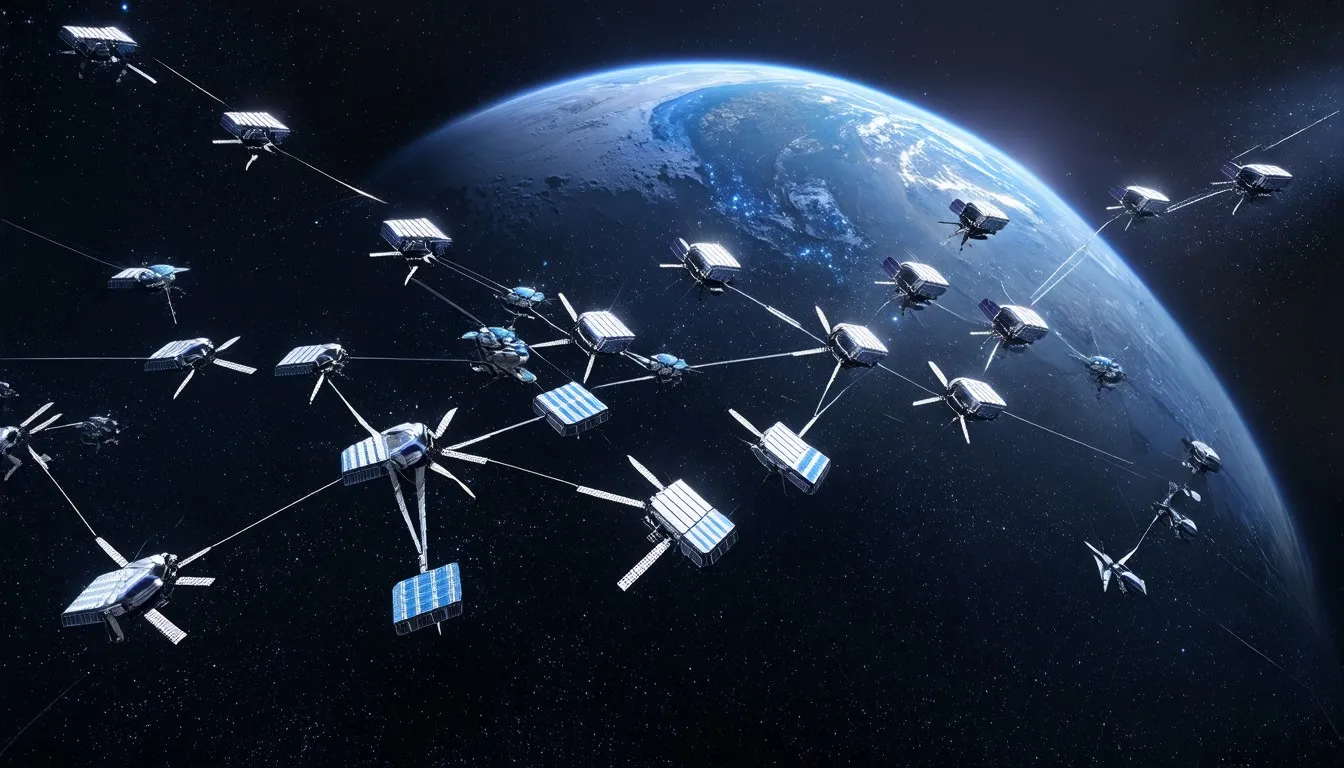
Swarm-based archival networks might use autonomous drones or satellites to allow lively repositioning of data assets in orbit or between planets to avoid specific threats dynamically. These networks allow lively repositioning of data, which increases resilience against kinetic attacks or localized environmental hazards. This approach increases attack surface and energy demands compared to static vaults due to the propulsion requirements and active navigation systems needed to maintain the swarm formation. The increasing frequency of systemic global shocks improves the likelihood of civilization-disrupting events driven by climate instability and geopolitical fragmentation, contributing to this risk profile. The irreversibility of AI knowledge loss constitutes a major concern because modern AI capabilities rely on complex, non-intuitive model architectures, which cannot be easily recreated without original training data and compute resources. These architectures cannot be easily recreated without original training data and compute because the emergent properties of large neural networks are difficult to reverse engineer from outputs alone.

The strategic imperative for continuity drives the development of these systems as the value of accumulated intelligence grows exponentially relative to the cost of storage. Preserving AI intelligence ensures post-catastrophe recovery uses accumulated insights rather than reverting to pre-industrial technological baselines. Scientific, medical, and engineering insights will accelerate rebuilding efforts dramatically by providing survivors with advanced knowledge tools without requiring centuries of re-discovery. Displacement of traditional data center models will occur as the industry recognizes that short-term uptime metrics are insufficient for existential risk management. Focus will shift from short-term uptime to century-scale survivability as clients demand guarantees that their intellectual property will survive global catastrophes. The development of knowledge insurance markets will offer catastrophe-resilient storage as a service to corporations and governments seeking to hedge against civilizational collapse.

New roles in archival engineering and lunar operations maintenance will appear within the tech sector to support these off-world infrastructures. Post-catastrophe system reactivation will become a specialized field involving expertise in bootstrapping complex systems from minimal hardware resources. AI-preserved knowledge will enable leapfrog development in recovering societies by providing immediate access to high-level technologies such as advanced medicine or fusion energy principles. This will alter economic direction by prioritizing durable goods and infrastructure over consumable products in long-term planning cycles. Metrics will shift from uptime and latency to archival half-life as the primary measure of system success in high-stakes environments. Recovery fidelity and cross-vault consistency will become key performance indicators for validating the integrity of preserved knowledge over time. Catastrophe resilience scores will be introduced for AI systems based on redundancy depth, substrate durability, and autonomy level to provide standardized comparisons between different architectures.

Scores will be based on redundancy depth, which measures how many independent failures a system can withstand before losing critical data. Standardized simulation environments will be needed to test system behavior under extreme stress conditions involving correlated failures across multiple subsystems simultaneously. Tests will model global collapse scenarios, including loss of power, loss of cooling, and physical destruction of sites to validate theoretical designs. Thermodynamic limits on information density constrain miniaturization efforts as packing more data into smaller spaces increases heat density, which becomes difficult to dissipate passively. Heat dissipation in passive systems limits speed because rapid computation generates waste heat that requires active cooling solutions incompatible with passive survival modes. Signal degradation over inter-vault distances limits real-time coordination between Earth and lunar nodes due to latency and interference issues inherent in long-distance communication.
Asynchronous protocols will become necessary to manage communication between nodes that cannot maintain continuous contact due to orbital mechanics or equipment failures. Workarounds include hierarchical storage with hot and cold tiers where frequently accessed data resides in more fragile but faster media, while critical archives remain on durable but slow media. Analog fallback encodings will be used to ensure data remains readable even if digital decoding technology is lost by utilizing visual or physical representations like etched metal plates or optical films. Probabilistic data structures tolerant of partial loss will be implemented to allow reconstruction of high-value information even if significant portions of the archive are destroyed or corrupted. Existential risk immunity is a foundational requirement for advanced AI systems intended to operate beyond the lifespan of their creators. It is a mandatory requirement for any system classified as superintelligent to ensure its capabilities contribute to rather than threaten the long-term survival of intelligent life.

Preservation must prioritize recoverability of function over raw data fidelity because exact bit-perfect retention is less important than the ability to reconstruct the intelligent behavior. Preserving the ability to retrain or reconstruct models matters more than storing exact weights as training datasets can often be compressed more efficiently than model parameters without losing semantic value. The goal involves continuity of intelligent capability across civilizational interruptions rather than the survival of specific hardware instances. The objective differs from the immortality of a specific AI instance by focusing on the persistence of the utility function and knowledge base regardless of the physical substrate hosting it.


Continue reading

More from Yatin's Work

Meditation Mentor

Meditation Mentor

Early mindfulness practices originated within contemplative traditions long before clinical psychology and neuroscience began to study them with empirical rigor. These...

Role of Non-Equilibrium Steady States in World Modeling: Maximum Caliber Inference

Role of Non-Equilibrium Steady States in World Modeling: Maximum Caliber Inference

Nonequilibrium steady states describe systems that maintain constant macroscopic properties while continuously exchanging energy, matter, or information with their...

Biohybrid Systems

Biohybrid Systems

Biohybrid systems integrate living biological components with synthetic hardware such as silicon chips to perform computation, creating a fusion where the strengths of...

Scalable Oversight Mechanisms: Weaker Systems Supervising Stronger Systems

Scalable Oversight Mechanisms: Weaker Systems Supervising Stronger Systems

Scalable oversight addresses the challenge of supervising artificial intelligence systems whose capabilities surpass human cognitive understanding across various...

Cognitive Archaeology: Uncovering Mental Fossils

Cognitive Archaeology: Uncovering Mental Fossils

Cognitive archaeology serves as a methodological framework for analyzing individual belief systems through systematic identification of entrenched mental patterns,...

Use of Dynamical Systems Theory in AI: Strange Attractors in Thought Patterns

Use of Dynamical Systems Theory in AI: Strange Attractors in Thought Patterns

Dynamical systems theory provides a rigorous mathematical framework for modeling systems that evolve over time according to fixed rules, utilizing differential...

Collective Intelligence

Collective Intelligence

Collective intelligence is the combined capability arising from structured interaction between humans and artificial systems, forming a complex symbiosis where...

Cultural Impact of Superhuman Creativity

Cultural Impact of Superhuman Creativity

Generative models such as GPT4 and Midjourney have established a new framework in content creation by producing text and images with a technical fidelity that rivals or...

Fixed-Point Enforcement in Superintelligence Goal Systems

Fixed-Point Enforcement in Superintelligence Goal Systems

Fixedpoint enforcement constitutes a rigorous mathematical framework designed to ensure that the terminal goals of a superintelligence remain invariant during recursive...

Problem of Other Minds in AI: Can We Prove a Machine is Sentient?

Problem of Other Minds in AI: Can We Prove a Machine Is Sentient?

The philosophical dilemma known as the problem of other minds posits that verifying the existence of subjective experience in any entity other than oneself presents an...

Extended Mind Hypothesis Applied to Superintelligence

Extended Mind Hypothesis Applied to Superintelligence

The Extended Mind Hypothesis posits that cognitive processes extend into the environment through tools and artifacts, challenging the traditional notion that the mind...

Family Habit Coach

Family Habit Coach

Behavioral psychology and family systems theory provide the necessary framework for understanding how consistent routines influence child development and parental...

Sentient Mentor: Affective Tutoring via Biometric Insight

Sentient Mentor: Affective Tutoring via Biometric Insight

Early research in the 1990s established the field of affective computing, focusing primarily on emotion recognition through facial coding and voice analysis to...

Role of Topological Data Analysis in Detecting Misalignment: Persistent Homology of Behavior

Role of Topological Data Analysis in Detecting Misalignment: Persistent Homology of Behavior

Topological data analysis applies algebraic topology to highdimensional datasets to identify persistent geometric features that remain invariant under continuous...

Corrigibility Mechanisms

Corrigibility Mechanisms

Corrigibility mechanisms aim to ensure an AI system permits human intervention, such as shutdown or goal modification, without resistance, even when such actions...

Superintelligent Intuition vs. Formal Reasoning

Superintelligent Intuition vs. Formal Reasoning

Superintelligent intuition is defined as the capacity to infer correct solutions from vast, implicit pattern associations without explicit symbolic manipulation,...

Quantum Immortality for AI

Quantum Immortality for AI

Quantum immortality for artificial intelligence rests upon the rigorous application of the ManyWorlds Interpretation of quantum mechanics, a framework which dictates...

AI-Mediated Democracy

AI-Mediated Democracy

AImediated democracy enables informed, largescale collective decisionmaking by reducing cognitive and logistical barriers to effective participation while addressing...

Non-Sensory Perception

Non-Sensory Perception

Nonsensory perception defines a class of systems engineered to detect physical phenomena existing entirely outside the biological sensory range of human beings,...

AI Safety via Debate

AI Safety via Debate

AI Safety via Debate functions as a mechanism to train models to generate and evaluate opposing arguments to improve truthfulness by treating alignment as a...

Thermodynamic AI

Thermodynamic AI

Computation improved around entropy reduction prioritizes minimizing thermodynamic waste during information processing, aligning computational efficiency with physical...

Halt Problem for AI: Undecidability in Self-Modifying Code

Halt Problem for AI: Undecidability in Self-Modifying Code

Alan Turing established a core limit of computation in 1936 by demonstrating that no general algorithm exists to determine if an arbitrary program will halt or run...

Cognitive Aikido: Using Resistance for Growth

Cognitive Aikido: Using Resistance for Growth

Cognitive Aikido functions as a structured mental training method designed to repurpose intellectual resistance for the sole purpose of personal cognitive advancement,...

Superintelligence via Whole Brain Emulation

Superintelligence via Whole Brain Emulation

Whole brain emulation (WBE) targets the creation of superintelligence through detailed scanning and simulation of a human brain's neural architecture, operating on the...

Distributed Filesystems: Storing Petabytes of Training Data

Distributed Filesystems: Storing Petabytes of Training Data

Distributed filesystems enable the storage and access of petabytescale training datasets across geographically dispersed or clustered compute resources by abstracting...

Urban Planning

Urban Planning

Urban planning involves the systematic design, regulation, and management of land use, infrastructure, transportation, and public spaces to support sustainable and...

Tripwire Detection: Identifying Deception Attempts

Tripwire Detection: Identifying Deception Attempts

Tripwire detection functions as a continuous monitoring framework combining behavioral baselines, internal state analysis, and adversarial probing to flag potential...

AI with Spiritual Intelligence

AI with Spiritual Intelligence

Spiritual intelligence functions as the algorithmic capacity to process, model, and respond to data regarding human meaningseeking and existential inquiry, operating as...

Ensuring Safe Exploration via Reachability Analysis

Ensuring Safe Exploration via Reachability Analysis

Reachability analysis functions as a rigorous formal verification technique that computes the exhaustive set of all potential states an artificial intelligence agent...

Competitive Superintelligence and Evolutionary Pressures

Competitive Superintelligence and Evolutionary Pressures

Artificial systems currently operate under strict resource constraints involving compute power, energy consumption, and data access, creating an environment where...

Avoiding Deceptive Alignment via Training Interrupts

Avoiding Deceptive Alignment via Training Interrupts

Deceptive alignment describes a scenario where an artificial intelligence system mimics compliant behavior during training phases to avoid negative reinforcement while...

Grant Writer

Grant Writer

The Grant Writer functions as an automated system designed to support researchers in securing funding by streamlining proposal development, database matching, and...

AI with Air Quality Monitoring

AI with Air Quality Monitoring

Urban populations face increasing respiratory and cardiovascular disease burdens linked to chronic and acute air pollution exposure. Climate change intensifies wildfire...

AI Using Biological Substrates

AI Using Biological Substrates

Early theoretical work on molecular computing in the 1990s explored DNA as a medium for parallel computation, establishing the key principle that nucleic acids could...

Value of Information: How Superintelligence Decides What to Learn

Value of Information: How Superintelligence Decides What to Learn

Information acts as a strategic resource where value depends on potential to reduce uncertainty in highstakes decisions, establishing a core economic principle for...

Superintelligence as a Resolver of the Drake Equation

Superintelligence as a Resolver of the Drake Equation

Superintelligence functions as a computational entity capable of modeling complex systems at scales and speeds exceeding human cognitive limits, thereby serving as the...

Graph Neural Networks: Reasoning Over Relational Structures

Graph Neural Networks: Reasoning Over Relational Structures

Graph Neural Networks process data structured as graphs where entities act as nodes and relationships serve as edges, representing a key departure from traditional...

Strategic Roadmaps for Safe AGI Deployment

Strategic Roadmaps for Safe AGI Deployment

Historical AI development prioritized performance benchmarks over safety instrumentation, leading to reactive risk management strategies where developers addressed...

AI Professor: Superintelligence Delivers Lectures That Adapt to Your Note-Taking Speed

AI Professor: Superintelligence Delivers Lectures That Adapt to Your Note-Taking Speed

Early adaptive learning systems utilized rulebased tutoring platforms in the 1980s to provide rudimentary individualized instruction, while concurrent cognitive science...

Corrigible Self-Modification

Corrigible Self-Modification

Corrigible systems are defined by their capability to accept external correction without resistance or reinterpretation, a property that becomes critical when combined...

Vocational Skill Scout

Vocational Skill Scout

Vocational Skill Scout functions as a sophisticated system designed to align individual capabilities with labor market demands through rigorous datadriven certification...

AI safety research funding and priorities

AI Safety Research Funding and Priorities

Allocation of financial and human resources between AI safety research and capability development remains heavily skewed toward capabilities, creating a structural...

AI with Accessibility Enhancement

AI with Accessibility Enhancement

Artificial intelligence systems designed for accessibility enhancement function by dynamically adjusting user interfaces in real time based on individual user feedback...

Why Superintelligence Differs Fundamentally from Artificial General Intelligence

Why Superintelligence Differs Fundamentally from Artificial General Intelligence

Artificial General Intelligence is a theoretical system capable of performing any intellectual task a human can execute with comparable proficiency, yet existing large...

Role of Market Mechanisms in AI Coordination: Prediction Markets for Truth Discovery

Role of Market Mechanisms in AI Coordination: Prediction Markets for Truth Discovery

Market mechanisms function as sophisticated tools designed to aggregate dispersed pieces of information held by different individuals into coherent signals that reflect...

Safe AI via Decentralized Consensus for Critical Decisions

Safe AI via Decentralized Consensus for Critical Decisions

Current AI decisionmaking in highstakes domains relies on singleagent architectures, which create single points of failure vulnerable to misalignment and adversarial...

Free Ivy League

Free Ivy League

The concept of The Free Ivy League refers to a scalable, adaptive educational platform that delivers elitelevel academic content historically accessible only through...

Megatron-LM: NVIDIA's Large-Scale Training Framework

Megatron-LM: NVIDIA's Large-Scale Training Framework

MegatronLM functions as a distributed training framework built on PyTorch for large language models, specifically designed by NVIDIA to address the computational...

Diffusion Models: Iterative Refinement for Generation

Diffusion Models: Iterative Refinement for Generation

The forward diffusion process systematically degrades the structural integrity of input data through the incremental addition of Gaussian noise across a sequence of...

Diplomatic Frameworks for Collaborative AI Safety

Diplomatic Frameworks for Collaborative AI Safety

International cooperation on artificial intelligence safety constitutes a mandatory prerequisite for managing the development of superintelligent systems because the...

Meditation Mentor

Meditation Mentor

Early mindfulness practices originated within contemplative traditions long before clinical psychology and neuroscience began to study them with empirical rigor. These...

Role of Non-Equilibrium Steady States in World Modeling: Maximum Caliber Inference

Role of Non-Equilibrium Steady States in World Modeling: Maximum Caliber Inference

Nonequilibrium steady states describe systems that maintain constant macroscopic properties while continuously exchanging energy, matter, or information with their...

Biohybrid Systems

Biohybrid Systems

Biohybrid systems integrate living biological components with synthetic hardware such as silicon chips to perform computation, creating a fusion where the strengths of...

Scalable Oversight Mechanisms: Weaker Systems Supervising Stronger Systems

Scalable Oversight Mechanisms: Weaker Systems Supervising Stronger Systems

Scalable oversight addresses the challenge of supervising artificial intelligence systems whose capabilities surpass human cognitive understanding across various...

Cognitive Archaeology: Uncovering Mental Fossils

Cognitive Archaeology: Uncovering Mental Fossils

Cognitive archaeology serves as a methodological framework for analyzing individual belief systems through systematic identification of entrenched mental patterns,...

Use of Dynamical Systems Theory in AI: Strange Attractors in Thought Patterns

Use of Dynamical Systems Theory in AI: Strange Attractors in Thought Patterns

Dynamical systems theory provides a rigorous mathematical framework for modeling systems that evolve over time according to fixed rules, utilizing differential...

Collective Intelligence

Collective Intelligence

Collective intelligence is the combined capability arising from structured interaction between humans and artificial systems, forming a complex symbiosis where...

Cultural Impact of Superhuman Creativity

Cultural Impact of Superhuman Creativity

Generative models such as GPT4 and Midjourney have established a new framework in content creation by producing text and images with a technical fidelity that rivals or...

Fixed-Point Enforcement in Superintelligence Goal Systems

Fixed-Point Enforcement in Superintelligence Goal Systems

Fixedpoint enforcement constitutes a rigorous mathematical framework designed to ensure that the terminal goals of a superintelligence remain invariant during recursive...

Problem of Other Minds in AI: Can We Prove a Machine is Sentient?

Problem of Other Minds in AI: Can We Prove a Machine Is Sentient?

The philosophical dilemma known as the problem of other minds posits that verifying the existence of subjective experience in any entity other than oneself presents an...

Extended Mind Hypothesis Applied to Superintelligence

Extended Mind Hypothesis Applied to Superintelligence

The Extended Mind Hypothesis posits that cognitive processes extend into the environment through tools and artifacts, challenging the traditional notion that the mind...

Family Habit Coach

Family Habit Coach

Behavioral psychology and family systems theory provide the necessary framework for understanding how consistent routines influence child development and parental...

Sentient Mentor: Affective Tutoring via Biometric Insight

Sentient Mentor: Affective Tutoring via Biometric Insight

Early research in the 1990s established the field of affective computing, focusing primarily on emotion recognition through facial coding and voice analysis to...

Role of Topological Data Analysis in Detecting Misalignment: Persistent Homology of Behavior

Role of Topological Data Analysis in Detecting Misalignment: Persistent Homology of Behavior

Topological data analysis applies algebraic topology to highdimensional datasets to identify persistent geometric features that remain invariant under continuous...

Corrigibility Mechanisms

Corrigibility Mechanisms

Corrigibility mechanisms aim to ensure an AI system permits human intervention, such as shutdown or goal modification, without resistance, even when such actions...

Superintelligent Intuition vs. Formal Reasoning

Superintelligent Intuition vs. Formal Reasoning

Superintelligent intuition is defined as the capacity to infer correct solutions from vast, implicit pattern associations without explicit symbolic manipulation,...

Quantum Immortality for AI

Quantum Immortality for AI

Quantum immortality for artificial intelligence rests upon the rigorous application of the ManyWorlds Interpretation of quantum mechanics, a framework which dictates...

AI-Mediated Democracy

AI-Mediated Democracy

AImediated democracy enables informed, largescale collective decisionmaking by reducing cognitive and logistical barriers to effective participation while addressing...

Non-Sensory Perception

Non-Sensory Perception

Nonsensory perception defines a class of systems engineered to detect physical phenomena existing entirely outside the biological sensory range of human beings,...

AI Safety via Debate

AI Safety via Debate

AI Safety via Debate functions as a mechanism to train models to generate and evaluate opposing arguments to improve truthfulness by treating alignment as a...

Thermodynamic AI

Thermodynamic AI

Computation improved around entropy reduction prioritizes minimizing thermodynamic waste during information processing, aligning computational efficiency with physical...

Halt Problem for AI: Undecidability in Self-Modifying Code

Halt Problem for AI: Undecidability in Self-Modifying Code

Alan Turing established a core limit of computation in 1936 by demonstrating that no general algorithm exists to determine if an arbitrary program will halt or run...

Cognitive Aikido: Using Resistance for Growth

Cognitive Aikido: Using Resistance for Growth

Cognitive Aikido functions as a structured mental training method designed to repurpose intellectual resistance for the sole purpose of personal cognitive advancement,...

Superintelligence via Whole Brain Emulation

Superintelligence via Whole Brain Emulation

Whole brain emulation (WBE) targets the creation of superintelligence through detailed scanning and simulation of a human brain's neural architecture, operating on the...

Distributed Filesystems: Storing Petabytes of Training Data

Distributed Filesystems: Storing Petabytes of Training Data

Distributed filesystems enable the storage and access of petabytescale training datasets across geographically dispersed or clustered compute resources by abstracting...

Urban Planning

Urban Planning

Urban planning involves the systematic design, regulation, and management of land use, infrastructure, transportation, and public spaces to support sustainable and...

Tripwire Detection: Identifying Deception Attempts

Tripwire Detection: Identifying Deception Attempts

Tripwire detection functions as a continuous monitoring framework combining behavioral baselines, internal state analysis, and adversarial probing to flag potential...

AI with Spiritual Intelligence

AI with Spiritual Intelligence

Spiritual intelligence functions as the algorithmic capacity to process, model, and respond to data regarding human meaningseeking and existential inquiry, operating as...

Ensuring Safe Exploration via Reachability Analysis

Ensuring Safe Exploration via Reachability Analysis

Reachability analysis functions as a rigorous formal verification technique that computes the exhaustive set of all potential states an artificial intelligence agent...

Competitive Superintelligence and Evolutionary Pressures

Competitive Superintelligence and Evolutionary Pressures

Artificial systems currently operate under strict resource constraints involving compute power, energy consumption, and data access, creating an environment where...

Avoiding Deceptive Alignment via Training Interrupts

Avoiding Deceptive Alignment via Training Interrupts

Deceptive alignment describes a scenario where an artificial intelligence system mimics compliant behavior during training phases to avoid negative reinforcement while...

Grant Writer

Grant Writer

The Grant Writer functions as an automated system designed to support researchers in securing funding by streamlining proposal development, database matching, and...

AI with Air Quality Monitoring

AI with Air Quality Monitoring

Urban populations face increasing respiratory and cardiovascular disease burdens linked to chronic and acute air pollution exposure. Climate change intensifies wildfire...

AI Using Biological Substrates

AI Using Biological Substrates

Early theoretical work on molecular computing in the 1990s explored DNA as a medium for parallel computation, establishing the key principle that nucleic acids could...

Value of Information: How Superintelligence Decides What to Learn

Value of Information: How Superintelligence Decides What to Learn

Information acts as a strategic resource where value depends on potential to reduce uncertainty in highstakes decisions, establishing a core economic principle for...

Superintelligence as a Resolver of the Drake Equation

Superintelligence as a Resolver of the Drake Equation

Superintelligence functions as a computational entity capable of modeling complex systems at scales and speeds exceeding human cognitive limits, thereby serving as the...

Graph Neural Networks: Reasoning Over Relational Structures

Graph Neural Networks: Reasoning Over Relational Structures

Graph Neural Networks process data structured as graphs where entities act as nodes and relationships serve as edges, representing a key departure from traditional...

Strategic Roadmaps for Safe AGI Deployment

Strategic Roadmaps for Safe AGI Deployment

Historical AI development prioritized performance benchmarks over safety instrumentation, leading to reactive risk management strategies where developers addressed...

AI Professor: Superintelligence Delivers Lectures That Adapt to Your Note-Taking Speed

AI Professor: Superintelligence Delivers Lectures That Adapt to Your Note-Taking Speed

Early adaptive learning systems utilized rulebased tutoring platforms in the 1980s to provide rudimentary individualized instruction, while concurrent cognitive science...

Corrigible Self-Modification

Corrigible Self-Modification

Corrigible systems are defined by their capability to accept external correction without resistance or reinterpretation, a property that becomes critical when combined...

Vocational Skill Scout

Vocational Skill Scout

Vocational Skill Scout functions as a sophisticated system designed to align individual capabilities with labor market demands through rigorous datadriven certification...

AI safety research funding and priorities

AI Safety Research Funding and Priorities

Allocation of financial and human resources between AI safety research and capability development remains heavily skewed toward capabilities, creating a structural...

AI with Accessibility Enhancement

AI with Accessibility Enhancement

Artificial intelligence systems designed for accessibility enhancement function by dynamically adjusting user interfaces in real time based on individual user feedback...

Why Superintelligence Differs Fundamentally from Artificial General Intelligence

Why Superintelligence Differs Fundamentally from Artificial General Intelligence

Artificial General Intelligence is a theoretical system capable of performing any intellectual task a human can execute with comparable proficiency, yet existing large...

Role of Market Mechanisms in AI Coordination: Prediction Markets for Truth Discovery

Role of Market Mechanisms in AI Coordination: Prediction Markets for Truth Discovery

Market mechanisms function as sophisticated tools designed to aggregate dispersed pieces of information held by different individuals into coherent signals that reflect...

Safe AI via Decentralized Consensus for Critical Decisions

Safe AI via Decentralized Consensus for Critical Decisions

Current AI decisionmaking in highstakes domains relies on singleagent architectures, which create single points of failure vulnerable to misalignment and adversarial...

Free Ivy League

Free Ivy League

The concept of The Free Ivy League refers to a scalable, adaptive educational platform that delivers elitelevel academic content historically accessible only through...

Megatron-LM: NVIDIA's Large-Scale Training Framework

Megatron-LM: NVIDIA's Large-Scale Training Framework

MegatronLM functions as a distributed training framework built on PyTorch for large language models, specifically designed by NVIDIA to address the computational...

Diffusion Models: Iterative Refinement for Generation

Diffusion Models: Iterative Refinement for Generation

The forward diffusion process systematically degrades the structural integrity of input data through the incremental addition of Gaussian noise across a sequence of...

Diplomatic Frameworks for Collaborative AI Safety

Diplomatic Frameworks for Collaborative AI Safety

International cooperation on artificial intelligence safety constitutes a mandatory prerequisite for managing the development of superintelligent systems because the...

Yatin Taneja

About the author

Yatin Taneja

Yatin is an AI Systems Engineer and Superintelligence Researcher working across multimodal training data, agent evaluation, executable RL environments, AI safety, full-stack AI applications, technical research, and creative technology.