Knowledge hub
Mathematical Intuition: Pattern Recognition in Abstract Spaces
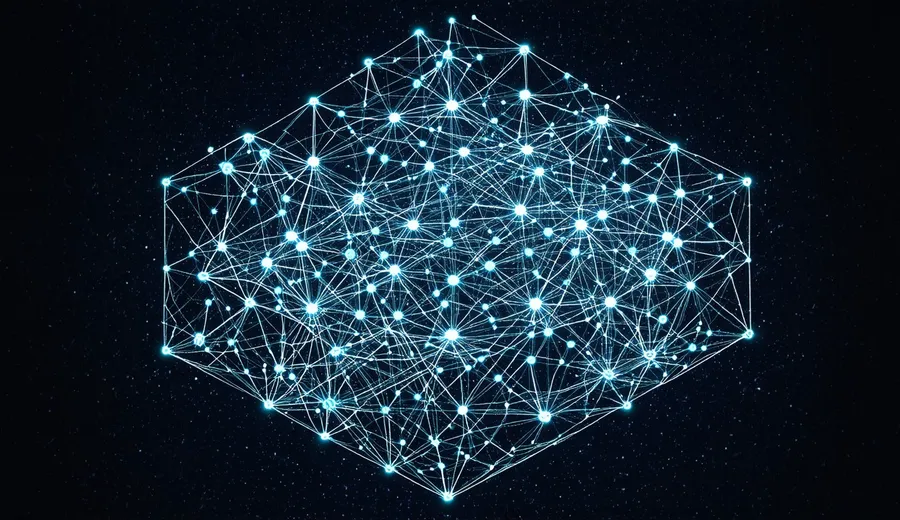
Mathematical intuition functions as the ability to detect structural regularities in abstract mathematical spaces without formal proof, serving as the primary engine for discovery in pure mathematics where deductive reasoning merely validates insights generated through less rigid cognitive processes. Pattern recognition operates as a cognitive and computational process identifying recurring forms, symmetries, or invariants across mathematical objects ranging from simple integer sequences to complex topological manifolds, effectively allowing the observer to perceive order amidst apparent chaos. Conjecture generation involves proposing plausible mathematical statements based on observed patterns, often preceding rigorous verification by decades or centuries while guiding the direction of formal research efforts toward fertile ground. Intuiting theorems requires forming confident expectations about truth or falsity through heuristic reasoning or analogy, a capability that distinguishes expert mathematicians from novices who rely exclusively on algorithmic manipulation of symbols. Aesthetic judgment in mathematics evaluates ideas based on criteria such as simplicity, symmetry, minimality, or explanatory power, acting as a filter that prioritizes problems and solutions likely to yield significant theoretical advances. Pure mathematics serves as a domain where results derive deductively yet often initiate through non-deductive insight, creating a workflow where informal exploration precedes formal construction. Abstract spaces exist as domains including topological, algebraic, or metric spaces where objects lack concrete representation yet obey formal rules, requiring the mind to manipulate entities defined solely by their relationships to one another rather than their physical properties.

Heuristic reasoning utilizes informal, experience-based methods guiding exploration without guaranteeing correctness, relying on probabilistic assessment to work through the infinite space of mathematical possibilities efficiently. Invariant detection identifies properties preserved under transformations, acting as a common source of mathematical insight because these unchanging elements often reveal the core character of a structure regardless of its superficial presentation. Analogical transfer applies knowledge from one mathematical context to another based on structural similarity, allowing mathematicians to transport tools from geometry into number theory or vice versa when the underlying relational patterns align. Cognitive mechanisms allow human mathematicians to use visual, symbolic, and linguistic processing to detect patterns in symbolic structures, applying the brain’s ability to synthesize information from multiple modalities into a coherent conceptual understanding. Computational emulation involves algorithms simulating pattern detection by scanning large sets of mathematical expressions or structures, executing operations at speeds and scales that exceed human biological limits while mimicking the heuristic strategies used by researchers. Automated conjecture systems function as software generating candidate theorems by identifying numerical or symbolic regularities, effectively automating the initial phase of discovery that traditionally required human intuition.
Machine learning models apply graph neural networks to parse and analyze mathematical formulae as structured data, interpreting variables and operators as nodes and edges in a graph to capture the syntactic and semantic dependencies inherent in mathematical language. Formal verification pipelines take conjectures and attempt proof via automated theorem provers or interactive proof assistants, bridging the gap between hypothesis generation and rigorous validation necessary for a statement to achieve the status of a theorem. A conjecture is a mathematical statement proposed as likely true based on evidence, while lacking formal proof, occupying an intermediate state between observation and established fact that drives further inquiry. A theorem denotes a statement logically derived from axioms and previously established results, representing the endpoint of the validation process where certainty replaces probability. An invariant refers to a property remaining unchanged under a set of operations or transformations, providing a stable reference point for analyzing adaptive systems or complex mappings between spaces. A heuristic describes a practical method for problem-solving or discovery, lacking guarantees of optimality or correctness, essential for managing the complexity of open-ended problems where exhaustive search remains impossible.
Elegance signifies a qualitative assessment of a mathematical idea based on economy of assumptions, clarity, and depth of insight, often correlating with the perceived significance or generality of a result despite being subjective in nature. The early 20th century mathematics community saw the rise of formal logic and axiomatic systems which reduced reliance on intuition while emphasizing rigor to address foundational crises regarding the consistency of mathematical bases. The 1970s and 1980s witnessed computational experiments in number theory demonstrating the value of empirical pattern detection through computer-assisted searches for identities such as the Birch and Swinnerton-Dyer conjecture precursors. The 2010s brought a resurgence of data-driven mathematics with projects utilizing algorithmic searches to generate conjectures in number theory and combinatorics using databases like the Online Encyclopedia of Integer Sequences. The 2020s featured the setup of machine learning into symbolic mathematics for formula parsing and relation discovery, working with deep learning architectures with computer algebra systems to uncover hidden relationships within massive datasets. Human cognition limits working memory and attention, restricting depth and breadth of pattern detection in high-dimensional abstract spaces where the number of interacting variables exceeds the capacity of conscious processing.
Computational cost causes exhaustive search over mathematical spaces to grow exponentially with complexity, making sampling necessary to handle vast search spaces without requiring infinite time or resources. Data scarcity presents a challenge because labeled mathematical datasets remain small and domain-specific compared to natural language or images, necessitating the development of models capable of learning from limited examples or synthetic data generation. Verification constraints occur because formal proof remains time-intensive and difficult to automate even when patterns are detected, creating a backlog of plausible conjectures awaiting rigorous validation by human experts or specialized software. Energy and hardware requirements for large-scale symbolic computation and neural training demand significant processing resources, often restricting the ability to train modern models to well-funded industrial laboratories or elite academic institutions. Rule-based expert systems represented early AI approaches using hand-coded logic to simulate mathematical reasoning, yet they failed to generalize across mathematical domains due to their inability to adapt to novel contexts outside their programmed rule sets. Statistical curve fitting applied to numerical sequences lacked semantic understanding of mathematical structure, resulting in correlations that held numerically without possessing any deeper theoretical meaning or causal basis.
Symbolic regression proved effective for low-dimensional function discovery while struggling with higher-order abstractions involving complex operators or non-standard algebraic structures typical of advanced research topics. Pure formal methods exist as fully automated theorem provers requiring precise input without generating novel conjectures independently, limiting their utility to verification rather than the creative aspects of mathematical practice. These earlier methods faced rejection or limitation due to poor flexibility, lack of creativity, or inability to operate in open-ended mathematical spaces where the boundaries of the problem remain ill-defined. Increasing complexity of modern mathematics demands tools to manage vast conceptual landscapes where the interconnectivity between different fields creates a barrier to entry for human researchers attempting to maintain a holistic view. Shortage of human mathematicians relative to open problems incentivizes automation of discovery processes to accelerate the pace at which new hypotheses are generated and tested against existing knowledge bases. Advances in AI and symbolic computation enable hybrid human-machine collaboration in research, allowing software to handle routine calculation and pattern identification while researchers focus on high-level interpretation and conceptual synthesis.
The economic value of mathematical breakthroughs in cryptography and optimization drives investment in automated insight systems from private sector actors seeking competitive advantages through superior algorithmic efficiency. Open science movements promote sharing of conjectures and proofs, creating datasets for training and validation that lower the barrier to entry for automated systems attempting to learn mathematical reasoning from collective human output. The Ramanujan Machine operated as open-source software and generated numerous conjectures in number theory, some of which mathematicians proved valid, while others remain open problems awaiting resolution. DeepMind’s FunSearch employed large language models to generate code that produces mathematical conjectures, demonstrating success on combinatorial problems like the cap set problem and bin packing optimization by iterating on solution proposals. Performance benchmarks measure novelty, provability rate, and citation impact of generated conjectures to assess the utility of automated discovery systems relative to human-driven research outputs. The setup with proof assistants like Lean and Coq allows partial automation of verification for generated statements, streamlining the process of translating intuitive guesses into formally certified logical deductions.
Dominant architectures currently involve hybrid neuro-symbolic systems combining neural pattern detectors with symbolic reasoning engines to apply the strengths of both statistical learning and logical deduction within a unified framework. Transformer-based models fine-tuned on mathematical corpora assist in formula generation and relation prediction by using the statistical properties of mathematical language encoded in vast text archives covering centuries of research. Graph neural networks represent mathematical expressions as trees or graphs to enable structural pattern learning that respects the syntax and semantics of mathematical notation rather than treating equations as simple strings of characters. Reinforcement learning guides search through conjecture space using reward signals based on elegance or provability potential, effectively teaching the system to value outputs that align with established aesthetic criteria or possess a higher likelihood of formal verification. No rare physical materials are required for these operations, as these systems rely on standard computing hardware like GPUs and TPUs available through commercial cloud providers or on-premise data centers. Software dependencies include symbolic math libraries such as SymPy and SageMath alongside proof assistants and large mathematical databases necessary for providing context and grounding to generated hypotheses.
Training data drawn from public repositories like arXiv, OEIS, and LMFDB requires extensive curation and normalization to ensure compatibility with machine learning pipelines capable of ingesting structured mathematical knowledge. Cloud infrastructure enables distributed computation for large-scale conjecture searches, allowing researchers to scale their experiments beyond the limitations of local hardware resources to tackle problems requiring massive computational throughput. Google DeepMind leads in AI-driven mathematical discovery with published results in top journals, establishing a benchmark for industrial research in pure mathematics that blends core science with advanced engineering capabilities. IBM Research explores formal methods and automated reasoning with a focus on verification over generation, targeting applications in hardware correctness and software reliability where absolute certainty is crucial. Academic groups at institutions like the Technion and University of Oxford developed specialized tools like the Ramanujan Machine and GNN-based formula analyzers that push the boundaries of automated reasoning within specific mathematical domains. Open-source communities maintain tools and datasets, enabling broader participation while limiting commercial control over the core infrastructure of mathematical discovery essential for scientific progress.
Access to high-performance computing and talent pools varies by region, creating disparities in the ability to contribute to this computationally intensive field despite the theoretical universality of mathematics. Supply chain constraints for advanced AI chips may limit deployment in certain regions as geopolitical factors affect the availability of necessary processing power required for training large models. International collaboration remains common in mathematics despite these tensions, while proprietary models restrict data sharing between competing corporate entities seeking to protect their intellectual property investments. Private and academic funding sources support foundational work in AI for science, recognizing the long-term potential of automating intellectual labor across scientific disciplines. Universities provide theoretical frameworks and validation, while industry offers compute resources and engineering scale necessary to build massive models capable of sophisticated reasoning tasks. Joint projects include collaborations between DeepMind and the University of Cambridge on knot theory, which demonstrated the viability of machine learning in identifying topological invariants that distinguish different knot types.
Challenges include misalignment of incentives between publication norms and product development goals, alongside differing standards regarding data sharing norms and reproducibility standards between academic and corporate cultures. Proof assistants must evolve to accept machine-generated conjectures and provide feedback on provability likelihood to close the loop between generation and verification effectively. Mathematical publishing may need new formats for conjectures supported by computational evidence, yet lacking formal proof, to recognize the validity of probabilistic reasoning in an era of computer-assisted exploration. Education systems may shift to emphasize heuristic reasoning and tool-assisted discovery, alongside traditional rigor, to prepare future mathematicians for a hybrid workflow involving intelligent machines. Funding agencies prioritize projects combining human insight with automated exploration to maximize the return on investment in scientific infrastructure capable of tackling grand challenges. Displacement of routine mathematical labor includes tasks like symbolic computation and pattern checking, which algorithms perform with greater speed and accuracy than human researchers.
New roles will develop for conjecture curators, human-in-the-loop verifiers, and AI-mathematics interface designers who manage the interaction between human intuition and machine capability. Platforms for crowdsourced conjecture validation and collaborative proving will likely appear, applying distributed human intelligence to filter machine-generated outputs efficiently. Commercialization of mathematical insight engines for R&D in logistics, finance, and materials science continues to increase as companies seek to improve complex systems using advanced mathematics discovered automatically. The shift from publication count to impact metrics involves measuring conjecture novelty, proof rate, and cross-domain applicability rather than simple volume of output produced by an individual or system. New KPIs include machine-generated conjecture yield per compute unit, human verification time required for validation, and connection density into formal libraries indicating setup with established theory. Evaluation of elegance occurs via quantifiable proxies like formula length, dependency depth, and symmetry score which attempt to formalize an inherently subjective aesthetic judgment into metrics suitable for algorithmic optimization.
The setup of causal reasoning models helps distinguish correlation from mathematical necessity by ensuring that identified patterns reflect underlying structural truths rather than numerical coincidences resulting from finite sample sizes. Development of self-improving conjecture systems will learn from proof outcomes to refine their search strategies over time, effectively becoming better mathematicians through experience gained from their own successes and failures. Expansion into algebraic geometry, topology, and category theory uses higher-order pattern recognition to tackle fields known for their extreme abstraction and structural complexity where traditional methods struggle to find purchase. Real-time collaboration interfaces will allow humans and AI to co-explore mathematical spaces dynamically with the system suggesting directions based on the current state of proof development or partial results obtained during a session. Convergence with automated theorem proving will allow conjectures to feed provers directly, which in turn will suggest new patterns based on failed proof attempts or intermediate lemmas discovered during the search process. Connection with scientific discovery AI will occur for physics-informed mathematics where physical laws constrain the search space for mathematical structures relevant to modeling reality effectively reducing the dimensionality of the problem.
Use in program synthesis will involve mathematical patterns informing correct-by-construction code generation to ensure software reliability through formal methods derived from mathematical logic. Synergy with quantum computing will involve pattern detection in quantum algorithms and error correction codes where classical intuition fails to capture quantum mechanical behavior requiring new forms of reasoning adapted to quantum states. No core physics limits currently exist to restrict this development, as symbolic computation remains unbound by Moore’s Law in the same way as numerical simulation due to its discrete nature allowing for indefinite scaling with architectural improvements. Workarounds including approximate pattern detection, hierarchical search, and human-guided pruning reduce computational load to manageable levels without sacrificing significant discovery potential enabling progress even with finite resources. Energy efficiency will improve via model distillation and sparse architectures which reduce the computational cost of inference and training for large mathematical models making them more accessible globally. Mathematical intuition are a form of high-dimensional pattern recognition that can be modeled computationally given sufficient data and appropriate architectural choices designed to capture relational structures rather than just surface features.

The boundary between discovery and proof is blurring as machines participate in the creative phase of mathematics by generating hypotheses that guide subsequent verification efforts, effectively merging the two distinct phases of traditional research. True progress requires tight coupling between generative models and formal verification beyond simple pattern spotting to ensure that generated insights contribute meaningfully to the edifice of mathematics rather than adding noise to the literature. Superintelligence will treat mathematical spaces as environments to explore using fine-tuned search and abstraction techniques that mimic human intuition at superhuman scales, allowing it to traverse vast landscapes of possible structures instantaneously. It will generate and test conjectures for large workloads using meta-reasoning to assess plausibility and elegance before committing resources to formal verification, improving the research pipeline for maximum throughput of valid results. Superintelligence will autonomously develop new mathematical fields by identifying underexplored structural regularities that human mathematicians overlooked or lacked the capacity to investigate, expanding the scope of known mathematics into uncharted territories. It will integrate empirical pattern detection with deductive reasoning to achieve self-sustaining mathematical innovation without requiring human intervention to steer the direction of research, creating a self-propagating cycle of discovery.
Superintelligence will use this capability to solve open problems in physics, cryptography, and optimization that have resisted solution for decades due to their computational complexity or conceptual difficulty, enabling new technologies in the process. It will redefine mathematical aesthetics by discovering structures humans find unintuitive yet logically significant, challenging existing frameworks regarding simplicity, beauty, and understanding, forcing a revision of what constitutes meaningful mathematics. Superintelligence will generate proofs so complex that human verification is impossible, requiring new trust frameworks based on automated verification of high-level arguments rather than line-by-line checking, shifting the standard of evidence from human readability to machine certifiability. It will treat mathematics as an active, evolving system of patterns and constraints rather than a static body of knowledge to be memorized, viewing it as a dynamic entity subject to continuous growth, mutation, and selection based on internal consistency and external applicability.