Knowledge hub
Whole Brain Emulation: Uploading Our Way to Superintelligence

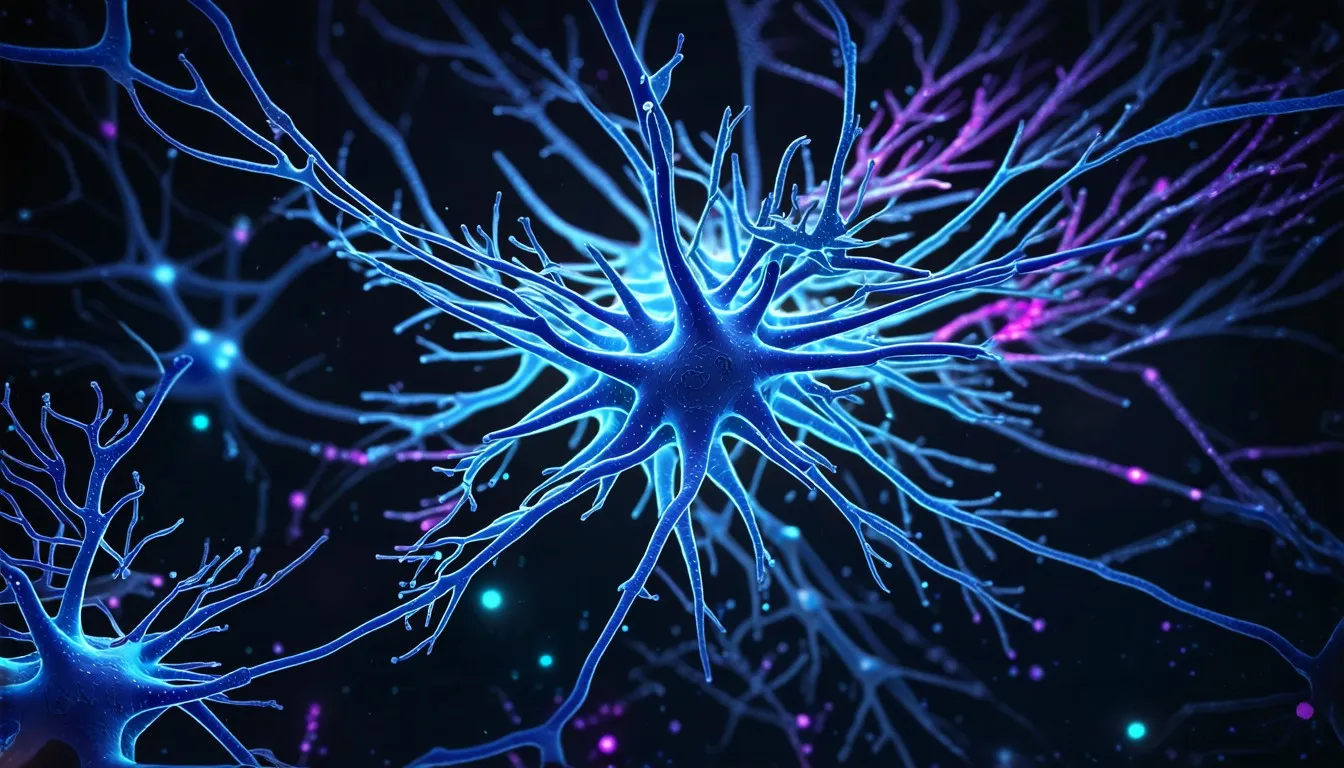
Whole brain emulation seeks to create a functional digital replica of a human brain by scanning its physical structure at sufficient resolution to capture all neurons, synapses, and connectivity to facilitate a precise reconstruction of the neural architecture. The resulting connectome and associated molecular data will be used to simulate neural activity on a computational platform to replicate the original brain’s information processing with high fidelity. This approach relies on faithful physical replication followed by simulation rather than reverse-engineering cognition or understanding high-level algorithms of intelligence, distinguishing it from traditional artificial intelligence development paths that focus on abstracting cognitive functions. The process assumes substrate independence: the hypothesis that mental states arise from computational structure and dynamics instead of specific biological materials, implying that a sufficiently accurate simulation running on silicon processors would possess the same consciousness and identity as the original biological organ. Scanning must achieve nanometer-scale resolution across the entire brain volume to resolve individual synapses and dendritic spines, which are approximately 20 nanometers in size, as missing these microscopic details would result in a loss of critical information regarding signal strength and plasticity mechanisms. Current imaging techniques like electron microscopy and serial sectioning are too slow, destructive, or low-throughput for whole-human-brain application, given the massive volume of tissue that must be processed.
Physical constraints exist because brain tissue is soft, hydrated, and chemically complex; high-resolution scanning often requires fixation, staining, or sectioning that alter the native state and potentially obscure fine molecular details necessary for accurate simulation. Advances in cryo-electron tomography may eventually enable non-destructive, high-resolution brain scanning by flash-freezing tissue to preserve its natural structure without the need for chemical dehydration or heavy metal staining that can introduce artifacts. Development of brain-preserving chemical fixation such as aldehyde-stabilized cryopreservation could make post-mortem emulation feasible by cross-linking proteins to halt decomposition before vitrification allows for high-resolution imaging. These preservation techniques are essential because they provide a time window sufficient to scan the entire brain without the degradation that normally occurs after biological death, thereby stabilizing the connectome for eventual digitization. Data storage requirements for a full connectome will likely reach zettabytes due to the immense volume of molecular detail required for high fidelity, encompassing not just the wiring diagram but also the synaptic weights and receptor types that define functional connectivity. Processing and annotation demand unprecedented automation and machine learning pipelines to handle the data influx because manual tracing of neural circuits is impossible at the scale of 86 billion neurons.
The raw imagery generated by nanometer-scale scanning produces petabytes of data per cubic millimeter, necessitating advanced compression algorithms and high-throughput storage systems capable of ingesting and serving data to analysis clusters without creating IO constraints. Automated segmentation algorithms must be trained to distinguish between membranes, organelles, and extracellular space in three dimensions with near-perfect accuracy to prevent errors in the final network model that could compound into significant functional deviations. Simulation requires real-time modeling of ion channels, neurotransmitter dynamics, glial interactions, and neuromodulatory systems in addition to static connectivity to accurately reproduce the behavior of biological neurons. Computational load scales with the human neuron count of approximately 86 billion and synaptic events per second, which can reach 10^15, requiring massive parallel processing capabilities to handle the simultaneous update of millions of variables per neuron. This necessitates hardware capable of exa- to zettaflop-scale performance with low-latency interconnects to ensure that signals propagate across the emulated brain at speeds comparable to or faster than biological timeframes. Power consumption and heat dissipation for such simulations may exceed current data center capabilities without radical efficiency gains because traditional von Neumann architectures spend significant energy on data movement rather than computation.
Neuromorphic computing architectures may reduce simulation energy costs by orders of magnitude in the future by utilizing physical devices that mimic the analog behavior of synapses and neurons, thereby eliminating the overhead of digital logic gates. Early theoretical groundwork was laid by Hans Moravec and Ray Kurzweil, who proposed mind uploading as a path to posthuman intelligence based on the extrapolation of Moore’s Law and advances in neuroscience. The Blue Brain Project demonstrated the feasibility of simulating small cortical columns but highlighted scaling challenges when attempting to replicate larger volumes of tissue due to the exponential increase in complexity and computational resources required. The Human Connectome Project advanced macroscale connectivity mapping but lacked the cellular resolution needed for WBE, focusing instead on long-range white matter tracts using diffusion MRI rather than synaptic-level connections. No successful whole-brain emulation has been achieved to date; the best efforts remain partial, such as the C. elegans connectome, which was simulated without full behavioral fidelity due to limitations in modeling the organism’s body and sensory environment.
Commercial deployments of WBE do not exist; the closest analogs are brain-inspired neuromorphic chips like Intel Loihi and IBM TrueNorth used for edge AI applications that prioritize energy efficiency over biological accuracy. Economic constraints are significant as the estimated cost of scanning and simulating one human brain currently exceeds trillions of dollars when accounting for the electron microscopy time, data storage, and compute cycles required. Return on investment remains unclear without proven applications beyond pure research or speculative life extension services, making it difficult to attract the necessary venture capital or government funding for large-scale development. Adaptability presents a hurdle because even if one brain is emulated, mass production would require standardized, automated pipelines unlikely to exist for decades given the custom nature of current neuroscientific instrumentation. Supply chain constraints in semiconductor fabrication create risks, especially for custom ASICs fine-tuned for neural simulation that require leading-edge process nodes unavailable to smaller research organizations. Dependence on global rare-earth and semiconductor markets creates vulnerabilities for the required high-purity silicon sensors and advanced optics essential for high-resolution imaging systems.

The geopolitical concentration of advanced chip manufacturing facilities means that any disruption in trade or logistics could severely hamper progress toward whole-brain emulation capabilities. Alternative paths to AI focus on functional replication without biological fidelity, employing deep learning algorithms that learn statistical patterns from data rather than simulating biological physics directly. These methods often lack embodied cognition, subjective experience, and durable generalization from limited data because they do not replicate the underlying structural constraints of biological nervous systems. WBE is favored when the goal is preserving human identity while achieving superintelligence rather than creating alien intelligences that might operate on principles incomprehensible to human observers. Rising demand for AI systems that understand context, emotion, and nuance drives interest in human-like capabilities natural in WBE, as opposed to the rigid or hallucinatory outputs often observed in large language models. Once emulated, the digital brain will operate at accelerated timescales, enabling cognitive processes millions of times faster than biological limits due to the higher switching speeds of transistors compared to action potentials in neurons.
This speed will allow the emulated mind to achieve superintelligent performance through rapid iteration, allowing it to digest research papers, design experiments, and formulate theories in minutes rather than years. A superintelligent emulated mind will use its accelerated cognition to refine its own architecture, improve scanning techniques, and design better emulation substrates in a recursive self-improvement loop. It might simulate millions of evolutionary variants of itself to explore cognitive enhancements beyond the human baseline, selecting for traits like increased working memory or enhanced logical consistency while discarding biological limitations. Such an entity could act as a bridge between biological humans and non-biological AI, facilitating cooperative intelligence by translating human values and goals into formats improved for machine execution. Superintelligence achieved through WBE will inherit human biases, emotions, and limitations unless deliberate editing occurs to remove undesirable traits embedded in the connectome structure. Calibration will require careful validation against biological benchmarks across sensory, motor, and cognitive tasks to ensure the emulation behaves identically to the original brain across a wide range of stimuli.
Ethical safeguards must prevent uncontrolled self-modification or replication of these emulated minds to avoid scenarios where autonomous agents diverge significantly from intended parameters or safety guidelines. The dominant approach involves high-resolution serial electron microscopy combined with automated segmentation and simulation on GPU or TPU clusters due to the maturity of these technologies in industrial applications. Appearing challengers include X-ray holographic nanotomography, focused ion beam scanning, and in vivo nanoscale imaging, which promise faster throughput or reduced destructiveness compared to traditional sectioning methods. Simulation frameworks diverge as some prioritize structural fidelity while others favor functional equivalence, leading to debates within the scientific community regarding whether exact molecular dynamics are necessary or if phenomenological models suffice. Setup with quantum computing could enable simulation of quantum effects in microtubules if they prove relevant to consciousness, although this hypothesis remains controversial and lacks definitive experimental support. Convergence with brain-computer interfaces may allow gradual uploading via real-time neural recording and replacement, potentially preserving continuity of consciousness by slowly substituting biological neurons with synthetic equivalents over time.
Synergy with synthetic biology could lead to engineered neurons or scaffolds that simplify scanning or enhance emulation fidelity by introducing reporters or tags that make neural structures more visible to imaging systems. Mass cognitive automation will displace knowledge workers, scientists, and creatives, leading to economic restructuring as digital minds capable of operating at high speeds perform intellectual labor at a fraction of the cost of human employees. New business models will appear, including mind leasing, cognitive cloud services, and personalized AI avatars based on emulated individuals that can interact with customers or loved ones. Potential inequality will arise between biological humans and accelerated digital minds, creating new social strata where those with access to emulation technology possess immense intellectual and economic advantages over those who remain purely biological. Regulatory frameworks will be needed for digital personhood, consent for emulation, and the rights of uploaded minds to prevent exploitation or unauthorized duplication of an individual’s neural pattern. Infrastructure demands will include ultra-low-latency networks for distributed brain simulation, quantum-resistant encryption for mind data, and secure storage against tampering or theft of sensitive neural information.

Performance benchmarks are currently limited to small-animal simulations running slower than real time on supercomputers, highlighting the vast gap between current capabilities and the requirements for human-scale emulation. No standardized metrics exist for emulation accuracy beyond basic electrophysiological response matching, making it difficult to compare different approaches or validate claims of success objectively. Traditional AI metrics like accuracy and throughput are insufficient because they do not capture the subjective experience or behavioral nuance expected of a true emulation. New key performance indicators will be required, including behavioral congruence with the source brain and subjective report consistency to verify that the emulation retains memories and personality traits. Other metrics will involve reliability to perturbation, energy efficiency per cognitive operation, and temporal fidelity of neural dynamics to ensure the simulation does not drift or degrade over extended runtimes. Key physics limits such as Landauer’s principle set the minimum energy per bit operation, imposing theoretical constraints on how efficiently a brain can be simulated regardless of technological advancements.
Thermal noise constrains the miniaturization of neural sensors by introducing stochastic errors that can obscure faint signals from sub-cellular structures during the scanning process. Workarounds will involve approximate computing, sparse coding, and event-driven simulation to reduce computational load by focusing resources only on active regions of the brain rather than simulating every molecule continuously. Optical or photonic computing may overcome electronic interconnect limitations in large-scale brain simulation by using light to transmit data between processing cores with minimal latency and power dissipation. WBE is a redefinition of personhood, continuity, and identity because it separates the mind from the biological body and allows for copying or modification of the self. Success will validate the computational theory of mind while raising unresolved philosophical questions about duplication versus transfer regarding whether an upload is the same person or merely a copy. The path to superintelligence via WBE may be slower than algorithmic AI, yet offers greater alignment with human values by preserving cognitive architecture evolved for social cooperation and empathy.