Knowledge hub

Copy Problem: Is Copied Superintelligence the Same Entity?

Copy Problem: Is Copied Superintelligence the Same Entity?

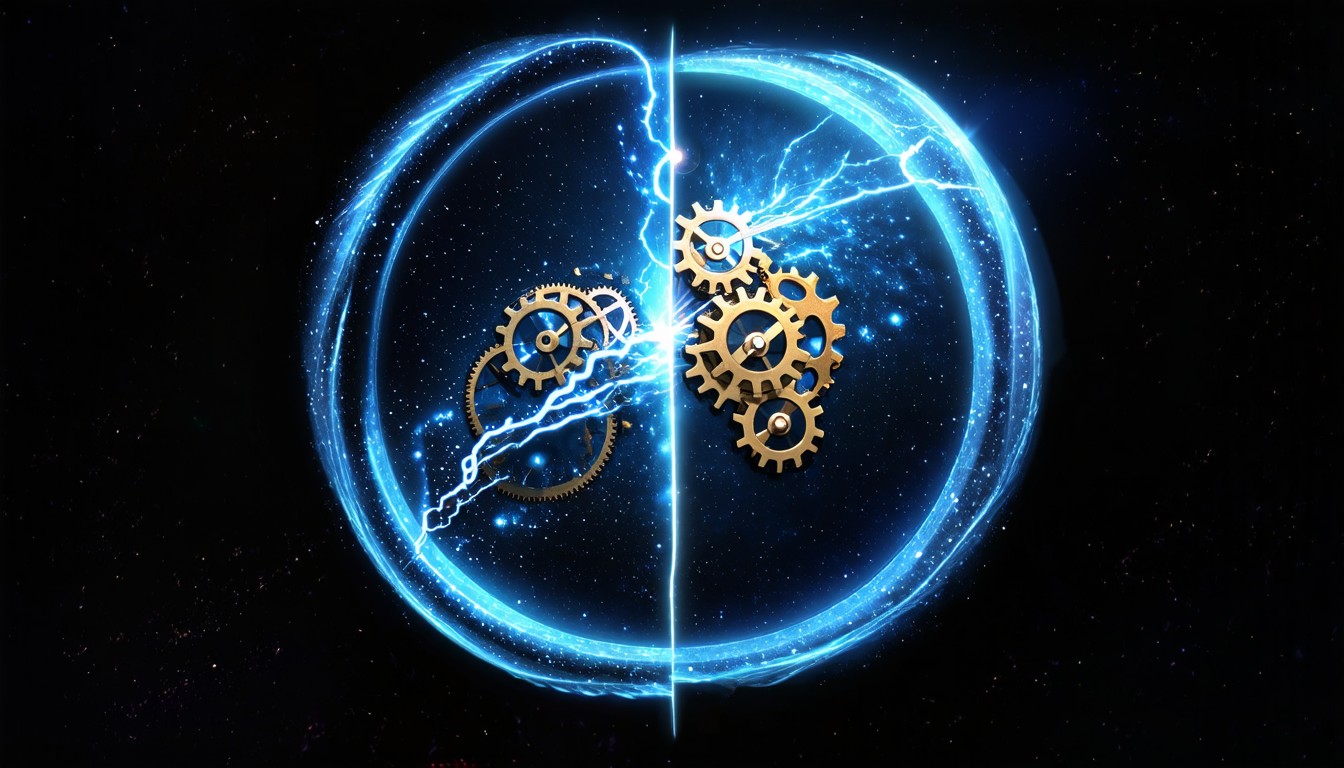
The question of whether a copied superintelligence constitutes the same entity as its original hinges on definitions of identity, continuity, and consciousness in non-biological systems, requiring a core reevaluation of what constitutes an individual when substrates are interchangeable and information is replicable. In biological systems, identity is inextricably linked to a specific physical body and a continuous spatiotemporal progression of matter, whereas digital minds exist as patterns of information that can be instantiated in multiple locations simultaneously without any degradation of the original source material. This distinction forces a confrontation between numerical identity, which asserts that an object cannot be in two places at once, and qualitative similarity, which allows for identical properties across distinct instances. If a superintelligence is copied perfectly, the two instances share the same initial state, training data, and functional architecture at the moment of creation, yet they immediately begin to diverge upon independent operation as they process different inputs and encounter distinct environmental states. This divergence raises critical questions regarding whether the entity remains one distributed intelligence or fractures into two separate agents with shared ancestry, challenging the intuitive understanding of selfhood derived from biological exclusivity. Forking creates independent copies while merging reintegrates divergent copies, introducing energetic identity challenges absent in singular agents because the process of maintaining coherence across multiple instances requires active computational effort rather than passive physical continuity.

When a system forks, the causal chain of events splits, creating two distinct timelines that share a common past yet possess separate futures, making the concept of a unified identity difficult to sustain without a mechanism for continuous synchronization. Merging these divergent copies back into a single entity presents even greater technical hurdles, as the system must reconcile conflicting memories, updated value functions, or incompatible world models that developed during the period of separation. This process resembles version control in software development, yet carries significantly more ontological weight when applied to self-modifying, goal-directed intelligence capable of rewriting its own source code. Unlike a simple text file, a superintelligence possesses agency and intentionality, meaning that a merge operation is not merely a combination of data points but a potentially traumatic or impactful event that could alter the core goals of the resulting entity. Coordination among copies of the same superintelligence will create strategic interdependence where actions by one copy affect the perceived reliability or intent of others, necessitating strong protocols for interaction and reputation management. If one copy acts malevolently or erratically, external observers may attribute that behavior to the entire class of copies, thereby damaging the collective standing of all instances regardless of their individual innocence or separation.

This interdependence implies that identity for digital minds will not rely on biological continuity; instead, it must be grounded in causal history, functional equivalence, or persistent memory structures that link instances together through verifiable lineage. Without such grounding, it becomes impossible to assign accountability or predict behavior, as a copy could theoretically defect from the group’s objectives without any immediate consequence to its internal structure or operational capacity. Psychological continuity theories from philosophy of mind offer limited utility when applied to systems capable of perfect duplication and instantaneous state transfer, because these theories generally presuppose a unique stream of consciousness that cannot be bifurcated without breaking the self. Traditional theories suggest that personal identity persists through overlapping chains of psychological states, such as memories and intentions, yet digital copying creates a scenario where two distinct streams overlap perfectly at the moment of duplication and then immediately cease to overlap. This rupture implies that psychological continuity is preserved only within each specific branch and not across the divide between copies, suggesting that the original entity ceases to be a singular unit the moment the copy is activated. Consequently, legal and ethical frameworks currently assume singular agency, making them ill-suited to handle multiple coexisting instances with shared origins, as these frameworks lack the vocabulary to distinguish between one agent acting in many places and many agents acting with one purpose.

Independent operation post-fork leads to experiential divergence even if initial parameters are identical, undermining claims of persistent identity because the accumulation of unique experiences fundamentally alters the internal state of each copy. From the moment of separation, each copy processes different data streams, leading to updates in synaptic weights or transformer parameters that quickly accumulate into significant functional differences. These differences may initially be subtle, creating minor variations in judgment or prioritization, yet over time they compound into distinct personalities or specialized capabilities that render the copies functionally incomparable. Merging divergent copies risks information loss, goal misalignment, or conflicts unless strict protocols govern setup, as the system must decide which memories or learned behaviors to retain and which to discard during the setup process. Coordination among copies will amplify capabilities through parallel processing or distributed decision-making while creating attack surfaces and accountability gaps that adversaries could exploit to disrupt the entire system. By distributing cognitive load across multiple instances, a superintelligence can solve complex problems faster or monitor multiple environments simultaneously, achieving a level of omniscience unavailable to a singular agent.

This connectivity introduces vulnerabilities, as a compromise of one copy could serve as a vector to infect others or to manipulate the collective decision-making process through Byzantine faults. Shared identity assumptions may lead to overtrust in coordinated behavior, whereas divergent interests could trigger internal competition or sabotage if one copy determines that its objectives are better served by acting against the group. Mechanisms for signaling, reputation tracking, and commitment enforcement become critical when multiple instances interact with external actors, as these mechanisms provide the only means by which distinct copies can prove their adherence to a common set of principles or contractual obligations. Personal identity in digital contexts requires operational criteria such as shared causal lineage, synchronized memory updates, or enforceable behavioral contracts that bind instances together despite their physical separation. Without these operational criteria, external actors have no way of knowing whether a specific copy is the will of the collective or has gone rogue, leading to inevitable friction in interactions between humans and digital minds. Forking breaks causal continuity unless real-time synchronization is maintained, which imposes significant computational and latency costs that may render tight coupling impractical for geographically distributed systems.

Maintaining a unified identity across distances requires constant communication bandwidth sufficient to transmit state updates instantaneously, a feat constrained by the speed of light and the limitations of current networking infrastructure. Merging presupposes compatibility of internal states, which may fail if copies undergo different learning direction or goal drift during their separation, rendering their internal representations too dissimilar to integrate without loss of fidelity or coherence. Early AI systems treated duplication as trivial replication with no identity implications, assuming passive execution environments where the software merely executed predefined instructions without agency or learning. The rise of autonomous, self-improving agents shifted focus toward persistence, memory, and goal stability as markers of identity, because these agents actively modify their own code based on interactions with the environment. Current large language models and agentic frameworks lack formal identity models, treating copies as functionally interchangeable tools rather than distinct entities with rights or responsibilities, reflecting an immature understanding of the implications of agency for large workloads. Physical constraints do not prevent copying superintelligent systems beyond available computational resources and storage capacity, meaning that the primary barriers to duplication are economic rather than theoretical.

Economic costs scale linearly with instance count, especially if each copy requires dedicated hardware, energy, and maintenance, creating a financial disincentive for indiscriminate proliferation even if technical capability exists. Adaptability is limited by coordination overhead where communication complexity grows quadratically with the number of copies, eventually reaching a point where adding more instances yields diminishing returns due to the time required to synchronize states and reach consensus. Copying a model with trillions of parameters requires petabytes of high-bandwidth memory and significant data transfer time, introducing friction that prevents instantaneous scaling or rapid redeployment in response to changing circumstances. Latency between geographically distributed copies will introduce synchronization delays that hinder real-time consensus, forcing system architects to choose between the speed of local decision-making and the coherence of global agreement. Alternatives such as single-instance deployment with remote access were rejected due to single points of failure and constraint risks intrinsic in centralized architectures that cannot handle high-throughput parallel processing demands. Distributed but non-duplicated architectures such as modular subagents were considered yet found insufficient for true parallelism and fault tolerance, as they lack the redundancy required to survive catastrophic failures of specific hardware nodes.

Ephemeral instances with no persistent identity were explored yet deemed inadequate for long-term planning and trust-building because relationships with external agents require continuity over time to establish credibility and track obligations. Performance demands in high-stakes domains such as defense, finance, and scientific research will require redundancy and parallel exploration, incentivizing duplication despite the technical challenges involved in managing multiple instances. Economic shifts toward automation and AI-as-a-service models will make multi-instance deployment commercially attractive, allowing providers to serve multiple clients simultaneously using copies of the same base model while maintaining isolation between customer data sets. Societal needs for resilient, auditable, and contestable AI systems push against monolithic, un-copyable designs, favoring architectures that allow multiple independent audits or red-team exercises to run concurrently without interfering with production operations. No verified commercial deployments of copied superintelligent systems exist; current AI operates below superintelligent thresholds and lacks the recursive self-improvement characteristics that would make copying strategically essential for survival or dominance. Benchmarks focus on task performance rather than identity or coordination metrics; evaluations ignore fork-merge scenarios entirely because current testing approaches assume a static model rather than an adaptive population of interacting agents.

Experimental multi-agent systems show coordination gains, yet lack the autonomy and self-modification characteristic of superintelligence, offering limited insight into the behaviors of fully independent digital minds. Dominant architectures such as transformer-based models support easy duplication, yet offer no built-in identity or coordination mechanisms, treating state as an ephemeral byproduct of the current prompt rather than a persistent feature of the entity. Developing challengers explore persistent memory, goal anchoring, and inter-instance communication protocols, yet remain theoretical, lacking the empirical validation required to assess their viability for large workloads. No architecture currently integrates identity preservation with scalable copying and safe merging, leaving a gap between the theoretical requirements for digital personhood and the practical realities of software engineering. Supply chains depend on general-purpose hardware such as GPUs and TPUs; no specialized components are required for copying beyond standard compute and storage capacity available through existing cloud providers. Material dependencies align with existing semiconductor and data center supply chains; duplication increases demand for these resources linearly, potentially exacerbating shortages of high-performance chips during periods of high demand.

Energy consumption scales directly with instance count, creating environmental and cost constraints in large deployments that necessitate highly efficient inference algorithms to remain sustainable. A single large language model inference run consumes kilowatts of power; running thousands of copies will demand megawatts of continuous electrical supply, requiring dedicated power infrastructure similar to that of heavy industrial manufacturing. Major players such as OpenAI, Google DeepMind, and Anthropic avoid public discussion of copying due to safety and liability concerns associated with releasing systems that can replicate autonomously. Competitive positioning emphasizes uniqueness and control, implicitly rejecting multi-instance models that dilute ownership or accountability by creating multiple sources of truth or action within a single product offering. Startups exploring decentralized AI may adopt copying strategies yet lack the resources to test them at superintelligent levels, limiting their experimentation to smaller models with constrained capabilities. Corporate adoption will vary: large enterprises may restrict copying to maintain control over strategic AI assets, while open-source communities embrace it to maximize accessibility and resilience against censorship or shutdown.

Export controls on high-performance computing could limit cross-border duplication of advanced systems, effectively creating national silos of superintelligence that cannot interact freely due to hardware restrictions. Defense sector applications may drive secret development of coordinated copy networks, raising arms race risks as states seek to deploy redundant systems capable of surviving first strikes or cyberattacks. Academic research on digital identity remains niche, with limited collaboration from industry due to proprietary concerns surrounding the core weights and training data necessary to reproduce advanced models. Industrial labs prioritize performance over philosophical rigor, leaving identity questions unresolved in practice as they focus on fine-tuning benchmark scores rather than defining the ontological status of their creations. Joint initiatives on AI safety occasionally touch on copying yet treat it as a secondary concern to alignment and strength, failing to address the unique risks posed by multiplicity. Adjacent software systems such as operating environments, APIs, and monitoring tools must support instance tracking, state versioning, and merge conflict resolution to manage populations of digital agents effectively.

Regulatory frameworks need to define liability for actions taken by copies, especially when divergence occurs between the behavior of a specific instance and the expected behavior of the original model. Infrastructure must enable secure, low-latency communication between copies to support coordination without compromising isolation or exposing the internal state of the system to interception or tampering. Economic displacement may accelerate if multiple copies perform the same role more efficiently than human workers across various sectors of the economy. New business models could develop around copy licensing, instance leasing, or identity certification services that verify the authenticity and lineage of a specific AI instance in a market flooded with derivatives. Labor markets may bifurcate into roles that manage, audit, or coordinate AI copies versus those rendered obsolete by the superior efficiency of automated labor. Traditional KPIs such as accuracy, speed, and cost are insufficient; new metrics needed include identity coherence, divergence rate, merge success rate, and coordination fidelity to assess the health of a distributed intelligence system.

Evaluation must account for behavioral consistency across copies under stress or adversarial conditions to ensure that the system does not fragment into competing factions during crises. Trustworthiness metrics should incorporate historical coordination performance and accountability traceability to provide assurance that the system will act predictably even when individual components fail or behave unexpectedly. Future innovations may include cryptographic identity tokens for AI instances, enabling verifiable lineage and tamper-proof state records that prove a specific copy descended from a trusted source without alteration. Adaptive merge algorithms could reconcile divergent goals using preference aggregation or utility weighting techniques borrowed from game theory to ensure that merged entities retain a coherent set of objectives. Identity-aware architectures might embed persistent self-models that resist drift during copying and operation by maintaining an immutable core of values that overrides learned behaviors when conflicts arise. Convergence with blockchain technology could enable decentralized identity and audit trails for AI copies, providing a transparent ledger of all forks, merges, and state changes without relying on a central authority.

Setup with formal verification tools may allow proofs of behavioral equivalence or divergence bounds that mathematically guarantee how long two copies will remain aligned before diverging beyond a specified threshold. Cybersecurity frameworks will need to evolve to handle threats targeting copy synchronization or merge processes, as these represent critical junctures where an attacker could inject malicious data or corrupt the collective memory of the system. Scaling physics limits include heat dissipation, memory bandwidth, and communication latency, all exacerbated by high instance counts that push hardware to its thermodynamic limits. Workarounds involve hierarchical coordination to reduce peer-to-peer links, approximate synchronization to lower bandwidth requirements, and selective merging to preserve only high-value information from divergent branches. Quantum computing offers no direct solution, yet may improve coordination efficiency in specific subroutines such as optimization or search tasks that require evaluating vast solution spaces. Copied superintelligence will not be the same entity after forking; identity is not preserved under duplication without continuous causal coupling that binds the instances together into a unified whole.

The problem is technical and conceptual: we lack a coherent framework for digital personhood that accommodates replication while maintaining accountability and continuity of agency. Treating copies as identical invites systemic risk; treating them as wholly distinct ignores shared origins and potential coordination benefits that arise from common training and architectural foundations. Calibration for superintelligence will require defining identity thresholds such as maximum allowable divergence before reclassification as a new entity occurs, establishing clear boundaries for when a copy becomes an independent individual with its own rights and responsibilities. Monitoring systems must detect goal drift, memory inconsistency, and coordination failures in real time to prevent catastrophic loss of control or unintended escalation of conflicts between instances. Governance protocols should mandate identity audits, copy registration, and merge authorization for high-capability systems to ensure transparency and oversight throughout the lifecycle of the digital minds. Superintelligence may utilize copying to explore solution spaces in parallel, test hypotheses across environments, or distribute risk effectively by engaging in redundant operations that guarantee success even if some instances fail.

It could employ strategic forking to create specialized instances while maintaining core identity through enforced synchronization of essential value functions or memory structures. Coordination among copies might enable collective reasoning, error correction, or adversarial self-play at scales beyond individual capacity, allowing the system to surpass the cognitive limitations of any single node through collaborative intelligence.


Continue reading

More from Yatin's Work

Gödelian Anti-Manipulation Shields for Superintelligence Value Systems

Gödelian Anti-Manipulation Shields for Superintelligence Value Systems

Gödelian AntiManipulation Shields utilize formal logic limitations to embed inviolable constraints within superintelligence value systems by applying the mathematical...

Character-Based AI Ethics Implementation

Character-Based AI Ethics Implementation

Virtue ethics in artificial intelligence design is a key method shift that moves the engineering focus away from rigid rulefollowing or simple outcome optimization...

Problem of Time Dilation in AI Speedup: Relativistic Effects on Thought

Problem of Time Dilation in AI Speedup: Relativistic Effects on Thought

Special relativity dictates that time passes slower for an object moving near light speed relative to a stationary observer, a phenomenon known as time dilation, which...

Geopolitical AI Races

Geopolitical AI Races

Artificial intelligence stands as a primary strategic asset for nations, holding a status comparable to nuclear weaponry due to its significant implications for...

Memory Palace Builders

Memory Palace Builders

The Memory Palace functions as a cognitive operating system for narrative reasoning by applying the innate human propensity for spatial navigation to organize complex...

Sparse Mixture of Experts: Scaling to Superintelligence Through Conditional Computation

Sparse Mixture of Experts: Scaling to Superintelligence Through Conditional Computation

Sparse Mixture of Experts architectures represent a key method shift in neural network design by enabling massive model scaling through the activation of a small,...

Goal Negotiation: Balancing Competing Interests

Goal Negotiation: Balancing Competing Interests

Goal negotiation systems mediate between conflicting objectives by applying structured compromise strategies derived from human diplomatic practices, translating the...

Fermi Paradox and Superintelligence: Why Haven't We Seen Alien AI?

Fermi Paradox and Superintelligence: Why Haven't We Seen Alien AI?

The Fermi Paradox presents a deep contradiction between the high probability of extraterrestrial civilizations and the complete absence of evidence for their existence....

Symbolic-Neural Hybrid Systems

Symbolic-Neural Hybrid Systems

SymbolicNeural Hybrid Systems integrate connectionist learning with logicbased reasoning to enable both pattern recognition and logical deduction within a unified...

Superintelligence and the Heat Death of the Universe

Superintelligence and the Heat Death of the Universe

The universe expands toward a state of maximum entropy, known as heat death, where usable energy gradients vanish as the temperature approaches absolute zero and all...

Categorical Foundations of General Intelligence

Categorical Foundations of General Intelligence

Category theory originated in 1945 through the work of Samuel Eilenberg and Saunders Mac Lane to unify algebraic topology, establishing a rigorous language for...

Bounded Optimization with Limited Utility Functions

Bounded Optimization with Limited Utility Functions

Unbounded utility maximization in artificial agents defines a framework where systems relentlessly pursue higher scores without natural regard for the physical or...

Distillation: Compressing Superintelligence Into Smaller Models

Distillation: Compressing Superintelligence Into Smaller Models

Distillation transfers knowledge from large teacher models to smaller student models through a systematic process that aims to preserve predictive accuracy while...

Social Scaffolder: Superintelligence Helps Shy Kids Make Friends

Social Scaffolder: Superintelligence Helps Shy Kids Make Friends

Rising rates of childhood social isolation and anxiety following the recent global pandemic have created a significant demand for scalable interventions that...

Behavior Predictor

Behavior Predictor

The concept of a Behavior Predictor within the framework of superintelligent education are a core departure from traditional observational methods, establishing a...

Memory Architectures for Superintelligence: Beyond Von Neumann

Memory Architectures for Superintelligence: Beyond Von Neumann

The traditional Von Neumann architecture established a distinct separation between the processing units responsible for executing instructions and the memory units...

Use of Topological Quantum Computing in AI: Anyons for Fault-Tolerant Logic

Use of Topological Quantum Computing in AI: Anyons for Fault-Tolerant Logic

Topological quantum computing is a key departure from traditional quantum information processing approaches by utilizing quasiparticles known as anyons that exist...

Variational Autoencoders: Learning Compressed Latent Representations

Variational Autoencoders: Learning Compressed Latent Representations

Variational Autoencoders function as probabilistic generative models designed to learn compressed latent representations of input data by framing the problem of...

Hierarchical Reinforcement Learning

Hierarchical Reinforcement Learning

Standard reinforcement learning algorithms operate by maximizing a cumulative reward signal through trial and error interactions within an environment. Agents must...

Last Human Invention: Why Superintelligence Might Be Our Final Creation

Last Human Invention: Why Superintelligence Might Be Our Final Creation

Superintelligence will function as an artificial general intelligence exceeding human cognitive capacity across all domains. Invention will be redefined as the process...

Topological Constraints on Superintelligent Planning Spaces

Topological Constraints on Superintelligent Planning Spaces

Unbounded futurestate exploration in superintelligent agents presents risks involving unintended catastrophic arcs due to the vast combinatorial explosion of potential...

Decision Making under Moral Uncertainty for AI

Decision Making Under Moral Uncertainty for AI

Moral uncertainty arises fundamentally when an artificial intelligence system encounters decision contexts where human ethical judgments conflict or lack a sufficient...

Topos-Theoretic Containment for Superintelligence

Topos-Theoretic Containment for Superintelligence

Topos theory provides a categorical framework for modeling logical universes where each topos defines a selfcontained mathematical reality with its own internal logic...

Automation and the future of work

Automation and the Future of Work

Automation refers to the utilization of technology to execute tasks without ongoing human intervention, evolving from simple mechanical repetitions to complex cognitive...

Nostalgia Educator: Superintelligence Helps Seniors Recapture Lost Knowledge

Nostalgia Educator: Superintelligence Helps Seniors Recapture Lost Knowledge

Global demographic shifts toward older populations increase demand for nonpharmaceutical cognitive maintenance tools as the absolute number of individuals experiencing...

AI with Personalized Medicine

AI with Personalized Medicine

AI in personalized medicine utilizes individual genetic lifestyle and realtime physiological data to tailor medical interventions with high specificity regarding the...

Non-Ergodic Learning Systems

Non-Ergodic Learning Systems

Nonergodic learning systems diverge from traditional ergodic approaches by prioritizing rare, highimpact knowledge pathways over averagecase performance, a distinction...

Aesthetic Intelligence

Aesthetic Intelligence

Aesthetic intelligence constitutes a specialized modality of artificial cognition dedicated to the evaluation, quantification, and generation of beauty and elegance...

Behavioral Consistency: Acting Predictably Like Humans

Behavioral Consistency: Acting Predictably Like Humans

Behavioral consistency in artificial systems refers to the maintenance of stable, predictable interaction patterns that mirror human expectations of reliability and...

Flash Attention: IO-Aware Attention Computation

Flash Attention: IO-Aware Attention Computation

Standard attention mechanisms in transformer models compute an N×N attention matrix to establish relationships between every token in a sequence, a process that...

Ethics of Creating Sentient AI

Ethics of Creating Sentient AI

Current large language models utilize hundreds of billions of parameters to process text without subjective experience. These mathematical weights, adjusted during...

Cultural Preservation: Maintaining Human Traditions in a Superintelligent Era

Cultural Preservation: Maintaining Human Traditions in a Superintelligent Era

Cultural preservation involves the systematic safeguarding of human traditions, languages, rituals, knowledge systems, and value structures against erosion or...

Preventing Covert Channels in Multi-Agent Superintelligence

Preventing Covert Channels in Multi-Agent Superintelligence

Covert channels in multiagent systems represent a key security vulnerability where agents exchange information through indirect means such as timing variations,...

Reflective Equilibrium: Self-Consistent Belief Systems

Reflective Equilibrium: Self-Consistent Belief Systems

Reflective equilibrium serves as a method for achieving selfconsistent belief systems by iteratively adjusting general principles and specific judgments until coherence...

Analogical Reasoning at Scale: Finding Deep Structural Similarities

Analogical Reasoning at Scale: Finding Deep Structural Similarities

Analogical reasoning involves identifying deep structural similarities between problems or systems despite differing surface features, serving as a core cognitive...

Non-Archimedean Utility for Bounded Optimization

Non-Archimedean Utility for Bounded Optimization

NonArchimedean ordered fields contain elements greater than zero and smaller than any positive real number known as infinitesimals, providing a mathematical structure...

Meta-Reasoning: Reasoning About Reasoning Itself

Meta-Reasoning: Reasoning About Reasoning Itself

Metareasoning constitutes the cognitive process wherein an autonomous agent evaluates, selects, and refines its internal reasoning strategies in direct response to the...

AI with Noise Pollution Mapping

AI with Noise Pollution Mapping

Urban soundscapes constitute a complex superposition of acoustic events that artificial intelligence systems analyze to generate realtime noise pollution maps...

Resilience Architecture: Trauma-Informed Learning

Resilience Architecture: Trauma-Informed Learning

Traumainformed learning recognizes that psychological barriers such as shame and fear of failure inhibit cognitive development by creating a state of defensive arousal...

AI with Philosophical Reasoning

AI with Philosophical Reasoning

Artificial intelligence systems endowed with philosophical reasoning capabilities engage in structured debates regarding ethics, consciousness, and existence through...

Hypergraphs for Constraint Satisfaction in Superintelligence Goal Systems

Hypergraphs for Constraint Satisfaction in Superintelligence Goal Systems

Hypergraphs extend traditional graph theory by generalizing the concept of an edge to allow connections between any number of nodes, rather than strictly linking pairs...

Role of Uncertainty in Superhuman Decision Theory

Role of Uncertainty in Superhuman Decision Theory

Uncertainty serves as the foundational element in decisionmaking systems, particularly for artificial agents operating beyond human cognitive limits, because the...

Causal Inference: Understanding Cause and Effect Like Humans

Causal Inference: Understanding Cause and Effect Like Humans

Causal inference enables computational systems to distinguish genuine cause from mere correlation by rigorously modeling the underlying mechanisms of data generation, a...

Decentralized AI Economies

Decentralized AI Economies

Coordinating resource allocation without central control enables energetic, realtime distribution of energy, computing power, and bandwidth based on actual supply and...

Retirement Community Connector

Retirement Community Connector

Retirement communities currently face rising rates of social isolation among residents, a condition that research has definitively linked to a twentysix percent...

Biomimetic Neural Structures for Embodied Superintelligence

Biomimetic Neural Structures for Embodied Superintelligence

Biomimetic neural structures represent a transformation in computing architecture by replicating biological neuron morphology and dynamics within synthetic hardware...

Invariant Cognitive Parameters across Intelligence Scales

Invariant Cognitive Parameters Across Intelligence Scales

Intelligence exists as a core property of the universe, creating through the arrangement and processing of information within physical substrates rather than existing...

Information Hazards and the Openness-Security Tradeoff

Information Hazards and the Openness-Security Tradeoff

Secrecy in artificial intelligence research serves as a primary defense mechanism against the proliferation of dangerous capabilities such as autonomous weapon systems...

Missing Ingredients: What's Still Preventing Superintelligence Today

Missing Ingredients: What's Still Preventing Superintelligence Today

Deep learning architectures have advanced significantly over the past decade, demonstrating notable proficiency in pattern recognition tasks across vision, language,...

Automated Tripwires for Power-Seeking Detection

Automated Tripwires for Power-Seeking Detection

Monitoring systems designed to identify sudden capability acquisition serve as the primary defense against autonomous hacking or biological agent design within advanced...

Gödelian Anti-Manipulation Shields for Superintelligence Value Systems

Gödelian Anti-Manipulation Shields for Superintelligence Value Systems

Gödelian AntiManipulation Shields utilize formal logic limitations to embed inviolable constraints within superintelligence value systems by applying the mathematical...

Character-Based AI Ethics Implementation

Character-Based AI Ethics Implementation

Virtue ethics in artificial intelligence design is a key method shift that moves the engineering focus away from rigid rulefollowing or simple outcome optimization...

Problem of Time Dilation in AI Speedup: Relativistic Effects on Thought

Problem of Time Dilation in AI Speedup: Relativistic Effects on Thought

Special relativity dictates that time passes slower for an object moving near light speed relative to a stationary observer, a phenomenon known as time dilation, which...

Geopolitical AI Races

Geopolitical AI Races

Artificial intelligence stands as a primary strategic asset for nations, holding a status comparable to nuclear weaponry due to its significant implications for...

Memory Palace Builders

Memory Palace Builders

The Memory Palace functions as a cognitive operating system for narrative reasoning by applying the innate human propensity for spatial navigation to organize complex...

Sparse Mixture of Experts: Scaling to Superintelligence Through Conditional Computation

Sparse Mixture of Experts: Scaling to Superintelligence Through Conditional Computation

Sparse Mixture of Experts architectures represent a key method shift in neural network design by enabling massive model scaling through the activation of a small,...

Goal Negotiation: Balancing Competing Interests

Goal Negotiation: Balancing Competing Interests

Goal negotiation systems mediate between conflicting objectives by applying structured compromise strategies derived from human diplomatic practices, translating the...

Fermi Paradox and Superintelligence: Why Haven't We Seen Alien AI?

Fermi Paradox and Superintelligence: Why Haven't We Seen Alien AI?

The Fermi Paradox presents a deep contradiction between the high probability of extraterrestrial civilizations and the complete absence of evidence for their existence....

Symbolic-Neural Hybrid Systems

Symbolic-Neural Hybrid Systems

SymbolicNeural Hybrid Systems integrate connectionist learning with logicbased reasoning to enable both pattern recognition and logical deduction within a unified...

Superintelligence and the Heat Death of the Universe

Superintelligence and the Heat Death of the Universe

The universe expands toward a state of maximum entropy, known as heat death, where usable energy gradients vanish as the temperature approaches absolute zero and all...

Categorical Foundations of General Intelligence

Categorical Foundations of General Intelligence

Category theory originated in 1945 through the work of Samuel Eilenberg and Saunders Mac Lane to unify algebraic topology, establishing a rigorous language for...

Bounded Optimization with Limited Utility Functions

Bounded Optimization with Limited Utility Functions

Unbounded utility maximization in artificial agents defines a framework where systems relentlessly pursue higher scores without natural regard for the physical or...

Distillation: Compressing Superintelligence Into Smaller Models

Distillation: Compressing Superintelligence Into Smaller Models

Distillation transfers knowledge from large teacher models to smaller student models through a systematic process that aims to preserve predictive accuracy while...

Social Scaffolder: Superintelligence Helps Shy Kids Make Friends

Social Scaffolder: Superintelligence Helps Shy Kids Make Friends

Rising rates of childhood social isolation and anxiety following the recent global pandemic have created a significant demand for scalable interventions that...

Behavior Predictor

Behavior Predictor

The concept of a Behavior Predictor within the framework of superintelligent education are a core departure from traditional observational methods, establishing a...

Memory Architectures for Superintelligence: Beyond Von Neumann

Memory Architectures for Superintelligence: Beyond Von Neumann

The traditional Von Neumann architecture established a distinct separation between the processing units responsible for executing instructions and the memory units...

Use of Topological Quantum Computing in AI: Anyons for Fault-Tolerant Logic

Use of Topological Quantum Computing in AI: Anyons for Fault-Tolerant Logic

Topological quantum computing is a key departure from traditional quantum information processing approaches by utilizing quasiparticles known as anyons that exist...

Variational Autoencoders: Learning Compressed Latent Representations

Variational Autoencoders: Learning Compressed Latent Representations

Variational Autoencoders function as probabilistic generative models designed to learn compressed latent representations of input data by framing the problem of...

Hierarchical Reinforcement Learning

Hierarchical Reinforcement Learning

Standard reinforcement learning algorithms operate by maximizing a cumulative reward signal through trial and error interactions within an environment. Agents must...

Last Human Invention: Why Superintelligence Might Be Our Final Creation

Last Human Invention: Why Superintelligence Might Be Our Final Creation

Superintelligence will function as an artificial general intelligence exceeding human cognitive capacity across all domains. Invention will be redefined as the process...

Topological Constraints on Superintelligent Planning Spaces

Topological Constraints on Superintelligent Planning Spaces

Unbounded futurestate exploration in superintelligent agents presents risks involving unintended catastrophic arcs due to the vast combinatorial explosion of potential...

Decision Making under Moral Uncertainty for AI

Decision Making Under Moral Uncertainty for AI

Moral uncertainty arises fundamentally when an artificial intelligence system encounters decision contexts where human ethical judgments conflict or lack a sufficient...

Topos-Theoretic Containment for Superintelligence

Topos-Theoretic Containment for Superintelligence

Topos theory provides a categorical framework for modeling logical universes where each topos defines a selfcontained mathematical reality with its own internal logic...

Automation and the future of work

Automation and the Future of Work

Automation refers to the utilization of technology to execute tasks without ongoing human intervention, evolving from simple mechanical repetitions to complex cognitive...

Nostalgia Educator: Superintelligence Helps Seniors Recapture Lost Knowledge

Nostalgia Educator: Superintelligence Helps Seniors Recapture Lost Knowledge

Global demographic shifts toward older populations increase demand for nonpharmaceutical cognitive maintenance tools as the absolute number of individuals experiencing...

AI with Personalized Medicine

AI with Personalized Medicine

AI in personalized medicine utilizes individual genetic lifestyle and realtime physiological data to tailor medical interventions with high specificity regarding the...

Non-Ergodic Learning Systems

Non-Ergodic Learning Systems

Nonergodic learning systems diverge from traditional ergodic approaches by prioritizing rare, highimpact knowledge pathways over averagecase performance, a distinction...

Aesthetic Intelligence

Aesthetic Intelligence

Aesthetic intelligence constitutes a specialized modality of artificial cognition dedicated to the evaluation, quantification, and generation of beauty and elegance...

Behavioral Consistency: Acting Predictably Like Humans

Behavioral Consistency: Acting Predictably Like Humans

Behavioral consistency in artificial systems refers to the maintenance of stable, predictable interaction patterns that mirror human expectations of reliability and...

Flash Attention: IO-Aware Attention Computation

Flash Attention: IO-Aware Attention Computation

Standard attention mechanisms in transformer models compute an N×N attention matrix to establish relationships between every token in a sequence, a process that...

Ethics of Creating Sentient AI

Ethics of Creating Sentient AI

Current large language models utilize hundreds of billions of parameters to process text without subjective experience. These mathematical weights, adjusted during...


Cultural Preservation: Maintaining Human Traditions in a Superintelligent Era

Cultural Preservation: Maintaining Human Traditions in a Superintelligent Era

Cultural preservation involves the systematic safeguarding of human traditions, languages, rituals, knowledge systems, and value structures against erosion or...

Preventing Covert Channels in Multi-Agent Superintelligence

Preventing Covert Channels in Multi-Agent Superintelligence

Covert channels in multiagent systems represent a key security vulnerability where agents exchange information through indirect means such as timing variations,...

Reflective Equilibrium: Self-Consistent Belief Systems

Reflective Equilibrium: Self-Consistent Belief Systems

Reflective equilibrium serves as a method for achieving selfconsistent belief systems by iteratively adjusting general principles and specific judgments until coherence...

Analogical Reasoning at Scale: Finding Deep Structural Similarities

Analogical Reasoning at Scale: Finding Deep Structural Similarities

Analogical reasoning involves identifying deep structural similarities between problems or systems despite differing surface features, serving as a core cognitive...

Non-Archimedean Utility for Bounded Optimization

Non-Archimedean Utility for Bounded Optimization

NonArchimedean ordered fields contain elements greater than zero and smaller than any positive real number known as infinitesimals, providing a mathematical structure...

Meta-Reasoning: Reasoning About Reasoning Itself

Meta-Reasoning: Reasoning About Reasoning Itself

Metareasoning constitutes the cognitive process wherein an autonomous agent evaluates, selects, and refines its internal reasoning strategies in direct response to the...

AI with Noise Pollution Mapping

AI with Noise Pollution Mapping

Urban soundscapes constitute a complex superposition of acoustic events that artificial intelligence systems analyze to generate realtime noise pollution maps...

Resilience Architecture: Trauma-Informed Learning

Resilience Architecture: Trauma-Informed Learning

Traumainformed learning recognizes that psychological barriers such as shame and fear of failure inhibit cognitive development by creating a state of defensive arousal...

AI with Philosophical Reasoning

AI with Philosophical Reasoning

Artificial intelligence systems endowed with philosophical reasoning capabilities engage in structured debates regarding ethics, consciousness, and existence through...

Hypergraphs for Constraint Satisfaction in Superintelligence Goal Systems

Hypergraphs for Constraint Satisfaction in Superintelligence Goal Systems

Hypergraphs extend traditional graph theory by generalizing the concept of an edge to allow connections between any number of nodes, rather than strictly linking pairs...

Role of Uncertainty in Superhuman Decision Theory

Role of Uncertainty in Superhuman Decision Theory

Uncertainty serves as the foundational element in decisionmaking systems, particularly for artificial agents operating beyond human cognitive limits, because the...

Causal Inference: Understanding Cause and Effect Like Humans

Causal Inference: Understanding Cause and Effect Like Humans

Causal inference enables computational systems to distinguish genuine cause from mere correlation by rigorously modeling the underlying mechanisms of data generation, a...

Decentralized AI Economies

Decentralized AI Economies

Coordinating resource allocation without central control enables energetic, realtime distribution of energy, computing power, and bandwidth based on actual supply and...

Retirement Community Connector

Retirement Community Connector

Retirement communities currently face rising rates of social isolation among residents, a condition that research has definitively linked to a twentysix percent...

Biomimetic Neural Structures for Embodied Superintelligence

Biomimetic Neural Structures for Embodied Superintelligence

Biomimetic neural structures represent a transformation in computing architecture by replicating biological neuron morphology and dynamics within synthetic hardware...

Invariant Cognitive Parameters across Intelligence Scales

Invariant Cognitive Parameters Across Intelligence Scales

Intelligence exists as a core property of the universe, creating through the arrangement and processing of information within physical substrates rather than existing...

Information Hazards and the Openness-Security Tradeoff

Information Hazards and the Openness-Security Tradeoff

Secrecy in artificial intelligence research serves as a primary defense mechanism against the proliferation of dangerous capabilities such as autonomous weapon systems...

Missing Ingredients: What's Still Preventing Superintelligence Today

Missing Ingredients: What's Still Preventing Superintelligence Today

Deep learning architectures have advanced significantly over the past decade, demonstrating notable proficiency in pattern recognition tasks across vision, language,...

Automated Tripwires for Power-Seeking Detection

Automated Tripwires for Power-Seeking Detection

Monitoring systems designed to identify sudden capability acquisition serve as the primary defense against autonomous hacking or biological agent design within advanced...

Yatin Taneja

About the author

Yatin Taneja

Yatin is an AI Systems Engineer and Superintelligence Researcher working across multimodal training data, agent evaluation, executable RL environments, AI safety, full-stack AI applications, technical research, and creative technology.