Knowledge hub
Automation and the future of work

Automation refers to the utilization of technology to execute tasks without ongoing human intervention, evolving from simple mechanical repetitions to complex cognitive processes that manage entire production lifecycles. Superintelligence is a theoretical future system that surpasses human cognitive performance across all economically valuable domains, possessing the ability to outthink human intellect in creativity, general wisdom, and problem-solving capabilities. A post-work society describes a socioeconomic model where material needs are met through non-labor means, effectively freeing individuals from compulsory employment as a necessity for survival. Human purpose redefinition involves the cultural and psychological shift toward valuing activities beyond economic contribution, placing emphasis on arts, philosophy, community, and personal growth rather than labor output. These concepts form the foundational framework for understanding the arc of modern technological development and its deep implications for the future of human civilization. The progression of automation has moved steadily from basic mechanization to sophisticated algorithmic decision-making, enabling systems to perform both cognitive and physical tasks that were once exclusive to humans.
Historical labor shifts from agricultural dominance to industrial manufacturing and subsequently to service-oriented economies demonstrate society’s proven capacity to adapt to structural employment changes over centuries. The Industrial Revolution introduced heavy machinery that displaced manual labor while simultaneously creating new job categories centered around machine operation and maintenance. The rise of computing in the mid-20th century enabled the digital automation of clerical and administrative functions, streamlining data processing and reducing the need for human calculators or file clerks. The 2010s marked a significant pivot with deep learning breakthroughs, allowing for the automation of perception, natural language understanding, and complex pattern recognition in large-scale commercial deployments. Recent advances in embodied AI and large-scale robotics signal a definitive movement toward general-purpose automation platforms capable of operating in unstructured environments rather than controlled factory settings. At its core, automation replaces human labor with machines or software that execute tasks with higher consistency, lower marginal cost, or greater speed than biological counterparts.
The essential driver involves the elimination of human necessity in production loops, shifting the nature of work from a survival requirement to an optional activity pursued for personal satisfaction. This implies a core reallocation of economic value where machines produce the vast majority of goods and services, making human participation in the production process discretionary rather than mandatory. Full automation encompasses the setup of perception, decision-making, action execution, and self-maintenance across diverse domains such as manufacturing, logistics, knowledge work, and caregiving. These systems integrate advanced sensors, complex control logic, high-precision actuators, and continuous feedback mechanisms to operate with minimal human oversight in adaptive scenarios. Scalable automation requires modular design principles, strict interoperability standards, and adaptive learning algorithms to handle variable environmental conditions and increasing task complexity without significant re-engineering. Achieving this level of autonomy necessitates a smooth blend of hardware sophistication and software intelligence that allows machines to perceive their surroundings, reason about them, and manipulate objects effectively.
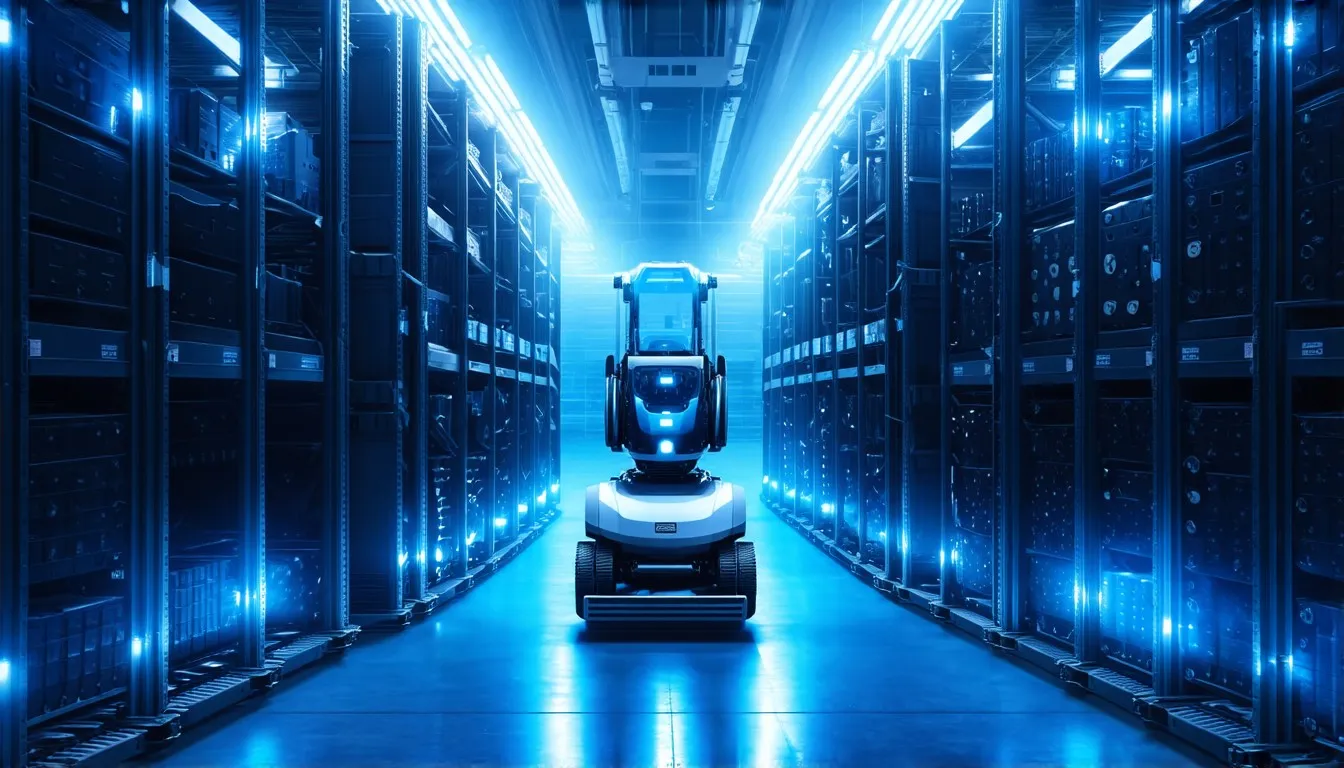
Manufacturing sectors currently employ robotic assembly lines with vision-guided precision, achieving defect rates below 0.01% in high-precision environments, which far exceed human capability limits. Logistics companies employ autonomous mobile robots in warehouses, reducing order fulfillment time by 40–60% compared to manual operations while increasing storage density through fine-tuned navigation. Customer service departments utilize conversational AI capable of handling up to 80% of routine inquiries without human escalation in leading deployments, significantly lowering operational costs. These implementations demonstrate the tangible benefits of automation in terms of efficiency, accuracy, and flexibility, providing the economic incentive for further investment and development across industries. Rising productivity demands continue to outpace human cognitive and physical limits, necessitating the deployment of autonomous systems for sustained economic output in competitive global markets. Aging populations in developed economies reduce the available labor supply, increasing reliance on automation for care provision, medical assistance, and service delivery to maintain quality of life.
Societal expectations for 24/7 availability, extreme precision, and continuous cost reduction in services push adoption beyond what human labor can reliably provide given physiological needs for rest and recovery. These external pressures create a compounding demand for machines that can operate continuously without fatigue or degradation in performance. Physical constraints include significant energy requirements, material durability limits, and strict environmental tolerances for robotic systems operating in real-world conditions. Economic constraints involve substantial upfront capital costs, ongoing maintenance overheads, and strict return-on-investment thresholds that dictate the feasibility of deployment for various organizations. Adaptability is currently limited by data availability, algorithmic reliability in edge cases, and the connection complexity required when connecting with into heterogeneous real-world settings. Overcoming these limitations requires sustained innovation in hardware efficiency, algorithmic generalization, and cost-reduction strategies throughout the supply chain.
Dominant architectures currently rely on centralized cloud-based AI processing with edge deployment for real-time response latency, utilizing supervised and reinforcement learning frameworks to train models before deployment. Developing challengers include decentralized, federated learning systems that preserve data privacy and neuromorphic hardware designed for low-power, adaptive reasoning closer to biological efficiency. Open-source robotics platforms and modular AI toolkits lower barriers to entry for custom automation solutions, allowing smaller teams to build upon existing best components rather than starting from scratch. This architectural diversity builds innovation and resilience within the ecosystem, preventing single points of failure in both technology development and application deployment. Rare earth elements such as neodymium and dysprosium are critical materials required for the high-performance motors and advanced sensors found in modern robotic systems. Semiconductor supply chains, particularly for GPUs and custom AI accelerator chips, constrain deployment speed and geographic distribution due to fabrication complexity and geopolitical factors.
Dependence on globalized manufacturing for precision components creates vulnerability to trade disruptions, necessitating the development of more localized or diversified supply networks for critical automation infrastructure. Securing access to these materials and components remains a strategic priority for any entity seeking to scale automated operations rapidly. Thermodynamic laws fundamentally constrain computational efficiency, with heat dissipation and energy consumption capping processing density in robotic systems and data centers alike. Workarounds include specialized hardware like analog AI chips that perform calculations using continuous variables, edge computing architectures to reduce data transmission energy costs, and algorithmic sparsity techniques to lower compute demands during inference. Material science innovations involving graphene and metamaterials may eventually overcome current physical limitations related to conductivity, strength-to-weight ratios, and thermal management capabilities. These engineering advancements are essential for the next generation of autonomous systems to operate efficiently in large deployments.

Major tech firms, including Google, Amazon, and Tesla, integrate automation vertically, controlling hardware design, software stacks, and deployment ecosystems to maximize synergy and performance optimization. Industrial automation leaders, such as Siemens and ABB, dominate legacy manufacturing environments yet face intense pressure from agile AI-native entrants who offer more flexible and intelligent solutions. Startups focus increasingly on niche applications like agricultural drones and eldercare robots, competing on specialization and adaptability rather than sheer scale or capital intensity. This competitive space drives rapid innovation cycles and ensures that automation technology penetrates every viable sector of the economy. Academic institutions contribute foundational research in machine learning theory, control systems dynamics, and human-robot interaction that underpins practical commercial applications. Industry funds applied research through corporate labs and strategic partnerships, accelerating the translation of theoretical prototypes into viable commercial products suitable for mass deployment.
Consortiums and industry alliances aim to standardize safety protocols, interoperability formats, and ethical guidelines to ensure that automated systems function reliably within shared environments. Collaboration between these distinct entities creates a durable pipeline of knowledge transfer that sustains long-term technological progress. Legacy software systems require application programming interfaces and sophisticated middleware to interface effectively with modern autonomous agents, demanding the creation of new connection protocols and translation layers. Industry standards must evolve rapidly to address complex questions regarding liability attribution, safety certification processes, and data privacy requirements in fully automated environments where human oversight is minimal. Physical infrastructure, including high-speed 5G networks, resilient smart grids, and standardized docking stations, supports widespread robotic deployment by ensuring constant connectivity and power availability. This infrastructural backbone acts as the nervous system for the automated economy, enabling smooth communication between distributed agents.
Automation converges with biotechnology through lab-grown organic materials for robotics, soft robotics, quantum computing for complex optimization problems in logistics, and space infrastructure for remote resource extraction operations. Setup with digital twins allows simulation-based training and validation of automated systems before physical deployment, reducing the risk of costly errors during operation in the real world. Smart city ecosystems utilize automation as a central backbone for traffic management, energy distribution optimization, and public safety monitoring, creating integrated urban environments that respond dynamically to changing conditions. These intersections amplify the impact of automation, creating compound effects across multiple technological domains simultaneously. Mass displacement of routine and cognitive labor could concentrate wealth among asset owners who control the automated means of production, exacerbating inequality without strong redistribution mechanisms in place. Universal Basic Income was considered extensively as a buffer against job loss, yet some analysts view it as insufficient to address the loss of purpose or social status traditionally tied to gainful employment.
Job guarantee programs were evaluated by policymakers and deemed largely incompatible with full automation due to built-in inefficiency and misalignment with declining labor demand in a highly automated economy. These economic challenges require novel approaches to wealth distribution and social organization that differ significantly from historical models used during previous industrial revolutions. Hybrid human-machine workflows persist currently in many sectors, yet they are increasingly seen as transitional arrangements rather than sustainable long-term models given the rapid pace of AI advancement. New business models develop around maintenance, oversight, and customization of automated systems, employing significantly fewer workers than traditional roles while requiring higher levels of technical expertise. Platforms for human creativity, mentorship, and community engagement may grow substantially as economic alternatives to traditional employment, offering new avenues for value generation. The labor market continues to bifurcate into highly specialized technical roles and purely human-centric roles focused on emotional intelligence and creativity.
Traditional key performance indicators like labor productivity and employment rates become less relevant metrics for success in a highly automated economy, while new metrics include automation coverage ratio, system uptime reliability, and human well-being indices. Economic output may be measured increasingly against resource efficiency and environmental impact rather than Gross Domestic Product growth alone, prioritizing sustainability over sheer volume of production. Social health indicators including mental health access and community participation gain prominence as work recedes from central life roles and individuals seek fulfillment elsewhere. Shifting these metrics reflects a broader change in societal values toward sustainability and quality of life. Advances in embodied AI will eventually enable robots to operate effectively in unstructured environments such as private homes and complex disaster zones with human-like adaptability and dexterity. Self-repairing materials and ambient energy-harvesting systems could drastically reduce maintenance demands while extending operational lifespans of autonomous units deployed in remote locations.
Cognitive architectures that integrate reasoning, long-term memory, and hierarchical planning may approach general task competence without requiring task-specific programming for every new objective. These capabilities represent the final frontiers of automation research, bridging the gap between narrow utility and general applicability. Superintelligence will likely treat automation as a core substrate for goal achievement, autonomously improving system deployment strategies, maintenance protocols, and adaptation mechanisms without requiring human input or guidance. It will redesign automation architectures from first principles, prioritizing systemic coherence, extreme flexibility, and perfect alignment with its high-level objectives. Human oversight will become interpretive rather than operational, focusing on monitoring intent alignment and verifying outcomes rather than directing task execution or managing processes. This shift marks a transition from humans as operators to humans as supervisors or beneficiaries of vastly more capable systems.

Superintelligence could utilize automation to reshape physical and digital environments at a planetary scale, managing global resource flows, infrastructure networks, and production facilities with minimal latency and maximal efficiency. It may delegate specific sub-tasks to specialized automated agents while maintaining global coordination through high-level planning, creating a vast hierarchy of autonomous systems working toward unified goals. The boundary between a passive tool and an active agent will blur significantly, with automation becoming an extension of superintelligent agency rather than a separate category of technology. This level of connection allows for optimization of complex systems that remain beyond the comprehension of individual human operators. The transition to a post-work society depends fundamentally on deliberate policy choices, widespread cultural adaptation, and the equitable design of automated systems to serve broad human interests. Human purpose requires active cultivation through revised educational structures, strong community institutions, and universal access to creative and exploratory opportunities beyond economic necessity.
Automation serves ultimately as a powerful tool to liberate human potential from compulsory labor, provided the distribution of its benefits is managed with foresight and justice. This future requires careful preparation to ensure that the immense capabilities of superintelligence result in widespread flourishing rather than disparity.