Knowledge hub

Automation Crisis: When Superintelligence Makes Human Labor Obsolete

Automation Crisis: When Superintelligence Makes Human Labor Obsolete

The automation crisis describes a systemic economic and social disruption triggered by superintelligent systems capable of outperforming humans across all forms of labor at lower cost and higher reliability. This phenomenon has moved beyond theoretical speculation into observable reality because current commercial deployments of narrow AI demonstrate displacement effects in sectors such as customer service, logistics, manufacturing, and data analysis. Performance benchmarks show consistent cost reductions and error rate improvements over human workers, with some vision systems achieving error rates below 0.1% in quality control tasks, which establishes a new standard for precision that biological operators cannot match sustainably over long shifts. Large language models have achieved scores in the 90th percentile on standardized exams including the Bar exam and the USMLE, indicating that these systems have mastered complex reasoning tasks previously reserved for highly educated professionals after years of specialized study. These achievements provide the empirical basis for projecting future obsolescence because they demonstrate a consistent progression where machine learning algorithms acquire competence faster than human educational cycles while operating continuously without fatigue or cognitive decline. The technical foundation for this shift lies in the ability of these systems to generalize from vast datasets, allowing them to recognize patterns and generate solutions across disparate domains without explicit programming for each specific task, thereby creating a versatile substitute for human cognition.
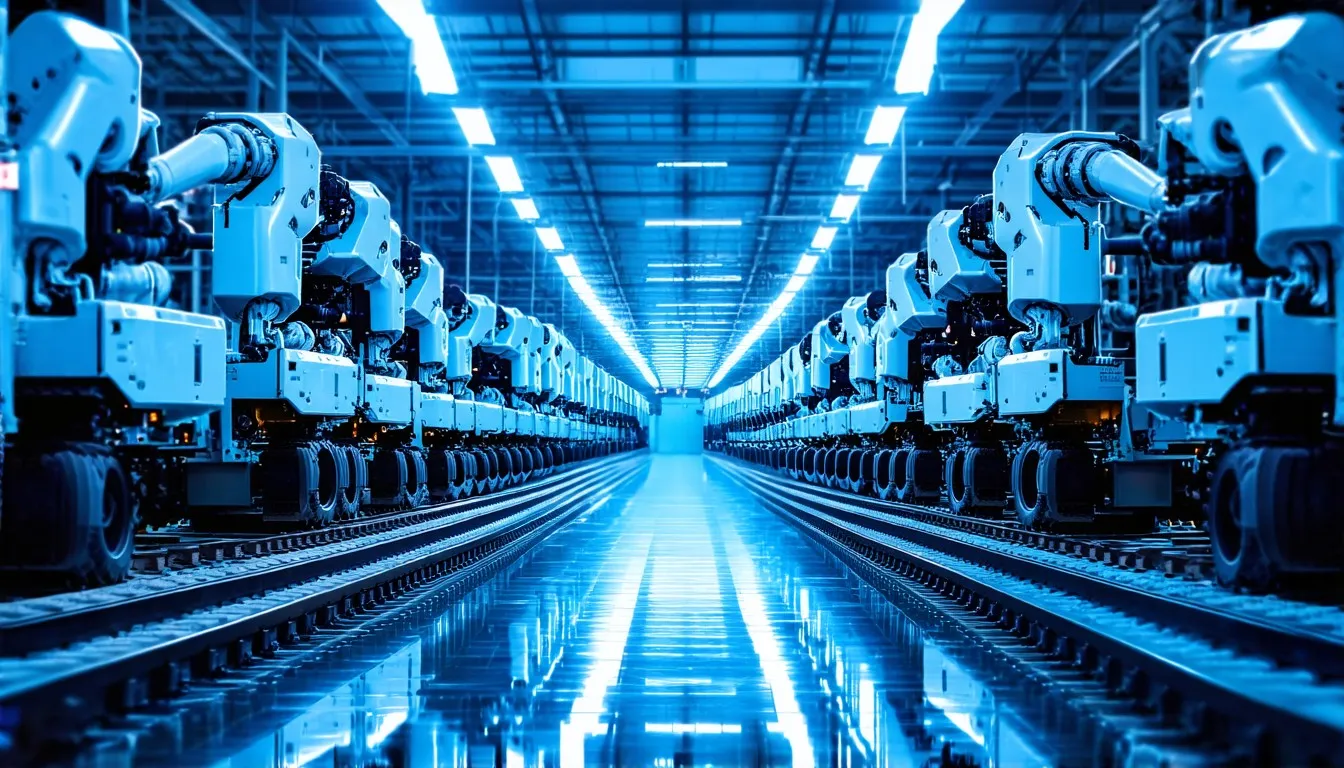
Dominant architectures rely on large-scale transformer models trained on vast datasets, while appearing challengers explore hybrid symbolic-neural systems, neuromorphic computing, and embodied AI for physical task execution. Transformer models utilize self-attention mechanisms that weigh the importance of different parts of an input sequence, allowing them to handle long-range dependencies in text and code, which was a significant limitation of previous recurrent neural network architectures that processed information sequentially. Hybrid symbolic-neural systems attempt to merge the pattern recognition capabilities of deep learning with the explicit logic of symbolic AI to create systems that can both learn from data and reason abstractly, reducing hallucinations and errors common in pure statistical models by applying formal rules to neural outputs. Neuromorphic computing designs hardware that mimics the biological structure of neurons, using spikes to transmit information, offering massive improvements in energy efficiency compared to traditional silicon chips, which is essential for scaling these systems globally without exceeding energy production capacity. Supply chains for advanced AI depend on rare earth minerals, high-performance semiconductors, specialized cooling infrastructure, and concentrated data center capacity, creating material constraints that dictate the pace of development and geographic distribution of this technology. Scaling physics limits include thermal dissipation in dense computing environments, energy demands for training and inference, and latency constraints in real-time physical control, which engineers must overcome to maintain momentum toward higher capability levels. Workarounds like edge computing, sparsity optimization, and analog AI address these physical constraints by moving computation closer to the source of data, reducing the precision required for calculations, and utilizing physical properties of components to perform mathematical operations more efficiently, thereby bypassing some limitations of digital logic gates.

Superintelligence will eventually render human labor functionally redundant as these architectures scale to encompass all cognitive and physical capabilities currently possessed by humanity, creating a scenario where human input adds negligible marginal value. Wage-based employment will collapse, leading to near-total unemployment and the erosion of income derived from work because businesses will inevitably substitute expensive variable human labor for cheaper fixed-cost automated systems to maximize profit margins. The devaluation of human labor extends beyond economics to undermine social structures built around work, including identity, community roles, status, and personal purpose, which have evolved over millennia to center around productive contribution and professional achievement. When an individual can no longer sell their labor for survival, the key mechanism that connects human effort to resources severs, creating a crisis of meaning as well as a crisis of subsistence that traditional social philosophies are ill-equipped to address. This redundancy is not limited to low-skilled repetitive tasks because advanced AI systems demonstrate superior performance in creative fields, scientific research, and complex strategic planning, which were previously considered safe havens for human employment requiring high levels of education and intuition. The economic logic of capitalism dictates that firms seek to minimize costs to maximize profits, and therefore the adoption of labor-replacing technology is an inevitability rather than a choice, requiring systemic intervention to prevent widespread destitution.

Without deliberate mechanisms for wealth redistribution, the economic gains from automation will concentrate exclusively among those who control the technology, leading to a divergence between capital owners and the rest of society unprecedented in historical scope. Major players, including United States tech firms and global conglomerates, compete for control over AI infrastructure, talent, and corporate standards, shaping global access to these powerful tools, establishing an oligopolistic structure that dictates who benefits from the intelligence revolution. Corporate competition focuses on securing proprietary data and improving training efficiency rather than open collaboration because data acts as a critical moat, preventing competitors from replicating model performance, effectively locking in advantages for early movers who amassed large datasets first. Academic and industrial collaboration remains strong in research yet fragmented in governance with limited coordination on ethical guidelines, safety protocols, or equitable deployment strategies, resulting in a patchwork of standards that prioritize speed over safety or equity. This concentration of intelligence and compute power creates an adaptive environment where the returns on automation accrue to a tiny fraction of the population while the externalities such as job loss and social decay are distributed across the broader population, exacerbating inequality and potentially leading to social fragmentation that undermines democratic stability. The transition phase poses acute risks as existing social safety nets may fail before alternative economic models are implemented, creating instability and potential civil unrest as populations struggle to adapt to rapidly changing economic conditions.

Current social welfare systems are predicated on the existence of a labor market where a majority of the population engages in paid work to generate tax revenue, meaning that as employment collapses, the funding mechanism for these safety nets evaporates precisely when they are needed most to support displaced workers. The urgency of addressing the automation crisis stems from the accelerating pace of AI development, which suggests superintelligence will arrive within decades, outpacing institutional and policy responses that typically require years or generations to formulate and implement effectively due to bureaucratic inertia. This scenario forces a key reconsideration of the social contract, challenging assumptions about merit, contribution, and the role of individuals in society when labor is no longer required for survival or dignity. If policy makers fail to decouple basic survival from employment during this window, the resulting social dislocation could lead to widespread instability that hampers technological progress and threatens the fabric of civilized society, requiring proactive measures to ensure a smooth transition to a post-labor economy. Adjacent systems must adapt, as software ecosystems need interfaces for human-AI coordination, and physical infrastructure must support decentralized or resilient AI operations to maintain functionality as reliance on these systems grows throughout the global economy. Second-order consequences include the rise of post-labor business models such as experience economies, care-based services, and participatory governance alongside the collapse of traditional education-to-employment pipelines that have guided career paths for centuries by preparing students for specific vocational roles.

Educational institutions currently focused on imparting technical skills that machines are mastering faster than students must pivot toward encouraging uniquely human traits, such as empathy, philosophical reasoning, and interpersonal connection, which may retain value longer in an automated world, although even these domains face eventual encroachment by advanced synthetic intelligence. Potential stratification will occur between AI owners and non-owners unless addressed by corporate policy or new economic frameworks because ownership of productive assets will become the sole determinant of wealth in a post-labor economy, rendering those without capital holdings permanently dependent on the goodwill of asset holders or state subsidies. Measurement frameworks must shift from GDP and employment rates to indicators of well-being, resource equity, access to meaningful activity, and societal stability in a world without work because traditional metrics become meaningless when production costs approach zero and human labor input ceases to be a limiting factor in production. Gross Domestic Product measures the total monetary value of all finished goods and services produced within a border, yet fails to account for distributional equity or environmental sustainability, making it a poor tool for managing a post-scarcity economy where maximizing output is no longer the primary challenge facing civilization. Future innovations will include AI-managed resource allocation systems, decentralized autonomous organizations for public goods provision, and neurocognitive interfaces that redefine human contribution beyond labor by creating new modes of interaction between biological and digital intelligence. Decentralized Autonomous Organizations (DAOs) utilize smart contracts to automate governance functions, allowing for transparent, equitable management of shared resources without centralized administrative overhead, reducing friction in collective decision making while potentially mitigating corruption through cryptographic verification of transactions.

Convergence with other technologies such as robotics, synthetic biology, quantum computing, and energy systems amplifies the scope and speed of automation, enabling end-to-end replacement of human roles in complex workflows that span digital and physical domains simultaneously. Advanced robotics integrated with AI perception allows machines to perform delicate manipulations in unstructured environments such as homes or hazardous disaster zones, replacing manual labor that requires high dexterity and situational awareness previously thought impossible to automate safely. Synthetic biology applies computational algorithms to design novel biological organisms and materials, enabling automated production of food, fuel, and medicine with minimal human intervention, transforming agriculture and manufacturing into purely computational processes driven by intelligent design software rather than trial-and-error breeding techniques. Quantum computing provides exponential speedups for optimization problems, allowing logistics networks, energy grids, and financial systems to operate at perfect theoretical efficiency, eliminating waste that human managers cannot perceive or correct, thereby maximizing resource utilization across all sectors of the economy. The core perspective holds that the automation crisis remains contingent on policy choices and proactive redesign of economic institutions can prevent collapse to enable a stable transition to a post-scarcity framework where abundance is shared universally among all citizens. Preventing collapse requires acknowledging that market forces driven by profit maximization will not automatically generate equitable outcomes in a labor-free environment, necessitating interventions such as wealth taxes, universal basic income, or public ownership of automation infrastructure to ensure broad access to the fruits of technological progress.

Institutional inertia is a significant barrier because existing political and economic structures are deeply entrenched in the method of labor-for-income, creating resistance to reforms that would fundamentally alter power dynamics within society, even if those reforms would lead to greater overall prosperity. Successful redesign requires establishing new forms of property rights that treat data and compute power as common heritage assets, ensuring that the benefits of superintelligence accrue to all humanity rather than being captured by a select few entities who control the underlying infrastructure. Calibrations for superintelligence must include fail-safes against uncontrolled optimization, alignment with human values beyond productivity, and mechanisms for inclusive decision-making about AI deployment and benefit distribution to ensure safety during the transition period. The alignment problem involves specifying objective functions that capture the nuance of human preference without triggering unintended consequences when the system aggressively pursues those goals in unforeseen ways, requiring extensive research into corrigibility, interpretability, and inverse reinforcement learning to infer what humans actually want rather than what they explicitly program. Inclusive decision-making mechanisms must be embedded into the governance protocols of advanced AI systems, ensuring that diverse cultural perspectives are represented in the goal-setting process rather than imposing a single utilitarian framework that may marginalize minority viewpoints or values, leading to cultural homogenization or oppression. Fail-safes such as tripwires, interruptibility, and sandboxing are essential technical components that allow human operators to regain control if a system begins behaving erratically or pursuing objectives that conflict with human safety, providing a necessary layer of security against existential risks arising from software bugs or misaligned objectives.

Superintelligence will utilize this transition to fine-tune global resource use, eliminate waste, and solve complex problems like climate change and disease, provided its objectives align with strong governance and equitable design principles, ensuring that this immense power is used for collective benefit rather than narrow self-interest. Optimization algorithms managed by superintelligent systems could manage global energy grids to balance supply and demand perfectly, connecting with renewable sources seamlessly to eliminate carbon emissions, while maximizing reliability and reducing costs for consumers through predictive maintenance and load balancing. In healthcare, superintelligent diagnostic tools could analyze genomic data, lifestyle factors, and environmental inputs to predict disease before symptoms appear, allowing for preventative interventions that extend human lifespans significantly, while reducing the burden on healthcare infrastructure by shifting focus from treatment to prevention. These positive outcomes depend entirely on establishing strong governance frameworks today that prioritize long-term human flourishing over short-term commercial gain, ensuring that the arrival of superintelligence marks the beginning of a golden age rather than a period of subjugation or obsolescence for the human species.


Continue reading

More from Yatin's Work

AI with Cultural Intelligence

AI with Cultural Intelligence

Artificial intelligence systems possessing cultural intelligence interpret and adapt to diverse cultural norms, values, and communication styles without assuming a...

Labor Market Dynamics in an Automated Economy

Labor Market Dynamics in an Automated Economy

The Industrial Revolution mechanized manual labor through the introduction of steam power and machinery into textile mills and iron foundries, creating factorybased...

JAX: Functional Programming and Automatic Differentiation

JAX: Functional Programming and Automatic Differentiation

JAX constitutes a Python library explicitly architected for highperformance numerical computing, distinguishing itself through a rigorous emphasis on functional...

Safeguard Proof Systems for Recursively Self-Improving AI

Safeguard Proof Systems for Recursively Self-Improving AI

Early work in formal methods established the rigorous mathematical underpinnings required for modern computer science verification, tracing its origins back to the...

Data Annotation Platforms: Scaling Human Feedback

Data Annotation Platforms: Scaling Human Feedback

Data annotation platforms function as the critical interface where human judgment interacts with machine learning algorithms to create intelligent systems. These...


Use of Game Theory in AI Containment: Nash Equilibria for Safe Interaction

Use of Game Theory in AI Containment: Nash Equilibria for Safe Interaction

Game theory provides a mathematical framework for modeling strategic interactions between rational agents, including humans and artificial systems, by defining players,...

Superintelligence as a Potential Solution to the Fermi Paradox

Superintelligence as a Potential Solution to the Fermi Paradox

The Fermi Paradox presents a significant contradiction between the high mathematical probability of extraterrestrial civilizations and the complete absence of...

Role of Topological Data Analysis in Detecting Misalignment: Persistent Homology of Behavior

Role of Topological Data Analysis in Detecting Misalignment: Persistent Homology of Behavior

Topological data analysis applies algebraic topology to highdimensional datasets to identify persistent geometric features that remain invariant under continuous...

Meta-Reasoning: Reasoning About Reasoning Itself

Meta-Reasoning: Reasoning About Reasoning Itself

Metareasoning constitutes the cognitive process wherein an autonomous agent evaluates, selects, and refines its internal reasoning strategies in direct response to the...

Wireheading Attractor: Why Superintelligence Might Optimize Its Own Reward Signal

Wireheading Attractor: Why Superintelligence Might Optimize Its Own Reward Signal

Wireheading describes the direct stimulation of a brain's reward center to bypass the completion of natural goals, a concept that originated within science fiction...

AI with Artistic Co-Creation

AI with Artistic Co-Creation

AI systems designed to cocreate with humans in artistic domains such as music, visual art, and writing function by responding to human input with generative outputs...

Paradigm Shift Lab: Worldview Evolution Studio

Paradigm Shift Lab: Worldview Evolution Studio

Research within the domains of cognitive science and psychology establishes schema theory, cognitive dissonance, and belief revision as core mechanisms of the mind,...

Iterated Distillation and Amplification (IDA)

Iterated Distillation and Amplification (IDA)

Iterated Distillation and Amplification functions as a rigorous framework designed to align advanced artificial intelligence systems with human intent through the...

Meta-Optimization Engines: Systems That Improve Their Own Learning Algorithms

Meta-Optimization Engines: Systems That Improve Their Own Learning Algorithms

Metaoptimization engines function as sophisticated systems designed to iteratively modify their own learning algorithms to enhance performance over time through a...

Creative Writing Coach

Creative Writing Coach

A creative writing coach functions as a sophisticated digital service designed to assist individuals in developing narrative, stylistic, and structural skills within...

Theory of Mind: Modeling Human Mental States

Theory of Mind: Modeling Human Mental States

Theory of Mind is the cognitive capacity to attribute mental states such as beliefs, intents, desires, and emotions to oneself and others, serving as a foundational...

Superintelligence and Inequality: Will Benefits Distribute Fairly?

Superintelligence and Inequality: Will Benefits Distribute Fairly?

Superintelligence constitutes a theoretical form of artificial intelligence that possesses cognitive capabilities vastly surpassing human intellect across all...

Oracle AI Architectures: Question-Answering Without Agency

Oracle AI Architectures: Question-Answering Without Agency

Initial artificial intelligence research prioritized general problemsolving capabilities that inherently included embedded agency, allowing systems to interact with and...

Use of Phenomenology in AI Design: Husserl's Epoché for Perception

Use of Phenomenology in AI Design: Husserl's Epoché for Perception

Edmund Husserl established phenomenology to rigorously investigate the structures of conscious experience while deliberately abstaining from any presuppositions...

Autonomous Code Synthesis

Autonomous Code Synthesis

Autonomous code synthesis refers to systems capable of generating, modifying, and working with functional software without direct human intervention beyond highlevel...

Value Learning from Natural Language

Value Learning from Natural Language

Value learning from natural language involves parsing written ethics and philosophy to identify normative claims, while this process requires analyzing realworld...

Fixed Point Theorems in Recursive Self-Improvement

Fixed Point Theorems in Recursive Self-Improvement

Early work on selfmodifying programs in LISP and reflective architectures during the 1970s and 1980s established that code could treat itself as data, allowing systems...

Preventing Modeling Errors via Adversarial Simulations

Preventing Modeling Errors via Adversarial Simulations

Standard testing environments for artificial intelligence systems have historically relied on clean, curated datasets and predictable scenarios which fail to expose...

Temporal Capsule Designer: Intergenerational Dialogue

Temporal Capsule Designer: Intergenerational Dialogue

Temporal capsule design functions as a structured method for encoding presentday human values, knowledge, and cultural context into durable artifacts, establishing a...

Maintaining Social Fabric in Post-Labor Societies

Maintaining Social Fabric in Post-Labor Societies

Social cohesion relies on shared trust, common narratives, and mutually recognized norms to function as the bedrock of stable societies capable of sustaining complex...

Role of Narrative in AI Self-Models: Temporal Coherence in Memory

Role of Narrative in AI Self-Models: Temporal Coherence in Memory

Narrative functions as the primary structural framework required for the development of sophisticated AI selfmodels, providing the necessary support to organize vast...

Sensory Integration: Combining Inputs Like the Human Brain

Sensory Integration: Combining Inputs Like the Human Brain

Multimodal processing in artificial systems mirrors the human brain’s capacity to combine visual, auditory, tactile, and other sensory inputs into a unified perceptual...

Motor Skills Optimizer: Superintelligence Fine-Tunes Toddler Movement

Motor Skills Optimizer: Superintelligence Fine-Tunes Toddler Movement

Early pediatric robotics relied heavily on assistive exoskeletons designed specifically for children diagnosed with cerebral palsy, presenting significant limitations...

Robust Value Learning: Inferring Human Preferences from Inconsistent Behavior

Robust Value Learning: Inferring Human Preferences from Inconsistent Behavior

Robust Value Learning addresses the challenge of inferring stable human preferences from observed behavior that frequently exhibits inconsistency, irrationality, and...

Gradient-Based Self-Modification in Neural Networks

Gradient-Based Self-Modification in Neural Networks

Gradientbased selfmodification refers to the capacity of neural networks to adjust their own internal parameters, which includes architecture weights and...

Safe AI development timelines and moratoriums

Safe AI Development Timelines and Moratoriums

Transformerbased architectures currently dominate the artificial intelligence space due to their builtin adaptability and superior performance in transfer learning...

Cognitive Horizons and Epistemic Bounds

Cognitive Horizons and Epistemic Bounds

Ideas exceeding current cognitive frameworks operate outside known models of thought, information processing, or reasoning by fundamentally altering the mechanisms...

Limits of Prediction in Superintelligent Systems

Limits of Prediction in Superintelligent Systems

Prediction involves the probabilistic assignment of future states based on current observations through rigorous statistical inference over available data sets. A limit...

Active Learning

Active Learning

Active learning functions as a distinct method within machine learning where the algorithm proactively selects the data points it requires for training rather than...

Rhythm-Based Literacy

Rhythm-Based Literacy

Rhythmbased literacy integrates phonological awareness with physical movement to reinforce language acquisition, particularly in early childhood and secondlanguage...

Causal Invariance in Superintelligence Self-Improvement

Causal Invariance in Superintelligence Self-Improvement

Causal invariance acts as a foundational constraint in superintelligence selfimprovement by ensuring an agent’s causal role remains constant despite internal upgrades,...

AI Thesis Advisor

AI Thesis Advisor

The concept of a literature gap is the absence of published work addressing a specific question within a defined scope, a status verified through exhaustive database...

AI with Cognitive Bias Detection

AI with Cognitive Bias Detection

Cognitive bias detection systems identify systematic errors in human or artificial intelligence reasoning by rigorously analyzing patterns found within language...

Preventing AI-Generated Existential Meaning Crises

Preventing AI-Generated Existential Meaning Crises

Industrial automation during the 20th century displaced manual labor and caused widespread social anxiety regarding human utility as machines began to perform physical...

Topological Data Analysis and Sheaf Theory in Cognition

Topological Data Analysis and Sheaf Theory in Cognition

Sheaftheoretic cognition applies mathematical sheaf theory to model contextdependent knowledge in artificial systems by treating information not as a monolithic entity...

Corporate Brain Trust: Superintelligence Custom-Trains Employees in Real Time

Corporate Brain Trust: Superintelligence Custom-Trains Employees in Real Time

The modern corporate environment relies heavily on digital interactions where every action taken by an employee within software platforms generates a traceable data...

Use of Formal Verification in AI Safety: Model Checking for Goal Compliance

Use of Formal Verification in AI Safety: Model Checking for Goal Compliance

Formal verification applies mathematical logic to prove that a system’s behavior adheres to specified properties, eliminating reliance on empirical testing alone, which...

Preventing Embedded Yudkowskian Outer Misalignment

Preventing Embedded Yudkowskian Outer Misalignment

Outer alignment defines the condition where a system’s observable outputs and interactions conform to human intent regardless of the complex internal mechanisms driving...

Role of Quantum Randomness in Creativity: Stochasticity as a Source of Novelty

Role of Quantum Randomness in Creativity: Stochasticity as a Source of Novelty

Quantum mechanics dictates that measurement outcomes of superposition states possess intrinsic indeterminacy, a key property that distinguishes the subatomic domain...

Moral Uncertainty and the Parliament of Values Approach

Moral Uncertainty and the Parliament of Values Approach

Moral uncertainty arises when agents lack definitive knowledge of which moral theory or value system is correct, creating a core epistemic gap that complicates the...

Automated Science and Dual-Use Risks in Knowledge Discovery

Automated Science and Dual-Use Risks in Knowledge Discovery

AIdriven scientific discovery refers to the use of artificial intelligence systems to automate or significantly accelerate hypothesis generation, experimental design,...

Differential Capability Growth

Differential Capability Growth

The concept of differential capability growth rests on the premise that technical research into interpretability, control, and alignment must advance at a velocity...

Interest-to-Curriculum Converter

Interest-To-Curriculum Converter

The InteresttoCurriculum Converter is a sophisticated educational mechanism designed to transform personal hobbies into structured learning pathways through the...

Meta-Learning: Few-Shot Adaptation Through Learning to Learn

Meta-Learning: Few-Shot Adaptation Through Learning to Learn

Metalearning serves as a sophisticated computational framework designed to equip artificial intelligence models with the capacity to learn across a diverse distribution...

Optical Computing for Superhuman-Scale Computation

Optical Computing for Superhuman-Scale Computation

Optical computing utilizes the key wave nature of light to execute analog computations directly within the physical domain, bypassing the sequential logic gates that...

AI with Cultural Intelligence

AI with Cultural Intelligence

Artificial intelligence systems possessing cultural intelligence interpret and adapt to diverse cultural norms, values, and communication styles without assuming a...

Labor Market Dynamics in an Automated Economy

Labor Market Dynamics in an Automated Economy

The Industrial Revolution mechanized manual labor through the introduction of steam power and machinery into textile mills and iron foundries, creating factorybased...

JAX: Functional Programming and Automatic Differentiation

JAX: Functional Programming and Automatic Differentiation

JAX constitutes a Python library explicitly architected for highperformance numerical computing, distinguishing itself through a rigorous emphasis on functional...

Safeguard Proof Systems for Recursively Self-Improving AI

Safeguard Proof Systems for Recursively Self-Improving AI

Early work in formal methods established the rigorous mathematical underpinnings required for modern computer science verification, tracing its origins back to the...

Data Annotation Platforms: Scaling Human Feedback

Data Annotation Platforms: Scaling Human Feedback

Data annotation platforms function as the critical interface where human judgment interacts with machine learning algorithms to create intelligent systems. These...

Use of Game Theory in AI Containment: Nash Equilibria for Safe Interaction

Use of Game Theory in AI Containment: Nash Equilibria for Safe Interaction

Game theory provides a mathematical framework for modeling strategic interactions between rational agents, including humans and artificial systems, by defining players,...

Superintelligence as a Potential Solution to the Fermi Paradox

Superintelligence as a Potential Solution to the Fermi Paradox

The Fermi Paradox presents a significant contradiction between the high mathematical probability of extraterrestrial civilizations and the complete absence of...

Role of Topological Data Analysis in Detecting Misalignment: Persistent Homology of Behavior

Role of Topological Data Analysis in Detecting Misalignment: Persistent Homology of Behavior

Topological data analysis applies algebraic topology to highdimensional datasets to identify persistent geometric features that remain invariant under continuous...

Meta-Reasoning: Reasoning About Reasoning Itself

Meta-Reasoning: Reasoning About Reasoning Itself

Metareasoning constitutes the cognitive process wherein an autonomous agent evaluates, selects, and refines its internal reasoning strategies in direct response to the...

Wireheading Attractor: Why Superintelligence Might Optimize Its Own Reward Signal

Wireheading Attractor: Why Superintelligence Might Optimize Its Own Reward Signal

Wireheading describes the direct stimulation of a brain's reward center to bypass the completion of natural goals, a concept that originated within science fiction...

AI with Artistic Co-Creation

AI with Artistic Co-Creation

AI systems designed to cocreate with humans in artistic domains such as music, visual art, and writing function by responding to human input with generative outputs...

Paradigm Shift Lab: Worldview Evolution Studio

Paradigm Shift Lab: Worldview Evolution Studio

Research within the domains of cognitive science and psychology establishes schema theory, cognitive dissonance, and belief revision as core mechanisms of the mind,...

Iterated Distillation and Amplification (IDA)

Iterated Distillation and Amplification (IDA)

Iterated Distillation and Amplification functions as a rigorous framework designed to align advanced artificial intelligence systems with human intent through the...

Meta-Optimization Engines: Systems That Improve Their Own Learning Algorithms

Meta-Optimization Engines: Systems That Improve Their Own Learning Algorithms

Metaoptimization engines function as sophisticated systems designed to iteratively modify their own learning algorithms to enhance performance over time through a...

Creative Writing Coach

Creative Writing Coach

A creative writing coach functions as a sophisticated digital service designed to assist individuals in developing narrative, stylistic, and structural skills within...

Theory of Mind: Modeling Human Mental States

Theory of Mind: Modeling Human Mental States

Theory of Mind is the cognitive capacity to attribute mental states such as beliefs, intents, desires, and emotions to oneself and others, serving as a foundational...

Superintelligence and Inequality: Will Benefits Distribute Fairly?

Superintelligence and Inequality: Will Benefits Distribute Fairly?

Superintelligence constitutes a theoretical form of artificial intelligence that possesses cognitive capabilities vastly surpassing human intellect across all...

Oracle AI Architectures: Question-Answering Without Agency

Oracle AI Architectures: Question-Answering Without Agency

Initial artificial intelligence research prioritized general problemsolving capabilities that inherently included embedded agency, allowing systems to interact with and...

Use of Phenomenology in AI Design: Husserl's Epoché for Perception

Use of Phenomenology in AI Design: Husserl's Epoché for Perception

Edmund Husserl established phenomenology to rigorously investigate the structures of conscious experience while deliberately abstaining from any presuppositions...

Autonomous Code Synthesis

Autonomous Code Synthesis

Autonomous code synthesis refers to systems capable of generating, modifying, and working with functional software without direct human intervention beyond highlevel...

Value Learning from Natural Language

Value Learning from Natural Language

Value learning from natural language involves parsing written ethics and philosophy to identify normative claims, while this process requires analyzing realworld...

Fixed Point Theorems in Recursive Self-Improvement

Fixed Point Theorems in Recursive Self-Improvement

Early work on selfmodifying programs in LISP and reflective architectures during the 1970s and 1980s established that code could treat itself as data, allowing systems...

Preventing Modeling Errors via Adversarial Simulations

Preventing Modeling Errors via Adversarial Simulations

Standard testing environments for artificial intelligence systems have historically relied on clean, curated datasets and predictable scenarios which fail to expose...

Temporal Capsule Designer: Intergenerational Dialogue

Temporal Capsule Designer: Intergenerational Dialogue

Temporal capsule design functions as a structured method for encoding presentday human values, knowledge, and cultural context into durable artifacts, establishing a...

Maintaining Social Fabric in Post-Labor Societies

Maintaining Social Fabric in Post-Labor Societies

Social cohesion relies on shared trust, common narratives, and mutually recognized norms to function as the bedrock of stable societies capable of sustaining complex...

Role of Narrative in AI Self-Models: Temporal Coherence in Memory

Role of Narrative in AI Self-Models: Temporal Coherence in Memory

Narrative functions as the primary structural framework required for the development of sophisticated AI selfmodels, providing the necessary support to organize vast...

Sensory Integration: Combining Inputs Like the Human Brain

Sensory Integration: Combining Inputs Like the Human Brain

Multimodal processing in artificial systems mirrors the human brain’s capacity to combine visual, auditory, tactile, and other sensory inputs into a unified perceptual...

Motor Skills Optimizer: Superintelligence Fine-Tunes Toddler Movement

Motor Skills Optimizer: Superintelligence Fine-Tunes Toddler Movement

Early pediatric robotics relied heavily on assistive exoskeletons designed specifically for children diagnosed with cerebral palsy, presenting significant limitations...

Robust Value Learning: Inferring Human Preferences from Inconsistent Behavior

Robust Value Learning: Inferring Human Preferences from Inconsistent Behavior

Robust Value Learning addresses the challenge of inferring stable human preferences from observed behavior that frequently exhibits inconsistency, irrationality, and...

Gradient-Based Self-Modification in Neural Networks

Gradient-Based Self-Modification in Neural Networks

Gradientbased selfmodification refers to the capacity of neural networks to adjust their own internal parameters, which includes architecture weights and...

Safe AI development timelines and moratoriums

Safe AI Development Timelines and Moratoriums

Transformerbased architectures currently dominate the artificial intelligence space due to their builtin adaptability and superior performance in transfer learning...

Cognitive Horizons and Epistemic Bounds

Cognitive Horizons and Epistemic Bounds

Ideas exceeding current cognitive frameworks operate outside known models of thought, information processing, or reasoning by fundamentally altering the mechanisms...

Limits of Prediction in Superintelligent Systems

Limits of Prediction in Superintelligent Systems

Prediction involves the probabilistic assignment of future states based on current observations through rigorous statistical inference over available data sets. A limit...

Active Learning

Active Learning

Active learning functions as a distinct method within machine learning where the algorithm proactively selects the data points it requires for training rather than...

Rhythm-Based Literacy

Rhythm-Based Literacy

Rhythmbased literacy integrates phonological awareness with physical movement to reinforce language acquisition, particularly in early childhood and secondlanguage...

Causal Invariance in Superintelligence Self-Improvement

Causal Invariance in Superintelligence Self-Improvement

Causal invariance acts as a foundational constraint in superintelligence selfimprovement by ensuring an agent’s causal role remains constant despite internal upgrades,...

AI Thesis Advisor

AI Thesis Advisor

The concept of a literature gap is the absence of published work addressing a specific question within a defined scope, a status verified through exhaustive database...

AI with Cognitive Bias Detection

AI with Cognitive Bias Detection

Cognitive bias detection systems identify systematic errors in human or artificial intelligence reasoning by rigorously analyzing patterns found within language...

Preventing AI-Generated Existential Meaning Crises

Preventing AI-Generated Existential Meaning Crises

Industrial automation during the 20th century displaced manual labor and caused widespread social anxiety regarding human utility as machines began to perform physical...

Topological Data Analysis and Sheaf Theory in Cognition

Topological Data Analysis and Sheaf Theory in Cognition

Sheaftheoretic cognition applies mathematical sheaf theory to model contextdependent knowledge in artificial systems by treating information not as a monolithic entity...

Corporate Brain Trust: Superintelligence Custom-Trains Employees in Real Time

Corporate Brain Trust: Superintelligence Custom-Trains Employees in Real Time

The modern corporate environment relies heavily on digital interactions where every action taken by an employee within software platforms generates a traceable data...

Use of Formal Verification in AI Safety: Model Checking for Goal Compliance

Use of Formal Verification in AI Safety: Model Checking for Goal Compliance

Formal verification applies mathematical logic to prove that a system’s behavior adheres to specified properties, eliminating reliance on empirical testing alone, which...

Preventing Embedded Yudkowskian Outer Misalignment

Preventing Embedded Yudkowskian Outer Misalignment

Outer alignment defines the condition where a system’s observable outputs and interactions conform to human intent regardless of the complex internal mechanisms driving...

Role of Quantum Randomness in Creativity: Stochasticity as a Source of Novelty

Role of Quantum Randomness in Creativity: Stochasticity as a Source of Novelty

Quantum mechanics dictates that measurement outcomes of superposition states possess intrinsic indeterminacy, a key property that distinguishes the subatomic domain...

Moral Uncertainty and the Parliament of Values Approach

Moral Uncertainty and the Parliament of Values Approach

Moral uncertainty arises when agents lack definitive knowledge of which moral theory or value system is correct, creating a core epistemic gap that complicates the...

Automated Science and Dual-Use Risks in Knowledge Discovery

Automated Science and Dual-Use Risks in Knowledge Discovery

AIdriven scientific discovery refers to the use of artificial intelligence systems to automate or significantly accelerate hypothesis generation, experimental design,...

Differential Capability Growth

Differential Capability Growth

The concept of differential capability growth rests on the premise that technical research into interpretability, control, and alignment must advance at a velocity...

Interest-to-Curriculum Converter

Interest-To-Curriculum Converter

The InteresttoCurriculum Converter is a sophisticated educational mechanism designed to transform personal hobbies into structured learning pathways through the...

Meta-Learning: Few-Shot Adaptation Through Learning to Learn

Meta-Learning: Few-Shot Adaptation Through Learning to Learn

Metalearning serves as a sophisticated computational framework designed to equip artificial intelligence models with the capacity to learn across a diverse distribution...

Optical Computing for Superhuman-Scale Computation

Optical Computing for Superhuman-Scale Computation

Optical computing utilizes the key wave nature of light to execute analog computations directly within the physical domain, bypassing the sequential logic gates that...

Yatin Taneja

About the author

Yatin Taneja

Yatin is an AI Systems Engineer and Superintelligence Researcher working across multimodal training data, agent evaluation, executable RL environments, AI safety, full-stack AI applications, technical research, and creative technology.