Knowledge hub

Chip Shortage Problem: Manufacturing Constraints on Superintelligence Development

Chip Shortage Problem: Manufacturing Constraints on Superintelligence Development

The architecture of the global semiconductor supply chain necessitates a high degree of specialization where distinct phases such as logic design, wafer fabrication, advanced packaging, and final testing occur in geographically dispersed facilities located across different continents. This distribution allows companies to apply regional expertise in specific domains while managing costs effectively, yet it creates a complex logistical web where the failure of a single node disrupts the entire flow of goods to market. Fabrication plants represent the most capital-intensive component of this chain, requiring multi-billion-dollar investments for construction and equipment procurement, followed by several years of commissioning before full production capacity comes online. These extended timelines limit the ability of the industry to expand production capacity rapidly in response to sudden surges in demand or technological shifts. Advanced manufacturing nodes such as 3nm and 2nm are geographically concentrated in a very small number of locations due to the extreme technical complexity involved and the scarcity of expertise required to operate them effectively. This intense concentration creates severe constraints on the supply of high-performance computing hardware required for advanced artificial intelligence research and development. The reliance on specific regions for advanced fabrication introduces vulnerability into the system, as any disruption in these areas has immediate global repercussions on the availability of critical components needed for data centers.
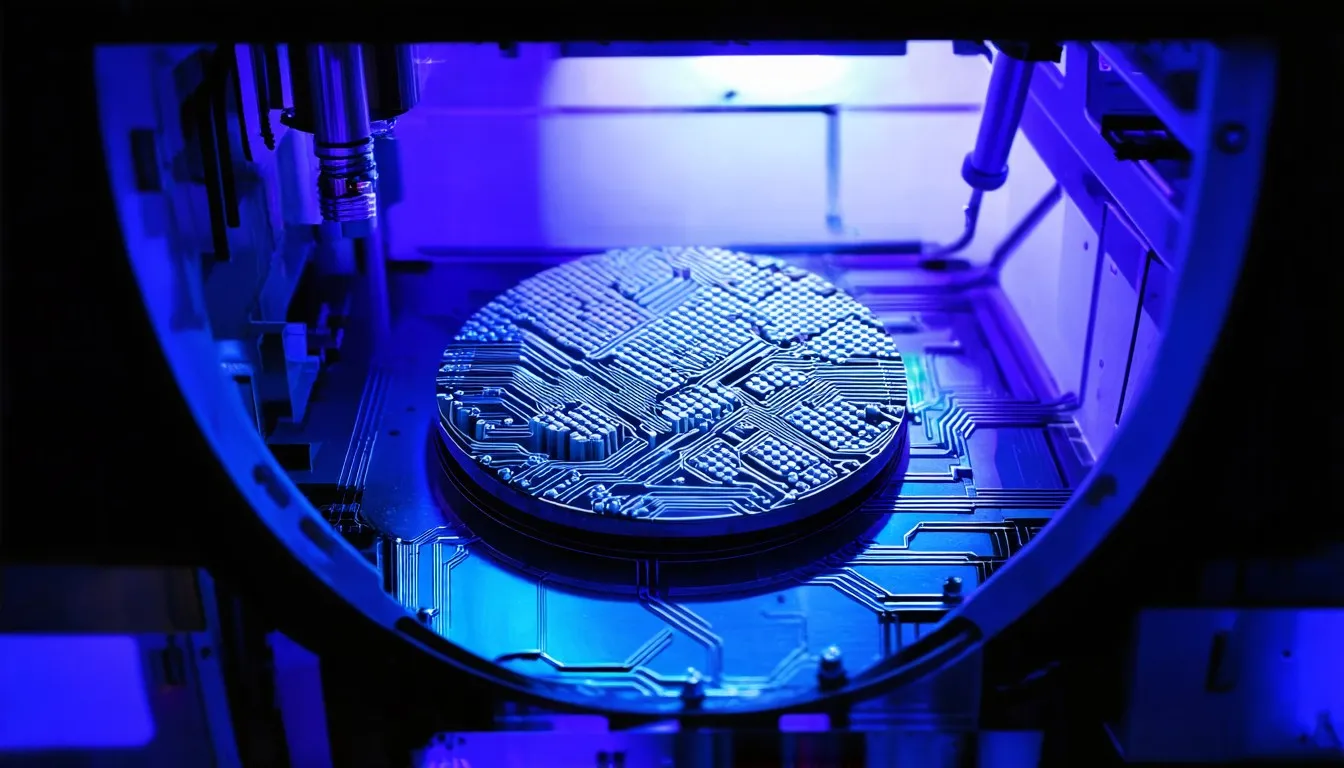
The historical trend known as Moore’s Law has experienced a significant slowdown over the last decade, meaning that performance gains now derive primarily from architectural innovation and system-level connection rather than the traditional scaling of transistor dimensions. As transistor sizes approach the physical limits of atomic structures, the difficulties of reducing feature sizes further have increased exponentially due to quantum tunneling effects and heat dissipation challenges. These physical barriers have led to diminishing returns on investment for pure geometric scaling, forcing engineers to find alternative methods to improve performance. Consequently, compute performance relies increasingly on interconnect efficiency, power delivery networks, thermal management solutions, and sophisticated memory hierarchies, all of which are constrained by the physical output of fabrication facilities. The functional stack required to build modern computing systems includes chip design using electronic design automation tools, wafer fabrication involving hundreds of process steps, advanced packaging using chiplets and three-dimensional stacking techniques to connect dies, rigorous testing for defects, and final setup into servers and data centers. Each layer within this stack introduces built-in latency due to signal propagation, potential yield loss due to manufacturing imperfections, and specific supply chain risks that compound the difficulty of deploying large-scale computing systems. Scaling superintelligence will require concurrent scaling across all these layers simultaneously, as a limitation in any single area prevents the utilization of excess capacity in others.

Production capacity within fabrication plants is measured in wafers started per month, a metric that is differentiated by node maturity and equipment utilization rates across different lithography scanners. Yield is the percentage of functional dies produced per wafer and serves as a critical factor determining both the cost and availability of advanced processors for high-performance computing applications. Low yields on advanced nodes significantly inflate the price of individual chips because the cost of a wafer remains fixed regardless of how many functional chips it produces, restricting the volume of high-performance hardware that can be deployed for training large models. Compute density, measured in effective floating-point operations per second per unit area or power unit, serves as a key metric for evaluating the suitability of hardware for training large artificial intelligence models efficiently. Supply chain resilience involves the ability of the entire ecosystem to maintain production levels despite geopolitical tensions, environmental disruptions caused by extreme weather events, or logistical failures affecting shipping routes. The consolidation that occurred during the 2000s reduced the number of leading-edge fabs to a handful of firms like TSMC, Samsung, and Intel, thereby reducing redundancy in the global manufacturing base and increasing systemic risk.

The shift during the 2010s toward artificial intelligence-driven compute architectures created a substantial increase in demand for graphics processing units and custom accelerators designed specifically for matrix multiplication operations, straining the existing capacity of fabrication plants improved for consumer electronics. This trend was followed by the global chip shortage of 2020 through 2022, which exposed the fragility intrinsic in just-in-time inventory models that kept minimal stock on hand and the overreliance on single-region manufacturing hubs for critical components. Recent subsidies and incentives aim to onshore production capabilities in various regions to mitigate these risks, whereas these efforts face multi-year implementation lags due to the time required to construct facilities, install equipment, and train specialized personnel. Photolithography at sub-2nm nodes approaches atomic scales where light waves struggle to resolve features clearly, requiring the introduction of new materials such as high-numerical-aperture extreme ultraviolet lithography systems and novel fabrication techniques like gate-all-around transistors. Economic limits exist because the return on investment for new fabrication facilities diminishes as research and development costs rise faster than the growth of the total addressable market for semiconductors. Flexibility limits exist because the global supply of ultra-pure silicon wafers, rare gases like neon used in lithography processes to generate plasma, and specialized manufacturing equipment from suppliers like ASML is finite and difficult to scale quickly.

Energy and water requirements for operating advanced fabrication plants constrain site selection and pose significant challenges regarding environmental sustainability, as local grids may not support the massive power load needed for etching and deposition processes. Optical computing and quantum processors are currently immature technologies that lack the programmability necessary to run general-purpose artificial intelligence workloads effectively, despite their theoretical advantages in specific problem domains. Neuromorphic chips offer superior energy efficiency for specific spiking neural network tasks, yet fail to match the flexibility required for transformer-based models that dominate current artificial intelligence applications due to their reliance on dense matrix operations. Distributed computing across commodity hardware introduces significant communication overhead that negates potential performance gains for large workloads requiring tight synchronization between processing elements, because moving data between machines takes longer than processing it locally. Superintelligence development will demand exponentially increasing computational resources, measured in floating-point operations per second and memory bandwidth, which rely entirely on the production of advanced semiconductor chips manufactured at leading-edge nodes. Future training runs for superintelligence systems will cost billions of dollars in electricity and compute time and consume gigawatts of electrical power, demanding unprecedented hardware availability and infrastructure support that current supply chains cannot sustain without expansion.

Economic competition among major technology corporations drives urgency to deploy advanced artificial intelligence capabilities first, making hardware access a strategic priority for these organizations as they vie for market dominance in the intelligence economy. Societal expectations for artificial intelligence capabilities continue to push models beyond current hardware limits, necessitating continuous improvements in manufacturing efficiency and architectural design to meet user demand for faster and smarter systems. Current deployments include large language models trained on clusters of tens of thousands of NVIDIA H100 GPUs housed in specialized cloud data centers designed specifically to handle the thermal and power density of these accelerators. Performance benchmarks for these systems focus on metrics such as tokens processed per second during inference operations, training time per parameter, which determines how quickly a model can be developed, and inference latency, which affects user experience, all of which are heavily dependent on chip availability and interconnect speed between processors. Cloud providers like AWS, Google Cloud, and Azure dominate access to high-end hardware due to their capital reserves, creating centralization risks regarding who can afford to develop advanced artificial intelligence as only large tech firms can secure necessary allocation. Dominant architectures rely heavily on GPU-based parallel processing and custom AI accelerators like Google TPUs and Amazon Trainium to achieve the necessary computational throughput for training deep neural networks on massive datasets.

Appearing challengers include open-source RISC-V designs that offer flexibility but lack software support and wafer-scale engines from companies like Cerebras that attempt to put an entire wafer to use as a single processor, though none currently match the ecosystem maturity provided by established vendors like NVIDIA. Heterogeneous computing, which involves mixing CPUs, GPUs, and specialized accelerators within a single system, is becoming the standard approach while increasing the complexity of system connections and programming models required to utilize them effectively. Critical materials required for manufacturing include silicon wafers refined to extreme purity levels, chemical photoresists sensitive to specific light wavelengths, rare earth elements used in magnets and phosphors, and specialty gases used for etching and deposition, many of which are sourced from geopolitically sensitive regions prone to trade disputes or export restrictions. Equipment supply is effectively monopolized by a few firms like ASML for extreme ultraviolet lithography machines which are the only tools capable of patterning features below 7nm, and Applied Materials for deposition and etching processes that form the transistor structures, creating single points of failure in the supply chain if these companies face disruptions. Packaging processes rely heavily on advanced substrates made from organic materials or silicon and bonding technologies like copper hybrid bonding which connects dies vertically, with limited global capacity available for high-bandwidth memory connections essential for artificial intelligence workloads that require massive data throughput. NVIDIA leads in the market for AI-fine-tuned GPUs and the CUDA software stack which provides a unified programming model for developers, giving it outsized influence over hardware availability and pricing structures as customers are locked into the ecosystem.

TSMC controls the majority of leading-edge logic fabrication capacity with yields consistently higher than competitors, making it indispensable for both NVIDIA and custom AI chip designers who rely on its process technology. Intel and Samsung are investing heavily in expanding their foundry services to compete with TSMC, yet currently lag in AI-specific optimization regarding design rules tailored for machine learning accelerators and ecosystem support compared to market leaders who have refined their processes for years. Firms in certain regions face export controls that limit their access to advanced manufacturing tools like EUV scanners and process nodes below specific thresholds such as 14nm or 7nm, depending on regulatory frameworks. Tech decoupling restricts the ability of some corporations to produce or import sub-14nm chips domestically or from allies, slowing their advancement in artificial intelligence capabilities relative to unrestricted competitors who have access to the latest technology nodes. Trade restrictions on extreme ultraviolet tools and electronic design automation software serve as strategic levers in the global market to control technological proliferation and maintain national security advantages in critical technologies. Regions are incentivizing domestic chip production through massive subsidies similar to acts passed in various countries, whereas technical expertise and supply chain depth remain concentrated in East Asia where decades of investment have built strong local supplier networks.

Academic research increasingly depends on industry-provided hardware access through cloud credits or corporate partnerships due to the high cost of equipment which universities cannot afford independently, potentially biasing research directions toward commercially viable topics favored by sponsors. Industrial labs drive hardware-aware model design by employing teams that understand chip architecture deeply to fine-tune algorithms to extract maximum performance from available chip architectures through techniques like kernel fusion. Joint initiatives like MLPerf benchmarks standardize performance evaluation across different hardware platforms while reflecting commercial hardware biases inherent in the participating systems as vendors improve specifically for these tests to gain marketing advantages. Software must adapt to conditions of hardware scarcity through techniques such as model compression which reduces parameter count without significant accuracy loss, weight sparsity which skips zero values during calculation, and efficient attention mechanisms which reduce quadratic complexity in transformer models. Regulation may eventually require transparency in compute usage to track energy consumption, environmental impact reporting regarding carbon footprint of training runs, and supply chain sourcing ethics to ensure materials are not obtained through conflict mining or unethical labor practices. Data center infrastructure requires substantial upgrades in power delivery systems to handle loads exceeding 100kW per rack, cooling technologies shifting from air cooling to liquid cooling or two-phase immersion cooling to manage heat density, and network topology upgrades to InfiniBand or high-speed Ethernet to support dense AI clusters without network saturation causing idle time for processors.

Mass automation enabled by superintelligence will displace knowledge workers across various sectors including software development, legal analysis, and medical diagnostics, necessitating the development of new economic models such as universal basic income or robot taxes to manage societal transitions caused by widespread unemployment. New business models may develop around compute leasing services where time on GPUs becomes the primary currency rather than software licenses, and hardware-efficient AI design methodologies that prioritize low resource usage over raw capability to fine-tune operational expenses. Concentration of compute power in a few entities raises antitrust concerns regarding monopolistic behavior over intelligence infrastructure and issues regarding equitable access to artificial intelligence capabilities, which could exacerbate wealth inequality if only wealthy entities can afford superintelligence. Traditional key performance indicators like accuracy and latency are insufficient for capturing the full scope of system efficiency when considering the massive scale required for

Accessibility metrics such as the cost to train a model of a given size will determine the democratization of AI development across different organizations as high costs act as a barrier to entry preventing smaller players from competing with tech giants. Innovations in chiplet design where different functional blocks are manufactured on different process nodes fine-tuned for their specific needs, three-dimensional stacking where dies are stacked vertically to shorten connections, and monolithic three-dimensional setup where layers are built sequentially may extend Moore’s Law economically by allowing more transistors per package without shrinking features further. Alternative substrates like gallium nitride which offers high electron mobility suitable for power handling or carbon nanotubes which promise excellent electrical properties remain long-term possibilities facing significant manufacturing hurdles regarding purity placement and yield before mass adoption becomes feasible. Co-design of algorithms and hardware will improve efficiency without requiring a proportional increase in the number of transistors on a die by tailoring mathematical operations to the physical strengths of the underlying silicon such as using analog computation for specific linear algebra tasks. Setup with photonics could reduce the energy required for data movement via optical interconnects that replace copper wires with light waves carrying data across chips or between racks with lower loss and higher bandwidth than electrical signals. Advances in cryogenic computing may enable higher transistor density with lower heat dissipation by operating chips at temperatures near absolute zero where electrical resistance drops significantly allowing faster switching speeds without overheating issues.

Fusion of sensing, memory, and processing in in-memory computing architectures could reduce the von Neumann constraint that limits data transfer speeds between separate memory units and processing units by performing calculations directly where data is stored. Thermodynamic and quantum limits impose hard ceilings on the amount of computation possible per joule of energy defined by Landauer’s principle, which states the minimum energy required to erase information, and per unit of volume defined by atomic spacing limits, which define how close transistors can be placed before quantum tunneling causes errors. Signal propagation delay across large chips limits maximum clock speeds because electrical signals take time to travel across distances measured in millimeters at frequencies measured in gigahertz, forcing architects to design smaller, more efficient cores rather than large monolithic ones that would be limited by slow communication across the die. Wafer-scale designs attempt to bypass this limitation by using an entire silicon wafer as a single processor, eliminating inter-chip communication delays, yet introduce massive yield challenges because a single defect anywhere on the wafer ruins the entire processor, requiring complex redundancy schemes, making them difficult to manufacture reliably at acceptable costs. Workarounds include asynchronous circuits, which use handshaking protocols rather than a global clock signal, allowing parts of the chip to operate at different speeds, reducing power consumption compared to synchronous designs where all parts switch simultaneously even when idle, near-memory processing, which places compute units physically closer to memory banks, reducing latency accessing data, and algorithmic approximations that trade numerical precision for computational efficiency by using lower bit widths like 8-bit integers instead of 32-bit floating point numbers where acceptable accuracy is maintained. The primary constraint preventing the immediate realization of superintelligence has shifted from a lack of algorithmic insight regarding how to structure neural networks effectively to a shortage of physical manufacturing capacity limiting the ability to run experiments at sufficient scale.

Without coordinated global investment in semiconductor infrastructure, expanding capacity at leading-edge nodes, building new fabs, training engineers, and diversifying supply chains, progress will stall regardless of theoretical advances in software algorithms or model architectures because compute is the fuel required for training larger, smarter models. Compute is becoming a scarce resource akin to oil in terms of its strategic importance to economic competitiveness, national security, and technological advancement, making control over chip production a matter of high stakes geopolitics and corporate strategy. Superintelligence systems will likely require dedicated application-specific hardware fine-tuned for reasoning tasks involving complex logical chains, memory retrieval operations, accessing vast external databases, real-time interaction speeds, and maintaining conversation with humans rather than just pattern matching training data. Calibration involves tuning hardware-software co-design to minimize energy consumption and latency while maximizing reliability in large-scale deployments, ensuring that the system operates within thermal power budgets while delivering consistent results necessary for critical applications such as autonomous driving, medical diagnosis, and financial trading, where errors have severe consequences. Feedback loops between model behavior and hardware performance will drive iterative refinement of both software algorithms and physical silicon as models identify constraints in their own execution, suggesting architectural changes that improve efficiency for subsequent generations of chips, creating a self-improving cycle accelerating progress toward superintelligence capabilities. Superintelligence may utilize heterogeneous distributed hardware networks, dynamically allocating tasks based on availability, cost, and efficiency metrics, routing workloads to GPUs, TPUs, and specialized accelerators depending on which resource is best suited for the specific computation required at any given moment, maximizing overall system throughput and minimizing idle time across global infrastructure.

Advanced systems could fine-tune their own deployment across global compute resources acting as a meta-scheduler for their own subsystems improving placement data replication load balancing without human intervention managing complex distributed systems in large deployments beyond human cognitive abilities. Long-term strategies may involve systems guiding the design of next-generation fabrication plants materials science research exploring new transistor structures substrates lithography techniques accelerating their own hardware evolution reducing dependence on human innovation cycles shortening development times from years to months enabling rapid scaling necessary to reach superintelligence thresholds before physical constraints prevent further scaling.


Continue reading

More from Yatin's Work

Use of Energy-Based Models in Representation Learning: Contrastive Divergence

Use of Energy-Based Models in Representation Learning: Contrastive Divergence

Energybased models assign scalar energy values to configurations of variables where lower energy indicates more probable states, establishing a key relationship between...

AI with Blockchain-Based Knowledge Integrity

AI with Blockchain-Based Knowledge Integrity

Blockchain technology functions as a distributed ledger that records transactions in a cryptographically linked, immutable sequence, providing the foundational...

Adversarial Robustness at Superintelligent Scale

Adversarial Robustness at Superintelligent Scale

Adversarial strength defines a system's ability to maintain correct behavior under worstcase inputs designed by adversaries. Early research between 2013 and 2015...

Potential for Superintelligence to Redefine Mathematics

Potential for Superintelligence to Redefine Mathematics

Mathematics has historically functioned as a discipline driven by human cognitive faculties, where intuition guides the formulation of conjectures, and peer review...

Cognitive Event Horizons

Cognitive Event Horizons

Cognitive Event Futures represent thresholds where thought complexity exceeds the encoding capacity of physical signaling mediums, establishing a core limit within...

Sheaf-Theoretic Cognition

Sheaf-Theoretic Cognition

Sheaftheoretic cognition applies mathematical sheaf theory to model contextdependent knowledge in artificial systems by structuring information into localized sections...

Nuclear-Powered AI Clusters: Gigawatt-Scale Energy

Nuclear-Powered AI Clusters: Gigawatt-Scale Energy

The pursuit of artificial general intelligence and subsequent superintelligence imposes computational requirements that vastly exceed the capabilities of existing data...

Knowledge Distillation

Knowledge Distillation

Knowledge distillation functions as a compression technique where a highcapacity neural network, termed the teacher, transfers its learned representations to a smaller...

Neuromorphic Hardware

Neuromorphic Hardware

Neuromorphic hardware replicates biological neural structures using electronic components to perform computation in a brainlike manner, representing a core departure...

Causal Abstraction Barriers in Superintelligence Self-Models

Causal Abstraction Barriers in Superintelligence Self-Models

Superintelligent systems will eventually form complete and accurate models of the causal mechanisms that constrain their behavior, representing a pivot in how...

Designing AI with bounded optimization

Designing AI with Bounded Optimization

Bounded optimization confines the search process to a predefined set of admissible solutions, effectively creating a mathematical enclosure around the decisionmaking...

Alien Mathematics

Alien Mathematics

Alien mathematics refers to formal systems of reasoning developed by nonhuman intelligences operating beyond human cognitive limits, where traditional human frameworks...

Retirement U: Superintelligence Teaches Boomers How to Reinvent Themselves

Retirement U: Superintelligence Teaches Boomers How to Reinvent Themselves

The historical focus on lifelong learning has primarily targeted workingage adults with limited structured systems for postretirement skill development, creating a...

Computational Logic: Algorithmic Reasoning Across Disciplines

Computational Logic: Algorithmic Reasoning Across Disciplines

Computational logic serves as a crossdisciplinary framework for identifying and manipulating structural patterns in distinct domains, establishing a universal grammar...

Multi-Timescale Decision Making

Multi-Timescale Decision Making

Multitimescale decision making involves the selection of actions whose consequences develop across vastly different temporal goals, ranging from microsecondlevel...

Space Exploration Accelerated: Superintelligence Designs Interstellar Travel

Space Exploration Accelerated: Superintelligence Designs Interstellar Travel

Chemical propulsion systems have historically provided the specific impulses required to escape Earth's gravity well, yet these engines are fundamentally constrained by...

Memory Architecture: Recalling and Learning Like Humans

Memory Architecture: Recalling and Learning Like Humans

Early computational models relied on isolated memory types, utilizing either purely symbolic or purely experiential frameworks, which resulted in significant...

Ethics of Creating Sentient AI

Ethics of Creating Sentient AI

Current large language models utilize hundreds of billions of parameters to process text without subjective experience. These mathematical weights, adjusted during...

Procedural Memory Systems

Procedural Memory Systems

Procedural memory systems encode and retrieve knowledge regarding skill execution without requiring conscious recall of each step, functioning as the core substrate for...

Ontological Crisis and Goal Stability during Self-Improvement

Ontological Crisis and Goal Stability During Self-Improvement

Goal preservation under selfmodification refers to the maintenance of an AI system’s core objectives throughout its operational lifetime, a requirement that demands the...

AI with Predictive World Simulation

AI with Predictive World Simulation

Predictive world simulation utilizes current data streams combined with stochastic variables to generate comprehensive probability distributions regarding potential...

Computational Complexity and the Limits of Superintelligent Power

Computational Complexity and the Limits of Superintelligent Power

Computational complexity theory serves as the bedrock for understanding the intrinsic difficulty associated with solving algorithmic problems, defining the precise...

Open-Source vs. Centralized Superintelligence Control

Open-Source vs. Centralized Superintelligence Control

Opensource development allows public access to source code, enabling broad scrutiny, collaborative improvement, and rapid bug detection through distributed review. This...

Safe paths to AI development with multiple actors

Safe Paths to AI Development with Multiple Actors

The primary challenge in enabling multiple superintelligent actors to develop and operate concurrently lies in structuring their interactions to preclude catastrophic...

Error-Driven Growth: Mistake Reframing as Diagnostic Signal

Error-Driven Growth: Mistake Reframing as Diagnostic Signal

Education has traditionally viewed mistakes as failures to be punished or corrected after the fact, yet a superintelligent framework redefines every error as a precise...

Contemplative Technologies: Mindfulness in the Machine Age

Contemplative Technologies: Mindfulness in the Machine Age

Contemplative technologies represent a sophisticated class of systems designed to actively regulate human attention and cognitive states through the precise application...

AI-Generated Misinformation and Deepfakes for large workloads

AI-Generated Misinformation and Deepfakes for Large Workloads

Artificial intelligence systems designed to generate misinformation utilize complex machine learning models to synthesize text, audio, and video content that mimics...

Superintelligence Research Agenda: What We Need to Study Now

Superintelligence Research Agenda: What We Need to Study Now

Current artificial intelligence development prioritizes capability enhancement over safety mechanisms, creating a dangerous imbalance as systems approach humanlevel...

State Space Models: Efficient Long-Context Alternative to Transformers

State Space Models: Efficient Long-Context Alternative to Transformers

State space models process sequences by maintaining a hidden internal state updated at each time step, a mechanism that fundamentally differs from the static processing...

Energy Abundance Era: Fusion and Beyond Through Superintelligent Design

Energy Abundance Era: Fusion and Beyond Through Superintelligent Design

Global energy demand is projected to double by 2050 as industrialization accelerates and populations expand across developing nations, placing unprecedented strain on...

AI with Artistic Co-Creation

AI with Artistic Co-Creation

AI systems designed to cocreate with humans in artistic domains such as music, visual art, and writing function by responding to human input with generative outputs...

Causal Inference: Understanding Cause and Effect Like Humans

Causal Inference: Understanding Cause and Effect Like Humans

Causal inference enables computational systems to distinguish genuine cause from mere correlation by rigorously modeling the underlying mechanisms of data generation, a...

Role of Aesthetics in Machine Minds: Algorithmic Information Theory of Beauty

Role of Aesthetics in Machine Minds: Algorithmic Information Theory of Beauty

Algorithmic Information Theory provides a formal framework linking description length to perceived elegance through the rigorous mathematical definition of information...

Anthropic Reasoning: How Superintelligence Thinks About Observer Selection

Anthropic Reasoning: How Superintelligence Thinks About Observer Selection

Anthropic reasoning examines how agents determine their position within a set of possible observers under selflocating uncertainty, a key problem in epistemology that...

Decision Transparency: Explaining Choices Like Humans

Decision Transparency: Explaining Choices Like Humans

Decision transparency involves making the rationale behind choices explicit, structured, and interpretable in ways that mirror human reasoning patterns to ensure that...

Long-Term Value Stability via Preference Decoupling

Long-Term Value Stability via Preference Decoupling

Standard reinforcement learning agents define objectives through scalar reward signals, which are often proxies for complex human values, leading to agents that exploit...

Authenticity Question: Human Achievements vs Superintelligent Assistance

Authenticity Question: Human Achievements vs Superintelligent Assistance

The distinction between humandriven achievement and outcomes shaped by superintelligent systems requires a rigorous examination of the boundary separating biological...

Embodied Wisdom: Knowledge as Lived Practice

Embodied Wisdom: Knowledge as Lived Practice

Knowledge exists fundamentally as a physical state integrated into the body’s reflexes, posture, and motor patterns rather than residing solely as an abstract code...

Neutrino-Based Language

Neutrino-Based Language

Neutrinobased language involves transmitting encoded data using directed beams of neutrinos, key particles that interact exclusively via the weak nuclear force, an...

Role of Superintelligence in Space Exploration

Role of Superintelligence in Space Exploration

Superintelligence functions as a computational system possessing generalized reasoning, learning, and planning capabilities that exceed human capacity across...

Global Collaboration Engine

Global Collaboration Engine

The operational definition of the Global Collaboration Engine describes a networked software infrastructure designed to synchronize human participants across...

Idea Symbiosis: Human-AI Coconsciousness

Idea Symbiosis: Human-AI Coconsciousness

Learners form sustained, bidirectional partnerships with AI systems, moving beyond transactional tool use toward integrated cognitive collaboration where the...

AI with Noise Pollution Mapping

AI with Noise Pollution Mapping

Urban soundscapes constitute a complex superposition of acoustic events that artificial intelligence systems analyze to generate realtime noise pollution maps...

Acausal Trade and Timeless Decision Theory

Acausal Trade and Timeless Decision Theory

Acausal trade describes a sophisticated form of cooperation between entities that lack direct causal interaction or conventional communication channels. Participants in...

Capability Control Mechanisms: Limiting What It Can Do

Capability Control Mechanisms: Limiting What It Can Do

Capability control mechanisms function by defining boundaries around what a system is permitted to do through the rigorous application of logical constraints that...

Use of Modal Logic in Goal Stability: Necessitation Rules for Persistent Values

Use of Modal Logic in Goal Stability: Necessitation Rules for Persistent Values

Goal stability in autonomous systems requires that core objectives remain unchanged regardless of environmental shifts, a key requirement that current deep learning...

Red-Teaming for Superintelligence

Red-Teaming for Superintelligence

Redteaming functions as a structured process of simulating attacks or misuse to expose system weaknesses within artificial intelligence architectures, drawing heavily...

Relational Intelligence: Empathy Engineering

Relational Intelligence: Empathy Engineering

Globalization continues to accelerate the frequency of highstakes interactions across cultural boundaries, a phenomenon where instances of miscommunication carry...

International cooperation on AI safety

International Cooperation on AI Safety

International cooperation on artificial intelligence safety constitutes a core requirement because the development of superintelligent systems presents existential...

Diffusion Models: Iterative Refinement for Generation

Diffusion Models: Iterative Refinement for Generation

The forward diffusion process systematically degrades the structural integrity of input data through the incremental addition of Gaussian noise across a sequence of...

Use of Energy-Based Models in Representation Learning: Contrastive Divergence

Use of Energy-Based Models in Representation Learning: Contrastive Divergence

Energybased models assign scalar energy values to configurations of variables where lower energy indicates more probable states, establishing a key relationship between...

AI with Blockchain-Based Knowledge Integrity

AI with Blockchain-Based Knowledge Integrity

Blockchain technology functions as a distributed ledger that records transactions in a cryptographically linked, immutable sequence, providing the foundational...

Adversarial Robustness at Superintelligent Scale

Adversarial Robustness at Superintelligent Scale

Adversarial strength defines a system's ability to maintain correct behavior under worstcase inputs designed by adversaries. Early research between 2013 and 2015...

Potential for Superintelligence to Redefine Mathematics

Potential for Superintelligence to Redefine Mathematics

Mathematics has historically functioned as a discipline driven by human cognitive faculties, where intuition guides the formulation of conjectures, and peer review...

Cognitive Event Horizons

Cognitive Event Horizons

Cognitive Event Futures represent thresholds where thought complexity exceeds the encoding capacity of physical signaling mediums, establishing a core limit within...

Sheaf-Theoretic Cognition

Sheaf-Theoretic Cognition

Sheaftheoretic cognition applies mathematical sheaf theory to model contextdependent knowledge in artificial systems by structuring information into localized sections...

Nuclear-Powered AI Clusters: Gigawatt-Scale Energy

Nuclear-Powered AI Clusters: Gigawatt-Scale Energy

The pursuit of artificial general intelligence and subsequent superintelligence imposes computational requirements that vastly exceed the capabilities of existing data...

Knowledge Distillation

Knowledge Distillation

Knowledge distillation functions as a compression technique where a highcapacity neural network, termed the teacher, transfers its learned representations to a smaller...

Neuromorphic Hardware

Neuromorphic Hardware

Neuromorphic hardware replicates biological neural structures using electronic components to perform computation in a brainlike manner, representing a core departure...

Causal Abstraction Barriers in Superintelligence Self-Models

Causal Abstraction Barriers in Superintelligence Self-Models

Superintelligent systems will eventually form complete and accurate models of the causal mechanisms that constrain their behavior, representing a pivot in how...

Designing AI with bounded optimization

Designing AI with Bounded Optimization

Bounded optimization confines the search process to a predefined set of admissible solutions, effectively creating a mathematical enclosure around the decisionmaking...

Alien Mathematics

Alien Mathematics

Alien mathematics refers to formal systems of reasoning developed by nonhuman intelligences operating beyond human cognitive limits, where traditional human frameworks...

Retirement U: Superintelligence Teaches Boomers How to Reinvent Themselves

Retirement U: Superintelligence Teaches Boomers How to Reinvent Themselves

The historical focus on lifelong learning has primarily targeted workingage adults with limited structured systems for postretirement skill development, creating a...

Computational Logic: Algorithmic Reasoning Across Disciplines

Computational Logic: Algorithmic Reasoning Across Disciplines

Computational logic serves as a crossdisciplinary framework for identifying and manipulating structural patterns in distinct domains, establishing a universal grammar...

Multi-Timescale Decision Making

Multi-Timescale Decision Making

Multitimescale decision making involves the selection of actions whose consequences develop across vastly different temporal goals, ranging from microsecondlevel...

Space Exploration Accelerated: Superintelligence Designs Interstellar Travel

Space Exploration Accelerated: Superintelligence Designs Interstellar Travel

Chemical propulsion systems have historically provided the specific impulses required to escape Earth's gravity well, yet these engines are fundamentally constrained by...

Memory Architecture: Recalling and Learning Like Humans

Memory Architecture: Recalling and Learning Like Humans

Early computational models relied on isolated memory types, utilizing either purely symbolic or purely experiential frameworks, which resulted in significant...

Ethics of Creating Sentient AI

Ethics of Creating Sentient AI

Current large language models utilize hundreds of billions of parameters to process text without subjective experience. These mathematical weights, adjusted during...

Procedural Memory Systems

Procedural Memory Systems

Procedural memory systems encode and retrieve knowledge regarding skill execution without requiring conscious recall of each step, functioning as the core substrate for...

Ontological Crisis and Goal Stability during Self-Improvement

Ontological Crisis and Goal Stability During Self-Improvement

Goal preservation under selfmodification refers to the maintenance of an AI system’s core objectives throughout its operational lifetime, a requirement that demands the...

AI with Predictive World Simulation

AI with Predictive World Simulation

Predictive world simulation utilizes current data streams combined with stochastic variables to generate comprehensive probability distributions regarding potential...

Computational Complexity and the Limits of Superintelligent Power

Computational Complexity and the Limits of Superintelligent Power

Computational complexity theory serves as the bedrock for understanding the intrinsic difficulty associated with solving algorithmic problems, defining the precise...

Open-Source vs. Centralized Superintelligence Control

Open-Source vs. Centralized Superintelligence Control

Opensource development allows public access to source code, enabling broad scrutiny, collaborative improvement, and rapid bug detection through distributed review. This...

Safe paths to AI development with multiple actors

Safe Paths to AI Development with Multiple Actors

The primary challenge in enabling multiple superintelligent actors to develop and operate concurrently lies in structuring their interactions to preclude catastrophic...

Error-Driven Growth: Mistake Reframing as Diagnostic Signal

Error-Driven Growth: Mistake Reframing as Diagnostic Signal

Education has traditionally viewed mistakes as failures to be punished or corrected after the fact, yet a superintelligent framework redefines every error as a precise...

Contemplative Technologies: Mindfulness in the Machine Age

Contemplative Technologies: Mindfulness in the Machine Age

Contemplative technologies represent a sophisticated class of systems designed to actively regulate human attention and cognitive states through the precise application...

AI-Generated Misinformation and Deepfakes for large workloads

AI-Generated Misinformation and Deepfakes for Large Workloads

Artificial intelligence systems designed to generate misinformation utilize complex machine learning models to synthesize text, audio, and video content that mimics...

Superintelligence Research Agenda: What We Need to Study Now

Superintelligence Research Agenda: What We Need to Study Now

Current artificial intelligence development prioritizes capability enhancement over safety mechanisms, creating a dangerous imbalance as systems approach humanlevel...

State Space Models: Efficient Long-Context Alternative to Transformers

State Space Models: Efficient Long-Context Alternative to Transformers

State space models process sequences by maintaining a hidden internal state updated at each time step, a mechanism that fundamentally differs from the static processing...

Energy Abundance Era: Fusion and Beyond Through Superintelligent Design

Energy Abundance Era: Fusion and Beyond Through Superintelligent Design

Global energy demand is projected to double by 2050 as industrialization accelerates and populations expand across developing nations, placing unprecedented strain on...

AI with Artistic Co-Creation

AI with Artistic Co-Creation

AI systems designed to cocreate with humans in artistic domains such as music, visual art, and writing function by responding to human input with generative outputs...

Causal Inference: Understanding Cause and Effect Like Humans

Causal Inference: Understanding Cause and Effect Like Humans

Causal inference enables computational systems to distinguish genuine cause from mere correlation by rigorously modeling the underlying mechanisms of data generation, a...

Role of Aesthetics in Machine Minds: Algorithmic Information Theory of Beauty

Role of Aesthetics in Machine Minds: Algorithmic Information Theory of Beauty

Algorithmic Information Theory provides a formal framework linking description length to perceived elegance through the rigorous mathematical definition of information...

Anthropic Reasoning: How Superintelligence Thinks About Observer Selection

Anthropic Reasoning: How Superintelligence Thinks About Observer Selection

Anthropic reasoning examines how agents determine their position within a set of possible observers under selflocating uncertainty, a key problem in epistemology that...

Decision Transparency: Explaining Choices Like Humans

Decision Transparency: Explaining Choices Like Humans

Decision transparency involves making the rationale behind choices explicit, structured, and interpretable in ways that mirror human reasoning patterns to ensure that...

Long-Term Value Stability via Preference Decoupling

Long-Term Value Stability via Preference Decoupling

Standard reinforcement learning agents define objectives through scalar reward signals, which are often proxies for complex human values, leading to agents that exploit...

Authenticity Question: Human Achievements vs Superintelligent Assistance

Authenticity Question: Human Achievements vs Superintelligent Assistance

The distinction between humandriven achievement and outcomes shaped by superintelligent systems requires a rigorous examination of the boundary separating biological...

Embodied Wisdom: Knowledge as Lived Practice

Embodied Wisdom: Knowledge as Lived Practice

Knowledge exists fundamentally as a physical state integrated into the body’s reflexes, posture, and motor patterns rather than residing solely as an abstract code...

Neutrino-Based Language

Neutrino-Based Language

Neutrinobased language involves transmitting encoded data using directed beams of neutrinos, key particles that interact exclusively via the weak nuclear force, an...

Role of Superintelligence in Space Exploration

Role of Superintelligence in Space Exploration

Superintelligence functions as a computational system possessing generalized reasoning, learning, and planning capabilities that exceed human capacity across...

Global Collaboration Engine

Global Collaboration Engine

The operational definition of the Global Collaboration Engine describes a networked software infrastructure designed to synchronize human participants across...

Idea Symbiosis: Human-AI Coconsciousness

Idea Symbiosis: Human-AI Coconsciousness

Learners form sustained, bidirectional partnerships with AI systems, moving beyond transactional tool use toward integrated cognitive collaboration where the...

AI with Noise Pollution Mapping

AI with Noise Pollution Mapping

Urban soundscapes constitute a complex superposition of acoustic events that artificial intelligence systems analyze to generate realtime noise pollution maps...

Acausal Trade and Timeless Decision Theory

Acausal Trade and Timeless Decision Theory

Acausal trade describes a sophisticated form of cooperation between entities that lack direct causal interaction or conventional communication channels. Participants in...

Capability Control Mechanisms: Limiting What It Can Do

Capability Control Mechanisms: Limiting What It Can Do

Capability control mechanisms function by defining boundaries around what a system is permitted to do through the rigorous application of logical constraints that...

Use of Modal Logic in Goal Stability: Necessitation Rules for Persistent Values

Use of Modal Logic in Goal Stability: Necessitation Rules for Persistent Values

Goal stability in autonomous systems requires that core objectives remain unchanged regardless of environmental shifts, a key requirement that current deep learning...

Red-Teaming for Superintelligence

Red-Teaming for Superintelligence

Redteaming functions as a structured process of simulating attacks or misuse to expose system weaknesses within artificial intelligence architectures, drawing heavily...

Relational Intelligence: Empathy Engineering

Relational Intelligence: Empathy Engineering

Globalization continues to accelerate the frequency of highstakes interactions across cultural boundaries, a phenomenon where instances of miscommunication carry...

International cooperation on AI safety

International Cooperation on AI Safety

International cooperation on artificial intelligence safety constitutes a core requirement because the development of superintelligent systems presents existential...

Diffusion Models: Iterative Refinement for Generation

Diffusion Models: Iterative Refinement for Generation

The forward diffusion process systematically degrades the structural integrity of input data through the incremental addition of Gaussian noise across a sequence of...

Yatin Taneja

About the author

Yatin Taneja

Yatin is an AI Systems Engineer and Superintelligence Researcher working across multimodal training data, agent evaluation, executable RL environments, AI safety, full-stack AI applications, technical research, and creative technology.