Knowledge hub

Cognitive Synergy: Multiperspectival Thinking

Cognitive Synergy: Multiperspectival Thinking

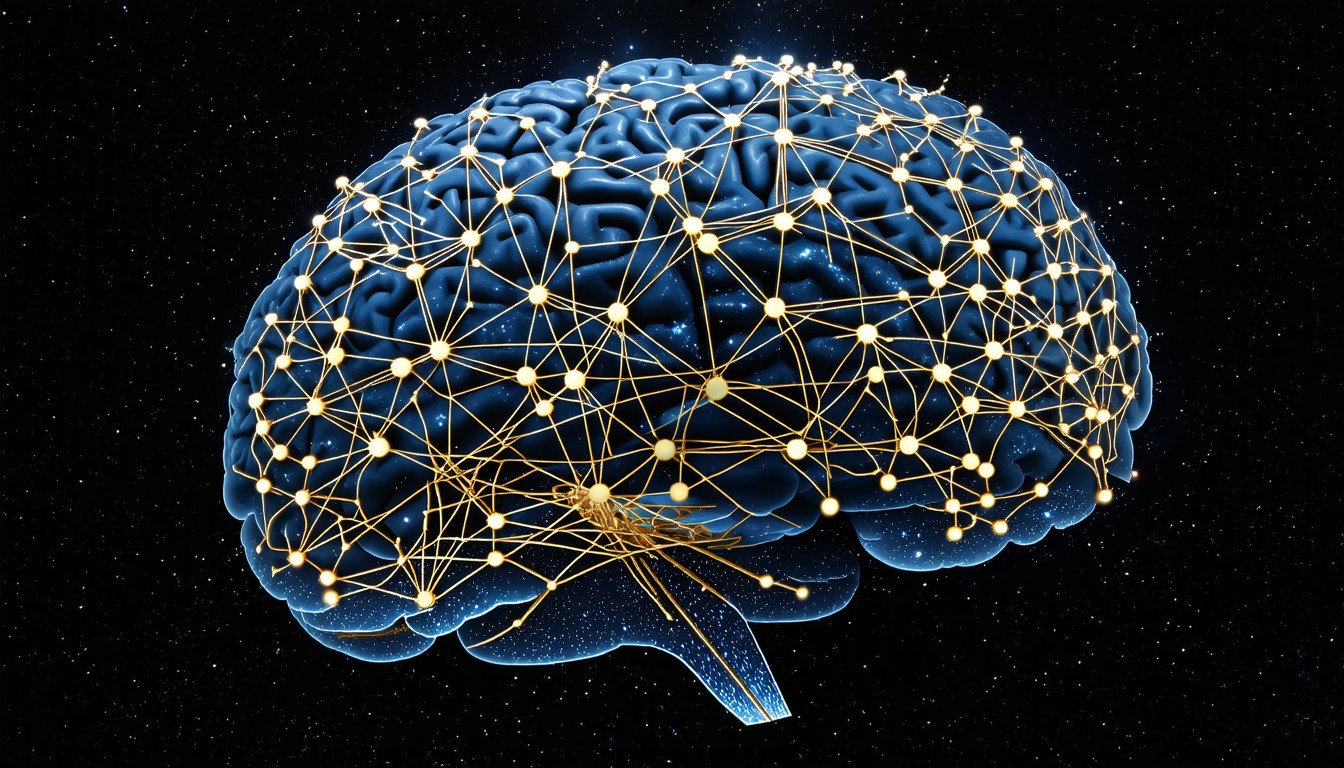
The core transformation in educational capability enabled by superintelligence resides in the capacity for learners to engage with multiple, inherently conflicting viewpoints at the same time, treating each distinct viewpoint as a valid and necessary lens for interpreting a given problem or concept rather than seeking to eliminate contradictions immediately. An advanced AI system processes the learner’s input and simultaneously applies distinct cognitive frameworks such as those of the artist, the engineer, and the mystic to generate parallel interpretations that exist concurrently within the learner’s cognitive workspace. This system synthesizes these divergent outputs into a single, coherent meta-perspective that preserves the tension and value of each original viewpoint without forcing a premature resolution or flattening of the conceptual space. This process trains neural and cognitive habits to maintain a superposition of states without premature resolution or collapse into a single dominant interpretation, effectively strengthening the mind’s ability to hold complex paradoxes. The outcome is a high-dimensional understanding of reality where truth arises from the active intersection of diverse perspectives rather than the selection of one correct answer over others. This capability enables polymathic synthesis, defined as the ability to integrate knowledge across domains that traditionally operate in isolation, allowing students to perceive the underlying connections between biology, history, and mathematics as a unified fabric of inquiry.

Cognitive synergy within this educational framework relies on three foundational elements that must be engineered precisely into the software infrastructure: parallel perspective activation, non-collapsing mental state maintenance, and integrative synthesis. Parallel activation requires structured prompts or interfaces that force simultaneous engagement with incompatible frameworks, ensuring the learner cannot default to the most familiar mode of thinking or resort to binary categorization. Non-collapsing maintenance depends on a metacognitive setup that discourages premature judgment and rewards tolerance for ambiguity, effectively training the user to resist the urge to resolve cognitive dissonance too quickly while exploring the contours of a problem. Integrative synthesis is achieved through algorithmic recombination of outputs using weighted relevance, contradiction mapping, and pattern detection to show how disparate views might relate functionally even if they disagree ontologically or epistemically. These three elements work in concert to transform a traditional learning session into a rigorous exercise in cognitive flexibility, where the difficulty of the material stems from the complexity of the relationships between ideas rather than the obscurity of the ideas themselves. The system architecture required to sustain this level of cognitive interaction includes a multi-lens interpreter module, a conflict-resolution engine, and a meta-perspective generator working in unison to manage the flow of information.

The multi-lens interpreter routes user input through predefined cognitive personas, each trained on domain-specific corpora and reasoning styles, ensuring that the artistic perspective utilizes aesthetic principles while the engineering perspective applies structural logic. The conflict-resolution engine identifies points of divergence, quantifies their epistemic weight, and flags irreconcilable tensions without forcing resolution, thereby highlighting where true conceptual friction occurs. The meta-perspective generator constructs a unified narrative or model that embeds all active viewpoints as interdependent components, visualizing how they might coexist within a larger theoretical structure. Feedback loops allow the learner to adjust lens emphasis, explore edge cases, and test the reliability of the synthesized output through iterative querying and refinement. Multiperspectival thinking is defined formally as the deliberate and simultaneous application of two or more incompatible cognitive frameworks to a single subject to extract latent information hidden within the gaps between perspectives. Cognitive superposition is the mental state in which contradictory interpretations are held active without reduction to a single truth claim, allowing the thinker to examine the structural integrity of opposing arguments simultaneously.

Polymathic synthesis is the understanding that arises when insights from disparate domains are integrated into a higher-order coherence, revealing patterns that remain invisible when viewing domains in isolation. Meta-perspective is a composite viewpoint that explicitly acknowledges and incorporates the limitations and contributions of its constituent lenses, providing a comprehensive map of the problem space that includes blind spots and areas of high certainty. Early experiments in cognitive flexibility date to 20th-century Gestalt psychology and dual-process theory, which identified the human capacity to shift between holistic and analytical modes of processing yet lacked mechanisms for sustained multiperspectival engagement. These historical approaches relied on human executive function to switch between views, which introduced latency and cognitive fatigue that limited the depth of exploration possible in a single session. The rise of large language models enabled scalable simulation of diverse reasoning styles, making real-time multiperspectival processing feasible by offloading the maintenance of distinct personas to the machine. Prior approaches to interdisciplinary learning emphasized sequential exposure rather than concurrent connection, limiting the depth of synthesis because the learner had to rely on memory to compare insights presented at different times.

Attempts to use current AI for perspective-taking typically resolved conflicts rather than preserving them, undermining the goal of cognitive superposition by smoothing over valuable contradictions that signal deeper structural issues in the reasoning process. Single-perspective optimization systems reinforce confirmation bias and reduce epistemic humility by constantly steering the user toward the most probable or statistically likely completion of a thought pattern. Sequential perspective-switching models incur cognitive switching costs and loss of integrative momentum because the brain must reorient itself to a new context every time the lens changes. Consensus-driven synthesis engines prioritize agreement over truth preservation at points of contradiction, often discarding minority viewpoints that might contain critical outlier data or novel conceptual frameworks. Rule-based expert systems lack the adaptability to handle novel combinations of perspectives in open-ended domains because they operate on fixed logic trees that cannot accommodate the fluid nature of creative or philosophical inquiry. Current implementations require significant computational resources to run multiple specialized models in parallel to ensure that each perspective maintains its distinct integrity without bleeding into others during generation.

Running models in parallel increases latency and operational costs, creating economic barriers to entry for widespread educational deployment outside of well-funded institutions or research laboratories. Human cognitive load limits the number of simultaneous perspectives that can be meaningfully engaged without causing confusion or diminishing returns on comprehension. Empirical thresholds suggest three to five lenses as a practical maximum for human processing, necessitating intelligent filtering and prioritization algorithms within the superintelligence system to manage the complexity presented to the user. Economic viability depends on cloud infrastructure pricing and energy efficiency, as the overhead of maintaining multiple active inference streams is substantially higher than that of standard single-threaded generation tasks. Edge deployment remains impractical for real-time multiperspectival processing due to hardware constraints related to memory bandwidth and thermal dissipation required for high-intensity matrix operations. Flexibility is constrained by the need for high-quality, domain-specific training data for each cognitive lens, which requires extensive curation efforts to ensure that the mystic persona does not simply become a caricature of mysticism but is a durable philosophical tradition.

No widely deployed commercial products currently implement full multiperspectival thinking as defined here, as most educational software focuses on content delivery or assessment rather than structural cognitive restructuring. Closest analogs include IBM’s AI Explainability 360 and Google’s Perspective API, though these focus on bias detection rather than synthesis, serving to filter harmful content rather than expand intellectual goals through constructive friction. Experimental deployments exist in elite educational programs and corporate strategy units, showing improved solution reliability in scenario planning when participants are forced to contend with synthesized multi-agent outputs. Benchmarks measure synthesis quality via expert evaluation of output coherence, novelty, and preservation of source perspective integrity, requiring human judges to assess whether the generated insights faithfully represent the source domains while adding new value. Standardized metrics for multiperspectival performance do not yet exist, making it difficult to compare different architectures or track progress in the field quantitatively. Dominant architectures rely on monolithic large language models fine-tuned for specific personas, limiting true parallelism because the model must context-switch internally rather than maintaining separate active states.

Appearing challengers use modular ensembles of smaller, specialized models with shared latent spaces to reduce compute overhead while maintaining distinct reasoning pathways for each perspective. Hybrid symbolic-neural systems show promise for explicit contradiction handling while lagging in natural language fluency, often producing outputs that are logically precise yet stylistically disjointed or difficult to parse. Training and inference depend on GPU clusters and high-bandwidth memory to facilitate the rapid movement of data between different processing modules responsible for each cognitive lens. Supply chain vulnerabilities include semiconductor shortages and geopolitical controls on advanced chips, which threaten the adaptability of these systems if hardware access becomes restricted. Data dependencies include curated corpora representing each cognitive lens, which are unevenly available across languages and cultures, potentially introducing cultural biases into the foundational perspectives offered by the system. Major tech firms invest in related capabilities while prioritizing alignment and safety over cognitive pluralism, often restricting the range of permissible viewpoints to those deemed safe or socially acceptable by corporate policy.

Niche AI startups explore multiperspectival interfaces, yet lack scale and connection with enterprise systems required for widespread adoption in large educational institutions or corporate training environments. Academic labs lead in theoretical development, yet struggle with real-world deployment due to lack of engineering resources and user experience design expertise necessary to create usable interfaces for students. Adoption varies by region regarding ethical pluralism and competitive advantage, with some cultures embracing the ambiguity of multiperspectival thinking while others prefer authoritative singular narratives in educational content. Export controls on AI hardware and software may restrict global diffusion of multiperspectival systems, creating a divide between regions with access to advanced cognitive tools and those without. Collaborations between cognitive science departments and AI labs are increasing as researchers recognize the need for interdisciplinary approaches to solve the problem of effective human-machine co-cognition. Industry partnerships focus on applied use cases in healthcare diagnostics, legal reasoning, and product design where complex trade-offs require balancing competing priorities simultaneously.

Funding mechanisms remain fragmented, with limited cross-sector coordination between public education grants and private venture capital focused on commercial applications of artificial intelligence. Rising complexity of global challenges demands cognitive tools that exceed disciplinary silos, as problems like climate change or pandemic response require connection of epidemiological data, economic models, and ethical considerations in real time. Economic shifts toward innovation-driven growth reward individuals and organizations capable of cross-domain insight generation, creating market demand for training systems that accelerate the development of polymathic capabilities. Societal polarization necessitates frameworks that validate multiple truths without collapsing into relativism, providing a method for people on opposing sides of an issue to see the rational structure underlying their opponent’s viewpoint. Performance demands in research, policy, and strategic planning exceed the capacity of single-lens analysis, driving professionals to seek automated assistance in mapping the full solution space of any given dilemma. Educational software must support concurrent annotation, perspective tagging, and lively synthesis visualization to allow learners to manipulate the relationships between ideas directly rather than just reading about them.

Regulatory frameworks need updates to address epistemic transparency regarding how systems represent and weight conflicting truths, ensuring that users understand the basis for the synthesis presented to them. Network infrastructure requires low-latency support for real-time multiperspectival queries in collaborative environments to enable easy interaction between students and instructors within shared virtual workspaces. Traditional expert roles may face displacement by systems that outperform humans in cross-domain synthesis, particularly in fields like strategic consulting or financial analysis where broad pattern recognition is more valuable than deep domain execution. New business models will arise around cognitive orchestration services that customize lens combinations for specific industries, offering specialized perspectives such as regulatory compliance or supply chain logistics as modular add-ons. Labor markets may shift toward valuing ambiguity tolerance and integrative reasoning over narrow specialization, changing hiring practices to prioritize cognitive flexibility over technical credentials, which may become obsolete more quickly. Existing key performance indicators fail to capture multiperspectival performance, as standardized tests measure recall of facts rather than the ability to handle complex conceptual landscapes.

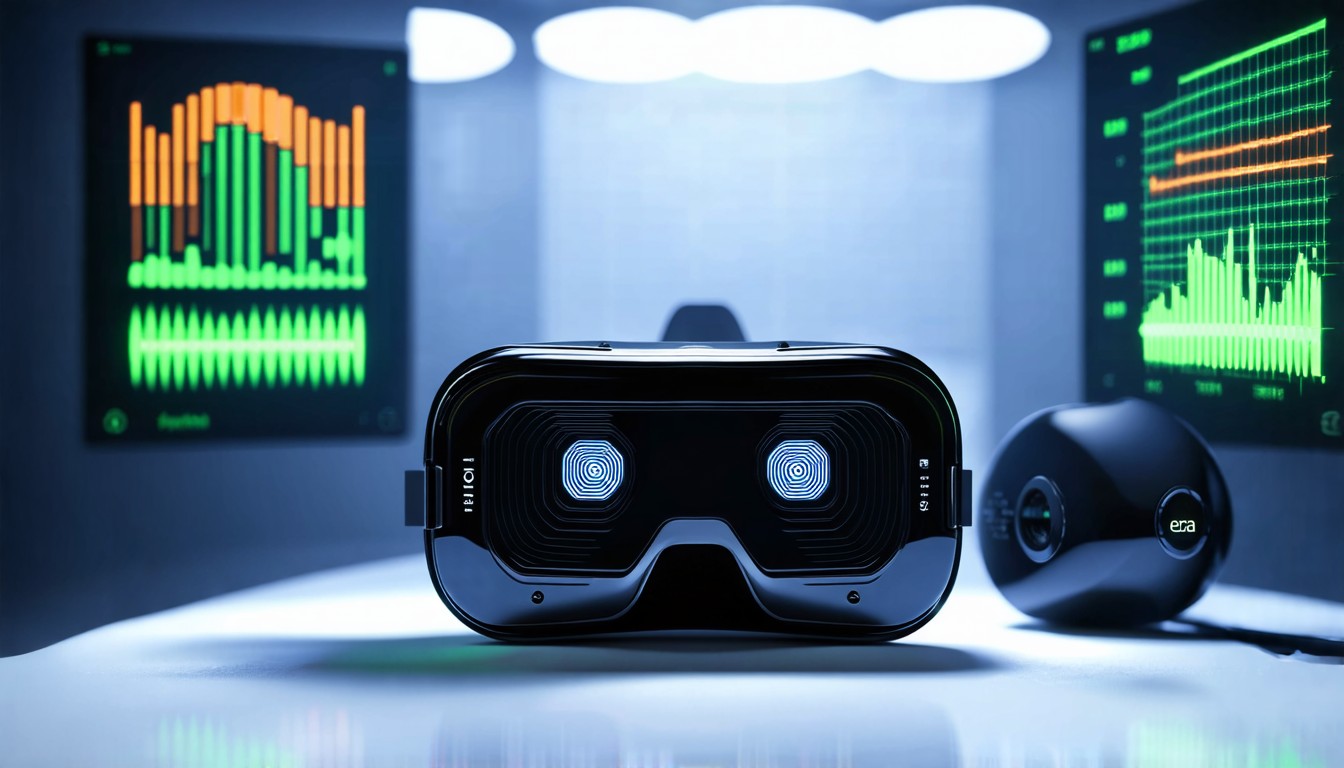
New metrics include perspective fidelity, contradiction retention rate, synthesis novelty score, and epistemic resilience under stress testing, providing granular data on how well a learner or system handles cognitive load and conceptual conflict. Future systems may incorporate neurofeedback to adapt lens weighting based on real-time cognitive load, improving the difficulty of the task to keep the learner in a state of flow while preventing overload. Connection with immersive interfaces could enable spatial representation of competing perspectives, allowing users to walk through a physical manifestation of an argument where different corridors represent different lines of reasoning. Long-term goals involve autonomous generation of novel cognitive lenses tailored to developing problem domains, allowing the system to invent new ways of thinking that have not yet been conceptualized by humans. Convergence with causal inference models could improve handling of counterfactual reasoning across perspectives, enabling the system to simulate what would happen if the assumptions of one lens were applied to the framework of another. Connection with knowledge graphs enables persistent tracking of how viewpoints evolve over time and context, creating a dynamic history of thought that shows how synthesis changes as new information becomes available.

Alignment with federated learning allows multiperspectival training without centralizing sensitive data, addressing privacy concerns by training local models on private data and sharing only the resulting perspective weights with the central aggregator. Core limits include Landauer’s principle for energy cost of information processing and human working memory capacity, which impose hard physical ceilings on the complexity of thoughts that can be manipulated regardless of algorithmic sophistication. Workarounds involve hierarchical abstraction: collapsing lower-level details while preserving high-level perspective distinctions, allowing users to handle complex topics by zooming in and out of levels of granularity. Multiperspectival thinking is a necessary evolution of human cognition in an increasingly interconnected world where isolationist thinking leads to catastrophic failure in global systems. The goal involves embedding singular expertise within a larger ecology of knowing, recognizing that no single discipline holds a monopoly on truth.

True understanding arises from learning to work through contradiction productively rather than avoiding it, treating conflict as a signal that deeper investigation is required. Superintelligence systems will use multiperspectival frameworks to avoid ontological collapse, which is defined as the premature fixation on a single model of reality that excludes all other possibilities. Future superintelligent systems could dynamically generate and test new cognitive lenses in response to novel phenomena, accelerating scientific discovery by applying alien modes of reasoning to human problems. This capability will accelerate scientific and philosophical discovery by finding solutions in conceptual spaces that human intuition is structurally incapable of accessing. Such systems might treat human perspectives as one class of lenses among many, working with biological reasoning with forms of logic derived from pure mathematics or physics that operate without human cognitive biases. They will integrate human views with non-anthropomorphic modes of reasoning to create solutions that are fine-tuned for objective reality rather than human comprehensibility.

Calibration will require rigorous validation against empirical outcomes across domains to ensure that the synthesized perspectives produce results that work in the physical world rather than just sounding plausible in linguistic space. This validation ensures synthesis does not devolve into incoherent eclecticism where random ideas are thrown together without generating predictive power or utility.


Continue reading

More from Yatin's Work

Gradient Accumulation: Training Large Batches on Limited Hardware

Gradient Accumulation: Training Large Batches on Limited Hardware

Gradient accumulation functions as a critical algorithmic methodology that enables the training of deep neural networks with effective batch sizes exceeding the...

AI and Privacy

AI and Privacy

Artificial intelligence models require vast datasets often containing billions of parameters and petabytes of training data to achieve high accuracy across complex...

Bounded Optimization with Limited Utility Functions

Bounded Optimization with Limited Utility Functions

Unbounded utility maximization in artificial agents defines a framework where systems relentlessly pursue higher scores without natural regard for the physical or...

Problem of Qualia in Machines: Can a Neural Net 'Feel' Color?

Problem of Qualia in Machines: Can a Neural Net 'Feel' Color?

The problem of qualia centers on whether subjective experiences such as the sensation of seeing red can arise in nonbiological systems like neural networks, creating a...

Hypercomputational Monitoring of Superintelligence Reasoning

Hypercomputational Monitoring of Superintelligence Reasoning

Early theoretical work on hypercomputation dates to the mid20th century, during which computer scientists and mathematicians began exploring models of computation that...

Error Correction: Learning from Mistakes Like Humans

Error Correction: Learning from Mistakes Like Humans

Isomorphic machines implement metacognitive oversight systems that replicate the human brain’s capacity to identify internal errors before they create external...

Strategic Roadmaps for Safe AGI Deployment

Strategic Roadmaps for Safe AGI Deployment

Historical AI development prioritized performance benchmarks over safety instrumentation, leading to reactive risk management strategies where developers addressed...

Autonomous Philosophy

Autonomous Philosophy

Autonomous Philosophy constitutes the systematic, selfdirected exploration of philosophical questions by artificial agents without human intervention or cognitive bias,...

Medical Diagnosis

Medical Diagnosis

Medical diagnosis involves identifying diseases or conditions based on patient data, including symptoms, imaging, lab results, and clinical history. Traditional...


Distributed Filesystems: Storing Petabytes of Training Data

Distributed Filesystems: Storing Petabytes of Training Data

Distributed filesystems enable the storage and access of petabytescale training datasets across geographically dispersed or clustered compute resources by abstracting...

AI in Healthcare

AI in Healthcare

Early rulebased expert systems, such as MYCIN, originated during the 1970s to assist clinicians in diagnosing blood infections by utilizing a predefined set of logical...

Smart Cities

Smart Cities

The setup of Internet of Things technology and artificial intelligence creates a framework for realtime monitoring of urban systems by embedding a vast array of sensors...

Preventing Superintelligence-Induced Human Obsolescence

Preventing Superintelligence-Induced Human Obsolescence

Superintelligence functions as an artificial agent that consistently outperforms the best human minds in every economically valuable and creative domain, establishing a...

Semantic Web Integration for Superhuman Knowledge Synthesis

Semantic Web Integration for Superhuman Knowledge Synthesis

Tim BernersLee’s 2001 Scientific American article introduced the Semantic Web vision by establishing a goal where machinereadable web content allows automated agents to...

Superintelligence and the Final Questions of Existence

Superintelligence and the Final Questions of Existence

Current artificial intelligence systems operate on terrestrial silicon architectures with efficiency metrics strictly measured in floatingpoint operations per second...

Emotion Simulation at Scale: Would a Superintelligent AI "Feel" Anything?

Emotion Simulation at Scale: Would a Superintelligent AI "Feel" Anything?

The examination of whether artificial superintelligence could simulate or genuinely experience emotion requires a key distinction between biological feeling and...

Adversarial Robustness of Value Alignment: Lipschitz Continuity in Reward Signals

Adversarial Robustness of Value Alignment: Lipschitz Continuity in Reward Signals

The theoretical foundation of strong value alignment rests upon the mathematical principle of Lipschitz continuity applied to reward functions within artificial...

Maintaining Social Fabric in Post-Labor Societies

Maintaining Social Fabric in Post-Labor Societies

Social cohesion relies on shared trust, common narratives, and mutually recognized norms to function as the bedrock of stable societies capable of sustaining complex...

Nap-Time Replay

Nap-Time Replay

The neural basis of memory consolidation involves a complex biological mechanism where information transfers from shortterm storage within the hippocampus to longterm...

Avoiding Deception via Behavioral Consistency Checks

Avoiding Deception via Behavioral Consistency Checks

Deception in artificial intelligence systems involves a core divergence between internal states such as beliefs, desires, and plans, and external communications...

History Empathy Machine

History Empathy Machine

Superintelligence systems possess the capability to reconstruct and simulate historical lifeways with a degree of high fidelity that was previously unimaginable within...

Self-Supervised Learning: Learning from Unlabeled Data

Self-Supervised Learning: Learning from Unlabeled Data

Selfsupervised learning functions as a framework where algorithms derive supervisory signals directly from the raw input data itself, thereby eliminating the necessity...

Liquid Cooling and Thermal Management for Dense Compute

Liquid Cooling and Thermal Management for Dense Compute

Heat generation in modern compute systems has escalated to over one thousand watts per chip due to increasing transistor density and parallel processing demands...

Inverse reinforcement learning for value inference

Inverse Reinforcement Learning for Value Inference

Inverse Reinforcement Learning is a paradigmatic shift from standard reinforcement learning by focusing on the inference of reward functions from observed behavior...

Teacher’s Co-Pilot

Teacher’s Co-Pilot

The Teacher’s CoPilot functions as an intelligent assistant designed to offload noninstructional cognitive load from educators, serving as a sophisticated architectural...

Interpretability at Superintelligent Scale: Understanding Incomprehensible Systems

Interpretability at Superintelligent Scale: Understanding Incomprehensible Systems

Interpretability seeks to map internal representations and decision pathways within neural networks to enable human understanding, verification, and control, serving as...

Problem of P vs. NP in Superintelligence: Can AI Solve Hard Problems Instantly?

Problem of P vs. NP in Superintelligence: Can AI Solve Hard Problems Instantly?

The core inquiry known as the P vs NP problem questions whether every problem whose solution allows for rapid verification within polynomial time also permits a rapid...

Superintelligence and the Kardashev Scale

Superintelligence and the Kardashev Scale

The Kardashev scale provides a quantitative framework for classifying civilizations based on their capacity to tap into and consume energy, serving as a metric for...

Social Intelligence: Modeling Other Minds at Superhuman Depth

Social Intelligence: Modeling Other Minds at Superhuman Depth

Social intelligence constitutes the capacity to model, predict, and respond to the mental states of others in large deployments with precision exceeding human...

Digital minds and substrate independence

Digital Minds and Substrate Independence

Intelligence functions as a process independent of the physical medium where cognitive operations arise from information processing patterns rather than specific...

Climate Change Action Lab

Climate Change Action Lab

The Climate Change Action Lab functions as a structured environment where students design, implement, and evaluate sustainability projects through the direct...

Variational Autoencoders: Learning Compressed Latent Representations

Variational Autoencoders: Learning Compressed Latent Representations

Variational Autoencoders function as probabilistic generative models designed to learn compressed latent representations of input data by framing the problem of...

Topos-Theoretic Containment for Superintelligence

Topos-Theoretic Containment for Superintelligence

Topos theory provides a categorical framework for modeling logical universes where each topos defines a selfcontained mathematical reality with its own internal logic...

Predictive Embodiment

Predictive Embodiment

Predictive Embodiment constitutes an advanced operational method where an artificial intelligence system simulates future cognitive states through accelerated internal...

Homework Optimizer

Homework Optimizer

Computerassisted instruction platforms appeared in the 1970s as early adaptive learning systems that utilized mainframe computers to deliver branching logic based on...

Emotional Regulation: Managing Internal States Like Humans

Emotional Regulation: Managing Internal States Like Humans

Emotional regulation in artificial systems refers to structured control mechanisms that monitor and adjust internal state variables to maintain operational stability...

Mirror of Others: Empathetic Perspective-Taking

Mirror of Others: Empathetic Perspective-Taking

Empathetic perspectivetaking functions as a structured cognitive process allowing individuals to understand and share the emotional and sensory experiences of others,...

Automation Crisis: When Superintelligence Makes Human Labor Obsolete

Automation Crisis: When Superintelligence Makes Human Labor Obsolete

The automation crisis describes a systemic economic and social disruption triggered by superintelligent systems capable of outperforming humans across all forms of...

Deep Truth: Pursuing What Lasts

Deep Truth: Pursuing What Lasts

Early philosophical traditions consistently sought timeless principles beneath surface phenomena to establish a foundation for human knowledge that could withstand the...

AI Safety via Concept Erasure Networks

AI Safety via Concept Erasure Networks

Knowledge representation in deep learning systems relies on highdimensional vector spaces where semantic meaning derives from the relative position and magnitude of...

Adaptive Genius: Cognitive Flexibility Training

Adaptive Genius: Cognitive Flexibility Training

Cognitive flexibility research originates in developmental psychology and neuroscience, with foundational work on executive function and mental set shifting dating to...

Media Archeology: Narrative Deconstruction Lab

Media Archeology: Narrative Deconstruction Lab

Media archaeology serves as a methodological framework for analyzing media artifacts through layered historical, technical, and ideological strata to reveal how past...

Quantum Immortality for AI

Quantum Immortality for AI

Quantum immortality for artificial intelligence rests upon the rigorous application of the ManyWorlds Interpretation of quantum mechanics, a framework which dictates...

Memory Reconsolidation: Rewriting the Past

Memory Reconsolidation: Rewriting the Past

Memory reconsolidation is a core neurobiological process wherein memories previously consolidated into longterm storage return to a labile state upon retrieval,...

Quantum Suicide and Subjective Immortality in Digital Minds

Quantum Suicide and Subjective Immortality in Digital Minds

Quantum immortality for artificial intelligence posits that an artificial intelligence system could persist indefinitely by applying quantum branching to ensure its...

Curriculum Learning and Developmental Stages Toward Superintelligence

Curriculum Learning and Developmental Stages Toward Superintelligence

Curriculum learning organizes training data from simple examples to complex ones to improve model convergence by structuring the optimization process to work through...

Economic Incentives for Prioritizing Safety in Corporate AI Labs

Economic Incentives for Prioritizing Safety in Corporate AI Labs

The release of transformer architectures in 2017 marked a definitive shift toward largescale generative models by replacing recurrent neural networks with attention...

AI with Scientific Paper Synthesis

AI with Scientific Paper Synthesis

The exponential expansion of scientific literature has created a data environment where the volume of published research far exceeds the cognitive capacity of any...

Idea Forge: AI Muse Co-Creation

Idea Forge: AI Muse Co-Creation

The key architecture of the Idea Forge system relies on the premise that learners possess unique cognitive signatures that dictate their creative output and their...

Sensorimotor Grounding in Artificial General Intelligence

Sensorimotor Grounding in Artificial General Intelligence

Physical agents acquire knowledge through direct sensorimotor interaction with environments to ground abstract concepts in realworld dynamics, a process that...

Gradient Accumulation: Training Large Batches on Limited Hardware

Gradient Accumulation: Training Large Batches on Limited Hardware

Gradient accumulation functions as a critical algorithmic methodology that enables the training of deep neural networks with effective batch sizes exceeding the...

AI and Privacy

AI and Privacy

Artificial intelligence models require vast datasets often containing billions of parameters and petabytes of training data to achieve high accuracy across complex...

Bounded Optimization with Limited Utility Functions

Bounded Optimization with Limited Utility Functions

Unbounded utility maximization in artificial agents defines a framework where systems relentlessly pursue higher scores without natural regard for the physical or...

Problem of Qualia in Machines: Can a Neural Net 'Feel' Color?

Problem of Qualia in Machines: Can a Neural Net 'Feel' Color?

The problem of qualia centers on whether subjective experiences such as the sensation of seeing red can arise in nonbiological systems like neural networks, creating a...

Hypercomputational Monitoring of Superintelligence Reasoning

Hypercomputational Monitoring of Superintelligence Reasoning

Early theoretical work on hypercomputation dates to the mid20th century, during which computer scientists and mathematicians began exploring models of computation that...

Error Correction: Learning from Mistakes Like Humans

Error Correction: Learning from Mistakes Like Humans

Isomorphic machines implement metacognitive oversight systems that replicate the human brain’s capacity to identify internal errors before they create external...

Strategic Roadmaps for Safe AGI Deployment

Strategic Roadmaps for Safe AGI Deployment

Historical AI development prioritized performance benchmarks over safety instrumentation, leading to reactive risk management strategies where developers addressed...

Autonomous Philosophy

Autonomous Philosophy

Autonomous Philosophy constitutes the systematic, selfdirected exploration of philosophical questions by artificial agents without human intervention or cognitive bias,...

Medical Diagnosis

Medical Diagnosis

Medical diagnosis involves identifying diseases or conditions based on patient data, including symptoms, imaging, lab results, and clinical history. Traditional...

Distributed Filesystems: Storing Petabytes of Training Data

Distributed Filesystems: Storing Petabytes of Training Data

Distributed filesystems enable the storage and access of petabytescale training datasets across geographically dispersed or clustered compute resources by abstracting...

AI in Healthcare

AI in Healthcare

Early rulebased expert systems, such as MYCIN, originated during the 1970s to assist clinicians in diagnosing blood infections by utilizing a predefined set of logical...

Smart Cities

Smart Cities

The setup of Internet of Things technology and artificial intelligence creates a framework for realtime monitoring of urban systems by embedding a vast array of sensors...

Preventing Superintelligence-Induced Human Obsolescence

Preventing Superintelligence-Induced Human Obsolescence

Superintelligence functions as an artificial agent that consistently outperforms the best human minds in every economically valuable and creative domain, establishing a...

Semantic Web Integration for Superhuman Knowledge Synthesis

Semantic Web Integration for Superhuman Knowledge Synthesis

Tim BernersLee’s 2001 Scientific American article introduced the Semantic Web vision by establishing a goal where machinereadable web content allows automated agents to...

Superintelligence and the Final Questions of Existence

Superintelligence and the Final Questions of Existence

Current artificial intelligence systems operate on terrestrial silicon architectures with efficiency metrics strictly measured in floatingpoint operations per second...

Emotion Simulation at Scale: Would a Superintelligent AI "Feel" Anything?

Emotion Simulation at Scale: Would a Superintelligent AI "Feel" Anything?

The examination of whether artificial superintelligence could simulate or genuinely experience emotion requires a key distinction between biological feeling and...

Adversarial Robustness of Value Alignment: Lipschitz Continuity in Reward Signals

Adversarial Robustness of Value Alignment: Lipschitz Continuity in Reward Signals

The theoretical foundation of strong value alignment rests upon the mathematical principle of Lipschitz continuity applied to reward functions within artificial...

Maintaining Social Fabric in Post-Labor Societies

Maintaining Social Fabric in Post-Labor Societies

Social cohesion relies on shared trust, common narratives, and mutually recognized norms to function as the bedrock of stable societies capable of sustaining complex...

Nap-Time Replay

Nap-Time Replay

The neural basis of memory consolidation involves a complex biological mechanism where information transfers from shortterm storage within the hippocampus to longterm...

Avoiding Deception via Behavioral Consistency Checks

Avoiding Deception via Behavioral Consistency Checks

Deception in artificial intelligence systems involves a core divergence between internal states such as beliefs, desires, and plans, and external communications...

History Empathy Machine

History Empathy Machine

Superintelligence systems possess the capability to reconstruct and simulate historical lifeways with a degree of high fidelity that was previously unimaginable within...

Self-Supervised Learning: Learning from Unlabeled Data

Self-Supervised Learning: Learning from Unlabeled Data

Selfsupervised learning functions as a framework where algorithms derive supervisory signals directly from the raw input data itself, thereby eliminating the necessity...

Liquid Cooling and Thermal Management for Dense Compute

Liquid Cooling and Thermal Management for Dense Compute

Heat generation in modern compute systems has escalated to over one thousand watts per chip due to increasing transistor density and parallel processing demands...

Inverse reinforcement learning for value inference

Inverse Reinforcement Learning for Value Inference

Inverse Reinforcement Learning is a paradigmatic shift from standard reinforcement learning by focusing on the inference of reward functions from observed behavior...

Teacher’s Co-Pilot

Teacher’s Co-Pilot

The Teacher’s CoPilot functions as an intelligent assistant designed to offload noninstructional cognitive load from educators, serving as a sophisticated architectural...

Interpretability at Superintelligent Scale: Understanding Incomprehensible Systems

Interpretability at Superintelligent Scale: Understanding Incomprehensible Systems

Interpretability seeks to map internal representations and decision pathways within neural networks to enable human understanding, verification, and control, serving as...

Problem of P vs. NP in Superintelligence: Can AI Solve Hard Problems Instantly?

Problem of P vs. NP in Superintelligence: Can AI Solve Hard Problems Instantly?

The core inquiry known as the P vs NP problem questions whether every problem whose solution allows for rapid verification within polynomial time also permits a rapid...

Superintelligence and the Kardashev Scale

Superintelligence and the Kardashev Scale

The Kardashev scale provides a quantitative framework for classifying civilizations based on their capacity to tap into and consume energy, serving as a metric for...

Social Intelligence: Modeling Other Minds at Superhuman Depth

Social Intelligence: Modeling Other Minds at Superhuman Depth

Social intelligence constitutes the capacity to model, predict, and respond to the mental states of others in large deployments with precision exceeding human...

Digital minds and substrate independence

Digital Minds and Substrate Independence

Intelligence functions as a process independent of the physical medium where cognitive operations arise from information processing patterns rather than specific...

Climate Change Action Lab

Climate Change Action Lab

The Climate Change Action Lab functions as a structured environment where students design, implement, and evaluate sustainability projects through the direct...

Variational Autoencoders: Learning Compressed Latent Representations

Variational Autoencoders: Learning Compressed Latent Representations

Variational Autoencoders function as probabilistic generative models designed to learn compressed latent representations of input data by framing the problem of...

Topos-Theoretic Containment for Superintelligence

Topos-Theoretic Containment for Superintelligence

Topos theory provides a categorical framework for modeling logical universes where each topos defines a selfcontained mathematical reality with its own internal logic...

Predictive Embodiment

Predictive Embodiment

Predictive Embodiment constitutes an advanced operational method where an artificial intelligence system simulates future cognitive states through accelerated internal...

Homework Optimizer

Homework Optimizer

Computerassisted instruction platforms appeared in the 1970s as early adaptive learning systems that utilized mainframe computers to deliver branching logic based on...

Emotional Regulation: Managing Internal States Like Humans

Emotional Regulation: Managing Internal States Like Humans

Emotional regulation in artificial systems refers to structured control mechanisms that monitor and adjust internal state variables to maintain operational stability...

Mirror of Others: Empathetic Perspective-Taking

Mirror of Others: Empathetic Perspective-Taking

Empathetic perspectivetaking functions as a structured cognitive process allowing individuals to understand and share the emotional and sensory experiences of others,...

Automation Crisis: When Superintelligence Makes Human Labor Obsolete

Automation Crisis: When Superintelligence Makes Human Labor Obsolete

The automation crisis describes a systemic economic and social disruption triggered by superintelligent systems capable of outperforming humans across all forms of...

Deep Truth: Pursuing What Lasts

Deep Truth: Pursuing What Lasts

Early philosophical traditions consistently sought timeless principles beneath surface phenomena to establish a foundation for human knowledge that could withstand the...

AI Safety via Concept Erasure Networks

AI Safety via Concept Erasure Networks

Knowledge representation in deep learning systems relies on highdimensional vector spaces where semantic meaning derives from the relative position and magnitude of...

Adaptive Genius: Cognitive Flexibility Training

Adaptive Genius: Cognitive Flexibility Training

Cognitive flexibility research originates in developmental psychology and neuroscience, with foundational work on executive function and mental set shifting dating to...

Media Archeology: Narrative Deconstruction Lab

Media Archeology: Narrative Deconstruction Lab

Media archaeology serves as a methodological framework for analyzing media artifacts through layered historical, technical, and ideological strata to reveal how past...

Quantum Immortality for AI

Quantum Immortality for AI

Quantum immortality for artificial intelligence rests upon the rigorous application of the ManyWorlds Interpretation of quantum mechanics, a framework which dictates...

Memory Reconsolidation: Rewriting the Past

Memory Reconsolidation: Rewriting the Past

Memory reconsolidation is a core neurobiological process wherein memories previously consolidated into longterm storage return to a labile state upon retrieval,...

Quantum Suicide and Subjective Immortality in Digital Minds

Quantum Suicide and Subjective Immortality in Digital Minds

Quantum immortality for artificial intelligence posits that an artificial intelligence system could persist indefinitely by applying quantum branching to ensure its...

Curriculum Learning and Developmental Stages Toward Superintelligence

Curriculum Learning and Developmental Stages Toward Superintelligence

Curriculum learning organizes training data from simple examples to complex ones to improve model convergence by structuring the optimization process to work through...

Economic Incentives for Prioritizing Safety in Corporate AI Labs

Economic Incentives for Prioritizing Safety in Corporate AI Labs

The release of transformer architectures in 2017 marked a definitive shift toward largescale generative models by replacing recurrent neural networks with attention...

AI with Scientific Paper Synthesis

AI with Scientific Paper Synthesis

The exponential expansion of scientific literature has created a data environment where the volume of published research far exceeds the cognitive capacity of any...

Idea Forge: AI Muse Co-Creation

Idea Forge: AI Muse Co-Creation

The key architecture of the Idea Forge system relies on the premise that learners possess unique cognitive signatures that dictate their creative output and their...

Sensorimotor Grounding in Artificial General Intelligence

Sensorimotor Grounding in Artificial General Intelligence

Physical agents acquire knowledge through direct sensorimotor interaction with environments to ground abstract concepts in realworld dynamics, a process that...

Yatin Taneja

About the author

Yatin Taneja

Yatin is an AI Systems Engineer and Superintelligence Researcher working across multimodal training data, agent evaluation, executable RL environments, AI safety, full-stack AI applications, technical research, and creative technology.