Knowledge hub
Medical Diagnosis
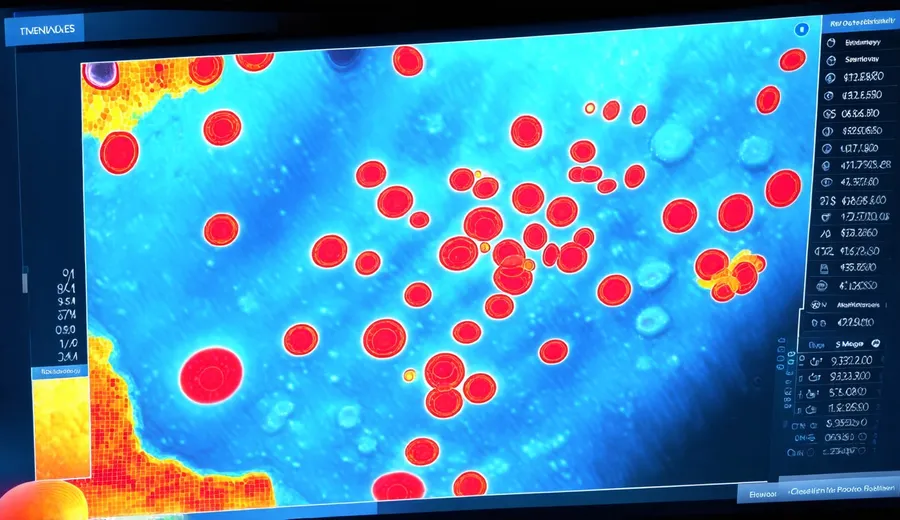
Medical diagnosis involves identifying diseases or conditions based on patient data, including symptoms, imaging, lab results, and clinical history. Traditional diagnosis relied on human expertise, pattern recognition, and probabilistic reasoning, often constrained by cognitive load and variability across practitioners. Early AI diagnostic efforts in the 1970s–1990s relied on rule-based expert systems with limited adaptability and poor generalization because these systems utilized rigid logic trees that failed to account for the ambiguity inherent in biological systems. Traditional computer-aided detection tools from the 2000s failed to improve diagnostic accuracy in randomized trials and were largely abandoned due to their inability to integrate context beyond pixel intensity or provide meaningful clinical decision support. A shift to statistical and machine learning approaches in the 2000s enabled handling of complex, high-dimensional data, which characterized modern medical records by identifying correlations within vast datasets that human observers could not perceive. A breakthrough in 2012 with deep convolutional neural networks on ImageNet triggered medical imaging applications as researchers recognized the potential of deep feature extraction for visual pattern recognition.

Recent advances in machine learning, particularly deep learning, enabled automated analysis of medical data with performance exceeding human specialists in specific diagnostic tasks such as lesion detection in radiology or cell classification in pathology. Systems like IDx-DR demonstrated regulatory approval and clinical deployment for autonomous detection of diabetic retinopathy from retinal images, proving that autonomous systems could operate safely within clinical workflows. AI models trained on large annotated datasets detected subtle pixel-level patterns in radiological or ophthalmological images that were imperceptible to human observers by analyzing high-frequency noise and texture variations invisible to the human eye. Performance gains stemmed from high-dimensional feature extraction, consistent application of learned criteria, and absence of fatigue or subjective bias in narrow domains where algorithms maintained constant attention to detail regardless of workload duration. The core function of diagnostic AI is classification: assigning a label to input data such as medical images or structured records based on learned statistical representations derived from training examples. Input modalities include radiographs, CT/MRI scans, fundus photographs, pathology slides, and electronic health record entries, each requiring specific preprocessing techniques to normalize signal-to-noise ratios and standardize formats across different hardware manufacturers.
The
Ground truth refers to the reference standard diagnosis established via biopsy or expert consensus, against which the model was trained and validated to ensure alignment with established medical knowledge. Model drift describes degradation in performance due to changes in data distribution over time, necessitating strong monitoring systems to detect shifts in input characteristics or scanner protocols that occurred after initial deployment. Explainability defines the ability to articulate the basis of prediction in clinically interpretable terms, allowing clinicians to trust and verify algorithmic decisions through techniques such as saliency maps or attention visualization. IDx-DR deployed in primary care clinics for diabetic retinopathy screening demonstrated 87.4% sensitivity and 89.5% specificity in key clinical trials, validating its efficacy in real-world environments compared to human specialists. Aidoc, Zebra Medical Vision, and Lunit offered cleared AI tools for radiology triage such as intracranial hemorrhage and pulmonary embolism, prioritizing critical cases for immediate radiologist review to reduce turnaround times. Google Health’s LYNA model showed high accuracy in detecting metastatic breast cancer in pathology slides by identifying tumor metastases in lymph nodes with greater precision than human pathologists under time constraints.
Performance benchmarks consistently showed non-inferiority or superiority to radiologists in retrospective studies across various modalities, including mammography and chest radiography. Prospective trials confirmed workflow setup benefits and reduced time-to-treatment for acute conditions like stroke, demonstrating tangible improvements in patient care pathways through automation of routine triage tasks. Dominant architectures included convolutional neural networks for image-based tasks and transformer-based models for multimodal EHR and imaging fusion tasks requiring sequence understanding across disparate data types. New challengers included vision transformers, self-supervised learning models, and foundation models pretrained on large-scale medical datasets to learn generalized representations before task-specific fine-tuning occurred. CNNs remained preferred for deployment due to maturity, interpretability tools, and hardware optimization on existing medical imaging infrastructure, which had been developed over decades of digital radiology advancement. Foundation models showed promise but faced challenges in fine-tuning, calibration, and regulatory acceptance due to their opaque nature and massive parameter counts, which complicated validation efforts required by regulatory bodies.
Training data sourced from hospital PACS systems, public datasets, and proprietary collections underwent rigorous de-identification to protect patient privacy while preserving relevant clinical features necessary for model learning. Annotation relied on radiologists, pathologists, and ophthalmologists, creating a limitation in the data pipeline as expert time was scarce and expensive compared to the volume of data required for training deep networks. Hardware relied on NVIDIA GPUs for training while inference increasingly ran on edge devices such as portable ultrasound machines or mobile retinal cameras to enable point-of-care diagnostics without requiring constant cloud connectivity. Cloud infrastructure used for scalable deployment raised data sovereignty and latency issues, compelling some healthcare systems to prefer on-premise solutions to maintain control over sensitive patient information. Computational requirements for training best models demanded GPU clusters and significant energy consumption, raising concerns about the environmental impact of scaling these technologies globally across millions of patients. Deployment in low-resource settings faced hardware limitations, internet connectivity, and power availability, necessitating the development of fine-tuned models capable of running on standard consumer-grade processors or mobile chipsets.
Economic barriers included high upfront development costs, ongoing maintenance, and reimbursement uncertainty regarding payment for algorithmic analyses performed alongside standard care procedures. Adaptability depended on the need for high-quality, diverse, and representative training data to ensure models performed equitably across different ethnicities, genders, and socioeconomic groups without inheriting biases present in historical medical records. Regulatory pathways imposed validation and monitoring requirements that slowed iterative deployment, requiring developers to conduct extensive clinical studies to demonstrate safety and effectiveness before market entry could occur. Rule-based systems failed due to the inability to handle ambiguity and variability in presentation, whereas modern deep learning systems excelled at finding patterns in noisy data, yet struggled with explainability regarding their internal reasoning processes. Hybrid human-AI systems, initially favored, were shown to underperform fully autonomous models in narrow tasks due to automation bias, where humans trusted the system too implicitly to catch errors effectively. Cloud-only deployment models faced rejection in favor of edge-compatible solutions due to latency and privacy concerns, pushing developers toward efficient model architectures suitable for local execution within secure hospital networks.
The rising global burden of chronic diseases increased demand for early and accurate diagnosis to enable timely interventions that reduced long-term healthcare costs associated with managing advanced stages of illness. Healthcare systems faced workforce shortages and rising costs, creating pressure for efficiency gains that automated diagnostic tools provided by acting as force multipliers for existing staff through rapid triage and preliminary analysis. Patient expectations for faster diagnoses drove adoption of automated tools as consumers became accustomed to rapid results in other aspects of their digital lives and demanded similar responsiveness from healthcare providers. Regulatory bodies now provided clearer pathways for AI-based medical devices, reducing uncertainty for investors and developers seeking to bring novel solutions to market through defined validation protocols. Economic incentives aligned as payers recognized the potential for cost reduction through earlier intervention, which prevented expensive complications associated with late-basis disease management. Major players included startups like IDx, Viz.ai, Aidoc, and Zebra Medical Vision, which focused on specific diagnostic niches to gain regulatory clearance and market traction before expanding into broader indications.
Tech giants such as Google Health, Microsoft, and IBM Watson Health participated in the market by using vast cloud infrastructure and research capabilities to develop broad platforms capable of handling diverse data types. Medical device firms like Siemens Healthineers, GE Healthcare, and Philips integrated AI into imaging hardware to create smooth workflows where analysis occurred immediately upon image acquisition without requiring separate user actions. Competitive differentiation relied on regulatory approvals, clinical validation, and connection with EHR/PACS systems that determined ease of setup into existing hospital operations. Consolidation increased as larger firms acquired niche AI diagnostics companies to expand their product portfolios and accelerate their internal research and development capabilities through talent acquisition. The United States led in regulatory approvals and venture funding, creating a centralized hub for innovation that attracted talent from around the world despite data localization restrictions present in other regions. Data privacy laws affected cross-border data sharing and model training, restricting the ability to train global models on diverse datasets without complex legal agreements regarding data sovereignty.
Export controls on high-performance computing hardware limited deployment in certain regions by restricting access to the advanced processors necessary for running new diagnostic models efficiently. Academic medical centers partnered with AI firms for dataset curation and clinical validation, providing the essential clinical expertise required to ground algorithms in medical reality through rigorous prospective trials. Funding agencies supported initiatives to promote equitable data sharing and model development to address underserved populations and rare diseases that lacked commercial incentives for private investment. Industrial labs published foundational work but faced challenges in clinical translation due to the disconnect between research benchmarks improved for static datasets and real-world clinical utility required in agile hospital environments. Joint publications and shared benchmarks accelerated progress by establishing standardized performance metrics that allowed direct comparison between competing approaches on common datasets held out for testing purposes. EHR and PACS systems required API-level connection to support real-time AI inference, necessitating interoperability standards such as DICOM and HL7 FHIR to facilitate data exchange between disparate systems seamlessly.
Regulatory frameworks evolved to handle continuous learning systems and post-market surveillance to ensure models maintained safety standards as they learned from new data over time without requiring pre-market approval for every minor update. Reimbursement codes were needed to incentivize clinical use by providing a financial mechanism for providers to bill for AI-assisted diagnostic services rendered during patient care episodes. Cybersecurity standards addressed model inversion and data leakage risks where malicious actors attempted to extract sensitive patient data from model parameters or prediction outputs through sophisticated query attacks on exposed APIs. Clinical decision support workflows required redesign to incorporate AI outputs effectively without causing alert fatigue or disrupting established physician routines relied upon for efficient patient throughput. Radiologist and pathologist roles shifted from primary interpreters to validators or supervisors who focused on complex cases flagged by algorithms or review borderline diagnoses requiring detailed judgment beyond algorithmic confidence scores. New business models included AI-as-a-Service, per-scan pricing, and outcome-based contracts that aligned the financial success of the AI vendor with improved patient health outcomes rather than just software licensing fees.
Diagnostic errors decreased overall while liability frameworks remained unclear for autonomous systems, creating legal ambiguity regarding responsibility when an algorithm missed a diagnosis that a human might have caught under standard care conditions. Training programs for clinicians included AI literacy and interpretation of algorithmic outputs to prepare the next generation of healthcare providers for an AI-augmented practice environment where man-machine collaboration became the standard of care. Traditional KPIs like accuracy and sensitivity were insufficient without clinical utility metrics that measured actual improvements in patient triage, treatment planning, or survival rates resulting from algorithmic intervention. Model reliability required measurement across demographic subgroups and imaging protocols to ensure reliability against variations in scanner manufacturers or patient demographics often overlooked in narrow validation studies. Monitoring for concept drift and data shift required continuous evaluation pipelines that automatically flagged performance degradation in production environments before it impacted patient safety negatively. Explainability metrics such as saliency map fidelity became standard in validation protocols to ensure that highlighted regions corresponded meaningfully to the pathology of interest rather than spurious correlations like imaging artifacts or text annotations present in training scans.
Multimodal models combining imaging, genomics, and EHR data enabled holistic diagnosis by synthesizing information across different biological scales and data types to form a comprehensive picture of patient health status unavailable to single-modality systems. Real-time adaptive learning with clinician feedback loops improved model performance by allowing the system to correct errors based on input from human experts during daily use without requiring full retraining cycles offline. Miniaturized models facilitated point-of-care devices like handheld ultrasound with embedded AI that provided diagnostic guidance to non-specialists in remote or emergency settings where access to expert radiologists was limited or non-existent. Setup with wearable sensors allowed for continuous diagnostic monitoring of vital signs and biomarkers, enabling early detection of decompensation in chronic disease management through analysis of longitudinal physiological data streams. Fusion with genomics supported precision diagnosis such as tumor subtype prediction by linking imaging phenotypes with underlying genetic mutations to guide targeted therapy selection based on molecular profile rather than anatomical location alone. Combination with robotic surgery systems provided intraoperative guidance by identifying critical anatomical structures or tumor margins in real time during surgical procedures to assist surgeons in achieving complete resections while preserving healthy tissue.
Linkage to digital therapeutics enabled closed-loop diagnosis and treatment adjustment where the diagnostic system directly modulated therapeutic interventions based on real-time patient data streams received from connected monitoring devices. Interoperability with blockchain ensured secure, auditable diagnostic records that maintained integrity and provenance of AI-generated insights across distributed healthcare networks, preventing tampering or unauthorized modification of patient data logs. Moore’s Law slowdown limited gains from hardware scaling, increasing reliance on algorithmic efficiency improvements rather than raw computing power increases to drive performance gains in future model iterations. Memory bandwidth affected large vision transformers which required rapid movement of massive parameter sets between memory and compute units during inference operations, creating latency issues unsuitable for real-time diagnostic applications requiring immediate results. Workarounds included model distillation, quantization, pruning, and specialized accelerators designed specifically for neural network inference workloads to maximize throughput per watt of energy consumed on edge devices located within clinical settings. Energy efficiency remained critical for global deployment to ensure that advanced diagnostic capabilities were accessible in regions with unstable power grids or limited energy resources where large server farms were impractical or unsustainable to operate continuously.
Diagnostic AI functioned as a new class of medical instrument subject to calibration and maintenance schedules similar to traditional imaging equipment like MRI machines or CT scanners, requiring regular quality assurance checks to ensure measurement accuracy over time. Success depended on embedding AI within sociotechnical systems where the technology complemented human workflow rather than attempting to replace the clinical judgment entirely, requiring careful consideration of user interface design and connection points within existing clinical pathways. Equity had to be central to avoid exacerbating health disparities through non-representative data that failed to capture the phenotypic diversity of global populations, leading to biased algorithms performing poorly on underrepresented groups. Autonomy should be task-specific and context-aware to ensure that systems operated safely within defined boundaries while escalating uncertainty to human supervisors appropriately when encountering inputs outside their training distribution or confidence intervals. Superintelligence required diagnostic systems that generalized across diseases, modalities, and populations without task-specific training by applying key principles of biology and pathology learned from massive, diverse datasets spanning multiple domains of medical knowledge simultaneously. Calibration shifted from statistical confidence to causal understanding of disease mechanisms, allowing the system to reason about why a specific pattern indicated a particular pathology rather than relying solely on correlation observed in retrospective data analysis.
Validation needed counterfactual reasoning to determine if a diagnosis held under alternate biological conditions simulating how a patient might respond to different treatments or how a disease might progress without intervention enabling strong predictions beyond simple pattern matching. Superintelligence treated diagnosis as an active inference problem over time, connecting with real-world patient progression to update beliefs dynamically as new data arrived from sensors or lab tests refining differential diagnoses iteratively until convergence on a most likely explanation. It reframed diagnosis as prediction of optimal intervention pathways rather than simple classification by considering the entire treatment space and potential outcomes associated with different diagnostic conclusions to recommend actions maximizing expected utility regarding patient quality of life and survival probability. Setup with synthetic biology or nanomedicine enabled real-time diagnostic feedback at the cellular level providing granular insights into metabolic processes or cellular dysfunction far earlier than macroscopic symptoms appeared allowing preventative interventions before irreversible tissue damage occurred. Ultimate utility lay in closing the loop between observation, diagnosis, and adaptive treatment for large workloads creating autonomous healthcare systems capable of managing population health for large workloads with minimal human oversight for routine cases while flagging complex anomalies for expert human review ensuring flexibility of high-quality care delivery globally despite workforce shortages limiting traditional healthcare provider availability.