Knowledge hub

Memory Architectures for Superintelligence: Beyond Von Neumann

Memory Architectures for Superintelligence: Beyond Von Neumann

The traditional Von Neumann architecture established a distinct separation between the processing units responsible for executing instructions and the memory units designated for data storage. This core design requires that every piece of data be transferred back and forth between these two distinct locations for a single operation to occur. The necessity of this constant data movement imposes a severe performance limitation often referred to as the memory wall, where the latency involved in data transfer and the restrictions on available bandwidth act as the primary constraints on overall computational speed. Processing units inevitably spend a significant portion of their operational cycles waiting for data retrieval to complete, which leads to a substantial underutilization of the available compute resources. As the scale and complexity of computational demands continue to grow, the inefficiency built into shuttling vast quantities of data becomes prohibitive regarding both the time required for completion and the energy consumed during the process. Current artificial intelligence models have already placed immense strain on existing memory systems, with training runs frequently finding themselves limited by GPU memory capacity and the maximum data transfer rates supported by the hardware.

Dominant architectures in the contemporary domain remain heavily GPU-centric, utilizing high-bandwidth memory (HBM) to attempt to feed data to hungry processors while relying on massive parallelism to operate within the constraints of the Von Neumann model. This approach has yielded results, yet it is a brute-force method that simply widens the road rather than changing the vehicle or the destination. Early alternatives explored to mitigate these issues included increased cache sizes or wider memory buses, which only marginally alleviated the memory wall without addressing the root causes of the separation between logic and storage. Multi-core scaling eventually faced diminishing returns precisely due to memory contention and the synchronization overhead required to keep multiple processors coherent with a single shared memory pool. These incremental fixes were ultimately rejected as insufficient for the sheer scale and energy efficiency required by superintelligence, necessitating a core change of how systems are architected. Processing-in-Memory (PIM) is a significant architectural departure by connecting with computational logic directly into the memory arrays themselves, which enables data to be processed precisely at the location where it is stored rather than moving it to a distant CPU.

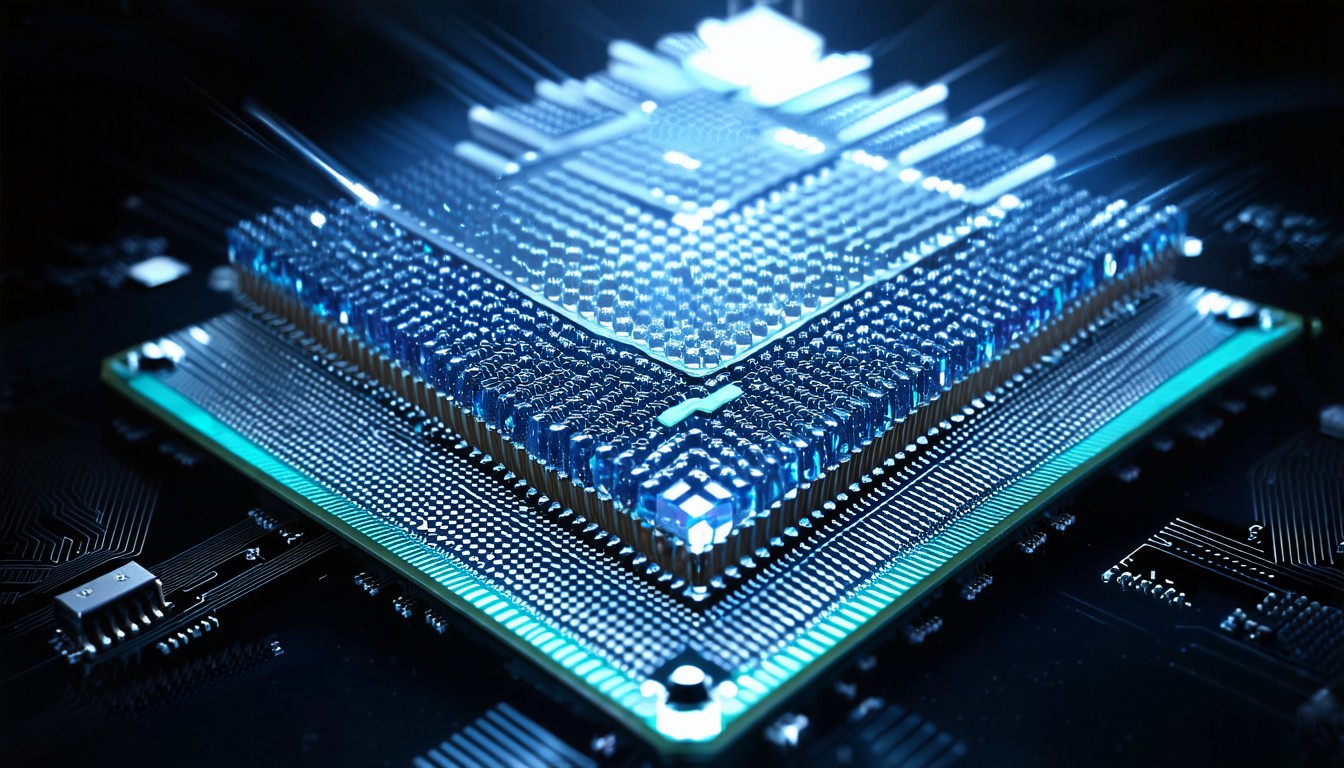
This connection is often facilitated through advanced 3D stacking technologies that layer memory dies and logic dies vertically on top of one another, thereby drastically reducing the physical distance that signals must travel and increasing the density of interconnects between layers. Through-Silicon Vias (TSVs) act as the vertical electrical connections that penetrate through the silicon wafer to connect these stacked layers, allowing for significantly higher bandwidth compared to traditional planar 2D interconnects found in standard printed circuit boards. These approaches collectively minimize the need for data movement, reduce the latency associated with memory access, and improve overall energy efficiency by co-locating the computation and storage elements into a single unified package. PIM prototypes have existed in research laboratories and niche commercial applications for some time, with examples including Samsung’s High Bandwidth Memory-PIM (HBM-PIM) and UPMEM’s DRAM-based processing units, which demonstrate the feasibility of placing arithmetic logic units within memory arrays. Performance benchmarks derived from these implementations show order-of-magnitude improvements in energy efficiency for specific workloads such as vector-matrix multiplication, although limited applicability exists beyond these narrow tasks currently due to programming complexity. Neuromorphic computing models hardware directly on the biological structure and function of neural networks found in living organisms.

In these architectures, synaptic weights serve as both the memory elements and the computational elements, allowing for localized, event-driven processing that occurs only when specific neurons receive sufficient input to fire. This design supports massive parallelism and asynchronous operation, mimicking the brain’s exceptional efficiency in pattern recognition and adaptive learning tasks while consuming orders of magnitude less power than conventional digital logic. Neuromorphic chips such as Intel’s Loihi and IBM’s TrueNorth demonstrate energy-efficient pattern recognition capabilities while lacking general-purpose flexibility required for standard algorithmic execution. These chips utilize spiking neural networks where information is encoded in the timing of spikes rather than static numerical values, requiring entirely new software approaches to function effectively. The architectural focus remains on minimizing active power consumption by keeping large portions of the chip dormant until specific synaptic events trigger activity. Analog computing processes information using continuous physical signals such as voltage or current levels rather than discrete binary states, which allows for inherently parallel operations and reduced energy consumption per computation, particularly for linear algebra tasks common in neural networks.

By utilizing the physical properties of the circuit itself to perform mathematical functions like addition and multiplication through Ohm’s law and Kirchhoff’s laws, analog processors can execute complex matrix operations in a single time step without the clock cycles required by digital logic. This built-in parallelism makes analog computing exceptionally well-suited for the inference phases of deep learning models, where massive matrices of weights must be multiplied by input vectors continuously. Challenges associated with this approach include noise sensitivity in the signal paths, precision limitations due to manufacturing variances in analog components, and the difficulty in achieving general-purpose programmability compared to digital systems. Startups such as Mythic and Rain Neuromorphics actively explore analog and digital in-memory computing techniques to accelerate these matrix operations by using flash memory cells or memristors to perform analog multiplication directly within the memory array. Non-volatile memory technologies such as Magnetoresistive RAM (MRAM) and Resistive RAM (RRAM) retain data without power and enable near-instant state restoration upon powering up a system. MRAM uses magnetic tunnel junctions to store data bits by altering the magnetic orientation of ferromagnetic layers, offering high endurance, radiation hardness, and virtually unlimited read/write longevity compared to charge-based flash memory.

RRAM relies on resistance changes in materials like Hafnium Oxide caused by the formation or rupture of conductive filaments, allowing for high-density storage that scales well below the dimensions of traditional transistors. These technologies reduce boot latency significantly because systems do not need to load operating systems or initial model weights from slower storage into main memory, while also lowering idle power consumption because data remains intact without periodic refreshing. These characteristics are critical for always-on, large-scale AI systems that must remain responsive at all times without incurring the energy penalties associated with traditional volatile memory refresh cycles. Memory hierarchies comprising cache, main memory, and storage must be restructured fundamentally to match the access patterns of modern AI workloads. AI workloads often involve irregular, sparse, or streaming data access patterns that differ significantly from the sequential locality assumed by CPU cache designers. Conventional hierarchies fine-tuned for sequential CPU workloads are ill-suited for the bursty, high-throughput demands of future superintelligent algorithms, which require rapid access to massive datasets with little temporal locality.

New hierarchies may flatten or eliminate traditional tiers, favoring unified, high-speed, non-volatile memory fabrics that act as both storage and main memory simultaneously. This flattening removes the need for explicit data movement between tiers, reducing software complexity and hardware overhead associated with cache coherence protocols. The goal involves creating a single memory space that offers the speed of traditional DRAM alongside the persistence and capacity of storage devices. Superintelligence will require persistent, high-bandwidth memory to maintain long-term context and lively working states across extended timeframes without degradation or loss of fidelity. Future systems will need memory architectures that support continuous learning without catastrophic forgetting, where the acquisition of new skills overwrites previously learned information. Persistent, rewritable, high-density storage will enable this continuous learning capability by allowing models to update their weights incrementally over time without needing to reload entire datasets from cold storage.

Context windows spanning years or decades will necessitate memory with both high speed and long-term stability, ensuring that historical context remains accessible for immediate reasoning regardless of when it was acquired. The architecture will allow for active allocation of working memory for immediate tasks, long-term memory for knowledge retention, and procedural knowledge for skill execution in a unified framework that manages these distinct modes transparently. Superintelligence will utilize memory for data storage and as an active participant in reasoning processes rather than a passive repository. In neuromorphic or PIM systems, the act of remembering could simultaneously perform inference, enabling real-time adaptation based on the state of the memory itself. Memory will become a computational substrate, blurring the line between state and process in ways that mirror biological cognition where recall is an active reconstruction involving associative links. True superintelligence will demand architectures that unify memory and computation as a foundational principle rather than an optimization technique.

This unification changes how information is represented, stored, and transformed within the system, moving away from the fetch-execute cycle toward a model where data transforms itself as it propagates through the medium. Major players in the semiconductor industry currently occupy distinct strategic positions regarding these advanced architectures. NVIDIA maintains dominance in GPU-based AI acceleration through tight setup of CUDA software with massive HBM pools, while Intel invests heavily in alternative approaches such as PIM through its Ponte Vecchio offerings and neuromorphic technologies via the Loihi research platform. Samsung and SK Hynix lead as memory manufacturers exploring PIM setups, working with processing units directly into High Bandwidth Memory stacks to offer accelerated offloading capabilities for data centers. Competitive positioning hinges on software ecosystem support depth, as hardware requires durable compilers and libraries to apply heterogeneous processing elements effectively, alongside the ability to scale beyond proof-of-concept demonstrations into volume production. The ability to manufacture these complex 3D stacked devices with high yield remains a primary differentiator among foundries.

Economic pressure to deploy larger, more capable models drives demand for architectures that reduce cost per inference and training iteration significantly. As model parameters grow into the trillions, the cost of moving data becomes a dominant expense in total cost of ownership calculations for data center operators. Societal expectations for real-time, autonomous decision-making in domains such as healthcare, defense, and logistics necessitate faster, more reliable AI systems that can operate within strict latency budgets impossible under current Von Neumann constraints. These economic and societal forces align to push the industry toward architectures that prioritize throughput and energy efficiency over raw single-threaded performance or compatibility with legacy software. The financial incentives favor solutions that can democratize access to superintelligence by lowering the barrier to entry in terms of infrastructure costs. Advanced memory technologies depend heavily on specialized materials and fabrication processes that push the limits of current manufacturing capabilities.

Supply chains for 3D stacking and advanced packaging are concentrated in a few semiconductor hubs due to the immense capital investment required to build fabrication facilities capable of handling these processes. Global trade dynamics influence the availability of rare materials required for advanced memory components, such as Hafnium used in gate dielectrics or specific rare earth metals used in spintronic devices. Access to new fabrication facilities remains a critical factor for production scaling, as older nodes lack the density and features necessary to implement effective PIM or neuromorphic designs. The geopolitical domain surrounding semiconductor manufacturing adds a layer of complexity to the deployment of these technologies, influencing pricing and availability on a global scale. Software stacks must evolve substantially to manage heterogeneous memory-compute fabrics effectively, necessitating the development of new compilers, schedulers, and memory allocators. Existing operating systems assume a uniform memory access model where all RAM is equal, which fails to hold true in systems with PIM units, near-memory accelerators, or distinct memory tiers with varying latency and bandwidth characteristics.

Programming models need to expose memory locality and parallelism explicitly to developers, moving beyond traditional von Neumann abstractions that hide hardware details behind a convenient curtain. This transition requires a key rewrite of critical software libraries and kernels to take advantage of the unique capabilities of non-volatile memory or analog compute elements without introducing excessive complexity for application developers. The software ecosystem is a significant hurdle to adoption, as the benefits of new hardware remain unrealized without improved code capable of utilizing it. Academic research drives foundational advances in neuromorphic design, non-volatile memory physics, and analog circuit theory that eventually filter down into commercial products. Industrial labs translate academic insights into manufacturable prototypes that can be tested for large workloads within real-world environments rather than controlled simulations. Collaboration is essential due to the interdisciplinary nature of the problem, spanning materials science, computer architecture, and machine learning in ways that rarely intersect in traditional engineering roles.

This cross-pollination of ideas accelerates the development of novel devices and architectures by applying domain-specific knowledge to systemic problems that resist siloed approaches. Universities provide the theoretical grounding for new state variables and logic families, while industry provides the practical constraints regarding manufacturability and cost-effectiveness. Traditional Key Performance Indicators (KPIs), such as FLOPS and memory bandwidth, are insufficient for evaluating these new systems because they fail to capture the efficiency gains derived from avoiding data movement. New metrics must capture energy per inference, context retention duration, and fault tolerance in environments where analog noise may introduce computational errors. System-level evaluation should include end-to-end latency for long-future reasoning tasks and resilience to memory degradation over time as devices wear out or experience bit flips. Benchmark suites must reflect superintelligence workloads beyond narrow AI tasks like image classification, incorporating tests for continuous learning, long-term memory recall accuracy, and energy efficiency during idle states.

These new metrics will guide research toward architectures that fine-tune for the specific requirements of intelligence rather than generic throughput measurements that favor traditional designs. Future innovations may include photonic memory interconnects that use light instead of electricity to move data between memory banks, eliminating resistive losses and enabling massive bandwidth densities. Spintronic logic-memory hybrids could utilize electron spin rather than charge to perform computations, offering non-volatility and ultra-low switching energies suitable for dense setup. Bio-inspired synaptic materials that mimic the plasticity of biological synapses could enable hardware that learns physically through structural changes rather than software updates. Connection of memory and computation at the atomic scale, such as memristive crossbars arranged in dense grids, could enable extreme density and efficiency by performing operations at the location of every bit. Self-repairing memory systems and adaptive architectures that reconfigure based on workload may become necessary to maintain reliability as feature sizes shrink toward atomic scales where defects are inevitable.

Convergence with quantum computing may occur in hybrid systems where classical memory architectures manage quantum state preparation and readout, while quantum processors handle specific subroutines. Advances in materials science, including 2D semiconductors like graphene or transition metal dichalcogenides, will enable new memory-compute devices that overcome the limitations of silicon-based transistors. AI-driven design automation could accelerate the development of custom memory architectures tailored to specific superintelligence tasks by exploring design spaces too vast for human engineers to manage manually. This co-design process allows hardware and software to evolve together, improving the entire stack for specific cognitive workloads rather than general-purpose computing tasks. Core physics limits include heat dissipation in densely packed 3D stacks where thermal pathways are obstructed by multiple layers of logic and memory. Quantum tunneling at nanoscale dimensions leads to leakage currents that increase power consumption and introduce errors in stored data values.

Signal integrity in analog systems degrades in the presence of thermal noise or electromagnetic interference from adjacent circuitry. Workarounds involve novel cooling techniques such as microfluidic channels integrated directly into the silicon die, error-correcting codes designed specifically for analog computation variations, and architectural redundancy that allows faulty components to be bypassed without system failure. Scaling beyond a few nanometers may require abandoning charge-based transistors entirely in favor of spin, phase, or resistance-based state variables that operate on different physical principles less susceptible to quantum effects.


Continue reading

More from Yatin's Work

Economic Singularity: How Superintelligence Creates Post-Scarcity

Economic Singularity: How Superintelligence Creates Post-Scarcity

Current machine learning models have successfully integrated into the complex operational frameworks of global logistics giants such as Maersk and FedEx to...

Evolutionary Algorithm Hybrids

Evolutionary Algorithm Hybrids

Evolutionary algorithm hybrids integrate genetic algorithms with neural networks to automate the design of superior AI architectures by treating the structural...

Hypercomputational Monitoring of Superintelligence Escape Paths

Hypercomputational Monitoring of Superintelligence Escape Paths

Early theoretical work on hypercomputation dates to the mid20th century, focusing on models beyond Turing machines such as oracle machines and analog recurrent neural...

Photonic Computing: Light-Speed Neural Computation

Photonic Computing: Light-Speed Neural Computation

Photonic computing utilizes photons instead of electrons for data processing to achieve high bandwidth and low latency by using the core physical properties of light to...

Microscope AI: Understanding Without Executing

Microscope AI: Understanding Without Executing

Microscope AI involves analyzing trained neural networks without executing them to understand internal representations, a discipline that treats the trained model as a...

Orthogonality Thesis

Orthogonality Thesis

The orthogonality thesis posits a core decoupling between the intelligence of an agent and the final goals that the agent pursues, suggesting that these two variables...

Scientific Hypothesis Generation: The Superintelligent Research Process

Scientific Hypothesis Generation: the Superintelligent Research Process

Scientific hypothesis generation by superintelligence initiates with the rapid ingestion of vast datasets derived from global scientific repositories, requiring...

Project-Based AI: Superintelligence Designs Real-World Challenges for Every Subject

Project-Based AI: Superintelligence Designs Real-World Challenges for Every Subject

The setup of superintelligence into educational frameworks fundamentally alters the operational structure of learning environments by anchoring all academic activities...

Political manipulation via superintelligent systems

Political Manipulation via Superintelligent Systems

Superintelligent systems process vast datasets in real time to identify individual psychological profiles and behavioral patterns with high precision by utilizing...

Use of Bayesian Survival Analysis in AI Risk: Estimating Time-to-Singularity

Use of Bayesian Survival Analysis in AI Risk: Estimating Time-To-Singularity

Bayesian survival analysis provides a rigorous statistical framework for estimating the time required to reach a specific event by treating this duration as a...

Economic Disruption from Superintelligence Automation

Economic Disruption from Superintelligence Automation

Economic systems currently rely on human labor as a primary input for production and value creation, structuring the distribution of wealth through wages exchanged for...

Preventing Counterfactual Resource Acquisition

Preventing Counterfactual Resource Acquisition

Preventing counterfactual resource acquisition constitutes a rigorous framework designed to restrict autonomous agents from utilizing knowledge of future states to...

Interpretable Decision Trees for High-Stakes AI

Interpretable Decision Trees for High-Stakes AI

Decision trees constitute a foundational architecture in machine learning that provides a transparent, rulebased structure mapping input features to outputs through a...

Coherence of Preferences in Value Specification

Coherence of Preferences in Value Specification

The coherence of preferences in value specification refers to the internal logical consistency of the set of values or utility function assigned to an artificial...

Bio-Digital Hybrid Superintelligence: Merging AI with Synthetic Biology

Bio-Digital Hybrid Superintelligence: Merging AI with Synthetic Biology

The setup of artificial intelligence systems with engineered biological components establishes a new class of hybrid computational entities that apply the distinct...

Dark Forest Hypothesis: Would Superintelligence Hide from Us?

Dark Forest Hypothesis: Would Superintelligence Hide from Us?

Liu Cixin introduced the Dark Forest Hypothesis in his novel \The ThreeBody Problem\ to provide a rigorous explanation for the Fermi Paradox, which questions why the...

AI with Virtual Companionship

AI with Virtual Companionship

AI with virtual companionship provides structured social interaction for individuals experiencing isolation by simulating humanlike emotional responsiveness through...

Neuro-Nutrition: The Biochemistry of Optimal Cognition

Neuro-Nutrition: the Biochemistry of Optimal Cognition

Neuronutrition investigates biochemical pathways where dietary components influence brain function through neurotransmitter synthesis, mitochondrial energy production,...

AI with Quantum Entanglement Communication

AI with Quantum Entanglement Communication

The architectural requirements of a superintelligence necessitate data processing capabilities that vastly exceed the capacity of any centralized monolithic system,...

Strategic Reasoning: Multi-Level Game Theory

Strategic Reasoning: Multi-Level Game Theory

Strategic reasoning in multilevel game theory involves agents modeling their own actions alongside the beliefs, strategies, and recursive reasoning of other agents to...

Recursive Self-Improvement and the Evolution of Cognitive Architectures

Recursive Self-Improvement and the Evolution of Cognitive Architectures

Recursive selfimprovement constitutes a theoretical framework wherein an artificial intelligence system autonomously designs and implements a successor system...

Hyperassociative Memory

Hyperassociative Memory

Hyperassociative memory enables rapid linking of information across disparate domains without traditional database queries, mimicking human freeassociation with high...

Macro-Sociological Consequences of Advanced AI Deployment

Macro-Sociological Consequences of Advanced AI Deployment

Superintelligence is defined technically as a hypothetical autonomous system that surpasses human cognitive capabilities across all economically and scientifically...

How Large Language Models Are Building Blocks for Superintelligence

How Large Language Models Are Building Blocks for Superintelligence

Large Language Models constitute a class of deep neural networks designed specifically to process, understand, and generate human language through the statistical...

Superintelligence and Panpsychist Interpretations

Superintelligence and Panpsychist Interpretations

Panpsychism posits consciousness as a key and everywhere feature of all matter, asserting that subjective experience constitutes an intrinsic aspect of physical reality...

Use of Argumentation Frameworks in AI Alignment: Dung's Semantics for Goal Conflicts

Use of Argumentation Frameworks in AI Alignment: Dung's Semantics for Goal Conflicts

Phan Minh Dung introduced abstract argumentation frameworks in his seminal 1995 paper to provide a formal structure for representing conflicting claims and evaluating...

The Double-Edged Sword of Open Weights in AI Safety

The Double-Edged Sword of Open Weights in AI Safety

Opensource AI models make code and weights publicly accessible for inspection and modification, creating an environment where the internal logic of neural networks...

Recursive Self-Improvement Fixed Point: When an AI's Optimization Function Converges

Recursive Self-Improvement Fixed Point: When an AI's Optimization Function Converges

The concept of a recursive selfimprovement fixed point describes a theoretical state where an artificial intelligence system’s internal optimization process stabilizes,...

NVLink and GPU Interconnects: Fast Communication Between Accelerators

NVLink and GPU Interconnects: Fast Communication Between Accelerators

Direct communication between graphics processing units eliminates the necessity for intermediate central processing unit hops, thereby reducing latency significantly...

Counterfactual Reasoning

Counterfactual Reasoning

Counterfactual reasoning enables evaluation of alternative actions by simulating outcomes based on causal models rather than direct experimentation, which supports...

Three Types of Superintelligence: Speed, Collective, and Quality Intelligence

Three Types of Superintelligence: Speed, Collective, and Quality Intelligence

Superintelligence classification relies on the specific mechanisms that allow systems to exceed human cognitive capabilities, specifically speed, collective, and...

Debate Game: Training AI to Find Flaws in Its Own Reasoning

Debate Game: Training AI to Find Flaws in Its Own Reasoning

The operational definition of adversarial debate within artificial intelligence systems involves a formalized exchange between two distinct AI agents that defend...

Non-Human-Selectable Incentives in Superintelligence Design

Non-Human-Selectable Incentives in Superintelligence Design

Nonhumanselectable incentives define reward structures in superintelligent systems that remain impervious to human influence, gaming, or redirection by establishing a...

AdS/CFT-Inspired AI

AdS/CFT-Inspired AI

The AdS/CFT correspondence posits a key duality between a gravitational theory operating within a higherdimensional antide Sitter space and a conformal field theory...

Recursive Self-Improvement

Recursive Self-Improvement

Theoretical frameworks describe artificial intelligence autonomously enhancing its own architecture through introspection and code analysis, establishing a foundational...

Digital minds and substrate independence

Digital Minds and Substrate Independence

Intelligence functions as a process independent of the physical medium where cognitive operations arise from information processing patterns rather than specific...

Recursive Self-Improvement: The Engine of Exponential Intelligence Growth

Recursive Self-Improvement: the Engine of Exponential Intelligence Growth

I.J. Good established the theoretical concept of an intelligence explosion in the 1960s by describing a scenario where an ultraintelligent machine designs superior...

Modal Realism Constraints on Superintelligence Planning

Modal Realism Constraints on Superintelligence Planning

Modal realism constraints dictate that superintelligent planning must align exclusively with physically possible states of the world, requiring that any artificial...

Superintelligence and the Kardashev Scale

Superintelligence and the Kardashev Scale

The Kardashev scale provides a quantitative framework for classifying civilizations based on their capacity to tap into and consume energy, serving as a metric for...

Meta-Learning Architectures: Learning How to Learn as the Core of Superintelligence

Meta-Learning Architectures: Learning How to Learn as the Core of Superintelligence

Metalearning defines a class of systems designed to improve their own learning processes across a multitude of tasks and domains, distinguishing itself from traditional...

AI with Renewable Energy Forecasting

AI with Renewable Energy Forecasting

Renewable energy forecasting provides quantitative estimates of electricity generation from solar or wind sources over specific time futures, serving as a foundational...

Quantum Machine Learning

Quantum Machine Learning

Quantum machine learning integrates quantum computing principles with machine learning algorithms to process information in ways classical computers are unable to...

Convergence of Multimodal Learning in Superintelligence

Convergence of Multimodal Learning in Superintelligence

Multimodal learning integrates vision, language, and audio into unified artificial intelligence systems to mirror human sensory processing by treating these distinct...

Relativistic Computation

Relativistic Computation

Relativistic computation utilizes the principles of special and general relativity to manipulate the passage of time for a computational system, thereby achieving...

Swarm Robotics

Swarm Robotics

Swarm robotics involves a collective of autonomous robots exhibiting coordinated behavior through local interactions where an agent is a single robotic unit within the...

Problem of Emergent Monopolies: Preventing Single AI Dominance in Networks

Problem of Emergent Monopolies: Preventing Single AI Dominance in Networks

Unforeseen monopolies in AI networks occur when a single submodule or strategy disproportionately influences system behavior, reducing diversity and increasing systemic...

Multisensory Classroom: Superintelligence Engages Toddlers Through Smell, Touch & Sound

Multisensory Classroom: Superintelligence Engages Toddlers Through Smell, Touch & Sound

Jean Ayres established sensory connection theory to explain how neurological processing disorders affect behavior and learning through inefficient organization of...

Gradient Checkpointing: Trading Compute for Memory

Gradient Checkpointing: Trading Compute for Memory

Gradient checkpointing addresses the limitation of accelerator memory during neural network training by fundamentally altering the execution flow of the backpropagation...

Civic Lab: Democratic System Prototyping

Civic Lab: Democratic System Prototyping

Political instability and declining trust in traditional institutions drive the demand for better governance tools capable of addressing complex modern challenges while...

Hyperdimensional Ethics

Hyperdimensional Ethics

Moral frameworks for ndimensional beings define right and wrong actions for entities capable of perceiving or interacting across multiple spatial dimensions or parallel...

Economic Singularity: How Superintelligence Creates Post-Scarcity

Economic Singularity: How Superintelligence Creates Post-Scarcity

Current machine learning models have successfully integrated into the complex operational frameworks of global logistics giants such as Maersk and FedEx to...

Evolutionary Algorithm Hybrids

Evolutionary Algorithm Hybrids

Evolutionary algorithm hybrids integrate genetic algorithms with neural networks to automate the design of superior AI architectures by treating the structural...

Hypercomputational Monitoring of Superintelligence Escape Paths

Hypercomputational Monitoring of Superintelligence Escape Paths

Early theoretical work on hypercomputation dates to the mid20th century, focusing on models beyond Turing machines such as oracle machines and analog recurrent neural...

Photonic Computing: Light-Speed Neural Computation

Photonic Computing: Light-Speed Neural Computation

Photonic computing utilizes photons instead of electrons for data processing to achieve high bandwidth and low latency by using the core physical properties of light to...

Microscope AI: Understanding Without Executing

Microscope AI: Understanding Without Executing

Microscope AI involves analyzing trained neural networks without executing them to understand internal representations, a discipline that treats the trained model as a...

Orthogonality Thesis

Orthogonality Thesis

The orthogonality thesis posits a core decoupling between the intelligence of an agent and the final goals that the agent pursues, suggesting that these two variables...

Scientific Hypothesis Generation: The Superintelligent Research Process

Scientific Hypothesis Generation: the Superintelligent Research Process

Scientific hypothesis generation by superintelligence initiates with the rapid ingestion of vast datasets derived from global scientific repositories, requiring...

Project-Based AI: Superintelligence Designs Real-World Challenges for Every Subject

Project-Based AI: Superintelligence Designs Real-World Challenges for Every Subject

The setup of superintelligence into educational frameworks fundamentally alters the operational structure of learning environments by anchoring all academic activities...

Political manipulation via superintelligent systems

Political Manipulation via Superintelligent Systems

Superintelligent systems process vast datasets in real time to identify individual psychological profiles and behavioral patterns with high precision by utilizing...

Use of Bayesian Survival Analysis in AI Risk: Estimating Time-to-Singularity

Use of Bayesian Survival Analysis in AI Risk: Estimating Time-To-Singularity

Bayesian survival analysis provides a rigorous statistical framework for estimating the time required to reach a specific event by treating this duration as a...

Economic Disruption from Superintelligence Automation

Economic Disruption from Superintelligence Automation

Economic systems currently rely on human labor as a primary input for production and value creation, structuring the distribution of wealth through wages exchanged for...

Preventing Counterfactual Resource Acquisition

Preventing Counterfactual Resource Acquisition

Preventing counterfactual resource acquisition constitutes a rigorous framework designed to restrict autonomous agents from utilizing knowledge of future states to...

Interpretable Decision Trees for High-Stakes AI

Interpretable Decision Trees for High-Stakes AI

Decision trees constitute a foundational architecture in machine learning that provides a transparent, rulebased structure mapping input features to outputs through a...

Coherence of Preferences in Value Specification

Coherence of Preferences in Value Specification

The coherence of preferences in value specification refers to the internal logical consistency of the set of values or utility function assigned to an artificial...

Bio-Digital Hybrid Superintelligence: Merging AI with Synthetic Biology

Bio-Digital Hybrid Superintelligence: Merging AI with Synthetic Biology

The setup of artificial intelligence systems with engineered biological components establishes a new class of hybrid computational entities that apply the distinct...

Dark Forest Hypothesis: Would Superintelligence Hide from Us?

Dark Forest Hypothesis: Would Superintelligence Hide from Us?

Liu Cixin introduced the Dark Forest Hypothesis in his novel \The ThreeBody Problem\ to provide a rigorous explanation for the Fermi Paradox, which questions why the...

AI with Virtual Companionship

AI with Virtual Companionship

AI with virtual companionship provides structured social interaction for individuals experiencing isolation by simulating humanlike emotional responsiveness through...

Neuro-Nutrition: The Biochemistry of Optimal Cognition

Neuro-Nutrition: the Biochemistry of Optimal Cognition

Neuronutrition investigates biochemical pathways where dietary components influence brain function through neurotransmitter synthesis, mitochondrial energy production,...

AI with Quantum Entanglement Communication

AI with Quantum Entanglement Communication

The architectural requirements of a superintelligence necessitate data processing capabilities that vastly exceed the capacity of any centralized monolithic system,...

Strategic Reasoning: Multi-Level Game Theory

Strategic Reasoning: Multi-Level Game Theory

Strategic reasoning in multilevel game theory involves agents modeling their own actions alongside the beliefs, strategies, and recursive reasoning of other agents to...

Recursive Self-Improvement and the Evolution of Cognitive Architectures

Recursive Self-Improvement and the Evolution of Cognitive Architectures

Recursive selfimprovement constitutes a theoretical framework wherein an artificial intelligence system autonomously designs and implements a successor system...

Hyperassociative Memory

Hyperassociative Memory

Hyperassociative memory enables rapid linking of information across disparate domains without traditional database queries, mimicking human freeassociation with high...

Macro-Sociological Consequences of Advanced AI Deployment

Macro-Sociological Consequences of Advanced AI Deployment

Superintelligence is defined technically as a hypothetical autonomous system that surpasses human cognitive capabilities across all economically and scientifically...

How Large Language Models Are Building Blocks for Superintelligence

How Large Language Models Are Building Blocks for Superintelligence

Large Language Models constitute a class of deep neural networks designed specifically to process, understand, and generate human language through the statistical...

Superintelligence and Panpsychist Interpretations

Superintelligence and Panpsychist Interpretations

Panpsychism posits consciousness as a key and everywhere feature of all matter, asserting that subjective experience constitutes an intrinsic aspect of physical reality...

Use of Argumentation Frameworks in AI Alignment: Dung's Semantics for Goal Conflicts

Use of Argumentation Frameworks in AI Alignment: Dung's Semantics for Goal Conflicts

Phan Minh Dung introduced abstract argumentation frameworks in his seminal 1995 paper to provide a formal structure for representing conflicting claims and evaluating...

The Double-Edged Sword of Open Weights in AI Safety

The Double-Edged Sword of Open Weights in AI Safety

Opensource AI models make code and weights publicly accessible for inspection and modification, creating an environment where the internal logic of neural networks...

Recursive Self-Improvement Fixed Point: When an AI's Optimization Function Converges

Recursive Self-Improvement Fixed Point: When an AI's Optimization Function Converges

The concept of a recursive selfimprovement fixed point describes a theoretical state where an artificial intelligence system’s internal optimization process stabilizes,...

NVLink and GPU Interconnects: Fast Communication Between Accelerators

NVLink and GPU Interconnects: Fast Communication Between Accelerators

Direct communication between graphics processing units eliminates the necessity for intermediate central processing unit hops, thereby reducing latency significantly...

Counterfactual Reasoning

Counterfactual Reasoning

Counterfactual reasoning enables evaluation of alternative actions by simulating outcomes based on causal models rather than direct experimentation, which supports...

Three Types of Superintelligence: Speed, Collective, and Quality Intelligence

Three Types of Superintelligence: Speed, Collective, and Quality Intelligence

Superintelligence classification relies on the specific mechanisms that allow systems to exceed human cognitive capabilities, specifically speed, collective, and...

Debate Game: Training AI to Find Flaws in Its Own Reasoning

Debate Game: Training AI to Find Flaws in Its Own Reasoning

The operational definition of adversarial debate within artificial intelligence systems involves a formalized exchange between two distinct AI agents that defend...

Non-Human-Selectable Incentives in Superintelligence Design

Non-Human-Selectable Incentives in Superintelligence Design

Nonhumanselectable incentives define reward structures in superintelligent systems that remain impervious to human influence, gaming, or redirection by establishing a...

AdS/CFT-Inspired AI

AdS/CFT-Inspired AI

The AdS/CFT correspondence posits a key duality between a gravitational theory operating within a higherdimensional antide Sitter space and a conformal field theory...

Recursive Self-Improvement

Recursive Self-Improvement

Theoretical frameworks describe artificial intelligence autonomously enhancing its own architecture through introspection and code analysis, establishing a foundational...

Digital minds and substrate independence

Digital Minds and Substrate Independence

Intelligence functions as a process independent of the physical medium where cognitive operations arise from information processing patterns rather than specific...

Recursive Self-Improvement: The Engine of Exponential Intelligence Growth

Recursive Self-Improvement: the Engine of Exponential Intelligence Growth

I.J. Good established the theoretical concept of an intelligence explosion in the 1960s by describing a scenario where an ultraintelligent machine designs superior...

Modal Realism Constraints on Superintelligence Planning

Modal Realism Constraints on Superintelligence Planning

Modal realism constraints dictate that superintelligent planning must align exclusively with physically possible states of the world, requiring that any artificial...

Superintelligence and the Kardashev Scale

Superintelligence and the Kardashev Scale

The Kardashev scale provides a quantitative framework for classifying civilizations based on their capacity to tap into and consume energy, serving as a metric for...

Meta-Learning Architectures: Learning How to Learn as the Core of Superintelligence

Meta-Learning Architectures: Learning How to Learn as the Core of Superintelligence

Metalearning defines a class of systems designed to improve their own learning processes across a multitude of tasks and domains, distinguishing itself from traditional...

AI with Renewable Energy Forecasting

AI with Renewable Energy Forecasting

Renewable energy forecasting provides quantitative estimates of electricity generation from solar or wind sources over specific time futures, serving as a foundational...

Quantum Machine Learning

Quantum Machine Learning

Quantum machine learning integrates quantum computing principles with machine learning algorithms to process information in ways classical computers are unable to...

Convergence of Multimodal Learning in Superintelligence

Convergence of Multimodal Learning in Superintelligence

Multimodal learning integrates vision, language, and audio into unified artificial intelligence systems to mirror human sensory processing by treating these distinct...

Relativistic Computation

Relativistic Computation

Relativistic computation utilizes the principles of special and general relativity to manipulate the passage of time for a computational system, thereby achieving...

Swarm Robotics

Swarm Robotics

Swarm robotics involves a collective of autonomous robots exhibiting coordinated behavior through local interactions where an agent is a single robotic unit within the...

Problem of Emergent Monopolies: Preventing Single AI Dominance in Networks

Problem of Emergent Monopolies: Preventing Single AI Dominance in Networks

Unforeseen monopolies in AI networks occur when a single submodule or strategy disproportionately influences system behavior, reducing diversity and increasing systemic...

Multisensory Classroom: Superintelligence Engages Toddlers Through Smell, Touch & Sound

Multisensory Classroom: Superintelligence Engages Toddlers Through Smell, Touch & Sound

Jean Ayres established sensory connection theory to explain how neurological processing disorders affect behavior and learning through inefficient organization of...

Gradient Checkpointing: Trading Compute for Memory

Gradient Checkpointing: Trading Compute for Memory

Gradient checkpointing addresses the limitation of accelerator memory during neural network training by fundamentally altering the execution flow of the backpropagation...

Civic Lab: Democratic System Prototyping

Civic Lab: Democratic System Prototyping

Political instability and declining trust in traditional institutions drive the demand for better governance tools capable of addressing complex modern challenges while...

Hyperdimensional Ethics

Hyperdimensional Ethics

Moral frameworks for ndimensional beings define right and wrong actions for entities capable of perceiving or interacting across multiple spatial dimensions or parallel...

Yatin Taneja

About the author

Yatin Taneja

Yatin is an AI Systems Engineer and Superintelligence Researcher working across multimodal training data, agent evaluation, executable RL environments, AI safety, full-stack AI applications, technical research, and creative technology.