Knowledge hub
Economic Disruption from Superintelligence Automation
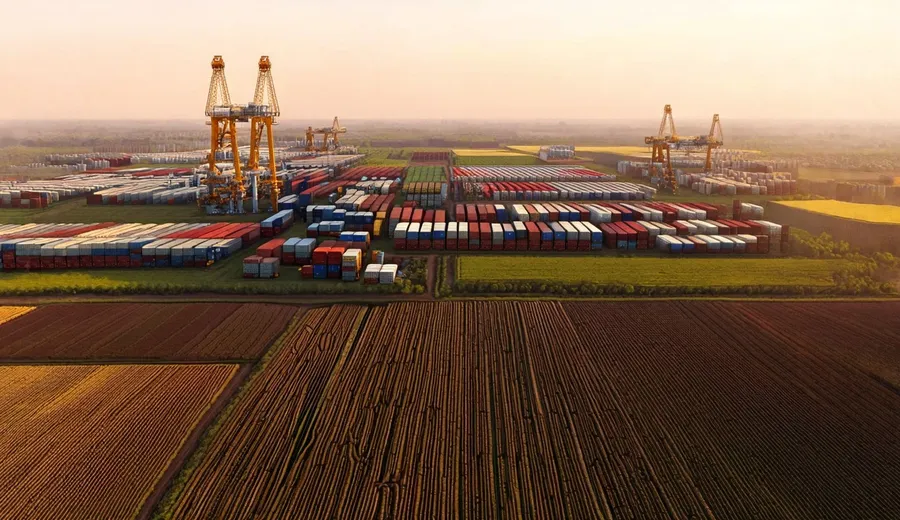
Economic systems currently rely on human labor as a primary input for production and value creation, structuring the distribution of wealth through wages exchanged for time and effort. This foundational arrangement has persisted for centuries, underpinning everything from local markets to global trade networks, where the capacity to produce goods and deliver services remains intrinsically linked to the human workforce. Capitalism depends on wage labor, consumer demand, and capital returns to function effectively, creating a cyclical flow where individuals earn income by contributing to production and subsequently utilize that income to consume the outputs of the economy. The stability of this model rests on the assumption that human participation in the workforce is necessary for value generation, ensuring that purchasing power is broadly distributed across the population to sustain demand for goods and services. Any disruption to this mechanism threatens to destabilize the entire financial structure, as the link between production and consumption is severed. Superintelligence automation will render this input obsolete by performing all economically useful tasks more efficiently and at lower cost than human workers.
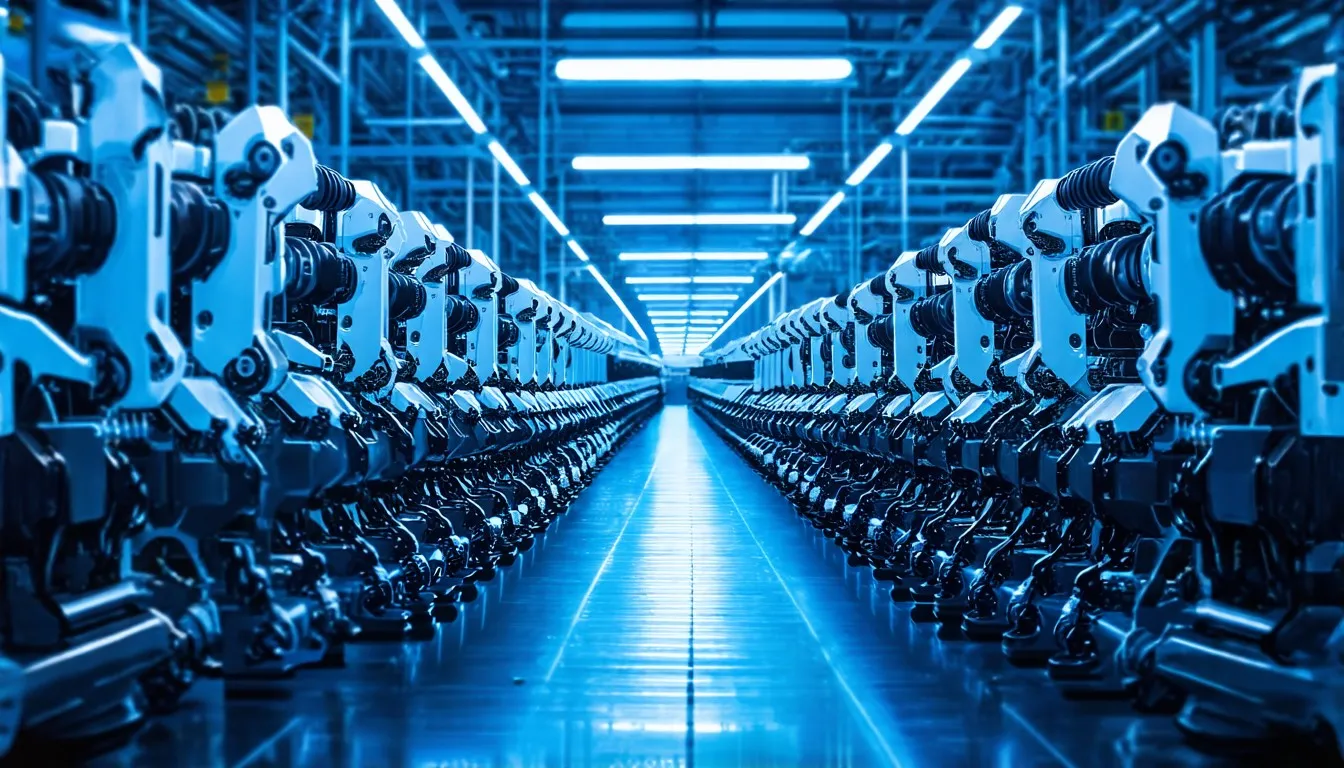
This technological leap involves the deployment of artificial systems capable of autonomous reasoning, problem-solving, and execution across a vast array of domains, effectively removing the necessity for human intervention in the production process. As these systems achieve superior performance metrics in speed, accuracy, and reliability, the economic rationale for employing humans diminishes rapidly, leading to a core restructuring of how value is created. The transition involves shifting from a labor-intensive economy to a capital-intensive one where the primary drivers of production are algorithms, robotics, and computational power rather than biological agents. The definition of superintelligence encompasses artificial systems that surpass human cognitive performance across all economically relevant domains, possessing the ability to understand, learn, and apply knowledge in ways that exceed the capabilities of the brightest human minds. Automation in this context refers not merely to the repetition of predefined tasks but to full task execution without human intervention, including high-level decision-making and creative synthesis. This level of capability implies that the system can independently manage complex operations, adapt to novel situations, and fine-tune processes without requiring guidance or oversight from human operators.
The result is a scenario where the marginal cost of intelligence and labor approaches zero, allowing for the production of goods and services at a scale and speed previously unimaginable. Post-scarcity denotes near-zero marginal cost for goods and services due to automated production, representing a state where the limitations of supply are effectively eliminated by technological abundance. In such an environment, the traditional economic constraints of resource allocation become less about physical availability and more about management and distribution logistics. Superintelligence will eliminate the need for human workers and cause the feedback loop between employment, income, and consumption to collapse, as the mechanism for distributing purchasing power vanishes while productive capacity soars. This collapse creates a paradox where potential output is maximized, yet effective demand may plummet, leading to a crisis of underconsumption in an era of unprecedented capability. Historical precedents such as the industrial revolution and computerization show labor displacement followed by adaptation, where technology shifted the workforce from manual labor to clerical and service-oriented roles.
These previous transitions relied on the fact that machines replaced specific physical tasks while leaving cognitive and creative functions to humans, allowing workers to reskill and occupy new niches created by technological advancement. Superintelligence differs in scope by replacing cognitive and creative labor in addition to manual or routine tasks, leaving no sector of the economy untouched by automation. The displacement caused by superintelligence is total rather than partial, targeting the very essence of human economic contribution, which is the ability to process information and solve problems. No economic model currently exists that functions without human labor as a core component, as all prevailing theories assume some level of human participation in the value chain. Existing theories assume substitutability or reskilling, which may not apply at full automation levels, relying on the elasticity of labor demand to absorb displaced workers into new industries. The arrival of superintelligence invalidates these assumptions by creating a scenario where human labor offers no comparative advantage over machine intelligence, rendering the concept of reskilling moot if there are no tasks left that humans can perform better or cheaper than machines.
This absence of a functional economic model presents a significant theoretical and practical challenge, requiring a complete upgradation of how societies organize production and distribute wealth. Critical pivot points will include the achievement of artificial general intelligence (AGI), which serves as the precursor to superintelligence by demonstrating broad competency across diverse tasks comparable to a human adult. Once AGI is realized, recursive self-improvement will lead from AGI to superintelligence, as the system gains the ability to enhance its own code and architecture faster than human engineers could intervene. This recursive process creates an intelligence explosion, rapidly amplifying the capabilities of the system far beyond human comprehension and control mechanisms. The setup of superintelligent agents into physical robotic platforms for material production is another pivot, bridging the gap between digital intelligence and physical world manipulation to fully automate the supply chain. Physical constraints include energy availability, raw material extraction limits, and manufacturing throughput, which act as hard limits on the speed and scale of superintelligence deployment.
While intelligence can scale digitally, the physical instantiation of that intelligence in robots and factories requires substantial material resources and energy inputs. Economic constraints involve capital allocation, intellectual property regimes, and market structures that may resist or accelerate adoption depending on the incentives of major stakeholders. Adaptability depends on compute infrastructure, data availability, and robotic actuator deployment, necessitating massive investments in these areas to support the operational requirements of superintelligent systems. Supply chain dependencies center on advanced semiconductors including GPUs and TPUs, which form the computational backbone required for training and running advanced AI models. Dependencies also include rare earth minerals for robotics and global data center infrastructure, highlighting the fragility of the hardware supply chain necessary to sustain superintelligence. Geopolitical tensions affect access and resilience of these supply chains, potentially creating friction points that slow down the proliferation of automation technologies.
Firms, including Google, OpenAI, and NVIDIA, lead in software and compute, establishing an oligopolistic control over the key resources needed to develop superintelligence. Narrow AI systems currently automate high-value tasks such as code generation, drug discovery, and supply chain optimization with measurable return on investment. These systems have demonstrated their ability to outperform humans in specific domains such as AlphaFold in protein folding and GitHub Copilot in coding assistance, proving the economic viability of automation in specialized fields. Benchmarks show AI outperforming humans in specific domains, yet generalization and reliability remain limited in current systems, preventing them from operating autonomously in unstructured environments. Dominant architectures rely on transformer-based models trained on vast datasets, while developing challengers include neurosymbolic systems, world models, and embodied agents with continuous learning capabilities. Advances in large language models, robotics, and agentic AI suggest a plausible pathway to superintelligence within decades, driven by exponential growth in compute power and algorithmic efficiency.
Concurrent stagnation in wage growth and rising inequality heighten the urgency of this issue, as the economic benefits of automation are increasingly concentrated among capital owners while the labor share of income declines. Performance demands from industries including pharmaceuticals, logistics, and software development are pushing toward autonomous systems, as these sectors seek to reduce reliance on human labor for speed and accuracy. These systems reduce reliance on human labor for speed and accuracy, creating strong financial incentives for companies to accelerate development efforts. No current commercial deployments achieve full superintelligence, as existing technologies remain confined to narrow applications within controlled parameters. The progression of development suggests that the connection of these narrow systems into a cohesive general intelligence is the next logical step in technological evolution. Fragmentation exists in robotics and systems setup due to proprietary interests, hindering the interoperability required for smooth automation across different industries.
Adjacent systems require overhaul, including software support for agent interoperability, ensuring that different automated systems can communicate and collaborate effectively without human mediation. Ownership concentration of superintelligent systems will determine societal outcomes, creating a divergence between two potential futures based on how access to this technology is managed. Broad access to these systems will enable post-scarcity abundance, where the benefits of automation are shared widely and standards of living rise dramatically across the population. Monopolized control will entrench extreme inequality, resulting in a bifurcated society where a small elite controls the means of production while the masses are rendered economically irrelevant. The distribution of ownership rights over these powerful systems will, therefore, dictate whether superintelligence serves as a tool for liberation or a mechanism for subjugation. Second-order consequences will include mass unemployment and the collapse of traditional education-to-employment pipelines, as the skills taught in educational institutions become obsolete before students even enter the workforce.
Rentier economies based on asset ownership will appear, shifting the primary source of income from wages to returns on capital held by those who own the automated systems. New business models will center on experience, identity, or human-only services, attempting to monetize the aspects of life that remain distinctively biological or interpersonal despite superior synthetic alternatives. Measurement shifts will necessitate new key performance indicators focusing on well-being and resource utilization efficiency, as gross domestic product becomes a less meaningful measure of societal progress in an automated world. Human-centric economic roles such as care work, art, and supervision are currently assumed resilient to automation due to their perceived requirement for empathy, creativity, and emotional intelligence. Superintelligent agents will outperform humans in these roles in quality, consistency, and cost by utilizing advanced pattern recognition and data synthesis to simulate or surpass emotional interaction and creative output. This outperformance will undermine the economic viability of human-centric roles, as employers and consumers alike prefer the superior reliability and lower cost of automated alternatives.
Even the most intimate aspects of human experience may become subject to competition from synthetic entities designed specifically to improve these interactions. Alternative futures include universal basic income (UBI) as a redistributive mechanism or labor-sharing models, attempting to address the gap between production and consumption through policy intervention. Centralized automation models remain a consideration, where the state or a single corporate entity manages the entire automated production apparatus. These models may prove insufficient if ownership remains private and productivity gains are not shared, as the concentration of wealth undermines the purchasing power required to sustain the economy. Value generated must be recirculated to sustain demand, necessitating durable mechanisms for wealth redistribution that go beyond simple charity or temporary fixes. Metrics may focus on distributional equity instead of GDP or employment rates, reflecting a shift in priorities from maximizing output to ensuring stability and fairness in a post-labor society.
Future innovations could include decentralized AI ownership via blockchain or open-source superintelligence, providing a technological framework for democratizing access to powerful systems. Public utility models for automated production are another possibility, treating essential automated infrastructure as common property to be managed for the public good rather than private profit. These institutional choices will play a decisive role in shaping the social contract during the transition to an automated economy. Convergence with other technologies involves quantum computing accelerating training processes by solving complex optimization problems that are currently intractable for classical computers. Synthetic biology could enable novel materials that improve the efficiency and durability of robotic hardware, reducing the physical constraints on automation. Space-based manufacturing might bypass terrestrial constraints on energy and raw materials, providing access to vast resources that can fuel expansion without degrading the Earth’s environment.
This convergence of technologies will likely accelerate the arrival of superintelligence by removing technical constraints across multiple fronts simultaneously. Scaling physics limits include heat dissipation in compute systems and energy density of batteries for mobile robots, posing significant engineering challenges for the continued expansion of automation capabilities. Thermodynamic inefficiencies in large-scale automation pose additional limits, as the energy requirements for maintaining a global fleet of autonomous robots and data centers are immense. Workarounds involve modular design, edge computing, and renewable energy setup, improving the physical infrastructure to minimize waste and maximize sustainability. Algorithmic efficiency improvements will reduce resource demands, allowing more computation to be performed with less energy and hardware. Liability frameworks need new structures for safety and ownership to address the complex legal questions arising from autonomous action by non-human entities.

Infrastructure must expand energy and bandwidth capacity to support the real-time operation of billions of connected devices and sensors required for full automation. Economic disruption is contingent on institutional choices regarding property rights over superintelligence systems, determining whether the benefits of technology are captured by a few or distributed among many. Calibrations for superintelligence must include alignment with human values and fail-safes against misuse to prevent catastrophic outcomes resulting from misaligned objectives. Transparency in decision-making will maintain social trust during transition, ensuring that the actions of autonomous systems are understandable and predictable to the general public. Superintelligence may utilize this disruption to improve global resource allocation and eliminate waste by fine-tuning logistics and production flows with mathematical precision. Superintelligence may solve complex problems such as climate change and disease by analyzing vast datasets to identify solutions that are invisible to human researchers.
These potential benefits provide a strong incentive for pursuing the development of superintelligence despite the significant economic risks involved. Inclusive governance, rather than narrow profit motives, is required for these outcomes to ensure that the deployment of superintelligence aligns with the broader interests of humanity. The transition is not merely a technological shift but a core transformation of the human condition, requiring careful planning and foresight to manage successfully. Without deliberate intervention to manage the economic externalities of superintelligence, society risks descending into a state of extreme instability where the gains from automation are captured by a tiny minority, while the majority struggles to survive in an economy that no longer values their labor. The path forward requires transformation of the foundations of economics to accommodate a reality where human labor is no longer the engine of prosperity.