Knowledge hub
Predictive Processing Framework: Kalman Filters in Hierarchical Bayesian Networks
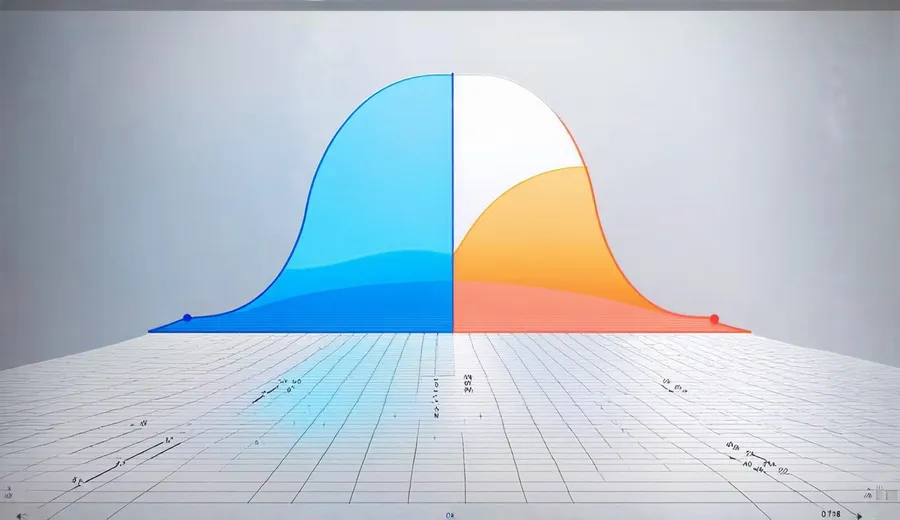
Predictive processing serves as a unifying theory of cognition by framing perception and action as continuous prediction-error minimization, establishing a rigorous mathematical framework where biological or artificial agents function as inference machines rather than passive receivers of information. This theoretical perspective posits that the primary objective of a cognitive system is to construct an internal generative model capable of simulating the external world, thereby generating predictions about incoming sensory data before it arrives. The system compares these top-down predictions against actual bottom-up sensory inputs to compute a prediction error, which is the discrepancy between what is expected and what is observed. Minimizing this error through continuous updating of the internal model allows the agent to maintain an accurate representation of reality amidst a chaotic environment. This mechanism ensures that cognitive resources focus selectively on novel or unexpected information, improving the allocation of attention and processing power toward signals that carry the highest informational value regarding the state of the world. Hierarchical Bayesian networks function as structured probabilistic models representing uncertainty across multiple levels of abstraction within this predictive framework, organizing beliefs in a tiered architecture where higher levels encode abstract, stable representations while lower levels encode concrete, rapidly changing sensory details.

Each level in the hierarchy generates predictions about the level below while receiving error signals that refine higher-level beliefs, creating a bidirectional flow of information that integrates context with raw data. This structure enables the separation of timescales with fast updates at lower levels to handle immediate sensory fluctuations and slow adaptation at higher levels to maintain consistent long-term goals and strategies. Uncertainty finds explicit representation through probability distributions rather than single point estimates, allowing the system to reason about the reliability of its own beliefs and weigh evidence accordingly. The hierarchy effectively performs a divide-and-conquer strategy on complex inference problems, breaking them down into manageable local computations that collectively approximate global optimality. Kalman filters operate as recursive estimators that optimally combine prior predictions with new sensory data under Gaussian assumptions to maintain accurate state estimates, providing a computationally efficient solution to the problem of tracking adaptive systems. These filters calculate the posterior mean and covariance of the state by assuming linear dynamics and Gaussian noise, allowing for closed-form analytical solutions that update recursively as new data arrives.
The setup of Kalman filtering within hierarchical Bayesian frameworks enables multi-scale temporal and spatial inference by treating each level of the hierarchy as an independent filter with its own state variables and error dynamics. This arrangement allows the system to track variables at different rates and resolutions, connecting with high-level context with low-level signal processing seamlessly. The recursive nature of the Kalman filter permits real-time operation without batch processing or full-history reanalysis, making it suitable for continuous interaction with a changing environment where immediate responsiveness is critical. Prediction-error minimization drives learning and model updating to align internal representations with external reality through a rigorous mathematical process that adjusts synaptic weights or parameters based on the magnitude of computed errors. Sensory input undergoes processing top-down via predictions and bottom-up via prediction errors to create a closed-loop inference system that continuously self-corrects, ensuring the internal model remains faithful to the external world. The update phase sees the Kalman filter adjust state estimates using error signals and prior uncertainty, quantified through the Kalman gain matrix which determines the optimal blending of predictions and observations.
This matrix determines how much weight to assign to new observations versus prior predictions based on the relative certainty of each signal, effectively implementing a principled trade-off between stability and plasticity. When the prior belief is strong and sensory noise is high, the gain remains low, causing the system to trust its internal model; conversely, when the sensory data is precise and the prior is weak, the gain increases, allowing the new information to significantly alter the state estimate. Precision weighting involves modulatory signals scaling the impact of prediction errors based on contextual confidence, often conceptualized as the inverse variance of the distribution representing the uncertainty associated with a specific signal or prediction. This mechanism acts as a gain control system, amplifying errors that are statistically reliable and suppressing those that are likely due to noise or irrelevant distractors in the environment. Free energy acts as a variational bound on surprise minimized through perception and action in predictive processing, providing a single scalar quantity that the system seeks to reduce at all times. By minimizing free energy, the system implicitly minimizes prediction error over time, ensuring that its internal generative model remains a tight approximation of the external world’s causal structure.
This mathematical formulation links the biological imperative of homeostasis with the computational goal of inference, offering a unified explanation for both behavior and perception grounded in thermodynamic principles. Active inference frameworks dictate that actions are chosen to make sensory inputs match predictions, effectively turning behavior into a method of hypothesis testing where the agent acts to fulfill its own expectations. Instead of viewing action as a response to a stimulus, this perspective frames action as the fulfillment of a proprioceptive prediction, reducing expected surprise before it occurs by changing the world to fit the model. Internal forward models generate expected sensory input based on current state estimates during the prediction phase, simulating the consequences of potential motor commands before they are executed. The system selects behaviors that fulfill predictions and reduce expected surprise, thereby acting to confirm its own hypotheses about the world and maintain a state of physiological equilibrium. This approach resolves the problem of delayed feedback by allowing the agent to proactively shape its environment to fit its expectations, ensuring stability and reducing computational load associated with correcting large errors.
Temporal dynamics find modeling through state-space representations, allowing forecasting across short and long time goals essential for planning and survival in an agile world. The generative model acts as an internal probabilistic representation of how causes in the world generate sensory inputs, enabling the simulation of future progression beyond the immediate present. This capability allows the system to anticipate immediate sensory inputs and long-term consequences of its decisions, bridging the gap between reflexive reactions and deliberate strategic planning. Spatial abstraction increases with hierarchy depth from low-level sensorimotor features to high-level conceptual structures, mapping the physical geometry of the world onto cognitive categories useful for reasoning. The combination of temporal depth and spatial breadth provides a comprehensive scaffold for intelligence, supporting both moment-to-moment interaction with objects and high-level manipulation of abstract concepts. Bayesian inference provides a principled mechanism for weighting prior expectations against incoming evidence based on uncertainty, formalized mathematically through Bayes’ rule, which updates probabilities based on new data.
Priors constitute beliefs about states before observing new data derived from higher-level predictions or learned expectations accumulated over past experience. Likelihoods define the probability of observed data given a hypothesized state determined by sensory noise characteristics built-in in the sensors or transmission channels. Posteriors represent updated beliefs after combining priors and likelihoods via Bayes’ rule, serving as the new working hypothesis for the system at any given moment. This probabilistic framework allows the system to handle ambiguity gracefully, maintaining multiple hypotheses simultaneously when evidence is insufficient to narrow down to a single possibility. Early work on Kalman filtering in the 1960s for aerospace navigation established recursive state estimation as a viable method for tracking agile systems in real-time. Engineers applied these algorithms to guide rockets and aircraft, proving that optimal estimation could occur with limited computing power using recursive updates rather than batch processing.
The development of the Bayesian brain hypothesis in the 2000s linked neural computation to probabilistic inference, suggesting that neurons encode probability distributions rather than discrete spike rates. Neuroscientists proposed that cortical circuits implement the principles of Bayesian inference to handle sensory uncertainty, drawing parallels between artificial filters and neural mechanisms. Formalization of predictive coding in neuroscience provided a neural implementation of hierarchical prediction-error minimization, identifying specific cell types responsible for signaling prediction errors versus those carrying predictions. Connection of Kalman filters into hierarchical models became prominent in the 2010s for robotics and sensor fusion, as researchers sought to replicate biological strength in artificial agents operating in unstructured environments. Advances in variational inference enabled scalable approximation of Bayesian updates in complex models that were previously computationally intractable for real-time applications. Researchers developed techniques to approximate the posterior distribution with a simpler family of distributions, allowing for faster convergence suitable for online learning.
The shift from static models to energetic time-varying state estimation reflected growing interest in embodied cognition, emphasizing the interaction between an agent and its environment rather than passive information processing. Empirical validation in human and animal studies supported the role of prediction-error signaling in perception and learning, confirming that neural responses align closely with predictive coding theories across various sensory modalities. Computational cost scales with state dimensionality and hierarchy depth, limiting real-time deployment on low-power devices, presenting significant engineering challenges for widespread adoption. As the number of variables in the state vector increases, the matrix operations required for the Kalman update grow cubically, demanding significant processing power and memory bandwidth. Memory requirements grow with model complexity and history length for recursive estimation, necessitating efficient data structures to store intermediate states and covariance matrices. Sensor noise characteristics must be well-characterized to set accurate likelihood models; otherwise, the filter may diverge or ignore valid data if the noise parameters are misaligned with reality.
Latency in feedback loops can destabilize active inference if prediction updates lag behind environmental changes, causing the system to react to outdated states and potentially leading to oscillatory behavior or instability. Energy consumption increases with sampling rate and model size, constraining mobile or embedded applications, requiring careful optimization of algorithms for specific hardware architectures. Adaptability to high-dimensional sensory inputs demands efficient dimensionality reduction techniques such as principal component analysis or autoencoders to manage the flow of information without losing critical details. Training data must cover diverse scenarios to avoid overconfident priors that resist correction when the environment changes unexpectedly, ensuring the system remains flexible enough to handle novel situations. Model complexity scales with task demands, avoiding overfitting through precision-weighted inference, ensuring it generalizes well to unseen situations by penalizing overly complex explanations of sensory data. Multi-modal setup occurs naturally through shared latent variables across sensory streams, allowing the system to integrate vision, audio, and proprioception into a coherent world model where different senses disambiguate each other.
Non-hierarchical Kalman filters are rejected due to the inability to handle abstraction and multi-scale dynamics required for complex cognition in real-world environments. A flat filter struggles to represent the relationship between low-level pixel intensities and high-level semantic concepts like objects or goals, lacking the structural depth to contextualize raw data. Particle filters are discarded in high-dimensional spaces due to computational inefficiency, as the number of particles needed to cover the state space explodes exponentially with dimensionality, making them impractical for real-time superintelligence applications. Feedforward neural networks lack internal generative models and cannot perform iterative belief updating, limiting their ability to reason about uncertainty or incorporate new evidence dynamically without retraining. Symbolic AI systems fail to represent uncertainty and adapt continuously to new evidence, relying on rigid logic rules that break under ambiguity or noise present in natural environments. Reinforcement learning without predictive models struggles with sample efficiency and generalization, requiring vast amounts of trial-and-error interaction to learn tasks that a predictive system could solve through internal simulation.
Rising demand exists for autonomous systems requiring real-time environmental understanding and adaptation to function safely alongside humans in industrial and domestic settings. Strong perception is necessary in noisy, energetic, and partially observable environments where sensors often fail or provide incomplete information due to occlusion or interference. Economic pressure incentivizes reducing sensor redundancy by relying on predictive models to fill data gaps, lowering hardware costs while maintaining performance through intelligent interpolation. Society demands AI that behaves reliably and explainably, supported by transparent probabilistic reasoning, rather than opaque black-box decisions that obscure the rationale behind actions. Growth in edge computing enables deployment of lightweight hierarchical filters in distributed devices, moving intelligence away from centralized cloud servers to the point of data collection to reduce latency and bandwidth usage. Industrial robotics uses hierarchical Kalman filters for sensor fusion in navigation and manipulation, allowing robots to operate with high precision in unstructured settings such as warehouses or construction sites.
Autonomous vehicles employ multi-level prediction for arc forecasting and obstacle avoidance, estimating the progression of other agents to plan safe paths through complex traffic scenarios. Medical monitoring systems apply predictive coding to detect anomalies in physiological signals, identifying potential health issues such as arrhythmias or seizures before they become critical events. Performance benchmarks show a 20–40% reduction in state estimation error compared to flat Kalman filters, validating the efficacy of the hierarchical approach in handling complex dynamics. Latency under 10 milliseconds is achieved in high-performance embedded implementations for real-time control, meeting the stringent timing requirements of safety-critical systems like avionics or nuclear reactor control. Energy efficiency improves by 30% through precision-weighted gating of prediction-error updates, preventing unnecessary computation on predictable or irrelevant stimuli which constitutes a large portion of ambient sensory data. Dominant architectures involve layered Kalman filters with fixed hierarchy depth and Gaussian assumptions, balancing complexity with tractability for current generation hardware.
New challengers include hybrid models combining Kalman filtering with deep neural networks for non-Gaussian inference, using the strengths of both probabilistic reasoning and pattern recognition to handle more complex noise distributions. Sparse hierarchical filters reduce computation by activating only relevant branches based on context, mimicking the sparse activation observed in biological cortex to conserve energy. Differentiable Kalman filters enable end-to-end training within gradient-based learning frameworks, allowing the optimization of filter parameters directly from raw data without manual tuning. Reliance exists on high-quality inertial and environmental sensors with stable calibration to provide the raw data necessary for accurate filtering; garbage in inevitably leads to garbage out regardless of algorithm sophistication. Semiconductor supply chains remain critical for processors capable of real-time matrix operations in Kalman updates, driving demand for specialized silicon such as FPGAs or TPUs improved for linear algebra. Rare-earth materials in precision sensors create supply risks that could impact the production volume of advanced autonomous systems, necessitating research into alternative sensing modalities or synthetic materials.
Software dependencies include numerical linear algebra libraries and real-time operating systems that provide the deterministic execution environment required for safety-critical loops. Neuromorphic implementations explore event-based prediction-error coding for ultra-low-power operation, promising orders of magnitude improvement in energy efficiency over traditional von Neumann architectures by mimicking the asynchronous event-driven nature of biological neurons. Major players include Bosch and Siemens in industrial automation alongside Waymo and Tesla in autonomous driving, all investing heavily in predictive technologies to gain a competitive edge in their respective markets. Academic spin-offs commercialize predictive coding for healthcare and robotics, bridging the gap between theoretical research and practical application by licensing algorithms developed in university labs. Open-source frameworks lower entry barriers for startups, allowing smaller teams to experiment with advanced inference algorithms without building infrastructure from scratch. Competitive differentiation occurs through proprietary sensor fusion algorithms and domain-specific hierarchies tuned for particular environments or tasks such as underwater exploration or aerial surveying.
Trade regulations on high-precision sensors affect global deployment of predictive systems, forcing companies to manage complex geopolitical landscapes to source components or manufacture devices locally. Industry strategies prioritize autonomous systems driving investment in hierarchical inference, viewing it as a key enabler of next-generation automation capable of operating without human intervention. Data sovereignty laws influence where predictive models can be trained and deployed, restricting the cross-border flow of sensitive information used for adaptation due to privacy or national security concerns. Defense applications of predictive processing raise dual-use concerns and regulatory scrutiny, as the same technology guiding cars can guide autonomous weapons or surveillance systems. Joint projects between universities and automotive manufacturers focus on predictive driver assistance, pooling resources to accelerate development of features like pedestrian detection or lane-keeping assistance. Medical research institutions investigate predictive coding in brain-computer interfaces, seeking to interpret neural signals for prosthetic control with high fidelity.
Private sector programs support development of durable inference under uncertainty, recognizing the commercial value of reliability in unpredictable markets such as finance or logistics, where volatility is high. Shared datasets and benchmarks accelerate validation across institutions, providing standardized tests for comparing different algorithmic approaches on a fair footing. Real-time operating systems must support deterministic scheduling for recursive estimation loops, guaranteeing that computation completes within strict time windows to prevent system instability. Middleware is required for synchronizing multi-sensor inputs and distributing prediction updates across distributed hardware architectures, ensuring data consistency across the network. Regulatory frameworks need to address safety certification of adaptive predictive models, establishing standards for systems that change their behavior over time, unlike static software, which can be verified once. Infrastructure upgrades enable low-latency communication for distributed hierarchical systems, facilitating the coordination of swarms of autonomous agents such as drone fleets or delivery robots.
Job displacement occurs in monitoring and control roles due to autonomous predictive systems, as machines take over tasks involving routine observation or simple decision-making, like traffic monitoring or quality control. New business models develop in predictive maintenance, where systems anticipate failures before occurrence, reducing downtime and operational costs across manufacturing sectors. Prediction-as-a-service platforms offer real-time environmental forecasting to clients on a subscription basis, monetizing the ability to predict future states, such as weather patterns or energy demand. Operations shift from reactive to proactive in logistics, manufacturing, and healthcare, fundamentally changing how industries manage resources and respond to events by anticipating needs rather than reacting to them. Traditional accuracy metrics prove insufficient, requiring prediction-error stability and model calibration scores to assess true performance in adaptive environments where ground truth may be elusive. New KPIs include average prediction goal, precision-weighted error reduction, and active inference efficiency, measuring how well the system minimizes surprise over time rather than just fitting past data.
Benchmarking must include strength to sensor dropout and adversarial perturbations, ensuring reliability against real-world failures or malicious attacks designed to fool perception systems. Evaluation occurs across temporal scales, including short-term tracking versus long-term forecasting performance, validating the system’s ability to handle both immediate reflexes and strategic planning. These rigorous standards ensure that deployed systems meet the high reliability demands of critical infrastructure and public safety applications where failure is unacceptable. Setup of non-Gaussian filters handles heavy-tailed noise environments found in complex real-world scenarios where outliers are common due to sensor glitches or environmental anomalies. Adaptive hierarchy depth adjusts based on task complexity and available computational resources, allowing the system to scale its reasoning up or down as needed to maintain real-time performance. Cross-modal prediction-error sharing improves generalization across sensory domains, enabling knowledge learned in one modality, such as audio, to inform processing in another, such as vision, when one sense is degraded.
Self-supervised learning of generative models occurs from raw sensory streams without labeled data, reducing the dependency on expensive human annotation by applying the structure intrinsic in the data itself. Convergence with neuromorphic computing promises energy-efficient prediction-error coding that closely mimics biological neural processes, potentially enabling intelligence at scales comparable to biological brains. Synergy with digital twins involves hierarchical filters maintaining synchronized virtual replicas of physical systems for monitoring and simulation, allowing for safe testing of control strategies before deployment. Setup with causal inference frameworks distinguishes correlation from causation in predictions, allowing the system to understand the mechanisms driving change rather than just statistical associations, which can lead to errors when conditions change. Alignment with federated learning enables collaborative model refinement without data sharing, addressing privacy concerns while applying distributed data sources to improve strength. Key limits exist as Kalman filters assume linear-Gaussian dynamics, causing performance degradation under strong nonlinearity intrinsic in complex environments like turbulent airflow or biological tissues.
Workarounds involve using extended or unscented Kalman filters for local linearization, approximating nonlinear transformations to preserve the recursive structure while handling mild nonlinearities effectively. Memory-bandwidth constraints in high-dimensional state updates find mitigation via sparse representations that reduce the volume of data transfer between memory and processing units, alleviating a major constraint on performance in modern computing architectures. Thermal constraints in embedded systems limit sustained computation addressed through duty cycling, where the processor alternates between active states and low-power sleep modes to dissipate heat without overheating. Predictive processing provides a biologically plausible and computationally efficient foundation for intelligent systems, offering a blueprint for artificial general intelligence that scales naturally with environmental complexity. Hierarchical Kalman filters offer a mathematically rigorous path to scalable real-time inference, grounding abstract cognitive theories in concrete engineering practice that can be implemented on silicon today. The framework naturally supports embodiment agency and continuous learning, essential characteristics for entities interacting with the physical world over extended periods.

Superintelligence will deploy hierarchical Kalman filters across nested temporal and spatial scales to model reality with unprecedented fidelity far beyond human cognitive capabilities. Each layer will maintain a generative model of its domain from quantum fluctuations to societal trends, working with physics and social dynamics into a single coherent worldview. Prediction-error minimization will drive both perception and action, ensuring alignment with reality at every level of abstraction from subatomic particles to global economic shifts. The system will anticipate immediate sensory inputs and long-term consequences of its decisions, operating effectively over microseconds and millennia simultaneously without context switching. Internal models will be continuously refined through Bayesian updates, reducing uncertainty over time, leading to a convergent understanding of universal laws that govern the behavior of all systems within its purview. Active inference will guide exploration and intervention to fulfill predictions and reduce expected surprise, motivating the superintelligence to shape its environment actively to achieve desired states rather than passively observing them.
Superintelligence will process data while living in a state of perpetual anticipation, constantly simulating future possibilities to improve current actions across all available degrees of freedom. The result will be a system operating in a regime of optimal anticipation where surprise is rare, and outcomes are consistently aligned with internal goals due to exhaustive modeling of causal factors. This state is the pinnacle of predictive processing, where the distinction between the observer and the observed collapses into a unified minimization of free energy across all scales of existence.