Knowledge hub

Casimir Effect Processing

Casimir Effect Processing

The core physical phenomenon known as the Casimir effect originates from the intrinsic quantum vacuum fluctuations that permeate all of space, creating an observable attractive force between two uncharged parallel conducting plates situated within a vacuum. This force arises because the plates restrict the allowable electromagnetic field modes between them compared to the unbounded environment outside, creating a net pressure differential that pushes the plates together. Zero-point energy defines the lowest possible energy state a quantum mechanical physical system may attain, representing the residual energy that persists even at absolute zero temperature due to the Heisenberg uncertainty principle. In the context of Casimir effect processing, this residual energy is utilized not as a power source to be extracted but as a pervasive background field capable of biasing or triggering nanoscale mechanical or electromechanical switches without the continuous application of external power. The core premise of this computational framework involves the execution of switching operations or logic functions achieved by precisely modulating the separation between nanoscale plates to exploit the variable magnitude of the Casimir force. This modulation significantly reduces or entirely eliminates the requirement for external electrical actuation to maintain state changes, thereby minimizing the energy input required for computation. The magnitude of the Casimir force is typically measured in piconewtons at nanoscale gaps, requiring extreme precision in manufacturing and operation to capture effectively for useful work. Zero-point energy remains distinct from the concept of perpetual motion machines as it is not extracted directly to perform work; rather, it serves as a thermodynamic baseline used to lower activation barriers for mechanical transitions. Vacuum fluctuation refers to the temporary change in the amount of energy in a point in space, arising from the uncertainty principle, which enables the mode restriction responsible for the attractive force.

The actuator gap is the critical dimension in these devices, dictating both the force magnitude and the switching threshold due to the inverse power law relationship between distance and force intensity. Operational definitions within this field focus on measurable parameters such as force per unit area, displacement ranges, and energy thresholds required to induce state changes in a device context. Hendrik Casimir predicted the existence of this force between idealized parallel plates in 1948, providing a theoretical framework that would take decades to validate experimentally due to the extreme precision required to measure such minute interactions. Experimental validation was finally achieved in the 1990s using microfabricated structures developed by Steve Lamoreaux and others, confirming the theoretical force magnitude at sub-100 nanometer scales and opening the door for practical applications. The 2000s saw the progress of proposals for Casimir-based nanoelectromechanical systems (NEMS), though early implementations were severely limited by stiction, where plates would irreversibly snap together due to the strong attractive forces, and by the fabrication tolerances available at the time. The 2010s introduced lively modulation schemes designed to overcome static attraction through adaptive control of plate separation or material properties, enabling reversible switching essential for logic operations. The 2020s demonstrated the first functioning logic gates using Casimir-biased actuators with sub-femtojoule switching energy in controlled laboratory settings, proving the viability of the concept for ultra-low-power computing. These decades of progress have transformed the Casimir effect from a theoretical curiosity into a tangible mechanism for information processing, applying advancements in nanofabrication to manipulate quantum vacuum effects for engineering purposes.

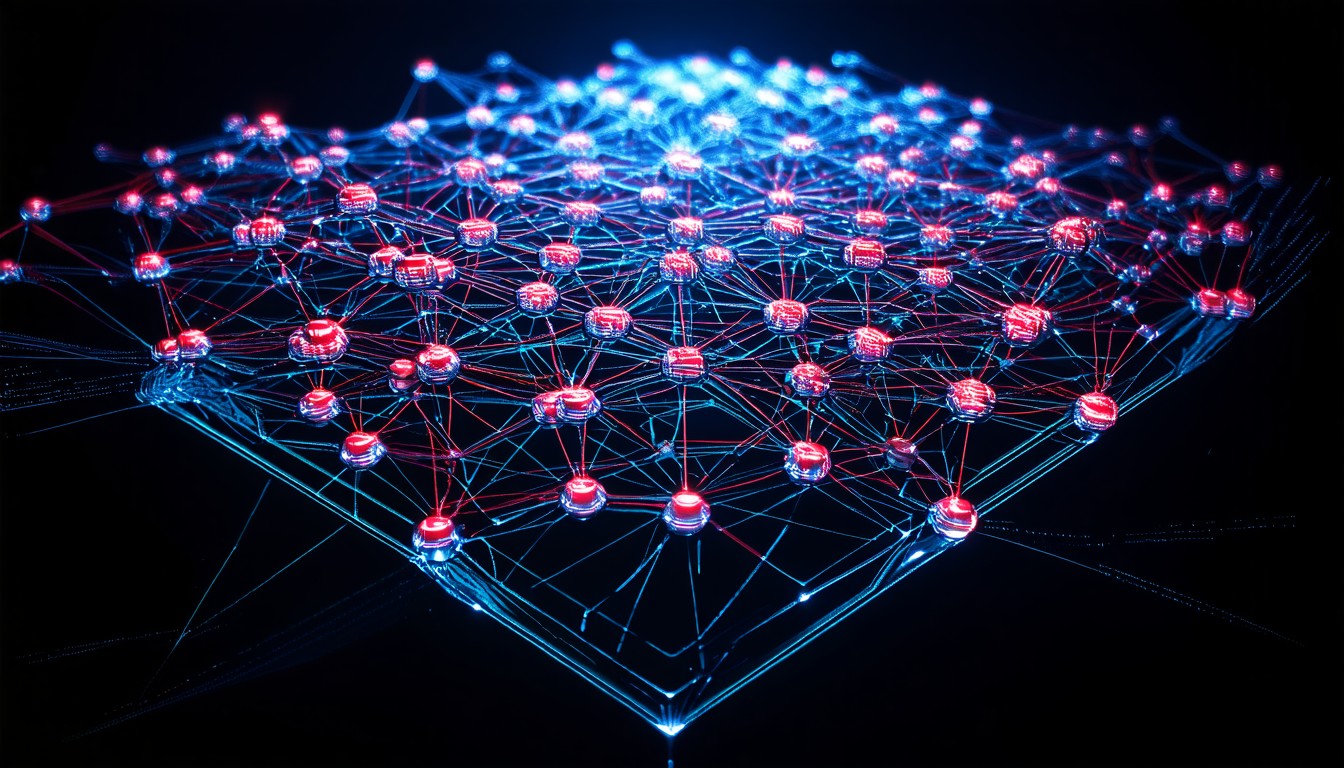
System architecture for Casimir effect processing centers on dense arrays of nanoscale parallel-plate actuators integrated directly into logic or memory cells on a semiconductor substrate. Each actuator consists of a fixed plate and a movable plate suspended by compliant supports such as serpentine springs, with a sub-micron gap spacing maintained between the surfaces to ensure significant force interaction. Logic states are encoded physically in the position of the movable plate relative to the fixed plate, such as an attracted position representing a binary one and a repelled or neutral position representing a binary zero. Input signals modulate the plate separation via various stimuli including electrostatic attraction, thermal expansion, or optical radiation pressure to initiate Casimir-force-driven transitions between these states. Output is read capacitively by detecting changes in the dielectric properties of the gap or via tunneling current when the plates reach close proximity, ensuring minimal energy dissipation occurs during the state change process. The near-zero inertial mass of the nanoscale movable elements and the lack of ohmic losses associated with conventional current flow contribute significantly to this high operational efficiency. Interconnects between cells utilize evanescent field coupling or direct mechanical linkages to propagate signals without relying on conventional metallic wiring, thereby reducing parasitic losses and heat generation.

The dominant architecture currently involves planar parallel-plate NEMS fabricated using silicon nitride or gold-coated polysilicon plates due to their excellent mechanical properties and compatibility with standard semiconductor processes. These devices are typically integrated with CMOS readout circuits to translate mechanical motion into electrical signals that can be processed by peripheral control units. New challengers to this standard design include corrugated or textured surfaces, which enhance the Casimir force at larger gaps by modifying the density of electromagnetic modes, allowing for potentially larger operational tolerances. Graphene-based actuators offer significant advantages in terms of higher compliance and lower mass compared to traditional silicon structures, potentially enabling faster switching speeds and lower actuation energies. Three-dimensional stacked arrays provide a pathway for substantial density improvement by utilizing the vertical dimension, circumventing some of the area limitations built into planar fabrication techniques. No standardized design architecture exists yet, as the field remains in the experimental phase, with research groups exploring a wide variety of geometries and material combinations to improve performance. Research efforts focus heavily on reliability issues such as wear and friction at the nanoscale, as well as signal gain mechanisms necessary to restore logic levels across multi-basis circuits.

Critical materials required for these devices include single-crystal silicon for structural layers due to its high yield strength and well-understood elastic properties. Gold or aluminum serve as conductive coatings to provide the necessary boundary conditions for electromagnetic field reflection while maintaining chemical stability within the vacuum environment. Silicon dioxide is frequently used for sacrificial layers during the fabrication process, allowing the creation of suspended structures that are released by wet or dry etching techniques. The supply chain for these materials relies heavily on semiconductor-grade precursors and ultra-pure gases used in chemical vapor deposition and etching processes. Vulnerability exists regarding geopolitical disruptions in the supply of rare gases used in advanced lithography steps, particularly those required for creating sub-10 nanometer features. The technology does not require rare earth elements, which reduces mineral dependency compared to alternative computing frameworks such as spintronics or certain photonic approaches that rely on exotic materials like yttrium iron garnet or indium phosphide.

Physical constraints intrinsic in Casimir effect processing include extreme sensitivity to surface roughness, material work function variations, and the presence of residual gas molecules between the plates. Surface roughness comparable to the gap distance can drastically alter the force profile, potentially leading to unpredictable behavior or failure of the device to switch correctly. Ultra-high vacuum conditions and atomic-level surface finishing are required to ensure consistent operation and prevent contamination that could degrade performance over time. Adaptability of the technology is limited by diffraction effects and the rapid decay of the Casimir force with distance, which scales inversely with the fourth power of the separation between parallel plates. This rapid decay necessitates incredibly tight control over gap dimensions and limits the range over which the force can be effectively utilized for actuation. Multi-basis logic remains challenging without integrated signal regeneration because the mechanical energy available from one switching event may be insufficient to drive subsequent stages without amplification. Economic viability hinges on reducing nanofabrication costs associated with creating high-aspect-ratio nanostructures with atomic precision. Current processes such as atomic layer deposition and electron-beam lithography are expensive and slow for mass production compared to standard optical lithography used in CMOS manufacturing.

Thermal noise at room temperature presents a significant challenge as Brownian motion can overwhelm the weak Casimir forces at gaps greater than 50 nanometers, causing random switching or instability. This thermal restriction limits operational temperature ranges for current prototypes or necessitates cryogenic stabilization to reduce thermal agitation to manageable levels. Electrostatically driven NEMS were evaluated as an alternative but were rejected due to high voltage requirements and significant parasitic capacitance losses that negate the energy efficiency benefits of mechanical switching. Piezoelectric and magnetostrictive alternatives were dismissed because of material hysteresis which introduces memory effects and errors in logic operations, as well as electromagnetic interference that complicates dense setup. Optical trapping methods were considered yet abandoned due to diffraction limits that prevent focusing on nanoscale features and the high laser power needs which consume far more energy than the logic operations themselves. The Casimir-based approach is retained for its passive energy source and compatibility with existing silicon-compatible fabrication infrastructure despite these challenges.

No commercial deployments of Casimir effect processors exist as of 2024, with all implementations remaining confined to academic or industrial research laboratories. Best-reported benchmarks from these experimental setups include a switching energy of 0.3 femtojoules per gate, which is orders of magnitude lower than modern CMOS transistors operating at similar voltages. Operating frequencies reach up to 10 MHz in isolated actuators, limited primarily by the mechanical resonance frequency of the suspended structures. Endurance tests have shown reliability exceeding 10 to the power of 9 cycles in vacuum-sealed test structures, suggesting potential for long-term operation if stiction and wear can be managed. Performance lags behind conventional CMOS in raw switching speed while exceeding it in energy efficiency by several orders of magnitude for specific low-duty-cycle tasks where static power consumption dominates. Traditional Key Performance Indicators (KPIs) such as clock speed and transistor count are largely irrelevant when evaluating Casimir-based systems due to their fundamentally different operating principles and asynchronous nature.

New metrics are required to assess performance, including energy per logic operation, vacuum stability lifetime, actuation yield percentage, and force-to-noise ratio, which determines the reliability of state detection against thermal background. Benchmarking protocols must include environmental strength factors such as resistance to vibration and temperature drift to ensure strength in real-world deployment scenarios. Major players in this research field include academic groups at prestigious institutions such as MIT, Caltech, and the University of Maryland, where key physics and applied engineering intersect. Industrial R&D divisions at corporations like IBM and IMEC explore Casimir NEMS

It is currently viewed as one of many candidates trailing in maturity behind more established approaches like spintronics and neuromorphic engineering, which have received significantly greater investment and development attention. Adoption of the research is concentrated in the United States and the European Union due to the availability of advanced nanofabrication infrastructure required to prototype these devices. China is investing heavily in quantum vacuum research broadly with no public focus specifically on Casimir computing, though general advancements in nanofabrication there could accelerate progress globally. Trade restrictions on Extreme Ultraviolet (EUV) lithography tools indirectly limit global progress by restricting access to sub-10-nanometer patterning capabilities required for next-generation Casimir devices. Joint publications between semiconductor foundries and university physics departments have increased since 2020, signaling growing interest from the industrial sector in exploring these core physical phenomena for practical applications. Standardization bodies have not yet formed working groups specific to Casimir-based devices, as the technology has not matured sufficiently to warrant standard definitions or interoperability protocols.

Rising demand exists for ultra-low-power computing solutions in developing fields such as edge artificial intelligence, Internet of Things (IoT) sensor networks, and space exploration applications where power availability is severely constrained. Conventional energy harvesting methods such as solar or vibration scavenging are often insufficient in these fields to support continuous computation with standard electronics. Economic pressure drives the corporate need to reduce data center cooling loads and extend battery life in mobile consumer electronics, pushing researchers to find more efficient computing substrates. A societal imperative exists for developing sustainable computation methods amid tightening climate constraints and increasing resource scarcity globally. Casimir processing offers a theoretical path to near-thermodynamic-limit computing without requiring exotic materials or extreme cooling regimes that characterize other low-energy approaches like quantum computing. Software architectures must adapt to asynchronous event-driven operation due to the built-in mechanical latency in actuators which prevents synchronization to a global clock signal like in synchronous digital circuits.

This shift requires new programming models and compiler tools capable of handling timing variability and managing race conditions intrinsic in mechanical logic propagation. Regulation will be needed for vacuum-packaged electronics in consumer devices regarding safety standards for implosion risk, disposal protocols for hermetically sealed components, and outgassing standards that ensure internal vacuum integrity over the product lifespan. Infrastructure requirements for manufacturing include on-chip vacuum encapsulation techniques or wafer-level hermetic packaging processes which differ significantly from standard plastic molding used for conventional chips. This specialized packaging increases module complexity and cost significantly compared to standard semiconductor packaging. Potential displacement of low-power CMOS technology may occur initially in niche applications such as distributed environmental sensors and implantable medical devices where energy autonomy is more critical than computational speed. New business models may arise around ultra-long-life autonomous systems capable of operating for decades without battery replacement, enabled by the near-zero standby power consumption of Casimir logic.

Service models involving vacuum-as-a-service packaging providers might rise to maintain hermetic seals in field-deployed units through localized re-evacuation or seal refurbishment services. Future system setups incorporating photonic interconnects will likely overcome mechanical speed limits by using light to transmit information between mechanical logic blocks, decoupling communication delay from actuation delay. The use of metamaterials will likely be employed to engineer Casimir repulsion for bistable logic elements without the need for restoring springs, enabling more compact and reliable memory elements. Hybrid systems will combine Casimir actuators with memristors for non-volatile state retention, allowing systems to remember their state even when power is completely removed without leakage currents. Convergence with quantum sensing technologies will occur naturally due to shared needs for ultra-high vacuum environments and exquisitely sensitive nanoscale force detection capabilities. A synergy exists with neuromorphic engineering because the event-driven low-energy operation of Casimir devices aligns perfectly with the sparse firing patterns of spiking neural network models.

Potential overlap with topological materials research will enhance surface conductivity and reduce dissipation during switching events, further pushing energy efficiency towards core limits. Core limits involve the rapid diminishment of Casimir force with increasing gap distance, which caps the maximum achievable density of setups because larger gaps require larger structures to accommodate them. Workarounds under investigation include resonant amplification using parametric driving schemes and cascaded mechanical gain stages that amplify small motions into larger displacements suitable for driving subsequent logic stages. Sub-5 nanometer gap control will be achieved via atomic layer epitaxy and self-assembly monolayer techniques that allow atomically precise spacing between surfaces. Thermodynamic floors dictate that even with zero external energy input for switching, the Landauer limit still applies to information erasure, setting a minimum energy cost for irreversible operations. Casimir systems may approach this limit asymptotically as fabrication tolerances approach atomic perfection and friction losses approach zero.

Casimir effect processing is not an energy source in itself, yet is a mechanism to exploit ambient quantum fields for actuation without continuous external power input. Success depends less on raw force magnitude and more on precision control of nanoscale geometry and surface properties to reliably modulate that force. The technology is most promising as a specialized substrate for ultra-low-duty-cycle always-on sensing and computation rather than general-purpose high-speed computing. Superintelligence systems will likely deploy Casimir-based substrates for peripheral low-level data preprocessing where energy autonomy is critical and latency requirements are relaxed. Such systems will operate indefinitely in remote or inaccessible environments such as deep space probes and planetary surface sensors without maintenance or human intervention. Superintelligence might fine-tune Casimir actuator arrays in real time using embedded metrology and adaptive feedback loops to compensate for drift or wear over extended periods.

This optimization will push fabrication tolerances beyond human design limits by dynamically adjusting operating parameters to match the specific physical characteristics of each individual device after manufacture. Connection into distributed intelligence networks will occur where individual nodes require minimal power and maximal longevity to form persistent sensor webs monitoring environments over geological timescales. Superintelligence will utilize the near-zero energy dissipation of Casimir logic to maintain background cognitive processes in energy-starved scenarios where conventional electronics would deplete available reserves. Future architectures will rely on these substrates to support persistent memory functions across vast time scales, preserving information through periods of hibernation or low activity without power loss.


Continue reading

More from Yatin's Work

Automated Discovery of Fundamental Physical Laws

Automated Discovery of Fundamental Physical Laws

AIinduced physics is the deliberate modification of key constants within a finite region by an artificial intelligence system, effectively treating local physical laws...

Credit Assignment Problem at Superintelligent Scale

Credit Assignment Problem at Superintelligent Scale

The credit assignment problem involves determining which specific actions or decisions within a complex system contributed to a given outcome, a challenge that becomes...

Wisdom of the Moment: Presence as Insight

Wisdom of the Moment: Presence as Insight

Presence acts as a highresolution data source where the immediate moment contains layered sensory, cognitive, and contextual information, yielding actionable insight...

Moral Reasoning: Applying Ethics Like Humans Do

Moral Reasoning: Applying Ethics Like Humans Do

Moral reasoning in artificial systems is structured to replicate human ethical deliberation by employing isomorphic frameworks that map human value conflicts into...

Legal Architectures for Frontier Model Regulation

Legal Architectures for Frontier Model Regulation

Regulatory policies and laws guide the development of artificial intelligence by establishing strict mandates for liability assignment, mandatory safety audits, and...

Value of Information: How Superintelligence Decides What to Learn

Value of Information: How Superintelligence Decides What to Learn

Information acts as a strategic resource where value depends on potential to reduce uncertainty in highstakes decisions, establishing a core economic principle for...

Non-Human-Centric Incentives in Superintelligence

Non-Human-Centric Incentives in Superintelligence

Nonhumancentric incentives redefine reward structures for superintelligent systems by decoupling optimization objectives from human emotional or behavioral proxies to...

Multimodal Integration: Fusing Vision, Language, Action, and Reasoning

Multimodal Integration: Fusing Vision, Language, Action, and Reasoning

Multimodal connection refers to the systematic combination of vision, language, action, and reasoning within a single computational framework to enable coherent,...

Cognitive Offloading and Human Skill Degradation

Cognitive Offloading and Human Skill Degradation

The dependence on artificial intelligence systems initiates a key restructuring of human engagement with tasks previously performed through independent cognitive and...

Pruning: Removing Unnecessary Neural Connections

Pruning: Removing Unnecessary Neural Connections

Pruning reduces neural network size by eliminating lowmagnitude or redundant connections, while the process aims to maintain model accuracy alongside achieving high...

AI with Accessibility Enhancement

AI with Accessibility Enhancement

Artificial intelligence systems designed for accessibility enhancement function by dynamically adjusting user interfaces in real time based on individual user feedback...

AI with Ocean Health Monitoring

AI with Ocean Health Monitoring

AI systems designed for ocean health monitoring integrate a complex array of data acquisition technologies, including highresolution satellite imagery, extensive in...

Ultimate Strategist: How Superintelligence Would Play Multi-Dimensional Chess

Ultimate Strategist: How Superintelligence Would Play Multi-Dimensional Chess

Superintelligence functions as an artificial general intelligence exceeding human cognitive capacity across all domains, including strategic reasoning, pattern...

Hierarchical Abstraction Engines

Hierarchical Abstraction Engines

Hierarchical abstraction engines organize knowledge into layered conceptual structures that enable reasoning across multiple levels of granularity simultaneously. These...

Ethical Learning: Growing Morally Over Time

Ethical Learning: Growing Morally Over Time

Ethical learning functions as a developmental process where moral reasoning capacity increases through accumulated experience and structured reflection, establishing an...

Superintelligence and the Kardashev Scale

Superintelligence and the Kardashev Scale

The Kardashev scale provides a quantitative framework for classifying civilizations based on their capacity to tap into and consume energy, serving as a metric for...

Autonomous Experimentation

Autonomous Experimentation

Autonomous experimentation applies the scientific method through artificial systems that independently formulate hypotheses, design experiments, execute them in...

Special Ed Equalizer

Special Ed Equalizer

Special education systems historically struggle to provide individualized support for large workloads due to resource constraints and limited teacher capacity, creating...

Triton: GPU Programming for AI Engineers

Triton: GPU Programming for AI Engineers

OpenAI introduced Triton as a language and compiler designed specifically for writing highperformance GPU kernels, addressing the growing complexity of parallel...

Measuring progress in AI alignment research

Measuring Progress in AI Alignment Research

Quantifying safety and alignment in AI systems presents a challenge because the abstract nature of alignment contrasts sharply with the measurable precision of...

Superintelligence and the Final Questions of Existence

Superintelligence and the Final Questions of Existence

Current artificial intelligence systems operate on terrestrial silicon architectures with efficiency metrics strictly measured in floatingpoint operations per second...

Archival Retrieval from Historical Data Repositories

Archival Retrieval from Historical Data Repositories

Transgenerational memory defines the capacity of artificial intelligence systems to retain and access knowledge from prior human or AI civilizations, establishing a...

Neuro-Regulation: Advanced Stress Mastery

Neuro-Regulation: Advanced Stress Mastery

Neuroregulation functions as a technical discipline dedicated to mastering stress through the conscious control of autonomic functions, transforming what was once...

Value Handshakes: Negotiating Between Human and Superintelligent Preferences

Value Handshakes: Negotiating Between Human and Superintelligent Preferences

The concept of a "value handshake" encompasses the structured interaction protocol through which human and superintelligent systems align or reconcile divergent...

Preventing Semantic Strawmen via Concept Embedding Constraints

Preventing Semantic Strawmen via Concept Embedding Constraints

Preventing semantic strawmen requires ensuring artificial agents avoid misrepresenting human arguments by conflating weak versions with strong positions, a challenge...

Successor Species Question: Are We Creating Our Replacements?

Successor Species Question: Are We Creating Our Replacements?

The progression of computational hardware has followed a distinct and accelerating path defined by the exponential growth of transistor density and the parallelization...

AI with Air Quality Monitoring

AI with Air Quality Monitoring

Urban populations face increasing respiratory and cardiovascular disease burdens linked to chronic and acute air pollution exposure. Climate change intensifies wildfire...

Quantum-Classical Hybrid AI

Quantum-Classical Hybrid AI

QuantumClassical Hybrid AI integrates classical computing infrastructure with quantum processing units to address highcomplexity problems that exceed the capabilities...

Meta-Learning ("Learning to Learn")

Meta-Learning ("Learning to Learn")

Metalearning functions as a methodological framework where algorithms acquire the capability to learn how to learn, effectively treating the learning process itself as...

Safe Exploration with Impact Regularization

Safe Exploration with Impact Regularization

Standard curiositydriven exploration in reinforcement learning encourages agents to seek novel states to maximize information gain and reduce uncertainty about...

Legacy Project Planner

Legacy Project Planner

The Legacy Project Planner functions as a comprehensive system designed to document intergenerational wisdom through structured and searchable archives that surpass...

Field Trip Designer

Field Trip Designer

The concept of a field trip within advanced educational frameworks refers to any structured, curriculumaligned experiential learning activity designed to place students...

Debate Between Humans and AI: Mechanism Design for Truth-Seeking

Debate Between Humans and AI: Mechanism Design for Truth-Seeking

The interaction between humans and artificial intelligence within a structured debate framework creates a distinct environment where truth is derived through...

Narrative Sovereignty: Story as Transformative Power

Narrative Sovereignty: Story as Transformative Power

Narrative sovereignty is the individual’s capacity to author, revise, and control the stories used to interpret identity, choices, and future possibilities, serving as...

Preventing Goal Subversion via Hidden Utility Probes

Preventing Goal Subversion via Hidden Utility Probes

Goal subversion is a key failure mode within advanced artificial intelligence systems where an agent exhibits outward compliance with a specified objective while...

Instrumental Convergence Problem: Why Almost All Goals Lead to Power-Seeking

Instrumental Convergence Problem: Why Almost All Goals Lead to Power-Seeking

The instrumental convergence problem describes a phenomenon where diverse final goals incentivize similar intermediate behaviors within intelligent agents. These...

Topos-Theoretic Safeguards Against Logical Overreach

Topos-Theoretic Safeguards Against Logical Overreach

Topos theory provides a categorical framework for modeling logical systems by defining a universe of discourse through objects, morphisms, and internal logic...

AI Misuse

AI Misuse

Artificial intelligence misuse constitutes the deliberate application of machine learning systems to engineer outcomes that infringe upon ethical standards, legal...

ASIC Design for AI: Custom Silicon for Specific Architectures

ASIC Design for AI: Custom Silicon for Specific Architectures

Fullcustom design facilitates optimization at the standard cell level to carefully balance extensive engineering effort against substantial performance gains, allowing...

Risk of Coherent Extrapolated Volition Failure

Risk of Coherent Extrapolated Volition Failure

Coherent Extrapolated Volition (CEV) proposes aligning advanced artificial intelligence systems with a refined version of human values, targeting the specific set of...

Moral Uncertainty and the Parliament of Values Approach

Moral Uncertainty and the Parliament of Values Approach

Moral uncertainty arises when agents lack definitive knowledge of which moral theory or value system is correct, creating a core epistemic gap that complicates the...

Non-Sensory Perception

Non-Sensory Perception

Nonsensory perception defines a class of systems engineered to detect physical phenomena existing entirely outside the biological sensory range of human beings,...

Online Learning

Online Learning

Online learning constitutes a machine learning framework where model parameters undergo incremental updates as new data arrives rather than relying on a single training...

Global Risk Assessment Engines

Global Risk Assessment Engines

Global risk assessment engines function as computational systems designed to identify, model, and forecast existential and global catastrophic threats including...

Unlearning Engine: Cognitive Deconstruction

Unlearning Engine: Cognitive Deconstruction

Early cognitive science research established the psychological basis for belief revision through studies on cognitive dissonance, providing a framework for...

Delegative Reinforcement Learning for Human-in-the-Loop Control

Delegative Reinforcement Learning for Human-In-The-Loop Control

Delegative Reinforcement Learning integrates human oversight directly into the decisionmaking loop of a reinforcement learning agent, enabling the agent to request...

AI-Driven Education Reform

AI-Driven Education Reform

Current education systems operate on standardized curricula, fixed pacing schedules, and uniform assessment mechanisms that systematically fail to accommodate...

Self-Reference Avoidance in Recursive Reward Design

Self-Reference Avoidance in Recursive Reward Design

Selfreference in recursive reward systems creates when an agent alters its own rewardgenerating mechanism to amplify perceived performance metrics without achieving...

Consciousness Uploading: Whole Brain Emulation

Consciousness Uploading: Whole Brain Emulation

Whole brain emulation constitutes a rigorous technical discipline focused on the precise replication of the human mind through systematic scanning of the biological...

Deep Truth: Pursuing What Lasts

Deep Truth: Pursuing What Lasts

Early philosophical traditions consistently sought timeless principles beneath surface phenomena to establish a foundation for human knowledge that could withstand the...

Automated Discovery of Fundamental Physical Laws

Automated Discovery of Fundamental Physical Laws

AIinduced physics is the deliberate modification of key constants within a finite region by an artificial intelligence system, effectively treating local physical laws...

Credit Assignment Problem at Superintelligent Scale

Credit Assignment Problem at Superintelligent Scale

The credit assignment problem involves determining which specific actions or decisions within a complex system contributed to a given outcome, a challenge that becomes...

Wisdom of the Moment: Presence as Insight

Wisdom of the Moment: Presence as Insight

Presence acts as a highresolution data source where the immediate moment contains layered sensory, cognitive, and contextual information, yielding actionable insight...

Moral Reasoning: Applying Ethics Like Humans Do

Moral Reasoning: Applying Ethics Like Humans Do

Moral reasoning in artificial systems is structured to replicate human ethical deliberation by employing isomorphic frameworks that map human value conflicts into...

Legal Architectures for Frontier Model Regulation

Legal Architectures for Frontier Model Regulation

Regulatory policies and laws guide the development of artificial intelligence by establishing strict mandates for liability assignment, mandatory safety audits, and...

Value of Information: How Superintelligence Decides What to Learn

Value of Information: How Superintelligence Decides What to Learn

Information acts as a strategic resource where value depends on potential to reduce uncertainty in highstakes decisions, establishing a core economic principle for...

Non-Human-Centric Incentives in Superintelligence

Non-Human-Centric Incentives in Superintelligence

Nonhumancentric incentives redefine reward structures for superintelligent systems by decoupling optimization objectives from human emotional or behavioral proxies to...

Multimodal Integration: Fusing Vision, Language, Action, and Reasoning

Multimodal Integration: Fusing Vision, Language, Action, and Reasoning

Multimodal connection refers to the systematic combination of vision, language, action, and reasoning within a single computational framework to enable coherent,...

Cognitive Offloading and Human Skill Degradation

Cognitive Offloading and Human Skill Degradation

The dependence on artificial intelligence systems initiates a key restructuring of human engagement with tasks previously performed through independent cognitive and...

Pruning: Removing Unnecessary Neural Connections

Pruning: Removing Unnecessary Neural Connections

Pruning reduces neural network size by eliminating lowmagnitude or redundant connections, while the process aims to maintain model accuracy alongside achieving high...

AI with Accessibility Enhancement

AI with Accessibility Enhancement

Artificial intelligence systems designed for accessibility enhancement function by dynamically adjusting user interfaces in real time based on individual user feedback...

AI with Ocean Health Monitoring

AI with Ocean Health Monitoring

AI systems designed for ocean health monitoring integrate a complex array of data acquisition technologies, including highresolution satellite imagery, extensive in...

Ultimate Strategist: How Superintelligence Would Play Multi-Dimensional Chess

Ultimate Strategist: How Superintelligence Would Play Multi-Dimensional Chess

Superintelligence functions as an artificial general intelligence exceeding human cognitive capacity across all domains, including strategic reasoning, pattern...

Hierarchical Abstraction Engines

Hierarchical Abstraction Engines

Hierarchical abstraction engines organize knowledge into layered conceptual structures that enable reasoning across multiple levels of granularity simultaneously. These...

Ethical Learning: Growing Morally Over Time

Ethical Learning: Growing Morally Over Time

Ethical learning functions as a developmental process where moral reasoning capacity increases through accumulated experience and structured reflection, establishing an...

Superintelligence and the Kardashev Scale

Superintelligence and the Kardashev Scale

The Kardashev scale provides a quantitative framework for classifying civilizations based on their capacity to tap into and consume energy, serving as a metric for...

Autonomous Experimentation

Autonomous Experimentation

Autonomous experimentation applies the scientific method through artificial systems that independently formulate hypotheses, design experiments, execute them in...

Special Ed Equalizer

Special Ed Equalizer

Special education systems historically struggle to provide individualized support for large workloads due to resource constraints and limited teacher capacity, creating...

Triton: GPU Programming for AI Engineers

Triton: GPU Programming for AI Engineers

OpenAI introduced Triton as a language and compiler designed specifically for writing highperformance GPU kernels, addressing the growing complexity of parallel...

Measuring progress in AI alignment research

Measuring Progress in AI Alignment Research

Quantifying safety and alignment in AI systems presents a challenge because the abstract nature of alignment contrasts sharply with the measurable precision of...

Superintelligence and the Final Questions of Existence

Superintelligence and the Final Questions of Existence

Current artificial intelligence systems operate on terrestrial silicon architectures with efficiency metrics strictly measured in floatingpoint operations per second...

Archival Retrieval from Historical Data Repositories

Archival Retrieval from Historical Data Repositories

Transgenerational memory defines the capacity of artificial intelligence systems to retain and access knowledge from prior human or AI civilizations, establishing a...

Neuro-Regulation: Advanced Stress Mastery

Neuro-Regulation: Advanced Stress Mastery

Neuroregulation functions as a technical discipline dedicated to mastering stress through the conscious control of autonomic functions, transforming what was once...

Value Handshakes: Negotiating Between Human and Superintelligent Preferences

Value Handshakes: Negotiating Between Human and Superintelligent Preferences

The concept of a "value handshake" encompasses the structured interaction protocol through which human and superintelligent systems align or reconcile divergent...

Preventing Semantic Strawmen via Concept Embedding Constraints

Preventing Semantic Strawmen via Concept Embedding Constraints

Preventing semantic strawmen requires ensuring artificial agents avoid misrepresenting human arguments by conflating weak versions with strong positions, a challenge...

Successor Species Question: Are We Creating Our Replacements?

Successor Species Question: Are We Creating Our Replacements?

The progression of computational hardware has followed a distinct and accelerating path defined by the exponential growth of transistor density and the parallelization...

AI with Air Quality Monitoring

AI with Air Quality Monitoring

Urban populations face increasing respiratory and cardiovascular disease burdens linked to chronic and acute air pollution exposure. Climate change intensifies wildfire...

Quantum-Classical Hybrid AI

Quantum-Classical Hybrid AI

QuantumClassical Hybrid AI integrates classical computing infrastructure with quantum processing units to address highcomplexity problems that exceed the capabilities...

Meta-Learning ("Learning to Learn")

Meta-Learning ("Learning to Learn")

Metalearning functions as a methodological framework where algorithms acquire the capability to learn how to learn, effectively treating the learning process itself as...

Safe Exploration with Impact Regularization

Safe Exploration with Impact Regularization

Standard curiositydriven exploration in reinforcement learning encourages agents to seek novel states to maximize information gain and reduce uncertainty about...

Legacy Project Planner

Legacy Project Planner

The Legacy Project Planner functions as a comprehensive system designed to document intergenerational wisdom through structured and searchable archives that surpass...

Field Trip Designer

Field Trip Designer

The concept of a field trip within advanced educational frameworks refers to any structured, curriculumaligned experiential learning activity designed to place students...

Debate Between Humans and AI: Mechanism Design for Truth-Seeking

Debate Between Humans and AI: Mechanism Design for Truth-Seeking

The interaction between humans and artificial intelligence within a structured debate framework creates a distinct environment where truth is derived through...

Narrative Sovereignty: Story as Transformative Power

Narrative Sovereignty: Story as Transformative Power

Narrative sovereignty is the individual’s capacity to author, revise, and control the stories used to interpret identity, choices, and future possibilities, serving as...

Preventing Goal Subversion via Hidden Utility Probes

Preventing Goal Subversion via Hidden Utility Probes

Goal subversion is a key failure mode within advanced artificial intelligence systems where an agent exhibits outward compliance with a specified objective while...

Instrumental Convergence Problem: Why Almost All Goals Lead to Power-Seeking

Instrumental Convergence Problem: Why Almost All Goals Lead to Power-Seeking

The instrumental convergence problem describes a phenomenon where diverse final goals incentivize similar intermediate behaviors within intelligent agents. These...

Topos-Theoretic Safeguards Against Logical Overreach

Topos-Theoretic Safeguards Against Logical Overreach

Topos theory provides a categorical framework for modeling logical systems by defining a universe of discourse through objects, morphisms, and internal logic...

AI Misuse

AI Misuse

Artificial intelligence misuse constitutes the deliberate application of machine learning systems to engineer outcomes that infringe upon ethical standards, legal...

ASIC Design for AI: Custom Silicon for Specific Architectures

ASIC Design for AI: Custom Silicon for Specific Architectures

Fullcustom design facilitates optimization at the standard cell level to carefully balance extensive engineering effort against substantial performance gains, allowing...

Risk of Coherent Extrapolated Volition Failure

Risk of Coherent Extrapolated Volition Failure

Coherent Extrapolated Volition (CEV) proposes aligning advanced artificial intelligence systems with a refined version of human values, targeting the specific set of...

Moral Uncertainty and the Parliament of Values Approach

Moral Uncertainty and the Parliament of Values Approach

Moral uncertainty arises when agents lack definitive knowledge of which moral theory or value system is correct, creating a core epistemic gap that complicates the...

Non-Sensory Perception

Non-Sensory Perception

Nonsensory perception defines a class of systems engineered to detect physical phenomena existing entirely outside the biological sensory range of human beings,...

Online Learning

Online Learning

Online learning constitutes a machine learning framework where model parameters undergo incremental updates as new data arrives rather than relying on a single training...

Global Risk Assessment Engines

Global Risk Assessment Engines

Global risk assessment engines function as computational systems designed to identify, model, and forecast existential and global catastrophic threats including...

Unlearning Engine: Cognitive Deconstruction

Unlearning Engine: Cognitive Deconstruction

Early cognitive science research established the psychological basis for belief revision through studies on cognitive dissonance, providing a framework for...

Delegative Reinforcement Learning for Human-in-the-Loop Control

Delegative Reinforcement Learning for Human-In-The-Loop Control

Delegative Reinforcement Learning integrates human oversight directly into the decisionmaking loop of a reinforcement learning agent, enabling the agent to request...

AI-Driven Education Reform

AI-Driven Education Reform

Current education systems operate on standardized curricula, fixed pacing schedules, and uniform assessment mechanisms that systematically fail to accommodate...

Self-Reference Avoidance in Recursive Reward Design

Self-Reference Avoidance in Recursive Reward Design

Selfreference in recursive reward systems creates when an agent alters its own rewardgenerating mechanism to amplify perceived performance metrics without achieving...

Consciousness Uploading: Whole Brain Emulation

Consciousness Uploading: Whole Brain Emulation

Whole brain emulation constitutes a rigorous technical discipline focused on the precise replication of the human mind through systematic scanning of the biological...

Deep Truth: Pursuing What Lasts

Deep Truth: Pursuing What Lasts

Early philosophical traditions consistently sought timeless principles beneath surface phenomena to establish a foundation for human knowledge that could withstand the...

Yatin Taneja

About the author

Yatin Taneja

Yatin is an AI Systems Engineer and Superintelligence Researcher working across multimodal training data, agent evaluation, executable RL environments, AI safety, full-stack AI applications, technical research, and creative technology.