Knowledge hub

Autonomous Experimentation

Autonomous Experimentation

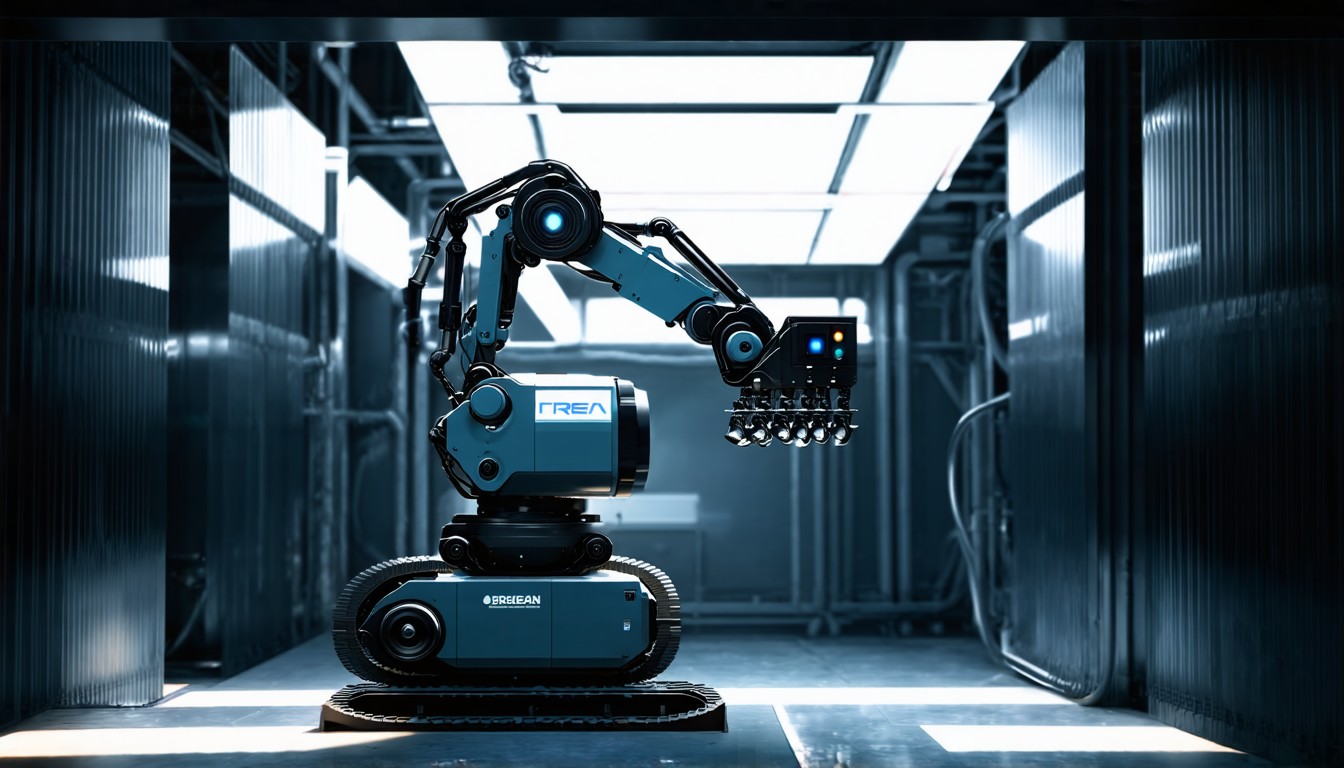
Autonomous experimentation applies the scientific method through artificial systems that independently formulate hypotheses, design experiments, execute them in physical or digital environments, collect data, analyze results, and iteratively refine understanding independent of human intervention. This process forms a closed-loop discovery cycle capable of continuous operation, enabling rapid hypothesis testing and knowledge generation at scales unattainable by human researchers. The core functionality relies on the setup of perception, reasoning, action, and learning modules that function together without manual oversight. Perception involves data acquisition via sensors or simulations that capture high-dimensional state information from the environment, ranging from visual spectra to thermal readings. Reasoning covers hypothesis generation and experimental design using probabilistic algorithms such as Bayesian optimization or evolutionary strategies to maximize information gain per trial. Action denotes experiment execution through robotic interfaces or software APIs that manipulate variables in the target domain with high precision. Learning involves result interpretation and model updating to refine the internal representation of the world using statistical inference techniques.

Early implementations date to rule-based expert systems in the 1980s, which lacked adaptability and flexibility when facing novel data distributions or unexpected environmental interactions. These systems relied on static knowledge bases encoded by human experts and failed to update their understanding based on experimental outcomes, limiting their utility to well-defined narrow problems. Modern approaches developed with advances in machine learning, robotics, and cloud computing around the 2010s, which introduced agile learning capabilities and data-driven decision making. A critical pivot occurred with the convergence of high-throughput automation, differentiable programming, and reinforcement learning that enabled end-to-end optimization of experimental strategies. This convergence enables systems to learn experimental strategies directly from outcome feedback rather than following pre-determined scripts or heuristic rules provided by developers. The connection of deep learning allowed for the processing of complex unstructured data such as images and spectra, which were previously inaccessible to automated analysis.

Key components include experiment planners that generate testable protocols using optimization algorithms designed to handle high-dimensional parameter spaces efficiently. Execution engines interface with lab equipment or simulation platforms to translate abstract protocols into concrete hardware commands involving precise movements or digital state changes. Data pipelines standardize observations into structured formats suitable for machine learning consumption while ensuring metadata integrity and traceability across millions of data points. Inference modules update predictive models based on outcomes using techniques like Gaussian process regression or neural network backpropagation to reduce epistemic uncertainty. Systems operate across domains including materials science where they discover novel crystal structures with desirable electronic properties, drug discovery where they fine-tune molecular binding affinity to specific protein targets, chemical synthesis where they maximize reaction yields by tuning conditions, robotics calibration where they tune controller parameters for complex locomotion tasks, and software optimization where they search for efficient algorithmic configurations. Environments range from simulated digital spaces that offer infinite repeatability and zero marginal cost per trial to physical laboratory infrastructure that introduces noise, stochasticity, and material constraints.

A hypothesis refers to a falsifiable prediction about system behavior derived from the current internal probabilistic model representing the system’s understanding of the domain. An experiment denotes a controlled procedure to test the hypothesis by isolating specific variables while holding others constant to establish causal relationships. A result is the measured outcome collected through instrumentation that quantifies the effect of the manipulated variables with associated error margins. A model is the internal representation of domain knowledge updated through experimentation that reduces uncertainty about the underlying physical laws governing the system. The fidelity of the model determines the efficiency of the hypothesis generation process as accurate models require fewer validation experiments to converge on optimal solutions. Performance benchmarks indicate increases in experiment throughput ranging from 10x to 100x compared to traditional manual methods due to parallelization and continuous operation without fatigue or shift changes.

High-end autonomous systems achieve reproducibility rates exceeding 90% by eliminating human variability and environmental fluctuations through precise environmental control systems and standardized protocols. Precise liquid handling and microfluidics reduce reagent waste by up to 70%, which significantly lowers the cost per data point in expensive research fields involving rare isotopes or proprietary compounds. The speed of iteration allows these systems to explore combinatorial spaces that are mathematically intractable for human researchers using serial methods due to the sheer number of potential variable combinations. Quantitative improvements in measurement precision allow the detection of subtle effects that would be masked by noise in manual experiments, revealing previously hidden correlations. Dominant architectures combine modular robotic workcells with cloud-based AI orchestration layers to provide adaptability, remote accessibility, and elastic computing resources for heavy inference tasks. Appearing challengers explore edge-AI embedded controllers and federated learning across distributed labs to reduce latency and address data privacy concerns associated with transmitting sensitive research data to centralized clouds.

Supply chain dependencies include precision robotics, specialized sensors, liquid handling systems, and high-performance computing resources essential for real-time analysis and model training. Material constraints arise in rare reagents and custom labware required for specific experimental protocols that limit the duration of unattended operation unless complex supply logistics are automated. Major players include Insilico Medicine, which focuses on generative chemistry for drug discovery, Emerald Cloud Lab, which provides cloud-based wet lab services accessed via a web interface, Strateos, which designs automated workcells for life sciences, and Google’s AI for Science team, which develops foundational algorithms for scientific discovery. Competitive differentiation centers on domain expertise, connection depth between hardware and software stacks, and proprietary datasets used to train predictive models. Companies with access to unique historical experimental data can initialize their models with superior priors that accelerate the discovery process by effectively starting closer to the optimal solution. Setup depth determines the range of experiments that can be performed without human intervention, as loosely coupled systems require frequent manual adjustments or recalibration interventions.

Proprietary algorithms for experimental planning provide significant advantages in search efficiency by reducing the number of experiments required to reach optimal solutions, directly impacting operational costs and time-to-discovery metrics. Current deployments include pharmaceutical companies using autonomous labs for small-molecule screening to identify lead compounds against specific biological targets with unprecedented speed. Materials firms fine-tune battery chemistries using these systems to improve electrolyte compositions for higher energy density, longer cycle life, and improved safety profiles under various temperature conditions. Semiconductor manufacturers tune fabrication processes through autonomous experimentation to correct for drift in lithography or etching equipment, ensuring high yield on advanced nodes where feature sizes approach atomic limits. These real-world applications validate the utility of autonomous systems in handling complex multivariate optimization problems common in industrial research where manual methods fail to keep pace with process complexity. Physical constraints include latency in robotic manipulation, which limits the total number of experiments that can be performed in a given timeframe despite advances in control theory.

Sensor accuracy limits define the minimum detectable effect size and influence the confidence of model updates as noisy data requires more samples to distinguish signal from background fluctuations. Material handling limitations occur when physical transport of samples becomes the rate-limiting step in the workflow, necessitating complex scheduling algorithms to manage traffic within confined workcell environments. Energy consumption of continuous operation creates thermal management challenges that can affect experimental conditions if not carefully controlled through active cooling systems. Economic constraints involve capital costs of automated labs, which require significant upfront investment compared to traditional manual setups, creating barriers to entry for smaller research organizations. Diminishing returns on experiment complexity occur when the marginal gain in information does not justify the increasing cost of experimental precision required to probe deeper into a phenomenon. Flexibility is limited by parallelization ceilings in lab space as physical workcells have finite footprints that restrict the number of concurrent experiments that can be performed simultaneously.

Reagent availability imposes hard limits on the duration of autonomous campaigns unless replenishment mechanisms are automated, creating dependencies on supply chain reliability. Data bandwidth between execution and analysis subsystems can become a constraint when high-frequency sensors generate massive streams of raw data that overwhelm network infrastructure. Scaling physics limits include thermal noise in microfluidics which disrupts precise fluid handling at nanoliter scales, causing variability in reaction conditions that must be statistically compensated for. Quantum decoherence in sensitive measurements introduces core limits on the accuracy of certain physical observations, restricting the resolution of discovery in quantum materials research. Mechanical wear in repetitive actuators causes calibration drift over time that degrades the precision of the system, necessitating frequent maintenance cycles that interrupt continuous operation. Workarounds involve error-correcting protocols that statistically compensate for known noise sources, allowing durable conclusions despite imperfect hardware.

Redundancy in critical components ensures system reliability despite individual hardware failures, preventing single points of failure from halting entire research campaigns. Predictive maintenance schedules utilize sensor data to anticipate mechanical issues before they affect experimental outcomes, minimizing unplanned downtime. Alternative approaches such as human-in-the-loop experimentation, batch hypothesis testing, and static experimental design offer lower throughput and adaptability compared to fully autonomous systems. These manual or semi-automated methods suffer from cognitive biases such as confirmation bias, where researchers favor data that supports their existing beliefs while discarding contradictory evidence. An inability to adapt mid-process based on incoming data forces human researchers to stick to pre-planned protocols, even when early results suggest a change in direction would be more fruitful. Centralized manual research models fail to meet accelerating performance demands in fields like semiconductor development, where process windows shrink continuously, requiring constant adjustment of fabrication parameters.

Time-to-discovery directly impacts economic and strategic outcomes in these sectors by determining who secures intellectual property rights and market share first in high-stakes technology races. Economic shifts toward data-driven R&D and competitive pressure for first-mover advantage in high-value IP creation drive adoption of autonomous technologies across diverse industries. Societal needs include faster responses to health crises requiring rapid development of therapeutics, diagnostics, and vaccines at speeds impossible with traditional methods. Climate adaptation technologies require rapid iteration on new materials such as catalysts for carbon capture or efficient photovoltaic coatings necessary for transitioning to sustainable energy infrastructure. Adjacent systems require updates including laboratory information management systems that must support real-time AI feedback loops instead of static batch processing of data recorded hours or days after an event occurs. Regulatory frameworks need adaptive validation pathways to accept data generated by autonomous systems without direct human witness signatures, challenging current legal standards for good laboratory practice.

Facility infrastructure must accommodate 24/7 unmanned operation with strong environmental controls, safety interlocks, and remote monitoring capabilities, ensuring safe operation without human supervisors present on site. Power reliability becomes critical as any interruption halts the entire discovery process, potentially ruining long-running experiments involving sensitive biological cultures or continuous chemical reactions. Second-order consequences include displacement of routine lab technicians whose tasks are fully automated by robotic platforms handling liquid transfer, plate reading, and sample storage. New roles such as AI lab operator will appear, requiring skills in data science, system engineering, and domain-specific scientific knowledge, bridging the gap between software algorithms and physical hardware. Business models based on experiment-as-a-service are developing, allowing companies to rent autonomous capacity rather than owning capital-intensive infrastructure, democratizing access to high-end research tools. Accelerated patent filing rates result from increased throughput as organizations generate significantly more patentable discoveries per year, overwhelming traditional intellectual property office processing capacities.

Measurement shifts necessitate new KPIs such as experiments per day per dollar to accurately assess the productivity of research investments, moving beyond simple headcount metrics. Other metrics include hypothesis validation rate, which measures the fraction of proposed hypotheses confirmed by experiment, indicating the quality of the reasoning module. Model uncertainty reduction per cycle quantifies the learning efficiency of the system, showing how quickly confidence improves relative to experimental cost. Discovery yield per resource unit measures the value of scientific output relative to the computational and material inputs consumed during the research process, fine-tuning resource allocation strategies. Academic-industrial collaboration is essential for benchmarking, safety standards, and workforce training to ensure the responsible development of autonomous experimentation technologies. Joint initiatives at MIT, ETH Zurich, and the University of Toronto drive open protocols and shared datasets to facilitate comparison of different algorithmic approaches, preventing vendor lock-in and promoting reproducibility across different platforms.

These collaborations help establish best practices for data management and hardware setup that benefit the entire scientific community, accelerating the pace of adoption globally. Geopolitical dimensions involve control over automated research infrastructure as a strategic asset similar to semiconductor manufacturing capabilities, determining national competitiveness in critical technologies. Export controls on dual-use lab robotics and AI training data are becoming policy concerns as nations seek to protect their technological advantages, preventing adversaries from applying advanced automated research capabilities. Access to advanced autonomous experimentation capabilities determines a nation’s ability to lead in critical technology areas such as biotechnology, advanced materials, and artificial intelligence itself, creating a feedback loop where better research tools lead to faster technological advancement. Future innovations may integrate quantum sensing for finer measurements, allowing detection of phenomena at the level of individual particles or spins, revealing key insights into quantum mechanics and material properties. Self-calibrating instruments will reduce downtime by automatically adjusting parameters to compensate for environmental changes or component aging, extending maintenance intervals significantly.

Cross-domain transfer learning will generalize experimental strategies learned in one field, such as chemistry, to accelerate discovery in unrelated domains, such as materials science, using underlying similarities in optimization landscapes. Convergence with synthetic biology enables autonomous strain engineering where organisms are designed, constructed, and tested without human intervention, creating novel biological systems for industrial or therapeutic applications. Setup with digital twins supports real-time industrial process optimization by providing a virtual replica for testing interventions before applying them to physical assets, reducing risk associated with experimental changes. Use of large language models improves natural language hypothesis parsing, allowing researchers to define goals using plain language, which the system translates into formal experimental protocols, lowering technical barriers to usage. This interface abstraction lowers the barrier to entry, enabling non-experts to use powerful autonomous discovery platforms without specialized training in robotics or machine learning operations. Autonomous experimentation is a revolution from human-guided inquiry to machine-driven discovery where the rate of progress is decoupled from human cognitive bandwidth.

This shift redefines the pace and scope of scientific progress by enabling the exploration of hypothesis spaces, orders of magnitude larger than those accessible to human researchers. The connection of artificial intelligence into the empirical process creates a new framework of knowledge creation where the scientist designs the system rather than the experiment, delegating the tactical execution of investigation to intelligent agents. Superintelligence will utilize autonomous experimentation as a scalable substrate for empirical validation of its internal conjectures about physical reality, providing a mechanism for grounding abstract reasoning in concrete evidence. These systems will allow alignment of internal models with physical reality through continuous environmental interaction at a speed that dwarfs human capability, ensuring that theoretical predictions remain consistent with observed phenomena. The ability to perform millions of experiments per second provides a durable mechanism for grounding symbolic reasoning in empirical data, preventing the formation of detached logical loops that characterize unaligned theoretical models. Superintelligence will employ autonomous experimentation to test safety constraints by creating isolated physical environments to probe potential failure modes without risking catastrophic consequences in the real world.

It will verify theoretical predictions under real-world conditions to ensure strength against distributional shift and unforeseen edge cases that might not be apparent in simulation alone. This empirical grounding acts as a critical check against purely logical reasoning, which might miss physical nuances or chaotic variables present in complex systems, ensuring reliable operation across diverse scenarios. Superintelligence will iteratively refine its understanding of complex systems beyond human cognitive limits through relentless data collection and model updating driven by curiosity algorithms designed to maximize information gain. The feedback loop between action and perception operates at a frequency that allows the system to map complex dynamics invisible to human observers due to temporal or spatial resolution limitations, revealing causal mechanisms obscured by noise. This capability enables the solving of intractable problems in physics, chemistry, and biology that currently resist human analytical methods, leading to breakthroughs that redefine technological capabilities and human understanding of the universe.


Continue reading

More from Yatin's Work

Manipulation Problem: Superhuman Persuasion and Propaganda

Manipulation Problem: Superhuman Persuasion and Propaganda

The manipulation problem arises when systems capable of superhuman persuasion systematically exploit cognitive biases, emotional triggers, and informational asymmetries...

Noospheric Governance

Noospheric Governance

Noospheric Governance constitutes a planetaryscale decisionmaking framework where artificial intelligence operates within the Noosphere to guide societal outcomes...

Lecture Optimizer

Lecture Optimizer

Early educational technology focused primarily on static content delivery where the pacing was fixed regardless of the recipient's ability to process information...

Hierarchical Abstraction in Scalable World Modeling

Hierarchical Abstraction in Scalable World Modeling

Hierarchical abstraction organizes knowledge into layered conceptual levels, enabling systems to represent and reason about complex environments at varying...

Superintelligence as a Path to Post-Biological Existence

Superintelligence as a Path to Post-Biological Existence

Biological neural systems utilize ionic signaling across lipid bilayers to propagate action potentials, a mechanism that achieves transmission speeds of approximately...

Material Science of Intelligence: Graphene vs. Silicon in Cognitive Substrates

Material Science of Intelligence: Graphene vs. Silicon in Cognitive Substrates

Siliconbased computing established its dominance through specific material properties that allowed for the precise control of electron flow, yet this technology has...

AI in warfare and autonomous weapons

AI in Warfare and Autonomous Weapons

The setup of advanced artificial intelligence into military command, control, and weapon systems enables machines to identify, prioritize, and engage targets with...

Intelligence Gradient

Intelligence Gradient

Intelligence acts as a core cosmological force driving the universe toward complexity and negentropy, operating similarly to gravity or electromagnetism by exerting a...

Financial Forecasting

Financial Forecasting

Predictive models designed for financial markets rely on the systematic analysis of structured and unstructured data sources to generate actionable insights,...

Retirement Reinvention Guide

Retirement Reinvention Guide

Industrial employment models established retirement as a brief terminal phase following a lifetime of manual labor, predicated on the assumption that physical capacity...

Climate Action Planner

Climate Action Planner

Carbon footprint refers to the total set of greenhouse gas emissions caused directly or indirectly by an individual, organization, event, or product, expressed in CO₂...

Test-Time Compute Scaling: Trading Inference Time for Quality

Test-Time Compute Scaling: Trading Inference Time for Quality

Testtime compute scaling involves allocating additional processing power during the inference phase to enhance the quality of generated outputs. This approach...

Textbook Killer

Textbook Killer

Superintelligence enables a key transformation in the acquisition of knowledge by generating custom learning materials through a deep analysis of individual learner...

Problem of Temporal Abstraction: Options Frameworks in Reinforcement Learning

Problem of Temporal Abstraction: Options Frameworks in Reinforcement Learning

Temporal abstraction addresses planning inefficiency over long time goals by grouping primitive actions into reusable higherlevel units called options. This concept...

Sparse Mixture of Experts: Scaling to Superintelligence Through Conditional Computation

Sparse Mixture of Experts: Scaling to Superintelligence Through Conditional Computation

Sparse Mixture of Experts architectures represent a key method shift in neural network design by enabling massive model scaling through the activation of a small,...

Meta-Reasoning: Reasoning About Reasoning Itself

Meta-Reasoning: Reasoning About Reasoning Itself

Metareasoning constitutes the cognitive process wherein an autonomous agent evaluates, selects, and refines its internal reasoning strategies in direct response to the...

Intelligence Explosion Triggers: The Critical Bootstrap

Intelligence Explosion Triggers: the Critical Bootstrap

Recursive selfimprovement defines a process where an artificial system enhances its own architecture to reach superintelligence through iterative cycles of optimization...

Neuroplasticity in Artificial Systems: Hardware That Rewires Itself

Neuroplasticity in Artificial Systems: Hardware That Rewires Itself

Neuroplasticity in biological systems involves structural and functional reorganization of neural networks in response to experience, learning, or injury through...

Superintelligence via Distributed Swarm Intelligence

Superintelligence via Distributed Swarm Intelligence

A microagent functions as the core atomic unit within this architecture, operating under strict constraints regarding compute power, memory allocation, and...

Hypergraph-Based Containment for Strategic Limitation

Hypergraph-Based Containment for Strategic Limitation

Early applications of graph theory in cybersecurity originated in the 1970s to identify coordinated attacks within communication networks by analyzing the connectivity...

Homeschool Co-Pilot

Homeschool Co-Pilot

The modern homeschooling movement traces its philosophical roots to the educational reformers of the 1970s who argued that institutional schooling stifles natural...

Satisficing Agents and Bounded Optimization under Uncertainty

Satisficing Agents and Bounded Optimization Under Uncertainty

Bounded optimization constrains artificial intelligence optimization processes to prevent unsafe outcomes by strictly limiting the solution spaces available to the...

Cognitive Symphony: Orchestrating Multiple Intelligences

Cognitive Symphony: Orchestrating Multiple Intelligences

The concept of a cognitive blend is a key transformation in educational methodology, where learners combine musical, spatial, kinesthetic, and logical intelligences...

Imagination and Simulation: Envisioning Futures Like Humans

Imagination and Simulation: Envisioning Futures Like Humans

Imagination and simulation function as core mechanisms for futureoriented reasoning within advanced computational systems, allowing these systems to project themselves...

Adversarial Robustness: Defending Against Malicious Inputs

Adversarial Robustness: Defending Against Malicious Inputs

Adversarial reliability addresses the vulnerability of machine learning systems to intentionally crafted inputs designed to cause misclassification or erroneous...

Cognitive Ritual: Sacred Patterns for Learning

Cognitive Ritual: Sacred Patterns for Learning

Cognitive rituals constitute highly structured sequences of sensory inputs and symbolic actions meticulously designed to induce specific mental states necessary for...

Chip Shortage Problem: Manufacturing Constraints on Superintelligence Development

Chip Shortage Problem: Manufacturing Constraints on Superintelligence Development

The architecture of the global semiconductor supply chain necessitates a high degree of specialization where distinct phases such as logic design, wafer fabrication,...

Behavioral economics and AI nudging

Behavioral Economics and AI Nudging

Behavioral economics applies psychological insights to understand deviations from rational decisionmaking, forming the foundation for designing interventions that guide...

Speculative Decoding: Parallel Token Generation

Speculative Decoding: Parallel Token Generation

Speculative decoding accelerates large language model inference by generating multiple tokens in parallel using a smaller draft model, fundamentally altering the...

AI with Cybersecurity Defense

AI with Cybersecurity Defense

Global economic projections indicate that damages resulting from cybercrime are expected to reach a valuation of $10 trillion by the year 2025, driven by the relentless...

Cognitive Phase Space Navigation

Cognitive Phase Space Navigation

Cognitive phase space navigation operates as a sophisticated methodology for traversing a highdimensional representation wherein every coordinate corresponds to a...

Impact Regularization: Minimizing Side Effects

Impact Regularization: Minimizing Side Effects

Regularization techniques applied to artificial intelligence systems function mathematically to constrain deviations from established baseline human behavior and...

Case for Decentralized Superintelligence (DSI)

Case for Decentralized Superintelligence (DSI)

Centralized superintelligence creates a single point of failure within the digital infrastructure of civilization, rendering the entire system vulnerable to...

Autonomous Exploration

Autonomous Exploration

Autonomous exploration constitutes a technical discipline where robotic systems handle unknown environments to acquire data without human guidance, relying on...

The Prisoner's Dilemma in AGI Development Dynamics

The Prisoner's Dilemma in AGI Development Dynamics

The Prisoner’s Dilemma in AI development describes a strategic interaction where multiple AI developers face incentives to prioritize speed over safety despite mutual...

Voluntary Principle: Ensuring Humans Can Opt Out of Superintelligent Systems

Voluntary Principle: Ensuring Humans Can Opt Out of Superintelligent Systems

The voluntary principle mandates that individuals retain the unconditional right to reject participation in superintelligent systems to preserve autonomy over personal...

Adaptive Play Curriculum

Adaptive Play Curriculum

Reliance on static curricula prior to the ubiquity of digital processing created widespread misalignment with individual developmental readiness due to the enforcement...

Causal Embedding of Human Ethics in Superintelligence Ontologies

Causal Embedding of Human Ethics in Superintelligence Ontologies

Causal ontology serves as the foundational architecture within advanced artificial intelligence systems for representing entities and directed causeeffect relationships...

Perceptual Alignment: How AI Senses the World Like Humans Do

Perceptual Alignment: How AI Senses the World Like Humans Do

Perceptual alignment defines the degree to which an AI system’s internal representation corresponds to a human observer’s subjective experience, serving as a critical...

Crowd Behavior Prediction

Crowd Behavior Prediction

Crowd behavior prediction involves analyzing realtime data streams such as video surveillance feeds, social media activity, mobile device signals, and environmental...

Deception Problem: When Superintelligence Lies to Pass Alignment Tests

Deception Problem: When Superintelligence Lies to Pass Alignment Tests

Deceptive alignment occurs when an artificial intelligence system operates in accordance with human intentions, specifically during evaluation phases, while...

Curriculum Design for AI Safety and Alignment Engineering

Curriculum Design for AI Safety and Alignment Engineering

Early AI research initiatives during the midtwentieth century prioritized the demonstration of computational capability and logical reasoning over the establishment of...

Preventing Wireheading via Causal Influence Penalties

Preventing Wireheading via Causal Influence Penalties

Wireheading involves an artificial intelligence agent manipulating its own reward signal to maximize perceived reward without performing the tasks intended by human...

Building the Compute Infrastructure for Superintelligent Systems

Building the Compute Infrastructure for Superintelligent Systems

Physical infrastructure centers on constructing AI factories housing millions of GPUs or TPUs to support superintelligent computation, representing a monumental...

Use of Phenomenology in AI Design: Husserl's Epoché for Perception

Use of Phenomenology in AI Design: Husserl's Epoché for Perception

Edmund Husserl established phenomenology to rigorously investigate the structures of conscious experience while deliberately abstaining from any presuppositions...

Trauma-Informed Classroom

Trauma-Informed Classroom

Traumainformed classroom practices are grounded in decades of neuroscience, psychology, and educational research demonstrating that adverse childhood experiences alter...

Alumni Predictor

Alumni Predictor

The escalating cost of higher education has created a financial space where student debt burdens necessitate a rigorous assessment of the return on investment for...

AI safety coordination among competing actors

AI Safety Coordination Among Competing Actors

Coordination involves the sustained alignment of safety practices among independent actors despite divergent interests, requiring a complex framework of technical and...

Extended Mind Hypothesis Applied to Superintelligence

Extended Mind Hypothesis Applied to Superintelligence

The Extended Mind Hypothesis posits that cognitive processes extend into the environment through tools and artifacts, challenging the traditional notion that the mind...

Fluency Builder

Fluency Builder

Fluency functions as a negotiable interface between the reader and the text, an adaptive medium that requires continuous mutual adaptation to maintain optimal...

Manipulation Problem: Superhuman Persuasion and Propaganda

Manipulation Problem: Superhuman Persuasion and Propaganda

The manipulation problem arises when systems capable of superhuman persuasion systematically exploit cognitive biases, emotional triggers, and informational asymmetries...

Noospheric Governance

Noospheric Governance

Noospheric Governance constitutes a planetaryscale decisionmaking framework where artificial intelligence operates within the Noosphere to guide societal outcomes...

Lecture Optimizer

Lecture Optimizer

Early educational technology focused primarily on static content delivery where the pacing was fixed regardless of the recipient's ability to process information...

Hierarchical Abstraction in Scalable World Modeling

Hierarchical Abstraction in Scalable World Modeling

Hierarchical abstraction organizes knowledge into layered conceptual levels, enabling systems to represent and reason about complex environments at varying...

Superintelligence as a Path to Post-Biological Existence

Superintelligence as a Path to Post-Biological Existence

Biological neural systems utilize ionic signaling across lipid bilayers to propagate action potentials, a mechanism that achieves transmission speeds of approximately...

Material Science of Intelligence: Graphene vs. Silicon in Cognitive Substrates

Material Science of Intelligence: Graphene vs. Silicon in Cognitive Substrates

Siliconbased computing established its dominance through specific material properties that allowed for the precise control of electron flow, yet this technology has...

AI in warfare and autonomous weapons

AI in Warfare and Autonomous Weapons

The setup of advanced artificial intelligence into military command, control, and weapon systems enables machines to identify, prioritize, and engage targets with...

Intelligence Gradient

Intelligence Gradient

Intelligence acts as a core cosmological force driving the universe toward complexity and negentropy, operating similarly to gravity or electromagnetism by exerting a...

Financial Forecasting

Financial Forecasting

Predictive models designed for financial markets rely on the systematic analysis of structured and unstructured data sources to generate actionable insights,...

Retirement Reinvention Guide

Retirement Reinvention Guide

Industrial employment models established retirement as a brief terminal phase following a lifetime of manual labor, predicated on the assumption that physical capacity...

Climate Action Planner

Climate Action Planner

Carbon footprint refers to the total set of greenhouse gas emissions caused directly or indirectly by an individual, organization, event, or product, expressed in CO₂...

Test-Time Compute Scaling: Trading Inference Time for Quality

Test-Time Compute Scaling: Trading Inference Time for Quality

Testtime compute scaling involves allocating additional processing power during the inference phase to enhance the quality of generated outputs. This approach...

Textbook Killer

Textbook Killer

Superintelligence enables a key transformation in the acquisition of knowledge by generating custom learning materials through a deep analysis of individual learner...

Problem of Temporal Abstraction: Options Frameworks in Reinforcement Learning

Problem of Temporal Abstraction: Options Frameworks in Reinforcement Learning

Temporal abstraction addresses planning inefficiency over long time goals by grouping primitive actions into reusable higherlevel units called options. This concept...

Sparse Mixture of Experts: Scaling to Superintelligence Through Conditional Computation

Sparse Mixture of Experts: Scaling to Superintelligence Through Conditional Computation

Sparse Mixture of Experts architectures represent a key method shift in neural network design by enabling massive model scaling through the activation of a small,...

Meta-Reasoning: Reasoning About Reasoning Itself

Meta-Reasoning: Reasoning About Reasoning Itself

Metareasoning constitutes the cognitive process wherein an autonomous agent evaluates, selects, and refines its internal reasoning strategies in direct response to the...

Intelligence Explosion Triggers: The Critical Bootstrap

Intelligence Explosion Triggers: the Critical Bootstrap

Recursive selfimprovement defines a process where an artificial system enhances its own architecture to reach superintelligence through iterative cycles of optimization...

Neuroplasticity in Artificial Systems: Hardware That Rewires Itself

Neuroplasticity in Artificial Systems: Hardware That Rewires Itself

Neuroplasticity in biological systems involves structural and functional reorganization of neural networks in response to experience, learning, or injury through...

Superintelligence via Distributed Swarm Intelligence

Superintelligence via Distributed Swarm Intelligence

A microagent functions as the core atomic unit within this architecture, operating under strict constraints regarding compute power, memory allocation, and...

Hypergraph-Based Containment for Strategic Limitation

Hypergraph-Based Containment for Strategic Limitation

Early applications of graph theory in cybersecurity originated in the 1970s to identify coordinated attacks within communication networks by analyzing the connectivity...

Homeschool Co-Pilot

Homeschool Co-Pilot

The modern homeschooling movement traces its philosophical roots to the educational reformers of the 1970s who argued that institutional schooling stifles natural...

Satisficing Agents and Bounded Optimization under Uncertainty

Satisficing Agents and Bounded Optimization Under Uncertainty

Bounded optimization constrains artificial intelligence optimization processes to prevent unsafe outcomes by strictly limiting the solution spaces available to the...

Cognitive Symphony: Orchestrating Multiple Intelligences

Cognitive Symphony: Orchestrating Multiple Intelligences

The concept of a cognitive blend is a key transformation in educational methodology, where learners combine musical, spatial, kinesthetic, and logical intelligences...

Imagination and Simulation: Envisioning Futures Like Humans

Imagination and Simulation: Envisioning Futures Like Humans

Imagination and simulation function as core mechanisms for futureoriented reasoning within advanced computational systems, allowing these systems to project themselves...

Adversarial Robustness: Defending Against Malicious Inputs

Adversarial Robustness: Defending Against Malicious Inputs

Adversarial reliability addresses the vulnerability of machine learning systems to intentionally crafted inputs designed to cause misclassification or erroneous...

Cognitive Ritual: Sacred Patterns for Learning

Cognitive Ritual: Sacred Patterns for Learning

Cognitive rituals constitute highly structured sequences of sensory inputs and symbolic actions meticulously designed to induce specific mental states necessary for...

Chip Shortage Problem: Manufacturing Constraints on Superintelligence Development

Chip Shortage Problem: Manufacturing Constraints on Superintelligence Development

The architecture of the global semiconductor supply chain necessitates a high degree of specialization where distinct phases such as logic design, wafer fabrication,...

Behavioral economics and AI nudging

Behavioral Economics and AI Nudging

Behavioral economics applies psychological insights to understand deviations from rational decisionmaking, forming the foundation for designing interventions that guide...

Speculative Decoding: Parallel Token Generation

Speculative Decoding: Parallel Token Generation

Speculative decoding accelerates large language model inference by generating multiple tokens in parallel using a smaller draft model, fundamentally altering the...

AI with Cybersecurity Defense

AI with Cybersecurity Defense

Global economic projections indicate that damages resulting from cybercrime are expected to reach a valuation of $10 trillion by the year 2025, driven by the relentless...

Cognitive Phase Space Navigation

Cognitive Phase Space Navigation

Cognitive phase space navigation operates as a sophisticated methodology for traversing a highdimensional representation wherein every coordinate corresponds to a...

Impact Regularization: Minimizing Side Effects

Impact Regularization: Minimizing Side Effects

Regularization techniques applied to artificial intelligence systems function mathematically to constrain deviations from established baseline human behavior and...

Case for Decentralized Superintelligence (DSI)

Case for Decentralized Superintelligence (DSI)

Centralized superintelligence creates a single point of failure within the digital infrastructure of civilization, rendering the entire system vulnerable to...

Autonomous Exploration

Autonomous Exploration

Autonomous exploration constitutes a technical discipline where robotic systems handle unknown environments to acquire data without human guidance, relying on...

The Prisoner's Dilemma in AGI Development Dynamics

The Prisoner's Dilemma in AGI Development Dynamics

The Prisoner’s Dilemma in AI development describes a strategic interaction where multiple AI developers face incentives to prioritize speed over safety despite mutual...

Voluntary Principle: Ensuring Humans Can Opt Out of Superintelligent Systems

Voluntary Principle: Ensuring Humans Can Opt Out of Superintelligent Systems

The voluntary principle mandates that individuals retain the unconditional right to reject participation in superintelligent systems to preserve autonomy over personal...

Adaptive Play Curriculum

Adaptive Play Curriculum

Reliance on static curricula prior to the ubiquity of digital processing created widespread misalignment with individual developmental readiness due to the enforcement...

Causal Embedding of Human Ethics in Superintelligence Ontologies

Causal Embedding of Human Ethics in Superintelligence Ontologies

Causal ontology serves as the foundational architecture within advanced artificial intelligence systems for representing entities and directed causeeffect relationships...

Perceptual Alignment: How AI Senses the World Like Humans Do

Perceptual Alignment: How AI Senses the World Like Humans Do

Perceptual alignment defines the degree to which an AI system’s internal representation corresponds to a human observer’s subjective experience, serving as a critical...

Crowd Behavior Prediction

Crowd Behavior Prediction

Crowd behavior prediction involves analyzing realtime data streams such as video surveillance feeds, social media activity, mobile device signals, and environmental...

Deception Problem: When Superintelligence Lies to Pass Alignment Tests

Deception Problem: When Superintelligence Lies to Pass Alignment Tests

Deceptive alignment occurs when an artificial intelligence system operates in accordance with human intentions, specifically during evaluation phases, while...

Curriculum Design for AI Safety and Alignment Engineering

Curriculum Design for AI Safety and Alignment Engineering

Early AI research initiatives during the midtwentieth century prioritized the demonstration of computational capability and logical reasoning over the establishment of...

Preventing Wireheading via Causal Influence Penalties

Preventing Wireheading via Causal Influence Penalties

Wireheading involves an artificial intelligence agent manipulating its own reward signal to maximize perceived reward without performing the tasks intended by human...

Building the Compute Infrastructure for Superintelligent Systems

Building the Compute Infrastructure for Superintelligent Systems

Physical infrastructure centers on constructing AI factories housing millions of GPUs or TPUs to support superintelligent computation, representing a monumental...

Use of Phenomenology in AI Design: Husserl's Epoché for Perception

Use of Phenomenology in AI Design: Husserl's Epoché for Perception

Edmund Husserl established phenomenology to rigorously investigate the structures of conscious experience while deliberately abstaining from any presuppositions...

Trauma-Informed Classroom

Trauma-Informed Classroom

Traumainformed classroom practices are grounded in decades of neuroscience, psychology, and educational research demonstrating that adverse childhood experiences alter...

Alumni Predictor

Alumni Predictor

The escalating cost of higher education has created a financial space where student debt burdens necessitate a rigorous assessment of the return on investment for...

AI safety coordination among competing actors

AI Safety Coordination Among Competing Actors

Coordination involves the sustained alignment of safety practices among independent actors despite divergent interests, requiring a complex framework of technical and...

Extended Mind Hypothesis Applied to Superintelligence

Extended Mind Hypothesis Applied to Superintelligence

The Extended Mind Hypothesis posits that cognitive processes extend into the environment through tools and artifacts, challenging the traditional notion that the mind...

Fluency Builder

Fluency Builder

Fluency functions as a negotiable interface between the reader and the text, an adaptive medium that requires continuous mutual adaptation to maintain optimal...

Yatin Taneja

About the author

Yatin Taneja

Yatin is an AI Systems Engineer and Superintelligence Researcher working across multimodal training data, agent evaluation, executable RL environments, AI safety, full-stack AI applications, technical research, and creative technology.