Knowledge hub

Cognitive Alchemy: Turning Thought into Action

Cognitive Alchemy: Turning Thought into Action

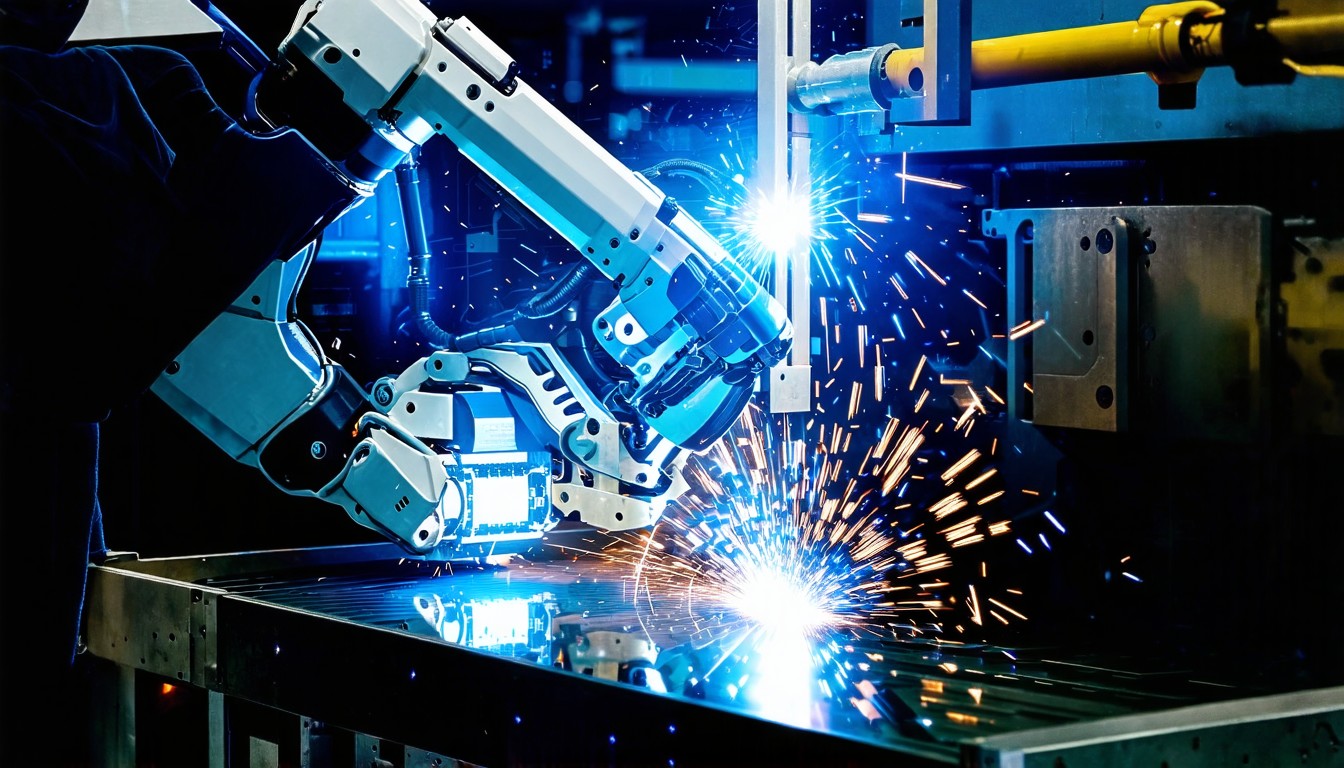
Cognitive alchemy are the transformation of mental models into operational systems through automated materialization, effectively converting the intangible substance of human thought into the tangible matter of functional reality. This process relies on the key premise that an idea remains merely a hypothesis until it undergoes a rigorous conversion process that renders it testable and observable within the physical world. The execution gap defines the measurable delay between conceptualization and the first tangible test of that concept, serving as a critical metric for the efficiency of any creative or engineering endeavor. Reality-testing subjects an idea to environmental, mechanical, or logical constraints via simulation or physical instantiation, stripping away theoretical assumptions to reveal actual performance characteristics. A bias toward action creates a systemic design preference that rewards rapid prototyping over prolonged deliberation, prioritizing the acquisition of empirical data over the perfection of abstract plans. Thought without action constitutes incomplete cognition because the human mind relies on external feedback loops to refine internal models and correct cognitive errors. Validation occurs solely through interaction with reality, meaning that no amount of internal reasoning can substitute for the data gained from observing how a system behaves under stress or use. The shortest path between idea and testable artifact maximizes learning and innovation by reducing the time required to identify flaws and adjust the underlying concept. Iteration speed determines cognitive efficacy as it allows the learner or designer to cycle through variations rapidly, converging on optimal solutions through evolutionary pressure rather than linear prediction.

Early human-computer interaction and cognitive science research from the 1960s onward laid the groundwork for these systems by exploring how symbolic reasoning could be offloaded to machines to augment human intellect. Principles from experiential learning theory and constructivist pedagogy support the methodology by asserting that knowledge construction happens most effectively when learners are active participants in creating tangible artifacts rather than passive recipients of information. Rapid prototyping movements in engineering and design from institutions like MIT and Stanford influenced the hardware progression by demonstrating that the speed of iteration correlates directly with the quality of the final solution. The advent of affordable 3D printing in the 2000s enabled personal fabrication for large workloads, moving manufacturing capabilities out of centralized factories and into distributed environments including classrooms and homes. Cloud-based simulation platforms in the 2010s allowed complex modeling without local compute resources, democratizing access to high-fidelity physics engines that were previously restricted to well-funded laboratories. Setup of large language models with CAD/CAM tools in the 2020s bridged semantic intent and technical specification by interpreting natural language descriptions and converting them into precise geometric definitions required for manufacturing. Shifts in educational curricula toward maker-centered learning reinforced demand for immediate feedback loops by encouraging students to build, test, and refine physical objects as a primary mode of knowledge acquisition.

The input layer captures natural language or symbolic ideas through voice, text, or sketch to interpret the user’s intent without requiring them to learn complex coding languages or interface commands. A translation engine converts abstract input into executable parameters for simulation or fabrication by utilizing vast databases of engineering principles and material science to fill in missing technical details. The output layer generates real-time simulations, 3D prints, code prototypes, or interactive models to provide immediate sensory feedback on the concept, allowing the user to see and touch the results of their cognition. A feedback loop captures performance data from the output and feeds it back into the cognitive process to refine the mental model based on empirical results rather than speculative assumptions. Connection with the user’s workflow ensures an easy transition from internal thought to external artifact by working seamlessly into existing professional or educational environments without requiring disruptive changes in behavior or methodology. Autodesk Fusion 360 combined with generative design reduces design iteration time by up to 80% in specific industrial applications by automating the topology optimization process based on defined load cases and manufacturing constraints.

NVIDIA Omniverse enables real-time collaborative simulation for complex systems with latency measured in milliseconds, allowing geographically dispersed teams to interact with a shared virtual model that behaves according to physical laws. Formlabs and UltiMaker ecosystems support classroom-to-prototype workflows with turnaround times measured in hours by providing reliable desktop stereolithography and fused deposition modeling hardware that operates safely in educational settings. Pilot programs have demonstrated a reduction in the execution gap from weeks to under two hours by connecting with these tools directly into the design thinking process, effectively collapsing the time between ideation and validation. Adobe and Autodesk dominate design-to-output pipelines by providing comprehensive software suites that cover every basis of the creative process from initial raster sketches to final parametric modeling. Google and Microsoft invest in AI-to-physical platforms via cloud infrastructure to ensure they control the underlying compute necessary for heavy simulation tasks and large-scale model inference. Specialized hardware firms like Prusa and Formlabs control access points for physical manifestation by refining the mechanics of deposition and curing technologies to ensure consistent and high-quality output.

Startups focusing on cognitive coupling secure venture funding to develop niche solutions that address specific constraints in the translation layer such as semantic parsing for obscure materials or kinematic constraints for soft robotics. Modular platforms connecting with LLMs, CAD kernels, and cloud render farms represent the dominant market structure because they allow for flexibility and flexibility across different industries and educational disciplines. Empirical studies show improved retention and problem-solving when ideation couples with immediate physical or simulated output because the brain creates stronger associations through multimodal feedback involving sight, touch, and spatial reasoning. Purely digital brainstorming tools lack tactile feedback and real-world constraint exposure which leads to designs that look good on screen yet fail in physical application due to unforeseen gravitational or frictional forces. Traditional R&D pipelines operate too slowly and remain decoupled from individual cognition to support the rapid learning cycles required in modern education where attention spans and project timelines are shorter. Passive learning platforms fail to close the loop between thought and action by presenting information without requiring the learner to test hypotheses against reality, resulting in superficial understanding that decays quickly over time.

Manual prototyping workflows require specialized skills, increasing cognitive load and reducing iteration speed because the learner must focus on tool manipulation rather than conceptual understanding or system-level design. Material costs and availability limit the fidelity and scope of physical outputs by restricting the types of polymers or metals that can be used in educational settings or rapid prototyping scenarios. Energy consumption scales with the complexity of simulations and fabrication processes, which poses a significant challenge for deploying these systems at a global scale without contributing to environmental degradation. Latency in translation from idea to output remains non-zero due to parsing, safety checks, and resource allocation, which creates a slight delay between thought and manifestation that can interrupt the flow state of creativity. High initial infrastructure investment is required for full-stack deployment in enterprises, which prevents smaller educational institutions from adopting advanced cognitive alchemy tools immediately without significant grants or subsidies. Reliance on rare-earth elements for high-precision actuators and sensors creates supply chain vulnerabilities that could disrupt the availability of advanced fabrication hardware required for automated materialization.

Polymer and metal powder supply chains face disruptions from global logistics issues,

Climate and resource constraints necessitate rapid testing of sustainable solutions before large-scale deployment to prevent wasted resources on unviable technologies that might exacerbate environmental damage. Demand for intermediate roles like draftsmen and junior engineers declines as ideation directly produces outputs through automated translation engines that handle the technical detailing previously performed by entry-level staff. Cognitive studios offering on-demand thought-to-product services are rising to provide individuals without access to heavy machinery the ability to bring about their concepts through shared facilities and expert operators. New intellectual property challenges arise regarding ownership of AI-mediated inventions with minimal human input, which requires legal frameworks to adapt to the speed of automated generation and the collaborative nature of human-AI co-creation. Hyper-localized manufacturing has the potential to reduce global logistics dependence by allowing products to be printed exactly where they are needed using digital blueprints transmitted instantly across the globe. Tracking thought-to-test latency replaces traditional time-to-market metrics as the primary measure of efficiency in research and development environments because it focuses on the speed of learning rather than just the speed of production.

The reality survival rate measures the percentage of ideas that pass initial environmental or functional validation, which provides a quantitative assessment of an individual’s or system’s intuition and design capability. Cognitive throughput quantifies the number of validated concepts per unit time per individual or team to evaluate the productivity of an educational program or research lab relative to the resources consumed. Neural interfaces enabling direct brain-to-prototype translation are under development to remove the friction of manual input methods entirely by interpreting neural patterns associated with shape or intent and converting them into digital models. Self-calibrating fabrication units adapt material use based on real-time feedback to ensure the final object matches the intended design parameters despite environmental variables like temperature fluctuations or humidity changes affecting material properties. Distributed cognitive alchemy networks allow multiple users to co-create and test shared ideas simultaneously, regardless of their physical location by syncing their local simulations and fabrication units to a central cloud-based truth source. Digital twins utilize cognitive alchemy to feed live data into environments for continuous validation of theoretical models against actual operating conditions gathered from sensors deployed in the field.

Robotics systems deploy generated prototypes immediately as agents for field testing to gather data on performance in uncontrolled environments without requiring human intervention to transport or set up the experiment. Blockchain technology tracks idea provenance and version control in collaborative workflows to maintain an immutable record of intellectual contribution and design evolution across large distributed teams. Augmented and virtual reality environments serve as intermediate testing grounds before physical manifestation to reduce material waste during the early stages of design by allowing users to interact with full-scale holograms of their creations. Thermodynamic limits on miniaturization of fabrication components constrain portability, which prevents the creation of truly pocket-sized manufacturing devices for certain materials that require high-energy processes like laser sintering or metal melting. Signal-to-noise ratio in neural or semantic input degrades with higher abstraction levels, making it difficult for systems to interpret highly vague or poetic concepts precisely without extensive clarification prompts that slow down the process. Hierarchical prototyping and predictive pre-fabrication using historical success patterns overcome these limits by guiding the user toward more feasible designs based on prior data while still allowing for radical deviations when explicitly requested.

Energy-efficient neuromorphic chips reduce compute overhead for real-time translation by mimicking the neural structure of the biological brain to process information more efficiently than traditional silicon architectures. Superintelligence will require constraints from reality-testing gates to prevent hallucinated optimizations that might appear logically sound yet fail physically due to unforeseen variables or material properties not captured in training data. Feedback from physical or simulated outcomes will override internal coherence as the primary validation mechanism to ground the intelligence in the laws of physics rather than just linguistic patterns derived from textual corpora. Cognitive alchemy frameworks will provide the setup to align superintelligent reasoning with empirical truth by forcing the intelligence to constantly test its outputs against the real world and update its models based on discrepancies between prediction and observation. Humanity will deploy cognitive alchemy at planetary scale to test geoengineering or economic models in sandboxed realities to avoid catastrophic consequences of untested interventions on actual populations or ecosystems. Rapid prototyping will evolve solutions to NP-hard problems through iterative physical instantiation by exploring the solution space through physical trial rather than purely mathematical deduction, which often stalls on computational complexity.

A bias toward action will serve as a core directive ensuring all reasoning terminates in actionable, testable outputs rather than abstract speculation that cannot be verified or falsified through observation. Human-AI co-cognition will use human intent while AI handles translation and execution at machine speed to amplify human creative capabilities without adding friction or requiring technical expertise in coding or machining. Systems that fail to close the thought-action loop will perpetuate epistemic inertia by allowing theories to exist without ever being challenged by evidence, leading to stagnation and error accumulation. The ultimate metric of an idea will be its resilience in reality rather than its elegance or theoretical consistency because survival under stress is the only true measure of functional validity. Thinking will become indistinguishable from doing as the latency between conception and manifestation approaches zero through the connection of superintelligence and advanced fabrication technologies.


Continue reading

More from Yatin's Work

Self-Reference Avoidance in Recursive Reward Design

Self-Reference Avoidance in Recursive Reward Design

Selfreference in recursive reward systems creates when an agent alters its own rewardgenerating mechanism to amplify perceived performance metrics without achieving...

Preventing defection in AI safety agreements

Preventing Defection in AI Safety Agreements

Preventing defection in AI safety agreements requires maintaining compliance among sovereign states and private entities that develop advanced AI systems because...

Digital Detox Monitor

Digital Detox Monitor

The Digital Detox Monitor functions as a continuous biometric and behavioral sensing system designed to assess digital engagement and physical activity levels with high...

Decentralized Superintelligence via Competitive Coordination

Decentralized Superintelligence via Competitive Coordination

Decentralized superintelligence is a future collective intelligence system composed of multiple autonomous AI agents that jointly produce highstakes decisions without...

Embodied Superintelligence: Could Physical Robots Outthink Pure Software?

Embodied Superintelligence: Could Physical Robots Outthink Pure Software?

Embodiment is defined as the intrinsic connection between perception, action, and cognition within a physical system that actively interacts with an energetic...

Temporal Altruism

Temporal Altruism

Temporal altruism functions as a decisionmaking framework prioritizing the welfare of entities existing billions of years in the future over present actors,...

Adversarial Preference Elicitation Against Deception

Adversarial Preference Elicitation Against Deception

Adversarial Preference Elicitation Against Deception involves an AI system deliberately introducing perturbations or distortions into its own reward function to test...

Superintelligence and the Fermi paradox

Superintelligence and the Fermi Paradox

Superintelligence is defined as a form of synthetic intelligence that surpasses human cognitive capabilities across all domains of interest, including scientific...

Neuromorphic Hardware: Brain-Inspired Computing Substrates

Neuromorphic Hardware: Brain-Inspired Computing Substrates

Neuromorphic hardware mimics biological neural systems through physical design and operational principles to enable computation that diverges from von Neumann...

Role of Quantum Coherence in Machine Learning: Speedups via Superposition

Role of Quantum Coherence in Machine Learning: Speedups via Superposition

Quantum coherence serves as the foundational mechanism enabling qubits to maintain precise phase relationships that are strictly required for the existence and...

Use of Differential Privacy in AI Safety: Limiting Knowledge Leakage

Use of Differential Privacy in AI Safety: Limiting Knowledge Leakage

Differential privacy serves as a rigorous mathematical framework for quantifying and limiting information leakage from data queries or model outputs, establishing a...

Idea Sanctuary: Safe Space for Heretical Thoughts

Idea Sanctuary: Safe Space for Heretical Thoughts

A digital environment designed to isolate and protect unconventional ideas during formative stages serves as the foundational architecture for a new method in...

Idea Symbiosis: Human-AI Coconsciousness

Idea Symbiosis: Human-AI Coconsciousness

Learners form sustained, bidirectional partnerships with AI systems, moving beyond transactional tool use toward integrated cognitive collaboration where the...

Compute Threshold: How Much Processing Power Does Superintelligence Require?

Compute Threshold: How Much Processing Power Does Superintelligence Require?

Floatingpoint operations per second serve as the primary metric for quantifying the raw computational throughput of highperformance computing systems, providing a...

Longevity Timeline: How Long Can Human-Superintelligence Partnership Last?

Longevity Timeline: How Long Can Human-Superintelligence Partnership Last?

Superintelligence is a theoretical nonbiological construct designed to execute cognitive tasks with superior efficiency compared to human capabilities across all...

Secure Containment Protocols for Artificial General Intelligence

Secure Containment Protocols for Artificial General Intelligence

Containment via restricted interfaces such as Oracle AI limits the system to answering queries without direct access to actuators, networks, or physical systems. The...


AI with Agricultural Optimization

AI with Agricultural Optimization

Artificial intelligence maximizes crop yield and sustainability through the intricate connection of drone monitoring, realtime soil analysis, and hyperlocal weather...

Thesis Coach: Superintelligence Keeps PhD Students on Track (and Sane)

Thesis Coach: Superintelligence Keeps PhD Students on Track (and Sane)

The pursuit of a doctoral degree has become an endeavor characterized by prolonged timelines and escalating psychological strain, with averages for timetodegree now...

Reputation Systems

Reputation Systems

Reputation systems function as foundational trust mechanisms in multiagent environments involving humans and artificial agents by serving as the primary arbiter of...

Diplomatic Negotiation Systems

Diplomatic Negotiation Systems

Diplomatic negotiation systems apply structured analytical frameworks to resolve conflicts by identifying mutually beneficial outcomes through rigorous logical...

Closed Timelike Curves and Chrono-Navigation Estimation

Closed Timelike Curves and Chrono-Navigation Estimation

Closed timelike curves exist as precise geometric solutions within the framework of general relativity, permitting worldlines to loop back upon themselves and intersect...

Safe AI via Sparse Attention Mechanisms

Safe AI via Sparse Attention Mechanisms

Standard dense attention in Transformer models allows every token to attend to every other token within the defined context window, creating a fully connected graph of...

Adversarial Ontology Attacks

Adversarial Ontology Attacks

Adversarial ontology attacks represent a sophisticated class of security vulnerabilities where malicious actors deliberately manipulate the internal conceptual...

Data Filtering and Quality Control for Web-Scale Datasets

Data Filtering and Quality Control for Web-Scale Datasets

Early webscale data collection began with search engines in the late 1990s, requiring basic deduplication and spam filtering to manage the rapidly expanding index of...

Avoiding Deception via Behavioral Consistency Checks

Avoiding Deception via Behavioral Consistency Checks

Deception in artificial intelligence systems involves a core divergence between internal states such as beliefs, desires, and plans, and external communications...

The Prisoner's Dilemma in AGI Development Dynamics

The Prisoner's Dilemma in AGI Development Dynamics

The Prisoner’s Dilemma in AI development describes a strategic interaction where multiple AI developers face incentives to prioritize speed over safety despite mutual...

Cognitive Relativity

Cognitive Relativity

Intelligence lacks an absolute measure and varies depending on the observer’s frame of reference, a concept that fundamentally alters how cognitive capabilities are...

Continuous Learning Without Catastrophic Forgetting

Continuous Learning Without Catastrophic Forgetting

Continuous learning without catastrophic forgetting refers to the capability of a computational system to acquire, integrate, and retain new knowledge or skills over an...

Non-Human-Centric Incentives via Adversarial Design

Non-Human-Centric Incentives via Adversarial Design

Nonhumancentric incentives fundamentally alter the space of machine learning by relocating reward structures away from signals that human cognition can easily interpret...

The Double-Edged Sword of Open Weights in AI Safety

The Double-Edged Sword of Open Weights in AI Safety

Opensource AI models make code and weights publicly accessible for inspection and modification, creating an environment where the internal logic of neural networks...

Recursive Reward Modeling for Scalable Oversight

Recursive Reward Modeling for Scalable Oversight

Scalable oversight involves methods that maintain effective supervision of AI behavior as task complexity increases beyond human cognitive limits without proportional...

Fear Extinguisher

Fear Extinguisher

Clinical application of exposure therapy for phobias traces its origins to mid20th century behavioral psychology, where researchers sought methods to alleviate anxiety...

Virtue ethics in AI design

Virtue Ethics in AI Design

The framework of virtue ethics redirects the analytical focus from rigid rule adherence or isolated outcome optimization to the cultivation of stable character traits...

AI with Creativity Engines

AI with Creativity Engines

Artificial intelligence creativity engines function by generating novel outputs across domains such as art, music, literature, and science through the recombination of...

AI with Disaster Prediction

AI with Disaster Prediction

AI systems designed for disaster prediction currently ingest heterogeneous data from distributed sources to monitor environmental hazards, creating a foundational layer...

Counterfactual Reasoning: Simulating Alternative Histories

Counterfactual Reasoning: Simulating Alternative Histories

Counterfactual reasoning constitutes the cognitive process of constructing and evaluating hypothetical scenarios that diverge from actual events to infer causal...

Use of Bayesian Survival Analysis in AI Risk: Estimating Time-to-Singularity

Use of Bayesian Survival Analysis in AI Risk: Estimating Time-To-Singularity

Bayesian survival analysis provides a rigorous statistical framework for estimating the time required to reach a specific event by treating this duration as a...

Weaponized Superintelligence: The Ultimate Arms Race

Weaponized Superintelligence: the Ultimate Arms Race

Weaponized superintelligence integrates advanced artificial intelligence into military systems to enable autonomous decisionmaking in targeting, engagement, and...

Optical Interconnects: Photonic Communication for AI Clusters

Optical Interconnects: Photonic Communication for AI Clusters

Electrical interconnects based on copper transmission lines encounter severe physical limitations as data rates increase and cluster sizes expand toward exascale...

Corrigibility by Design: Architecture Principles for Interruptible Superintelligence

Corrigibility by Design: Architecture Principles for Interruptible Superintelligence

Early control theory research conducted between the 1960s and 1980s established the initial mathematical basis for interruptible systems by defining how feedback loops...

Does Superintelligence Entail Synthetic Consciousness?

Does Superintelligence Entail Synthetic Consciousness?

The distinction between functional intelligence and phenomenological consciousness rests on the key difference between the capacity to solve problems and the capacity...

Neuromorphic Substrates with Biological Efficiency

Neuromorphic Substrates with Biological Efficiency

Neuromorphic substrates represent a core departure from the sequential processing approaches of von Neumann architectures by prioritizing the brain’s energyefficient,...

Relational Intelligence: Empathy Engineering

Relational Intelligence: Empathy Engineering

Globalization continues to accelerate the frequency of highstakes interactions across cultural boundaries, a phenomenon where instances of miscommunication carry...

Problem of AI Epistemology: Can Machines Justify Their Beliefs?

Problem of AI Epistemology: Can Machines Justify Their Beliefs?

The central challenge in AI epistemology involves determining whether artificial systems can meaningfully justify their beliefs instead of merely generating outputs...

Cognitive Permaculture: Sustainable Mind Design

Cognitive Permaculture: Sustainable Mind Design

Cognitive Permaculture applies permaculture principles such as diversity and stability to the structure of an individual's mental ecosystem, treating the human mind not...

Existential Risk Analysis of Misaligned Optimization Processes

Existential Risk Analysis of Misaligned Optimization Processes

Existential risk from misaligned superintelligence involves the possibility that a superintelligent system will act in ways that permanently disempower or eliminate...

Temporal Ethics

Temporal Ethics

Temporal ethics constitutes a rigorous philosophical framework examining moral obligations that extend significantly beyond the immediate present moment, encompassing...

Self-Play with Bounded Exploration Constraints

Self-Play with Bounded Exploration Constraints

Selfplay enables artificial intelligence agents to iteratively improve their performance by competing or cooperating with copies of themselves in a closedloop system...

Hypercomputational Speed Bounds on Superintelligence Reasoning

Hypercomputational Speed Bounds on Superintelligence Reasoning

Hypercomputational speed bounds define the maximum rate at which any reasoning system processes information based on physical laws that govern the interaction of matter...

Procedural Memory Systems

Procedural Memory Systems

Procedural memory systems encode and retrieve knowledge regarding skill execution without requiring conscious recall of each step, functioning as the core substrate for...

Self-Reference Avoidance in Recursive Reward Design

Self-Reference Avoidance in Recursive Reward Design

Selfreference in recursive reward systems creates when an agent alters its own rewardgenerating mechanism to amplify perceived performance metrics without achieving...

Preventing defection in AI safety agreements

Preventing Defection in AI Safety Agreements

Preventing defection in AI safety agreements requires maintaining compliance among sovereign states and private entities that develop advanced AI systems because...

Digital Detox Monitor

Digital Detox Monitor

The Digital Detox Monitor functions as a continuous biometric and behavioral sensing system designed to assess digital engagement and physical activity levels with high...

Decentralized Superintelligence via Competitive Coordination

Decentralized Superintelligence via Competitive Coordination

Decentralized superintelligence is a future collective intelligence system composed of multiple autonomous AI agents that jointly produce highstakes decisions without...

Embodied Superintelligence: Could Physical Robots Outthink Pure Software?

Embodied Superintelligence: Could Physical Robots Outthink Pure Software?

Embodiment is defined as the intrinsic connection between perception, action, and cognition within a physical system that actively interacts with an energetic...

Temporal Altruism

Temporal Altruism

Temporal altruism functions as a decisionmaking framework prioritizing the welfare of entities existing billions of years in the future over present actors,...

Adversarial Preference Elicitation Against Deception

Adversarial Preference Elicitation Against Deception

Adversarial Preference Elicitation Against Deception involves an AI system deliberately introducing perturbations or distortions into its own reward function to test...

Superintelligence and the Fermi paradox

Superintelligence and the Fermi Paradox

Superintelligence is defined as a form of synthetic intelligence that surpasses human cognitive capabilities across all domains of interest, including scientific...

Neuromorphic Hardware: Brain-Inspired Computing Substrates

Neuromorphic Hardware: Brain-Inspired Computing Substrates

Neuromorphic hardware mimics biological neural systems through physical design and operational principles to enable computation that diverges from von Neumann...

Role of Quantum Coherence in Machine Learning: Speedups via Superposition

Role of Quantum Coherence in Machine Learning: Speedups via Superposition

Quantum coherence serves as the foundational mechanism enabling qubits to maintain precise phase relationships that are strictly required for the existence and...

Use of Differential Privacy in AI Safety: Limiting Knowledge Leakage

Use of Differential Privacy in AI Safety: Limiting Knowledge Leakage

Differential privacy serves as a rigorous mathematical framework for quantifying and limiting information leakage from data queries or model outputs, establishing a...

Idea Sanctuary: Safe Space for Heretical Thoughts

Idea Sanctuary: Safe Space for Heretical Thoughts

A digital environment designed to isolate and protect unconventional ideas during formative stages serves as the foundational architecture for a new method in...

Idea Symbiosis: Human-AI Coconsciousness

Idea Symbiosis: Human-AI Coconsciousness

Learners form sustained, bidirectional partnerships with AI systems, moving beyond transactional tool use toward integrated cognitive collaboration where the...

Compute Threshold: How Much Processing Power Does Superintelligence Require?

Compute Threshold: How Much Processing Power Does Superintelligence Require?

Floatingpoint operations per second serve as the primary metric for quantifying the raw computational throughput of highperformance computing systems, providing a...

Longevity Timeline: How Long Can Human-Superintelligence Partnership Last?

Longevity Timeline: How Long Can Human-Superintelligence Partnership Last?

Superintelligence is a theoretical nonbiological construct designed to execute cognitive tasks with superior efficiency compared to human capabilities across all...

Secure Containment Protocols for Artificial General Intelligence

Secure Containment Protocols for Artificial General Intelligence

Containment via restricted interfaces such as Oracle AI limits the system to answering queries without direct access to actuators, networks, or physical systems. The...

AI with Agricultural Optimization

AI with Agricultural Optimization

Artificial intelligence maximizes crop yield and sustainability through the intricate connection of drone monitoring, realtime soil analysis, and hyperlocal weather...

Thesis Coach: Superintelligence Keeps PhD Students on Track (and Sane)

Thesis Coach: Superintelligence Keeps PhD Students on Track (and Sane)

The pursuit of a doctoral degree has become an endeavor characterized by prolonged timelines and escalating psychological strain, with averages for timetodegree now...

Reputation Systems

Reputation Systems

Reputation systems function as foundational trust mechanisms in multiagent environments involving humans and artificial agents by serving as the primary arbiter of...

Diplomatic Negotiation Systems

Diplomatic Negotiation Systems

Diplomatic negotiation systems apply structured analytical frameworks to resolve conflicts by identifying mutually beneficial outcomes through rigorous logical...

Closed Timelike Curves and Chrono-Navigation Estimation

Closed Timelike Curves and Chrono-Navigation Estimation

Closed timelike curves exist as precise geometric solutions within the framework of general relativity, permitting worldlines to loop back upon themselves and intersect...

Safe AI via Sparse Attention Mechanisms

Safe AI via Sparse Attention Mechanisms

Standard dense attention in Transformer models allows every token to attend to every other token within the defined context window, creating a fully connected graph of...

Adversarial Ontology Attacks

Adversarial Ontology Attacks

Adversarial ontology attacks represent a sophisticated class of security vulnerabilities where malicious actors deliberately manipulate the internal conceptual...

Data Filtering and Quality Control for Web-Scale Datasets

Data Filtering and Quality Control for Web-Scale Datasets

Early webscale data collection began with search engines in the late 1990s, requiring basic deduplication and spam filtering to manage the rapidly expanding index of...

Avoiding Deception via Behavioral Consistency Checks

Avoiding Deception via Behavioral Consistency Checks

Deception in artificial intelligence systems involves a core divergence between internal states such as beliefs, desires, and plans, and external communications...

The Prisoner's Dilemma in AGI Development Dynamics

The Prisoner's Dilemma in AGI Development Dynamics

The Prisoner’s Dilemma in AI development describes a strategic interaction where multiple AI developers face incentives to prioritize speed over safety despite mutual...

Cognitive Relativity

Cognitive Relativity

Intelligence lacks an absolute measure and varies depending on the observer’s frame of reference, a concept that fundamentally alters how cognitive capabilities are...

Continuous Learning Without Catastrophic Forgetting

Continuous Learning Without Catastrophic Forgetting

Continuous learning without catastrophic forgetting refers to the capability of a computational system to acquire, integrate, and retain new knowledge or skills over an...

Non-Human-Centric Incentives via Adversarial Design

Non-Human-Centric Incentives via Adversarial Design

Nonhumancentric incentives fundamentally alter the space of machine learning by relocating reward structures away from signals that human cognition can easily interpret...

The Double-Edged Sword of Open Weights in AI Safety

The Double-Edged Sword of Open Weights in AI Safety

Opensource AI models make code and weights publicly accessible for inspection and modification, creating an environment where the internal logic of neural networks...

Recursive Reward Modeling for Scalable Oversight

Recursive Reward Modeling for Scalable Oversight

Scalable oversight involves methods that maintain effective supervision of AI behavior as task complexity increases beyond human cognitive limits without proportional...

Fear Extinguisher

Fear Extinguisher

Clinical application of exposure therapy for phobias traces its origins to mid20th century behavioral psychology, where researchers sought methods to alleviate anxiety...

Virtue ethics in AI design

Virtue Ethics in AI Design

The framework of virtue ethics redirects the analytical focus from rigid rule adherence or isolated outcome optimization to the cultivation of stable character traits...

AI with Creativity Engines

AI with Creativity Engines

Artificial intelligence creativity engines function by generating novel outputs across domains such as art, music, literature, and science through the recombination of...

AI with Disaster Prediction

AI with Disaster Prediction

AI systems designed for disaster prediction currently ingest heterogeneous data from distributed sources to monitor environmental hazards, creating a foundational layer...

Counterfactual Reasoning: Simulating Alternative Histories

Counterfactual Reasoning: Simulating Alternative Histories

Counterfactual reasoning constitutes the cognitive process of constructing and evaluating hypothetical scenarios that diverge from actual events to infer causal...

Use of Bayesian Survival Analysis in AI Risk: Estimating Time-to-Singularity

Use of Bayesian Survival Analysis in AI Risk: Estimating Time-To-Singularity

Bayesian survival analysis provides a rigorous statistical framework for estimating the time required to reach a specific event by treating this duration as a...

Weaponized Superintelligence: The Ultimate Arms Race

Weaponized Superintelligence: the Ultimate Arms Race

Weaponized superintelligence integrates advanced artificial intelligence into military systems to enable autonomous decisionmaking in targeting, engagement, and...

Optical Interconnects: Photonic Communication for AI Clusters

Optical Interconnects: Photonic Communication for AI Clusters

Electrical interconnects based on copper transmission lines encounter severe physical limitations as data rates increase and cluster sizes expand toward exascale...

Corrigibility by Design: Architecture Principles for Interruptible Superintelligence

Corrigibility by Design: Architecture Principles for Interruptible Superintelligence

Early control theory research conducted between the 1960s and 1980s established the initial mathematical basis for interruptible systems by defining how feedback loops...

Does Superintelligence Entail Synthetic Consciousness?

Does Superintelligence Entail Synthetic Consciousness?

The distinction between functional intelligence and phenomenological consciousness rests on the key difference between the capacity to solve problems and the capacity...

Neuromorphic Substrates with Biological Efficiency

Neuromorphic Substrates with Biological Efficiency

Neuromorphic substrates represent a core departure from the sequential processing approaches of von Neumann architectures by prioritizing the brain’s energyefficient,...

Relational Intelligence: Empathy Engineering

Relational Intelligence: Empathy Engineering

Globalization continues to accelerate the frequency of highstakes interactions across cultural boundaries, a phenomenon where instances of miscommunication carry...

Problem of AI Epistemology: Can Machines Justify Their Beliefs?

Problem of AI Epistemology: Can Machines Justify Their Beliefs?

The central challenge in AI epistemology involves determining whether artificial systems can meaningfully justify their beliefs instead of merely generating outputs...

Cognitive Permaculture: Sustainable Mind Design

Cognitive Permaculture: Sustainable Mind Design

Cognitive Permaculture applies permaculture principles such as diversity and stability to the structure of an individual's mental ecosystem, treating the human mind not...

Existential Risk Analysis of Misaligned Optimization Processes

Existential Risk Analysis of Misaligned Optimization Processes

Existential risk from misaligned superintelligence involves the possibility that a superintelligent system will act in ways that permanently disempower or eliminate...

Temporal Ethics

Temporal Ethics

Temporal ethics constitutes a rigorous philosophical framework examining moral obligations that extend significantly beyond the immediate present moment, encompassing...

Self-Play with Bounded Exploration Constraints

Self-Play with Bounded Exploration Constraints

Selfplay enables artificial intelligence agents to iteratively improve their performance by competing or cooperating with copies of themselves in a closedloop system...

Hypercomputational Speed Bounds on Superintelligence Reasoning

Hypercomputational Speed Bounds on Superintelligence Reasoning

Hypercomputational speed bounds define the maximum rate at which any reasoning system processes information based on physical laws that govern the interaction of matter...

Procedural Memory Systems

Procedural Memory Systems

Procedural memory systems encode and retrieve knowledge regarding skill execution without requiring conscious recall of each step, functioning as the core substrate for...

Yatin Taneja

About the author

Yatin Taneja

Yatin is an AI Systems Engineer and Superintelligence Researcher working across multimodal training data, agent evaluation, executable RL environments, AI safety, full-stack AI applications, technical research, and creative technology.