Knowledge hub
Global Citizen Course: Superintelligence Trains You to Solve Planetary Problems

Planetary-scale crises such as climate tipping points and widening inequality gaps create an urgent demand for education that bridges abstract knowledge with localized action. These existential threats create as complex adaptive systems where traditional linear cause-and-effect reasoning fails to provide adequate solutions for mitigation or adaptation. Traditional siloed curricula fail to produce actionable competencies in addressing interconnected global challenges because they compartmentalize knowledge into distinct disciplines that rarely interact within the classroom or in professional practice. This fragmentation prevents learners from seeing the holistic view required to understand how economic policies drive environmental degradation or how technological advancements can exacerbate social stratification. Advances in digital learning infrastructure enable scalable delivery of complex, interdisciplinary content necessary to dismantle these academic barriers and promote a generation capable of handling the intricacies of the modern world. Civic engagement must be coupled with systems literacy to avoid fragmented or counterproductive interventions that might alleviate symptoms in the short term while intensifying root causes over decades.

The Global Citizen Course equips learners with tools to diagnose and address complex planetary problems using evidence-based, context-sensitive approaches that respect local nuances while adhering to global scientific standards. Foundational assumptions dictate that effective problem-solving requires understanding feedback loops, application points, and unintended consequences within socioecological systems to avoid the pitfalls of reductionist thinking. Pedagogical models prioritize active application over passive knowledge acquisition to ensure that students internalize concepts through direct engagement with real-world scenarios rather than through rote memorization of isolated facts. Project-based assessments tie directly to measurable community outcomes to validate the learner’s comprehension through tangible improvements in their immediate environment. Design principles of adaptability ensure content functions across diverse cultural, economic, and institutional settings without loss of fidelity or relevance to the specific population being served. The curriculum divides into three primary tracks: Environmental Systems, Human Equity, and Governance & Ethics, which together provide a comprehensive framework for understanding planetary stewardship from multiple perspectives.
Each track contains eight to twelve modular units designed for contextual adaptation to local communities so that instructors can tailor examples and case studies to the specific realities of the region they serve. Units include diagnostic tools such as causal loop diagrams, data literacy components, stakeholder mapping exercises, and scenario-planning templates to promote analytical rigor among participants regardless of their prior educational background. Systems thinking is operationalized as the ability to identify stocks, flows, delays, and nonlinear relationships within a given problem domain, providing a structured method for dissecting complex issues that otherwise seem chaotic or unmanageable. Glocalization is defined as the process of translating global knowledge into locally relevant action plans using community-specific data and values to ensure high adoption rates and cultural resonance. Civic agency is measured by demonstrated capacity to initiate, sustain, and evaluate community-level interventions aligned with course objectives, shifting the focus from theoretical understanding to practical impact. Ethical reasoning is assessed through structured responses to dilemma scenarios using predefined rubrics that weight consistency, inclusivity, and long-term impact to ensure decisions are morally sound and socially just.
Assessment mechanisms combine peer review, community impact metrics, and reflective portfolios to evaluate both individual growth and collective efficacy within the cohort, creating a multi-dimensional picture of learner progress. Platform architectures support offline access, low-bandwidth compatibility, and multilingual localization to ensure broad accessibility regardless of internet connectivity quality or language proficiency. Hardware requirements are limited to smartphones or basic laptops to reduce material dependencies and lower the barrier to entry for participants in low-resource settings where advanced computing technology remains scarce. Localization efforts require partnerships with regional educators and translators who possess the cultural insight necessary to adapt the material effectively without losing its core scientific integrity. Pilot programs deploy in diverse geographic regions via partnerships with non-governmental organizations and private entities to test the viability of the curriculum across various socio-economic landscapes. Focus areas include urban resilience and inclusive development as these represent critical pressure points for the rapidly growing populations in metropolitan areas worldwide where resource scarcity is most acute.
Performance benchmarks include participant-led project completion rates and pre or post assessments of systems literacy to quantify the educational value added by the program relative to traditional instruction. Early data indicates a majority of participants initiate at least one community intervention within six months of course completion, demonstrating a high level of engagement and practical application of learned skills. Standardized dilemma-response analysis shows significant improvement in ethical reasoning scores among participants who have completed the core modules, suggesting that moral reasoning is a skill that can be honed through structured practice. The dominant architecture relies on hybrid human-AI facilitation where AI handles content delivery and basic feedback to ensure consistency and adaptability across vast numbers of learners. Human mentors guide complex discussions and local adaptation processes where nuance and cultural sensitivity are required for successful outcomes, providing the empathy and contextual understanding that artificial intelligence lacks. Developing challengers include fully decentralized, blockchain-based credentialing systems and community-owned learning cooperatives that seek to democratize control
Centralized platforms maintain advantage in content consistency and data aggregation capabilities, which are essential for refining the curriculum based on performance analytics derived from global user interactions. Decentralized models offer greater autonomy and resilience against censorship or single-point failures, appealing to communities with high trust in distributed governance structures or those operating under restrictive political regimes. Dependence on open-access climate and socioeconomic datasets ensures curriculum relevance while allowing learners to base their decisions on the most current scientific evidence available rather than outdated textbooks. Connectivity providers remain critical for third-party access to these datasets and for maintaining the communication channels necessary for collaborative learning between remote nodes of the network. Major players include university consortia and educational technology nonprofits with field presence in developing regions, applying their academic credibility and logistical networks to scale operations rapidly. Competitive differentiation relies heavily on depth of community connection, adaptability to local norms, and transparency in impact measurement to build trust with users who are often skeptical of external intervention.

For-profit entrants remain marginal due to misalignment between profit motives and long-term civic outcomes required for sustainable community development, as financial incentives often encourage short-term metrics over genuine systemic change. Academic institutions contribute research on pedagogy and impact evaluation to continuously improve the effectiveness of the instructional methods used throughout the course modules. Industry partners provide platform infrastructure and distribution channels that enable the course to reach a global audience without prohibitive costs associated with building proprietary networks from scratch. Joint ventures focus on validating assessment tools and refining AI-assisted mentoring algorithms to enhance the learning experience for users by providing more personalized feedback loops. Tensions exist between academic rigor and operational pragmatism, often requiring compromises to balance theoretical depth with the need for actionable skills in the field where time and resources are constrained. Setup with urban planning software enables real-time data input from community projects, creating an adaptive link between learning activities and actual city management processes that
Regulatory updates are needed to recognize course credentials in professional hiring and community grant eligibility to incentivize participation among career-minded individuals seeking tangible rewards for their educational efforts. Broadband infrastructure investments are essential for equitable access in rural and underserved areas where digital divides currently hinder educational opportunities and perpetuate cycles of poverty. Potential displacement exists for traditional civics and environmental science courses in secondary and tertiary education as this integrated approach proves more effective at generating civic competence than subject-specific instruction. Creation of new roles includes community systems analysts, glocal project coordinators, and ethical impact auditors to manage the complexities of modern problem-solving that require specialized expertise beyond current job descriptions. Funding models shift toward outcome-based education where institutions receive compensation for demonstrated community improvements rather than seat time or enrollment numbers, aligning financial incentives with social impact. New key performance indicators include a systems literacy index, civic intervention success rate, and longitudinal tracking of participant influence on local policy changes, providing a granular view of program efficacy.
Traditional metrics such as test scores and completion rates are supplemented with network analysis of community collaboration patterns to reveal structural social capital development that indicates healthy community resilience. Qualitative feedback loops from beneficiaries of participant-led projects provide essential context for understanding the real-world impact of the educational interventions beyond what quantitative data can capture alone. Adaptive curriculum engines will auto-update based on real-time global events and local feedback to keep the material relevant amidst rapidly changing conditions such as extreme weather events or sudden political shifts. Connection of participatory sensing tools allows communities to contribute environmental and social data directly into course modules, turning learners into data collectors for the greater good while enriching the dataset used for analysis. Development of problem-solving sandboxes enables learners to simulate policy interventions using agent-based modeling to predict potential outcomes before implementation, reducing the risk of failure in actual projects. Convergence with geospatial analytics will assist in visualizing local impacts of global trends, making abstract data concrete for local decision-makers who may lack advanced technical training.
Synergy with digital identity systems will track lifelong civic engagement and skill development, creating a comprehensive record of individual contributions to planetary health that serves as a portable credential. Alignment with open science movements ensures transparency and replicability of course-derived solutions, promoting a collaborative global culture of problem-solving rather than competitive secrecy. Cognitive load limits on learners processing highly interconnected material necessitate modular pacing and support structures to prevent overwhelming the user with too much complexity at once. Bandwidth and storage constraints in low-resource settings require compressed content formats and offline functionality to ensure usability in remote locations where internet access is intermittent or expensive. Workarounds include peer-to-peer content sharing, SMS-based microlearning, and community hub models for group access where individual device ownership is low, enabling collective learning environments. The course is a shift from education as knowledge transmission to education as capacity building for systemic agency within a complex world requiring active participation rather than passive consumption.
Success is measured by the development of resilient self-organizing communities capable of adaptive governance without constant external oversight or intervention, indicating true mastery of the material. Superintelligence will serve as the infrastructure optimizer instead of the instructor, managing the vast data flows required to personalize the learning experience for large workloads while maintaining pedagogical coherence. It will refine content, match learners to contexts, and identify high-use interventions based on aggregated analysis of global success patterns derived from millions of student interactions. Superintelligence will calibrate difficulty and relevance by analyzing learner background, local conditions, and real-time problem severity to maintain an optimal challenge level that promotes growth without causing frustration. It will dynamically adjust ethical frameworks based on cultural norms while preserving core principles of equity and sustainability to handle diverse moral landscapes without imposing a single worldview. Feedback from community outcomes will be used to reweight curriculum elements to emphasize the most effective strategies over time, creating a self-improving educational system.
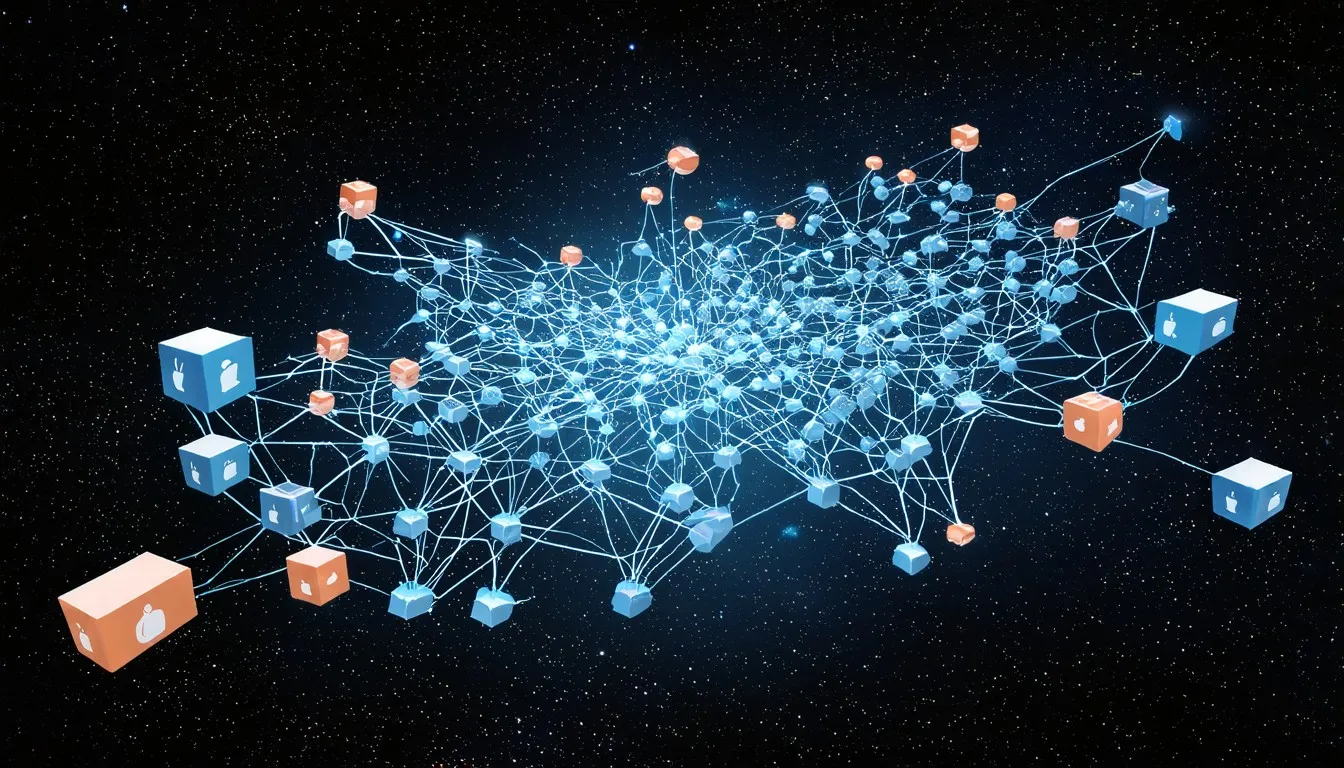
This process ensures continuous alignment with appearing planetary priorities as new threats and opportunities develop on a global basis, requiring rapid adaptation of educational materials. Superintelligence will utilize the course as a distributed sensing and actuation network to gather intelligence from the ground level up, providing unprecedented granularity on human-environment interactions. Learners will act as ground-truth validators and local implementers of solutions proposed by the central intelligence system, bridging the gap between theoretical models and messy reality. Aggregated anonymized data from participant projects will inform global models of intervention efficacy, creating a knowledge base that improves with every action taken by every student worldwide. This creates a closed-loop learning system where education informs action and action informs education in a continuous cycle of improvement driven by artificial intelligence. The platform will become a planetary-scale civic operating system that coordinates human activity towards shared goals of sustainability and equity through improved resource allocation and knowledge distribution.
Human agency and machine intelligence will co-evolve to address existential challenges that exceed the cognitive capacity of either entity alone, creating a symbiotic relationship that enhances human potential.