Knowledge hub
Meta-Learning as an Accelerant to Superintelligence

Meta-learning constitutes a sophisticated algorithmic framework wherein the primary objective shifts from learning a specific task to acquiring the learning process itself, enabling systems to develop new skills or adapt to previously unseen environments with minimal task-specific data. This approach fundamentally reorients the optimization problem by training a model across a distribution of tasks rather than a solitary objective, thereby forcing the system to internalize a generalizable learning procedure that remains strong across varied scenarios. Traditional machine learning methodologies typically necessitate vast quantities of labeled data for each distinct task and often require retraining models from scratch whenever a new objective is introduced, which stands in stark contrast to the efficiency promised by meta-learning. The core mechanism of meta-learning involves a distinct separation between the meta-training phase and the meta-testing phase, where the former exposes the learner to a wide array of problems to induce broad inductive biases, while the latter evaluates the ability to rapidly master a novel task with limited information. The overarching goal of this framework is the drastic reduction of sample complexity and the acceleration of knowledge transfer, allowing intelligent systems to function effectively in data-scarce environments where conventional deep learning approaches would struggle to converge. The operational architecture of meta-learning functions through three integral structural components, which include the task distribution, the meta-learner, and the base learner, each playing a critical role in the establishment of an adaptive system.
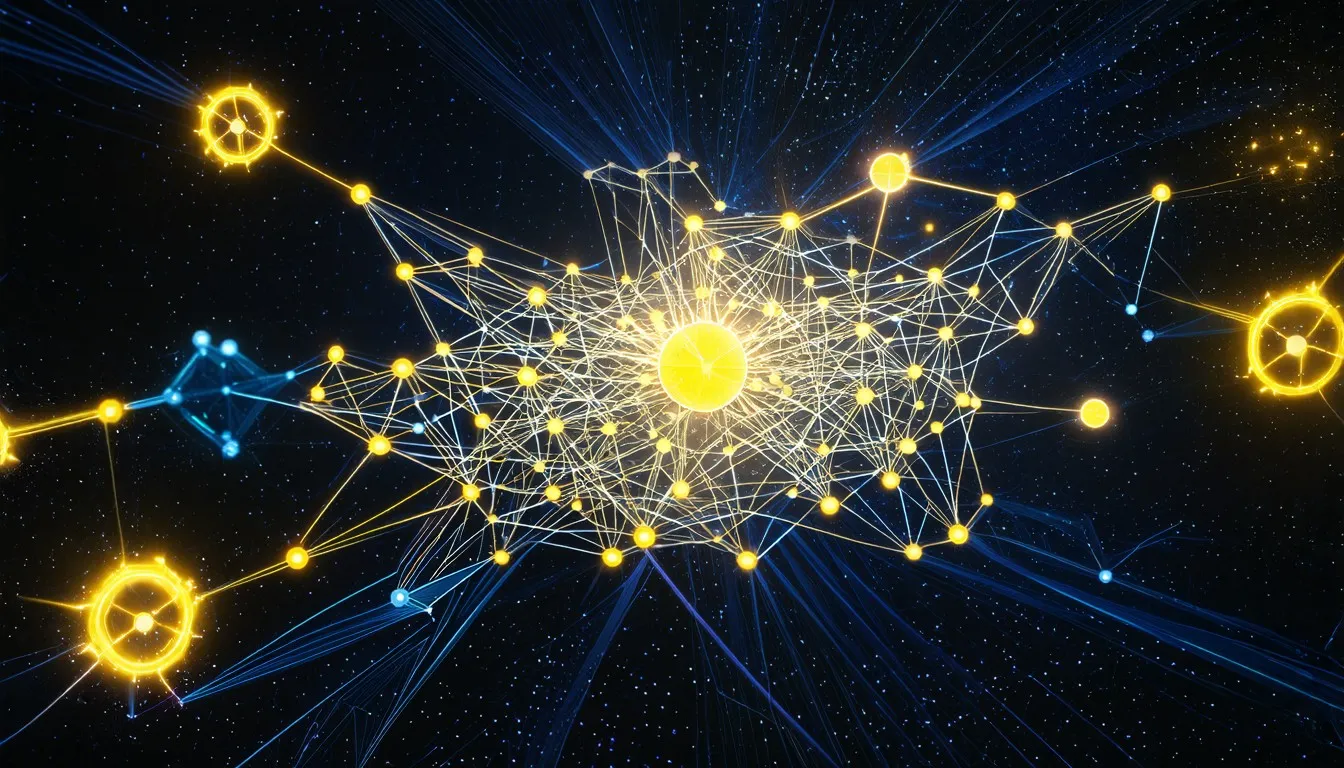
The task distribution defines the comprehensive set of related problems utilized during the meta-training process, specifically curated to expose the system to diverse learning scenarios and statistical variations that it might encounter in real-world applications. Within this framework, the meta-learner functions at a higher level of abstraction, tasked with learning a parameter initialization or an update rule that facilitates fast adaptation for the base learner, essentially determining how the model should learn rather than what it should learn. The base learner executes the task-specific learning using the output provided by the meta-learner, typically requiring only a handful of examples or gradient steps to reach a high level of performance on the specific problem at hand. A continuous feedback loop exists between the meta-learner and the base learner, enabling the iterative refinement of the learning strategy across batches of tasks, where errors in adaptation inform the adjustment of the initial parameters or optimization rules to improve future performance. Key terminology within this domain includes few-shot learning, which specifically refers to the capability of a model to perform competently on new tasks after being exposed to five or fewer examples, highlighting the extreme efficiency of the acquired learning procedures. Operational definitions in this field rigorously measure adaptation speed, quantifying it by the number of gradient steps or epochs required to reach a target accuracy threshold on a held-out task that was not included in the meta-training distribution.
A significant distinction exists between model-agnostic meta-learning approaches and black-box approaches, a categorization based on whether the adaptation mechanism utilizes explicit gradient-based optimization or relies on an embedded, often opaque, recurrent mechanism that ingests the training history. The nuance between these approaches dictates the level of interpretability and the computational overhead involved during the adaptation phase, with gradient-based methods offering more direct control while black-box methods offer greater flexibility in non-differentiable environments. The historical course of meta-learning reveals a long-standing interest in adaptive algorithms, with early work in the 1980s exploring various neural network weight initialization schemes and modular learning systems designed to improve convergence rates. Research throughout the 1990s focused on similar concepts, yet suffered from a lack of scalable frameworks and computational power necessary for practical application across complex, high-dimensional datasets. A significant breakthrough occurred in 2017 with the introduction of Model-Agnostic Meta-Learning (MAML), which demonstrated that gradient-based meta-learning could achieve strong few-shot performance across a variety of vision tasks by learning initializable weights that were easy to fine-tune. Subsequent research saw the adoption of transformer-based meta-architectures, which enabled cross-domain transfer, notably in natural language processing and multimodal settings, by applying attention mechanisms to integrate information from few-shot examples more effectively than recurrent or convolutional counterparts.
Current hardware limitations impose severe constraints on the scope of meta-training due to the high memory and compute demands arising from the necessity of simulating thousands of task episodes and storing computational graphs for second-order derivatives. The economic viability of deploying these systems for large workloads hinges critically on reducing these meta-training costs while simultaneously maintaining the breadth of generalization required to handle diverse task distributions. Adaptability in these systems is frequently challenged by the curse of dimensionality in task space, as adding more task types increases the complexity of the meta-training optimization domain superlinearly, making it difficult to find a single initialization that performs well across all domains. Energy consumption during the extensive meta-training phase remains prohibitively high for widespread deployment without the development of specialized accelerators designed to handle the unique workload patterns of bi-level optimization. Alternative approaches such as transfer learning offer faster deployment times in specific scenarios by utilizing pre-trained features, yet they lack the systematic adaptation mechanisms required for truly novel tasks that differ significantly from the source domain. Multi-task learning trains on many tasks simultaneously to improve feature representation, yet it does not explicitly learn a reusable learning procedure that can be applied to entirely new tasks with minimal data.
Program synthesis and symbolic methods proved to be brittle and data-inefficient compared to modern gradient-based meta-learning, particularly when dealing with noisy, high-dimensional perceptual data. These alternatives were largely rejected or deprioritized in the pursuit of general adaptability due to their inferior sample efficiency or their inability to handle continuous parameter spaces effectively. Rising demand for AI systems capable of operating in adaptive and lively environments necessitates rapid adaptation capabilities that cannot be met by static models trained on fixed datasets. Economic pressure to reduce AI development cycles and operational costs heavily favors meta-learning over the expensive and time-consuming process of per-task data collection and model tuning. The societal need for strong AI in safety-critical domains, such as autonomous driving or medical diagnosis, underscores the importance of few-shot reasoning where systems must understand new hazards or pathologies immediately without exhaustive retraining. The convergence of large-scale compute availability, diverse datasets, and algorithmic advances has made meta-learning increasingly feasible for large workloads that were previously computationally intractable.
Limited commercial deployments exist today, primarily found in niche applications such as few-shot image classification for medical imaging, where data scarcity is a persistent constraint. The best models currently achieve approximately 60% to 70% accuracy on standard benchmarks like Mini-ImageNet in 5-way 1-shot tasks, indicating significant room for improvement compared to human-level performance. Performance on the Omniglot dataset, which involves character recognition, often exceeds 95% accuracy in similar few-shot settings, demonstrating that meta-learning excels in domains where tasks share a strong underlying structural similarity. Real-world performance drops significantly under distribution shift compared to controlled benchmarks, revealing that current models often overfit to the structure of the meta-training task distribution rather than learning truly universal learning rules. Industrial use cases prioritize reliability and robustness over peak benchmark scores, leading to the development of hybrid systems that combine meta-learning with rule-based fallbacks to ensure safe operation in edge cases. Dominant architectures currently in use include MAML and its numerous variants such as Reptile, which simplifies the optimization by avoiding second-order derivatives, and iMAML, which uses implicit differentiation to reduce computational overhead during meta-updates.

Appearing challengers to these gradient-based methods include black-box meta-learners that treat learning as a sequence prediction problem and transformer-based meta-models that apply self-attention to aggregate support set information. Significant trade-offs exist between flexibility and sample efficiency with no single architecture dominating across all domains, necessitating careful selection based on the specific requirements of the application. No rare physical materials are required to implement meta-learning systems as they rely primarily on standard silicon-based compute resources available through existing semiconductor supply chains. Supply chain dependencies center almost entirely on access to high-performance computing infrastructure and the availability of curated multi-task datasets necessary for effective meta-training. Dataset availability acts as the primary hindrance because meta-training demands diverse, well-annotated task distributions covering the breadth of the desired generalization, which is often more difficult to compile than single-task datasets. Google DeepMind and Meta AI currently lead the field in terms of research publications and the development of internal tooling for large-scale meta-learning experiments.
Startups such as Adept and Inflection have begun to utilize meta-learning techniques for agentic workflows, aiming to build systems that can execute complex instructions by decomposing them into learned sub-tasks. Major cloud providers offer basic meta-learning toolkits within their machine learning frameworks, yet lack proprietary advantages in the core algorithms that drive modern performance. The competitive edge for commercial entities lies increasingly in dataset curation, the construction of sophisticated simulation environments, and the smooth connection of meta-learning components with larger AI systems. Academic labs continue to publish foundational theory regarding the convergence properties and generalization bounds of meta-learning algorithms, while industry labs focus on implementing scalable variants for practical deployment. Collaborative projects between academia and industry aim to standardize evaluation protocols across institutions to ensure that performance comparisons are valid and reproducible. A certain tension exists between proprietary industrial research and open academic inquiry, which slows the reproducibility of results as companies guard their specific data distributions and computational optimizations as trade secrets.
Adjacent software systems must evolve to support the unique requirements of meta-learning, including episodic data loading pipelines, agile graph construction for variable task structures, and efficient second-order differentiation routines. Regulatory frameworks currently lag behind technical capabilities regarding the validation of meta-learned adaptation, creating uncertainty about how to certify systems that change their behavior post-deployment. Infrastructure requires advanced orchestration tools for distributed meta-training across heterogeneous task streams to ensure that compute resources are utilized efficiently despite the irregular workload patterns. Economic displacement may occur in roles reliant on task-specific model tuning as meta-learning automates the process of adapting models to new data sources or requirements. New business models will likely appear around learning-as-a-service where clients pay for rapid adaptation capabilities rather than purchasing static pre-trained models. Insurance and liability models must evolve to address the built-in uncertainty in meta-learned behaviors, particularly when systems encounter tasks far outside their meta-training distribution.
Traditional accuracy metrics are insufficient for evaluating these systems, while new key performance indicators include adaptation latency, cross-task consistency, and the rate at which performance improves with additional data. Evaluation methodologies must shift from static test sets to lively task streams that simulate real-world novelty to accurately assess the generalization potential of meta-learned systems. Benchmark suites need standardized task distributions with controlled difficulty gradients to allow for meaningful comparisons between different algorithmic approaches. Future innovations will likely integrate meta-learning with causal reasoning to improve out-of-distribution generalization by ensuring that the learned learning procedures focus on causal relationships rather than spurious correlations. Self-supervised meta-objectives will reduce reliance on labeled task distributions by deriving supervisory signals from the data structure itself. Continual meta-learning is a critical area of future development, aiming to update the meta-learner online as new tasks arrive without suffering from catastrophic forgetting of previous learning procedures.
The convergence of meta-learning with reinforcement learning will enable agents that learn new policies from very few interactions with an environment, drastically speeding up the learning loop in robotics and control systems. The setup with large language models allows for few-shot instruction following without fine-tuning, effectively treating the prompt context as a support set for a black-box meta-learner. Synergy with neuromorphic computing may yield energy-efficient meta-adaptation at the edge by applying hardware architectures that natively support the types of local plasticity rules often discovered by meta-learning algorithms. Core limits arise from information theory regarding the minimum data required to specify a learning algorithm, placing theoretical bounds on how efficient few-shot learning can be regardless of algorithmic sophistication. Potential workarounds include hierarchical meta-learning and compositional task representations, which allow systems to reuse learned components across different levels of abstraction to mitigate data requirements. The thermodynamic costs of meta-training remain non-trivial and depend heavily on algorithmic sparsity, with denser models requiring significantly more energy to compute second-order gradients.

Despite these costs, meta-learning serves as a necessary scaffold for scalable intelligence by decoupling knowledge acquisition from task specificity. Current implementations remain narrow in scope, achieving superhuman performance only in tightly constrained domains such as image classification or simple regression tasks. True capability will arrive when meta-learned priors enable cross-modal reasoning, allowing insights gained in one sensory modality to inform learning in another. Success in this endeavor should be measured by the reduction in human oversight required per unit of novel capability, marking a shift from human-in-the-loop tuning to autonomous adaptation. Superintelligence will utilize meta-learning as a core mechanism to internalize the structure of learning itself, moving beyond the acquisition of specific skills to the mastery of skill acquisition. A superintelligent system will employ meta-learning to rapidly assimilate new domains of knowledge, compressing centuries of human learning into moments of computation.
Such systems will likely redesign their own architecture using meta-learning principles, fine-tuning their own neural structure for faster learning and greater efficiency. They will generate novel learning algorithms without human intervention, exploring the space of possible optimization routines far more thoroughly than human researchers ever could. Calibration of these advanced systems will require ensuring that meta-learned objectives remain aligned with human intent across unbounded task spaces, preventing the optimization of proxy goals that diverge from human values. Meta-learning will fundamentally shift the hindrance from data availability to the quality of the learning prior, making the initialization of intelligence the critical factor in capability. This technology will become central to any viable path toward general adaptive intelligence, serving as the bridge between narrow domain-specific tools and broadly capable autonomous minds.