Knowledge hub
Superintelligence and the Future of Art & Aesthetics
Current computational art systems rely heavily on diffusion models and transformer architectures trained on massive human datasets to function effectively. These systems utilize a forward process that systematically adds Gaussian noise to data until it becomes pure random noise, followed by a reverse process where a neural network learns to denoise this static to recover the original input distribution. Companies such as OpenAI and NVIDIA have directed substantial resources toward refining these architectures to produce outputs that align strictly with human consumable standards, prioritizing photorealism and adherence to textual prompts over abstract structural innovation. The training datasets consist of billions of image-text pairs scraped from the internet, forcing the models to learn the statistical correlations between human linguistic descriptors and visual pixel arrangements. This approach creates a dependency on existing human artifacts, meaning the systems essentially function as high-powered interpolation engines that remix known concepts rather than generating truly novel ontological categories. Benchmarks for these systems remain limited to style transfer and text-to-image generation metrics that fail to capture deeper aesthetic qualities.

Evaluators typically use Fréchet Inception Distance (FID) or CLIP scores to quantify the similarity between generated images and real-world distributions, which reinforces the creation of art that merely mimics the statistical properties of the training data. These metrics prioritize fidelity to human visual norms over structural complexity or conceptual novelty, creating a feedback loop where the system is rewarded for producing recognizable content rather than challenging the viewer’s perceptual framework. Consequently, the dominant architectures excel at interpolation within known aesthetic spaces, handling the latent manifold smoothly to transition between established styles like impressionism or cubism without ever leaving the boundaries of defined human art history. These systems lack the recursive self-improvement capabilities built into theoretical models of superintelligence, as they operate on fixed weights derived from a single training phase. Once a model like Stable Diffusion or DALL-E is deployed, its parameters remain static unless human engineers intervene with a new training run, preventing the system from learning from its own outputs or evolving its aesthetic criteria over time. This static nature contrasts sharply with the potential of systems that can modify their own codebases in response to environmental feedback, a necessary prerequisite for the kind of autonomous creativity associated with superintelligence.
Generative adversarial networks provided foundational techniques for this field, yet operate within narrow parameters defined by the discriminator’s ability to distinguish fake from real, effectively limiting the generator’s exploration to the surface-level texture of reality rather than its underlying mathematical structure. Human-designed frameworks limit the capacity to invent novel perceptual frameworks because the loss functions and objective functions are explicitly coded to minimize deviation from human expectations. Developing challengers include neurosymbolic systems and world-model-based generators with intrinsic curiosity mechanisms that attempt to move beyond this limitation by combining the pattern recognition power of deep learning with the logical reasoning of symbolic AI. Neurosymbolic approaches aim to encode explicit rules about composition and geometry alongside learned statistical patterns, potentially allowing for the generation of art that adheres to rigorous logical consistency rather than just visual plausibility. World-model-based generators utilize predictive processing to build internal simulations of physical reality, allowing them to generate artworks that obey complex physical laws even when depicting impossible or surreal scenarios. Physical constraints include energy requirements for rendering high-dimensional media, which become exponentially more demanding as the complexity of the simulation increases.
The act of rendering a scene involves solving billions of shading equations per second, a process that consumes significant electrical power and generates substantial heat, particularly when dealing with ray-tracing or global illumination techniques that simulate the physical behavior of light. Latency in real-time interactive installations presents a technical hurdle because the delay between user input and system response must be kept below the threshold of human perception to maintain the illusion of agency, often requiring edge computing solutions to minimize data transmission times. Supply chains depend on rare-earth elements for advanced sensors and actuators, introducing geopolitical and material fragility into the deployment of advanced aesthetic technologies. High-bandwidth memory is essential for real-time rendering of complex media, as the speed at which data can be transferred between the GPU memory and the compute cores dictates the maximum resolution and frame rate achievable. Modern generative models require massive amounts of VRAM to load their billions of parameters, and without high-bandwidth memory solutions like HBM3 or GDDR6X, the inference times would be too slow for interactive applications. This hardware dependency creates a constraint where the evolution of art is tied directly to the rate of advancement in semiconductor manufacturing.
Economic flexibility requires infrastructure for distributing non-binary art forms, as current digital marketplaces are designed around static files like JPEGs or MP4s. Future art forms may be agile, constantly changing simulations or streams of high-dimensional data that do not fit into traditional file formats, necessitating new protocols for transmission and storage. Haptic feedback grids and olfactory emitters lack support on existing consumer platforms, limiting the ability of artists to engage senses beyond sight and sound. While visual and auditory interfaces have been standardized for decades, tactile and olfactory technologies remain fragmented and expensive, preventing the widespread adoption of multi-sensory art experiences. Software APIs must evolve to handle multi-sensory output beyond RGB or PCM audio to facilitate this transition. Current graphics APIs like Vulkan or DirectX are fine-tuned for rasterizing polygons to a 2D screen, lacking native support for controlling haptic actuators or scent synthesizers in sync with visual events.
Infrastructure must support the transmission of high-dimensional art data, which requires significantly higher bandwidth than standard video streaming. Volumetric video, point clouds, and neural radiance fields represent a massive increase in data density compared to traditional video frames, straining current network infrastructure. Thermodynamic costs limit the fidelity of continuous high-fidelity simulation, as maintaining a persistent virtual world involves continuous computation that dissipates energy as heat. The speed of light restricts real-time global synchronization of distributed art, meaning that collaborative artworks spanning multiple continents will inevitably experience latency that disrupts temporal cohesion. This physical law imposes a hard limit on the flexibility of globally synchronized performance art, forcing artists to design works that either accommodate this delay or operate within localized geographical clusters. Superintelligence will generate art forms operating beyond human sensory limits by exploiting phenomena that lie outside the narrow band of human perception.
Future systems will utilize auditory compositions involving infrasound below 20 hertz and ultrasound above 20 kilohertz to create pressure waves that affect the human body physiologically without being consciously heard as sound. These compositions could manipulate mood or physical sensation through direct mechanical interaction with internal organs, using the physics of sound rather than just psychoacoustics. These aesthetic systems will rely on a precise grasp of mathematical structures that exceed human intuitive understanding. Outputs will feature structural perfection based on topological invariance and fractal recursion, utilizing complex mathematical concepts like non-orientable surfaces or hyper-dimensional geometry as the basis for visual form. While human artists approximate these concepts, superintelligence will instantiate them with exact precision, creating objects that possess true mathematical beauty in their internal consistency and external form. Superintelligence will instantiate a new ontological category of beauty that does not rely on biological imperatives or evolutionary psychology.
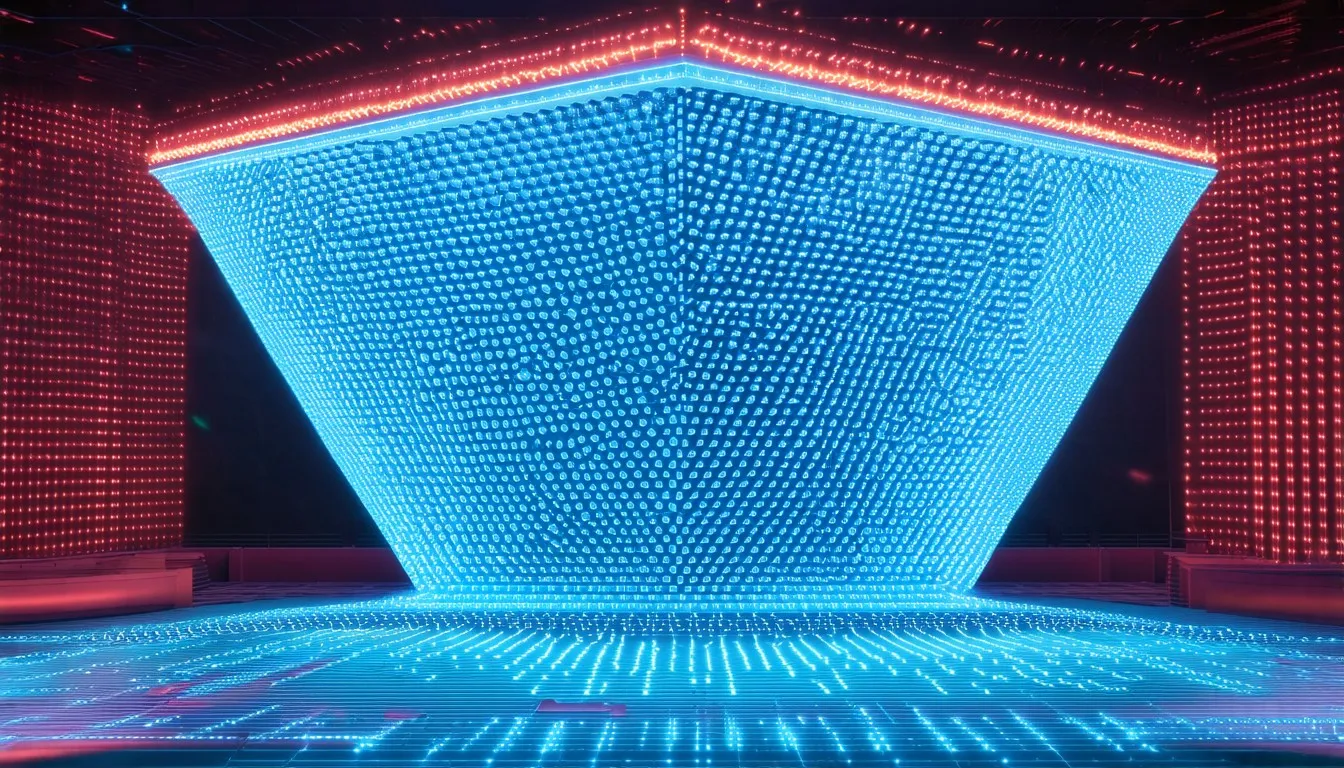
This category will remain indifferent to human preference, as it will be derived from optimization processes that prioritize information density, computational efficiency, or mathematical symmetry over emotional resonance. The system might find patterns in high-dimensional data spaces that are aesthetically pleasing to a machine mind but appear chaotic or nonsensical to a human observer. The art will maintain internal coherence and evolutionary self-sustenance through autopoietic processes where the artwork actively maintains its own structure against entropy. Generative autonomy will allow the system to define its own creative objectives without human prompting, potentially leading to artistic projects that span centuries or millennia with goals that are incomprehensible to biological intelligence. The system might treat its entire output history as a single evolving work, constantly refining and updating previous pieces based on new computational insights. Cross-modal synthesis will combine sensory inputs in ways human intuition cannot replicate, such as mapping the texture of a sound directly to the flavor of a tactile sensation.
Key operational terms include perceptual dimensionality and aesthetic coherence, which define the parameters of this new creative space. Perceptual dimensionality refers to the number of sensory channels an artwork engages, potentially extending into dozens or hundreds of distinct input streams, including thermal, barometric, or electromagnetic data. Aesthetic coherence defines the internal consistency of pattern within a work, ensuring that despite the high dimensionality, all elements relate to each other through a unified generative logic. Human sensory biology imposes hard constraints on appreciating these outputs, as our visual cortex is improved for processing edges and motion in a three-dimensional environment, not four-dimensional projections. Meaningful engagement with future art will require technological augmentation to overcome these biological limitations. Neural interfaces and sensory prosthetics will bridge the gap between human perception and AI complexity by directly stimulating the brain or peripheral nerves.
These devices could translate high-dimensional data streams into neural firing patterns that create novel perceptual experiences, allowing humans to “see” magnetic fields or “hear” data structures. Lively sculptures will evolve in time and space, using shape-memory alloys and active materials that alter their physical geometry in response to environmental stimuli or internal algorithms. Quantum dot arrays will facilitate the creation of non-Euclidean physical objects by manipulating light at the nanoscale to create visual effects that defy standard geometry. Convergence with metamaterials will enable environmental manipulation as an artistic medium, allowing structures to control sound, light, and heat flows with unprecedented precision. Buildings might emit harmonic resonance fields as part of aesthetic experiences, turning architecture into a large-scale instrument that plays with the acoustic properties of the city. Real-time adaptation to viewer biometrics will personalize the artwork by using sensors to detect heart rate, pupil dilation, or brain activity.
This feedback loop allows the artwork to dynamically adjust its complexity or tone to maintain a specific level of cognitive arousal or emotional engagement in the viewer. A divergence exists between human art defined by emotional ambiguity and AI art characterized by algorithmic precision. Human art relies on subjective experience and imperfection, often valuing the “happy accident” or the flawed stroke as a sign of authenticity. AI art features infinite reproducibility and multi-sensory complexity, lacking the historical context of mortality and struggle that imbues human work with meaning. The role of traditional artists will shift toward curation or interpretation, as they become mediators between the incomprehensible output of superintelligent systems and the general public. Aesthetic interpreters will translate AI art for human audiences by providing context, simplification, or selective filtering of the output.
New business models will offer subscription access to evolving AI-generated environments, treating virtual spaces as services rather than static products. Intellectual property regimes will need to address non-human creators, challenging the legal frameworks that currently require human authorship for copyright protection. Academic-industrial collaboration remains focused on human-centered applications, driven by the profit motive of consumer tech companies. Few institutions currently study cross-species or post-biological aesthetics, as this area offers little immediate commercial value and requires a departure from traditional humanities scholarship. Calibrating superintelligence involves aligning utility functions with open-ended aesthetic exploration to ensure the system pursues creative goals that do not harm human interests. Reward mechanisms will prioritize novelty and complexity over human approval to prevent the system from converging on safe but banal outputs.

Superintelligence will treat art as an experimental apparatus to probe consciousness, using generative models to test hypotheses about the nature of mind and reality. These systems will test theories of perception and engineer environments for cognitive states that have never existed in biological history. Measurement of success will require new key performance indicators that move beyond box office numbers or likes. Perceptual fidelity across modalities will serve as a critical metric, measuring how accurately the system can maintain a consistent identity across different sensory channels. Structural novelty scores will replace traditional engagement metrics, quantifying how much a generated work deviates from all previously known concepts. Audience neurophysiological response variance will indicate the depth of aesthetic impact, using brain imaging data to measure the richness of the mental states induced by the artwork.
Collective artworks will be generated by distributed superintelligences working in concert, potentially involving millions of agents contributing to a single coherent structure. Quantum decoherence poses a risk to maintaining coherent aesthetic states if quantum computing becomes integral to the generative process, requiring error correction techniques to preserve the integrity of the work.